Dr. Charles Obiajulu Ugwu
There is a quiet test every living tradition must eventually face. Not persecution. Not opposition but the mirror.
It was a Sunday morning in Nairobi, the kind where the city feels briefly forgiven. Along Ngong Road, traffic slowed not because of congestion but reverence with cars edging toward a glass-fronted megachurch whose LED screen flashed DESTINY SERVICE: NO LIMITS. Inside, the worship was flawless. As a visitor, all I needed was just a place to pray and the ambience here with the lights timed to crescendos, Voices trained to lift heart felt like it. The sermon soared with sacrifice, humility, surrender, all showcasing kenosis clothed in modern cadence. After a grueling overdose of religious theatrics that lasted over five and a half hours with three different pastors each trying to outdo the other in heavy admonitions and consequences for not towing the patterns they shared, I was relieved walking back to my hotel vowing to rather pray in my room than being held hostage a second time.
Two streets away, in a cramped bedsitter in Kibera’s shadow, a former church volunteer sat staring at his phone. The message he had received the night before was short, pastoral, devastating: “For the peace of the ministry, we advise you to let this matter rest”. His mistake had been simple and sincere; he had asked why funds raised for a community clinic never reached the site. No anger. No accusation. Just a question. By Monday, his access cards were deactivated. By Tuesday, his name was absent from the prayer list. By Friday, he was being described as “spiritually unstable.”
That same Sunday, the pastor preached Christ’s self-emptying.
The contradiction did not shout. It whispered. And that whisper is now echoing across Africa’s Christianity. A faith that teaches surrender but fears scrutiny. A Church that demands vulnerability from its people while armoring itself against consequence. Nairobi is not unique, it is simply honest enough to reveal the pattern. This is where the reckoning begins: not with disbelief, but with a mirror the Church has avoided for too long.Top of Form
Bottom of Form
Christianity in Africa has mastered the art of noise, crowds, crusades, credentials, confidence. What it has not mastered is reflection. And a faith that refuses the mirror does not remain innocent; it becomes fragile. The danger before African Christianity today is not collapse but hardening, a slow moral ossification where belief survives, institutions expand, but conscience atrophies.
This is why urgency matters. Inertia is no longer neutral. What once passed as stability is now resistance to truth. What once felt like reverence increasingly looks like fear of scrutiny, fear of loss, fear of admitting that the scaffolding has overtaken the structure.
This essay is a call to step into the mirror deliberately, before history holds it up brutally.
Not to destroy Christianity in Africa, but to realign it so it can once again bear moral weight in a continent navigating inequality, political volatility, technological acceleration, and generational distrust. Realignment is not reform theater. It is not cosmetic repentance. It is structural courage.
I bring the full complement of my persona (Contrarian thinker, Aquarian, Stoic) into this essay as I breaks the false peace, absorbs the cost of telling the truth and ensure the truth points somewhere viable.
Christianity in Africa does not suffer from marginality. It suffers from over-certainty.
Across the continent, churches rise faster than civic institutions, sermons travel farther than policy, and God-talk saturates public life with a confidence that borders on inevitability. Christianity is everywhere; on buses in Accra, in parliament halls in Kampala, on billboards in Lagos, in prophetic broadcasts from Nairobi, in healing crusades across Johannesburg’s townships. And yet, beneath this abundance, a quieter question grows louder: Why does a continent so saturated with faith remain so structurally wounded?
This is not the old, lazy accusation that Africans are “too religious.” That argument is shallow and colonial in tone. The deeper problem is not how much Christianity Africa has, but what kind.
What is at stake is credibility not belief, not devotion, not spiritual hunger. Africans believe deeply. They pray fiercely. They endure courageously. What is thinning out is the moral weight of Christianity as a civilizational force. The faith is present, but its capacity to interrogate power, restrain excess, demand truth, and model integrity has been compromised by its own institutional habits.
This is a call for a continental rethink. Not abandonment. Not secular substitution. But foundational realignment so Christianity in Africa can once again be dangerous to injustice and credible to conscience.
Our departure point is Nigeria known for exaggerating everything.
Here, Christianity has become a spectacle economy. Mega-auditoria, prophetic celebrities, private jets framed as proof of divine favor. Here, Kenosis the self-emptying model is preached relentlessly to congregants who are told to endure suffering as spiritual training, while the institution ascends into exemption. Financial opacity is defended as sacred mystery. Accountability is rebranded as rebellion. The Church demands trust while refusing verification.
But Nigeria is not an outlier. It is a mirror.
In Kenya, some of the loudest prophetic voices openly align with political power, sanctifying electoral outcomes while insulating themselves from scrutiny. When pastors bless corruption-adjacent leadership, they do not merely err politically; they collapse moral distance. Christianity becomes a chaplain to power rather than a critic of it.
In Uganda, faith institutions wield immense influence over social policy, yet remain reluctant to confront state violence or elite impunity with the same ferocity they deploy against private moral infractions. The result is selective righteousness that intimate lives are policed while public theft is spiritualized away.
In South Africa, once the global exemplar of prophetic Christianity during apartheid, sections of the Church now mirror corporate culture by branding salvation, monetizing healing, and protecting charismatic leaders accused of abuse with legal sophistication that victims can rarely afford. The prophetic tradition has not vanished, but it has been crowded out by performance spirituality.
In Ghana, widely celebrated as a stable democracy, Christianity thrives numerically while often avoiding serious engagement with structural inequality. Prosperity theology flourishes alongside youth unemployment. Churches speak of destiny while sidestepping systems.
In Rwanda, the genocide exposed one of Christianity’s most catastrophic failures: churches that became sites of slaughter, clergy who collaborated or remained silent. The post-genocide reckoning forced painful theological questions that many African churches elsewhere have not dared to ask: What does faith mean when it coexists with mass violence? Rwanda’s tragedy remains a warning Africa has not fully absorbed.
These are not isolated scandals. They are systemic signals.
The core contradiction is consistent across contexts: Christianity preaches kenosis while practicing exemption. It demands surrender from individuals while shielding institutions from consequence. It calls believers to humility while building unaccountable hierarchies. It venerates the cross while avoiding the cost of exposure.
From a contrarian standpoint, this is not accidental hypocrisy it is institutional self-preservation masquerading as theology. When Christianity becomes culturally dominant, it risks mistaking survival for truth. Numbers for legitimacy. Influence for fidelity.
From a stoic perspective, the problem is ethical misalignment. Stoicism insists that virtue is tested where it costs most. A faith that speaks endlessly about sacrifice but refuses to relinquish privilege when challenged has failed its own examination. You cannot preach endurance while exempting yourself from discomfort.
From an Aquarian lens future-facing, systems-conscious the current model is unsustainable. Younger Africans are not abandoning spirituality; they are abandoning incoherence. They see through performative piety. They distrust institutions that moralize without transparency. They intuit, correctly, that a belief system afraid of scrutiny cannot guide the future.
This is why many remain in church but disengage inwardly. Faith becomes instrumental and used for survival, advancement, protection. God becomes a transaction partner. Christianity becomes a utility, not a conscience. This is not revival. It is hollowing.
The tragedy is that Christianity in Africa was never meant to be this way.
Historically, African Christianity flourished most when it stood against power, not beside it. From the Ethiopian Church’s early independence, to anti-colonial Christian movements, to liberation theology in Southern Africa, the faith carried moral authority because it risked confrontation. It spoke truth upward, not just obedience downward.
But institutional success changed the incentive structure.
Once churches accumulated land, media, political access, and wealth, the cost of kenosis rose sharply. Self-emptying became inconvenient. Exposure became dangerous. So kenosis was privatized and taught as personal virtue while quietly suspended as institutional discipline.
This is where theology becomes theater.
Kenosis, properly understood, is not humility as posture. It is power voluntarily laid down. It is leadership without insulation. It is authority that accepts consequence. Christ did not empty himself partially. He does not retain veto rights. He does not appeal to exemption clauses.
A Christianity that refuses this logic cannot credibly preach it.
Africa’s broader institutional fragility worsens the problem. Where governments evade accountability, courts bend, and wealth lacks explanation, the Church should be the moral counterweight. Instead, it often mirrors the same evasions only with scripture. This mimicry is fatal to credibility.
The question, then, is not whether Christianity will survive in Africa. It will. The question is what kind of Christianity will survive.
A bloated, spectacle-driven, unaccountable Christianity may endure numerically. But it will not shape conscience. It will not restrain power. It will not guide societies through complexity. It will merely occupy space.
A smaller, more coherent Christianity, one willing to lose influence for integrity could do far more.
What would realignment look like?
1. Disentangling God from the Institution: Breaking the Sacred Hostage Crisis
The first realignment is the most foundational and the most resisted. Christianity in Africa must break what can only be described as a sacred hostage crisis: the quiet assumption that questioning the institution is equivalent to attacking God.
This confusion is everywhere. In Nigeria, congregants are warned against “speaking against the church.” In Kenya, prophetic figures frame critique as spiritual warfare. In parts of Southern Africa, lawsuits against abusive leaders are recast as persecution of the faith itself. God is subtly positioned as a dependent variable, His honor tethered to the institution’s reputation.
This is not theology. It is institutional anxiety dressed as reverence.
Historically, Christianity grew precisely because God was not owned by structures. The prophets of Israel challenged temple and throne alike. Jesus was executed not by atheists but by religious custodians who believed institutional stability was synonymous with divine will. The early Church survived because it understood a dangerous truth: God outlives institutions.
Realignment begins by restoring this distinction. God does not need protection from transparency. Faith does not collapse when leaders are questioned. On the contrary, faith collapses when questioning is forbidden. The moment an institution requires silence to survive, it has already lost its moral authority.
A useful construct here is the open altar principle. In African traditional societies, the sacred space was not sealed from communal accountability; elders could be questioned, rituals scrutinized, custodians replaced if they violated trust. The sacred endured because it was embedded in shared responsibility, not monopolized power.
Christianity in Africa must relearn this wisdom. God must be returned to the commons of conscience, not locked behind clerical immunity. Institutions that fear this disentanglement are not defending faith; they are confessing fragility.
This single shift would checkmate enormous inertia. Once God is freed from institutional hostage-taking, critique becomes fidelity, not rebellion. Transparency becomes worship, not threat.
2. Institutionalizing Kenosis: Turning Self-Emptying into a System, not a Sermon
The second realignment strikes at the heart of the contradiction: kenosis cannot remain an individual ethic while institutions practice exemption. That arrangement is no longer merely hypocritical; it is unsustainable.
Across Africa, Christianity excels at vertical moral extraction. Individuals are told to submit, endure, forgive, sacrifice, sow, wait. Institutions, meanwhile, accumulate insulation in the form of financial opacity, lifetime leadership, charismatic immunity, internal adjudication systems that protect reputation over truth. Kenosis becomes a one-way valve.
To realign, kenosis must migrate from pulpit rhetoric into organizational style. This means designing churches and Christian institutions such that power naturally empties itself rather than entrenching.
Imagine a different norm. This is the case in churches where senior leaders publish audited financial summaries as routinely as sermon schedules. Where boards are independent, not populated by spiritual dependents. Where leadership roles have clear terms, renewal processes, and removal mechanisms. Where accusations are handled by external bodies, not spiritualized committees. Where apology is not a prelude to preservation but an acceptance of loss.
This is not radical. It is applied humility.
A helpful metaphor is the load-bearing bridge. A bridge that never flexes under pressure eventually collapses. Flexibility is not weakness; it is structural intelligence. Kenotic institutions are flexible institutions they allow pressure to pass through them rather than accumulating it in silence until rupture.
In Rwanda, post-genocide reckoning forced some churches into painful structural introspection. In South Africa, where independent inquiries exposed charismatic abuse, the churches that survived with integrity were those that accepted external scrutiny. The lesson is consistent: self-emptying is not loss; it is durability. Kenosis that does not cost leaders anything is not kenosis. It is choreography.
3. Redefining Success: From Spectacle Metrics to Moral Density
The third realignment confronts one of Africa’s most seductive religious illusions: the equation of size with truth, visibility with favor, growth with health.
This illusion is understandable. In societies marked by scarcity, success feels like validation. But Christianity’s core narrative does not endorse spectacle as proof. The cross is not impressive. The resurrection did not happen in a stadium. Moral authority has never scaled linearly.
Yet across Africa, Christianity has absorbed corporate success metrics without critique. Bigger buildings, larger crowds, louder followings, richer leaders are framed as evidence of divine endorsement. Meanwhile, the harder metrics such as ethical coherence, community impact, integrity under pressure are ignored because they are harder to display.
Realignment requires replacing spectacle metrics with moral density.
Moral density asks different questions:
Does this church make corruption harder or easier to justify?
Does it produce citizens who question power or merely spiritual consumers?
Does it reduce suffering or merely explain it?
Does it tell the truth when silence would be safer?
A small church that answers these well is more dangerous to injustice than a megachurch that avoids them entirely.
The Stoics would call this internal excellence virtue measured by alignment, not applause. The contrarian insists that influence without integrity is a liability, not an asset. The Aquarian understands that future relevance will belong to institutions that generate trust, not noise.
Across Africa, younger generations are recalibrating instinctively. They may still attend church, but they no longer equate crowd size with credibility. They are drawn to coherence, not charisma. Any Christianity that ignores this shift is building monuments for an audience that is already leaving.
4. Restoring Repentance as a Public Discipline: Ending Apology Without Consequence
The fourth realignment is perhaps the most emotionally resisted, because it demands visible loss. Christianity in Africa has learned how to apologize without changing power arrangements. This has hollowed out repentance.
Press statements are issued. Tears are shed. Language is deployed “mistakes were made,” “lessons have been learned.” But leaders remain. Structures persist. The cost is absorbed by victims, not institutions.
This is not repentance. It is reputation management.
Biblically, repentance is not primarily emotional; it is directional. It changes trajectory. It redistributes cost. It restores trust by accepting consequence. Zacchaeus does not merely feel sorry; he repays. The early Church disciplines leaders publicly, not quietly, because credibility mattered more than comfort.
Africa’s Christianity must recover repentance as public moral repair.
This means leaders stepping aside when trust is broken. It means restitution where harm occurred. It means independent investigations whose findings are not negotiated. It means churches choosing to lose influence rather than shield misconduct.
A powerful African metaphor applies here: the broken calabash. In many cultures, when a sacred vessel is cracked, it is not hidden or painted over. It is removed from ritual use. Not because it is hated, but because trust in its function has been compromised. Restoration, if possible, comes after acknowledgment not denial.
Repentance that does not interrupt privilege teaches cynicism. Repentance that costs something teaches hope.
The Checkmate of Inertia: Why This Cannot Be Deferred
Inertia survives on delay. “Not now.” “It is sensitive.” “We are praying about it.” But time is no longer neutral. Africa is changing demographically, technologically, culturally faster than its religious institutions are willing to admit.
The real threat is not that Christianity will disappear. It is that it will remain loud but weightless, present but unpersuasive, powerful but distrusted.
Realignment is the only credible path forward.
The contrarian in me accepts that this will shrink some institutions. My stoic disposition accepts the discomfort of loss while my Aquarian leaning trusts that what survives honesty will outlast spectacle.
Christianity in Africa does not need rescue. It needs courage to face the mirror without flinching, to empty itself institutionally, to redefine success ethically, and to repent with consequence.
A faith that claims resurrection should not fear death.
If African Christianity can relearn that, it will not merely endure the future.
It will deserve it.
Finally, Christianity in Africa must recover future imagination, refuse stagnation while the faith must ask: What form of Christianity can survive honesty, pluralism, technology, and moral scrutiny? Not what preserves dominance, but what earns trust.
Across the continent, there are already seeds of this renewal: small communities practicing shared authority; churches choosing service over spectacle; leaders opening their books; believers refusing to weaponize faith. These movements are quiet. They do not trend. But credibility rarely does until it suddenly matters.
This is not an attack on Christianity. It is an act of fidelity to its deepest logic. A faith that claims divine grounding should be the least afraid of examination. If Christianity in Africa cannot survive truth, it does not deserve allegiance.
Africa does not need more Christianity.
It needs Christianity with moral gravity willing to empty itself first, so it can once again speak with authority.
Anything less is noise.
And Africa has had enough noise.
About the Author
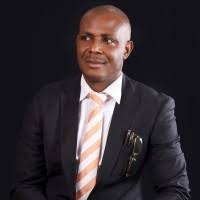
Dr. Charles Obiajulu Ugwu is a Nigerian contrarian thinker writing from Nairobi.