The executive and the legislature were never designed to admire each other. They were meant to restrain each other. In a presidential democracy, tension is not an accident. It is the design. The Constitution does not expect applause between arms of government. It expects suspicion. It expects scrutiny. It expects pushback.
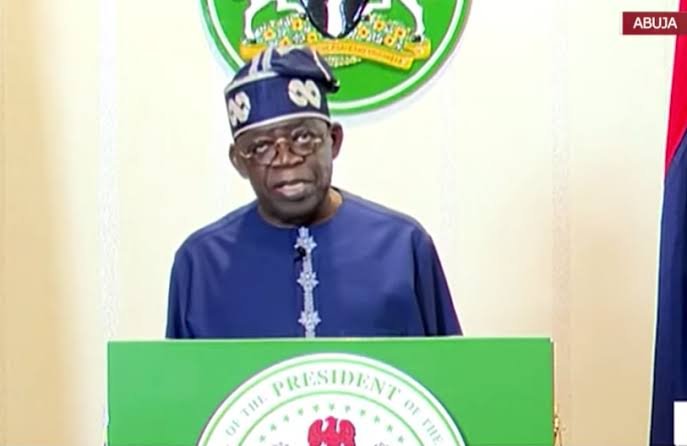
So when Senate President Godswill Akpabio declared that the National Assembly is loyal to President Bola Ahmed Tinubu, that word lingered.
Loyal.
In a democracy?
Older Nigerians remember when loyalty was never the language lawmakers used to describe themselves.
Maybe it was said casually. Maybe it was political routine. But it lingered.
Some of us remember when the National Assembly was many things, but loyal was never one of them.
Go back to the years of Olusegun Obasanjo. That was not a polite era. Senate Presidents came and went. Evan Enwerem barely settled in before he was out. Chuba Okadigbo clashed openly with the presidency and paid the price. Adolphus Wabara resigned under pressure. In 2002, lawmakers openly pushed impeachment moves against Obasanjo over spending disputes and alleged constitutional breaches. Budgets dragged. Accusations flew. It was rough.
You could accuse that Assembly of many sins. Submission was not one of them.
Then came the quiet crisis under Umaru Musa Yar’Adua. The president was ill. The country was drifting. No formal handover. Nobody was quite sure who was in charge. It was the National Assembly that stepped in with the Doctrine of Necessity in 2010 and made Vice President Goodluck Jonathan Acting President.
That moment could have gone badly. It did not. The legislature did not wait for permission. It acted. Not because it was loyal to a man, but because the vacuum was dangerous.
Under Jonathan, the clashes returned in full colour. The 2012 fuel subsidy probe led by Farouk Lawan shook the country. Ministers were dragged before cameras. Figures were contested publicly. There were constant quarrels over budgets and security spending. Aminu Tambuwal emerged as Speaker against party expectations and the presidency did not hide its displeasure. Bills were vetoed. Lawmakers pushed back.
It was noisy. Sometimes self serving. But nobody needed to ask where the legislature stood. It stood apart.
When Muhammadu Buhari arrived with strong party control, people assumed the friction would end. It did not. Bukola Saraki’s emergence as Senate President against party preference triggered a prolonged standoff. Ministerial confirmations stalled. Budgets were delayed amid accusations of padding. Electoral amendment bills were returned unsigned and the National Assembly responded publicly. Service chiefs were summoned again and again over insecurity.
Even with party dominance, there was still that underlying tension. That reminder that the legislature was not an errand arm.
Which is why today feels different.
Confirmations glide through. Supplementary budgets move quickly. Major executive requests meet little visible resistance. Debate feels shorter. The tone is softer.
And then that word surfaces again.
Loyal.
It is a small word. But in a democracy, small words matter.
The legislature is not supposed to be loyal to a President. It is supposed to be loyal to the Constitution and cautious toward everyone who wields power. That caution is not hostility. It is insurance.
Once lawmakers begin to see themselves as partners first and overseers second, something shifts. Questioning begins to look like betrayal. Delay begins to look like disloyalty. Investigation begins to feel inconvenient.
And so it reduces.
Nobody announces that oversight is over. It just slowly loses its edge.
This is not about demonising any administration. Every President prefers cooperation. Every executive enjoys smooth passage. That is natural. The real test is whether the other arm remembers that comfort is not its assignment.
Older Nigerians remember when budget season meant drama. When committee hearings could unsettle ministers. When the presidency and the legislature would brief separately after meetings because you knew they were not always saying the same thing.
Today the atmosphere feels more aligned. Maybe that alignment is strategic. Maybe it is political maturity. Or maybe it is something else.
Democracy does not always collapse with soldiers on the streets. Sometimes it quiets down. Institutions become polite. Disagreement becomes rare. Language becomes careful. The temperature drops.
And one day you look around and realise that the friction that once protected you is gone.
In our culture, respect for elders is unquestioned. But in a republic, institutions are not children. They do not bow to personalities. They hold their ground, even when it is uncomfortable.
Because power, left alone, does not reduce itself.
When a legislature begins to describe itself as loyal to the executive, it is not the President who benefits most. It is unchecked authority. It does not announce itself. It does not parade its power. It simply finds less resistance, and with each quiet concession, democracy loses a little of its armor.
That is why the word lingered.
Loyal.
It sounded small. It did not feel small. And in a democracy, the smallest shifts in language often signal the largest shifts in power.
Shaakaa can be reached on:
shaakaastephanie@yahoo.com