By Agbeze Ireke Kalu Onuma, AI-KO
I live in Lagos. I live in the Lekki-Epe Expressway suburb of Abijo GRA – a rapidly expanding corridor that stretches from the chaotic bottleneck of Ajah all the way down to the relative quiet of Epe. If you know this axis, you know it has become a microcosm of the Nigerian contradiction over the last decade. It is a landscape dotted with sprawling, gated estates boasting grand architectural ambitions, sitting cheek-by-jowl with overcrowded neighborhoods, makeshift shacks, roadside businesses, schools, and markets. Construction cranes sit beside wooden kiosks. Luxury apartments rise beside zinc-roofed homes. We are a community of extreme contrasts, separated by high walls and electric fences, yet bound together by the restless, ambitious pulse of Lagos itself.
And yet, for all its growth and visible prosperity, one basic thing has quietly disappeared from our lives here since November 2025.
Light. Sustained, reliable electricity. The kind that allows you to switch on a bulb and expect it to remain on.
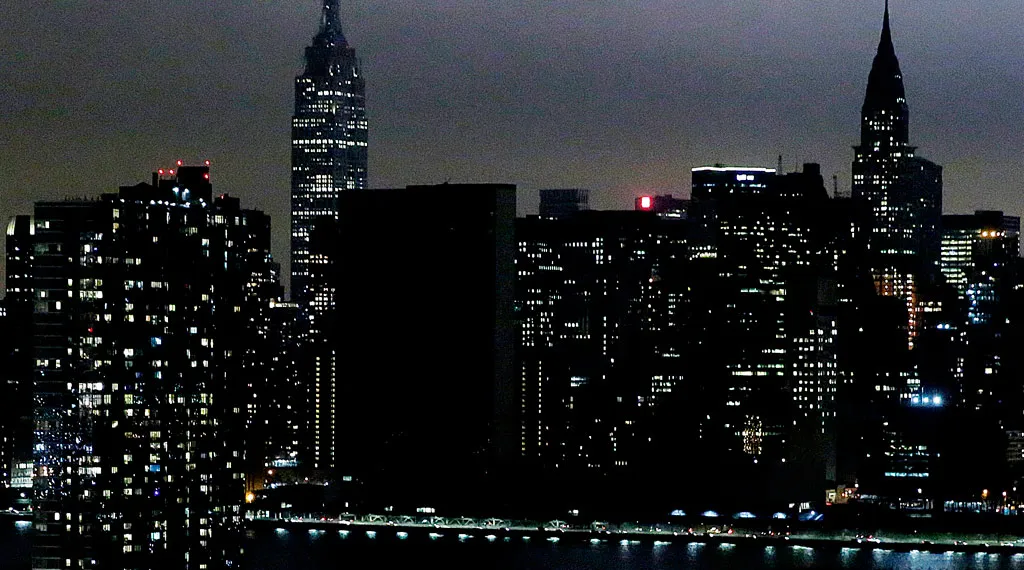
Whole swathes of streets, communities, and estates – mine included – have simply not known what it feels like to have sustained supply. Not reduced electricity. Not unstable electricity. Almost none at all. We have been plunged into a darkness so thick and persistent that it has…
When the men in their faded orange and blue jumpsuits – the staff of the distribution companies, whom the streets still stubbornly refer to as simply NEPA – come around with their wooden ladders and familiar clipboards, the absurdity of our reality reaches its peak. They come mostly for two things: to disconnect lines that have no current and to distribute estimated bills for light that was never supplied. When you confront them, when you look past their bureaucratic bravado and ask, “Brother, when will this darkness end?” or “What is happening to our light?”, they have no answers.
One of them came to our street last week, adjusting his reflective jacket, and simply shrugged. “We nor know o,” he said. “We dey suffer am same way.”
Their eyes betray a weary resignation. They cannot explain the collapsing grid or the phantom megawatts because they, too, are victims of the void. They fold their ladders, pocket their disconnection pliers, and commute back to their own dark houses. They are merely the lowly messengers of a broken system, enforcers of a darkness they do not understand and cannot escape. They know no lighter reality than the one they are paid to police.
And when answers are finally offered from the air-conditioned offices of the regulators in Abuja, they come in the form of bizarre, bureaucratic fictions. The most insulting of these is the vocabulary of the “Bands.” Band A, Band B, Band C, Band D, and down whatever alphabet they decide to end it at. We hear these words on radio, see them in newspaper headlines, but nobody came to our community meeting to explain what they mean. Nobody asked us which band we wanted to belong to. We were simply grouped, coded, and filed away like prisoners in some vast electricity penitentiary.
So what is this band system, really?
Stripped of its technocratic jargon, it is a simplistic but infinitely cruel formula where citizens of the same country, living in the same city, and driving on the same roads, are zoned out and segregated for the supply of a fundamental human necessity. The official explanation, for those who care to look, is that the Nigerian Electricity Regulatory Commission (NERC) adopted a service-based tariff system under the Multi-Year Tariff Order. Band A customers – supposedly just 15% of grid users – are meant to get 20-plus hours of power daily and pay cost-reflective tariffs of between ₦209 and ₦255 per kilowatt-hour. Bands B and C are meant to receive 16–18 hours and 12–16 hours respectively, with some subsidy protection. Bands D and E, the lowest, are supposed to get 4–12 hours and pay as little as ₦40 per kilowatt-hour.
Nobody was consulted. No town hall was held to ask the residents of Abijo or Sangotedo if they agreed to this caste system of energy. We were simply zoned. You are arbitrarily grouped, and the state dictates that you will receive light based on where you live, and crucially, that you will pay vastly different, exorbitant tariffs for the privilege of being in a “higher” band.
But here in Abijo GRA, and across vast stretches of the Lekki-Epe corridor, these classifications have become cruel jokes. What band are we? I honestly don’t know anymore. What I know is that since November last year, we have not seen twenty hours of light in a single week, let alone a single day. What I know is that when the light does come – usually late at night when we are asleep, or early morning for just an hour, flickering through a few appliances before vanishing – it leaves just as quickly as it came. We live in darkness. And whatever light we get is so basic, so minimal, so fleeting, it feels less like a utility and more like a taunt.
Why? Because you cannot zone what you do not have. You cannot segment a national grid that collapses every other week. The greatest insult of this alphabetical segregation is that it is a complete sham. Irrespective of what band they claim you belong to, and irrespective of the astronomical tariffs they forcefully extract from your prepaid meter, the supply remains epileptic, erratic, and largely unavailable. The distribution companies are not distributing power; they are distributing poverty, aggressively collecting tariffs to fund a system that produces nothing but excuses.
The numbers tell a grim story.
Data from the Nigerian Electricity Regulatory Commission shows that grid-connected power plants operated at only 36% of installed capacity in January 2026 – a 12.2% drop from November 2025. Average dispatched power hovers around 4,400 megawatts for a population of over 200 million people. To put that in perspective, that’s about 22 watts per person – barely enough to power a single energy-saving bulb. For comparison, South Africa, with one-third of our population, generates nearly ten times that amount. The gap between need and supply is enormous.
The national grid, that fragile web we are all supposed to depend on, has suffered at least four major collapses between November 2025 and February 2026. On January 23, 2026, the grid recorded its first full collapse of the year, with generation dropping to zero megawatts. A second collapse followed just days later. For those of us in Lagos, these national headlines translate into very personal realities: food spoiling in refrigerators, children unable to study, businesses grinding to a halt.
Just yesterday, a report confirmed that power generation has degraded even further, with gas shortages forcing thermal plants to operate far below capacity. The Nigerian Independent System Operator reported that generation on the grid stood at 3,940.53 megawatts around 5 am on March 5, 2026 – and by evening had dropped as low as 1,490 megawatts. Distribution companies across the country were left with a combined load allocation of just 2,830 megawatts. Here in Lagos, our own Eko Electric received 484 megawatts, Eko got 413 megawatts – and the rest of us fight over whatever crumbs remain.
We are a country sitting on proven natural gas reserves of over 200 trillion cubic feet, yet our thermal power plants are routinely forced offline because of – wait for it – inadequate gas supply. Pipeline vandalism, foreign exchange constraints, and unpaid supplier debts have created a situation where we cannot even fuel the plants we have. Generation companies now operate in a perpetual state of crisis, owed over ₦6.2 trillion in unpaid receivables, unable to invest in maintenance or expansion.
Dr. Joy Ogaji, CEO of the Association of Power Generation Companies, recently lamented that GenCos have received only about 35% payment since 2015 under the Multi-Year Tariff Order. “Persistent non-payment has rendered most GenCos technically insolvent and severely constrained their ability to invest in capacity maintenance and expansion,” she said. The victims of this insolvency? Not the executives, not the bureaucrats in Abuja, but ordinary Nigerians sitting in darkness.
If generation is bleeding, distribution is where hope goes to die. The House of Representatives Ad-hoc Committee investigating expenditure in Nigeria’s power sector recently accused electricity distribution companies of shortchanging Nigerians and failing to deliver on the promises that informed the privatisation of the industry thirteen years ago. Thirteen years. We have waited thirteen years for improvement, and instead we have gotten regression.
The Committee Chairman, Ibrahim Aliyu, did not mince words: “Across Nigeria, the general perception is that the DisCos are the weakest link in the entire power value chain. Many of them ended up in the hands of individuals who are not genuine investors, who lack both the capacity and the willingness to invest, and who instead take advantage of the system.”
Here in Lagos, we see this firsthand. Our transformers blow, and weeks pass before anyone comes to repair them. We pool money – sometimes hundreds of thousands of naira – to buy replacement parts, only for the DisCo to take over the equipment without compensation. We pay for meters that never arrive. We receive bills that bear no relationship to what we actually consume. And when we complain, we are told there is nothing they can do.
In May 2025, the government announced further tariff hikes as part of a “broader economic reform strategy intended to attract investment into the country’s struggling power sector.” The Minister of Power, Adebayo Adelabu, declared that “Nigerians can no longer continue to enjoy an unrealistic cost of power.” Unrealistic cost of power? We are paying more than ever for less than ever. The average monthly electricity bill for grid-connected homes has risen to ₦34,942 – a 98% increase. Many families now spend more on power than on food.
Band A customers, supposedly the privileged ones, routinely receive 10–15 hours of supply instead of the twenty hours they pay for. Yet the tariffs keep climbing. Between April and December 2025, NERC issued monthly Supplementary Tariff Orders adjusting rates based on inflation (now at 24.5%), foreign exchange (₦1,610 per dollar), and gas prices. Each adjustment is explained with technical jargon. Each one lands on our bills like a hammer.
The government claims these reforms have strengthened sector liquidity and improved revenue collection – and indeed, between Q1 and Q3 2025, DisCos collected ₦1.713 trillion, surpassing the entire revenue for 2024. But where is this money going? Not into our transformers. Not into our cables. Not into stable supply. The financial gains have not translated into operational improvements. We are paying more to receive less, and the numbers prove it.
Statistics are cold things. Let me tell you about real people.
There’s Mama Ngozi on my street, who sells puff-puff and akara every morning. She used to make enough to send her three children to school. Now she spends half her profits on fuel for her small generator – the same generator that coughs and sputters and has already been repaired four times this year. “If I had light,” she told me last week, “I could save money to buy a bigger frying pan, employ somebody to help me, expand my business. But how can I expand when I’m buying fuel every day?”
There’s Mr. Adekunle, a freelance graphic designer who lives two blocks away. He lost a major contract last month because his laptop died in the middle of a project and he couldn’t recharge it for six hours. “The client said I was unprofessional,” he said bitterly. “They didn’t want to hear about NEPA. They just wanted their work delivered.” He is now considering moving to Ghana, where at least the lights stay on long enough to meet deadlines.
There’s the small pharmacy at the end of our road, where they have lost vaccines worth over ₦150,000 because the refrigerator kept going off. The owner, a young pharmacist named Chioma, told me: “I have to choose between buying a generator that costs ₦400,000 and closing my business. The bank won’t give me a loan because they say my cash flow is unpredictable. Of course it’s unpredictable – how can anything be predictable when you never know when the light will come?”
And there’s my own household. We have dependents. My wife runs her business from home. We spend an average of ₦100,000 monthly on fuel for our generator, plus another ₦15,000 on maintaining the inverter we bought last year in desperation. That’s ₦115,000 every month – money that should be going towards other things, savings, maybe even a small holiday. Instead, it goes into a noisy, polluting machine that keeps us connected to a world that the rest of the country has seemingly forgotten.
A barber down the road cannot work unless he runs a generator. A frozen food seller risks losing her stock if the generator fails. Restaurants run multiple generators to power freezers, lights, and fans. Small businesses – barbers, tailors, cybercafés – are shutting down or operating at a loss. Families are spending more on fuel than food. Children do homework by candlelight or under rechargeable lamps that dim halfway through the night. Phones are charged at petrol stations.
In Abijo, generators have become the true backbone of daily life. The sound is constant. A low mechanical choir humming across estates every evening. From small “I pass my neighbor” generators to larger diesel units powering compounds and businesses. When the sun sets, the neighborhood does not become quiet. It becomes louder. Fuel costs climb. Maintenance costs climb. The cost of electricity has not disappeared. It has simply been transferred from the grid to private pockets.
And it is expensive.
When electricity does arrive – those rare, unexpected moments – it becomes a community event. Phones begin ringing. Someone shouts across the compound. Generators are hurriedly switched off. Neighbors text each other: “Did your light just come?” For a few hours, normal life briefly returns. Then it disappears again.
What makes the situation more difficult to understand is the contrast with the visible prosperity around us. This is not a forgotten rural road. It is one of the fastest growing residential zones in Nigeria. Thousands of new homes are built here every year. Schools, hospitals, malls, and tech companies are expanding along this axis. Billboards promise modern infrastructure. Developers sell dreams of smart homes and futuristic communities.
In theory, infrastructure should be growing alongside it.
In practice, electricity seems to be shrinking.
Residents have learned to adapt in ways that would seem extraordinary elsewhere. Solar panels now appear on rooftops across estates. Inverter systems have become as common as refrigerators. Entire compounds pool funds to run shared diesel generators. We are quietly building our own parallel power systems.
And perhaps that is the most troubling part of all. Because the more we adapt individually, the less pressure there seems to be for systemic solutions.
Increasingly, those who can afford it are simply opting out. Throughout 2025, no fewer than twenty major companies disconnected from the national grid, citing perennial generation failures and multiple system disturbances. By early last year, over 60% of Nigerian companies had already reduced their dependence on the grid, increasingly turning to diesel, gas-fired generators, and renewable energy solutions.
Chinedu Bosah, National Coordinator of the Coalition for Affordable and Regular Electricity, warns that this exodus spells disaster for the sector: “The long-term implication for the country includes discouragement of private investment, rising unemployment, higher production costs, and a further decline in living standards.”
He’s right. As bulk electricity buyers abandon the grid, revenue shortfalls will worsen, liquidity challenges will deepen, and those of us left behind – ordinary households and small businesses – will be forced to shoulder an even greater burden. The grid becomes a sinking ship, and the wealthy are taking the lifeboats.
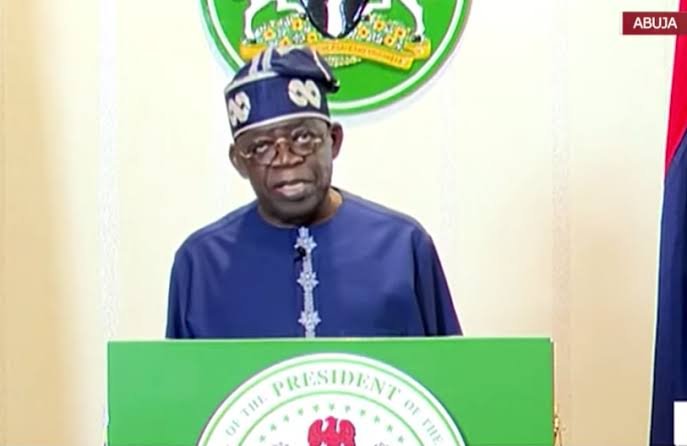
Even President Tinubu was recently reported to have opted for off-grid solutions at his residence due to high electricity costs. If the President of the Federal Republic cannot rely on the national grid, what hope is there for the rest of us?
There is one development that offers a sliver of hope, though it also exposes the depth of our federal dysfunction. In Enugu State, the state electricity regulatory commission recently slashed tariffs for Band A customers to ₦160 per kilowatt-hour – far below the national average of ₦208 per kilowatt-hour. The decision, hailed by some as a step toward localised energy autonomy, has thrown into sharp relief the question of why Nigerians in different states pay such different prices for the same unreliable service.
The Electricity Act 2023 devolved power sector regulation to the states, allowing sub-national entities to determine tariffs independently. Seven states – Enugu, Ondo, Ekiti, Imo, Oyo, Edo, and Kogi – have now assumed regulatory control, with Lagos, Ogun, Niger, and Plateau set to complete their transitions. This fragmentation may eventually lead to a more competitive and responsive power market. But for now, it creates a patchwork of inconsistent policies and highlights the federal government’s failure to provide a coherent national solution.
The Lagos State Government says it’s building a 132kV transmission line to boost electricity in Lekki, Epe, and Ajah. They’ve held stakeholder meetings and promised compensation for affected properties. The line will run from Ajah to Eleko Junction, and a gas pipeline is also planned. But here’s the problem: no timeline. No interim relief. No transparency. We’ve heard promises before. What we need is light, not press releases.
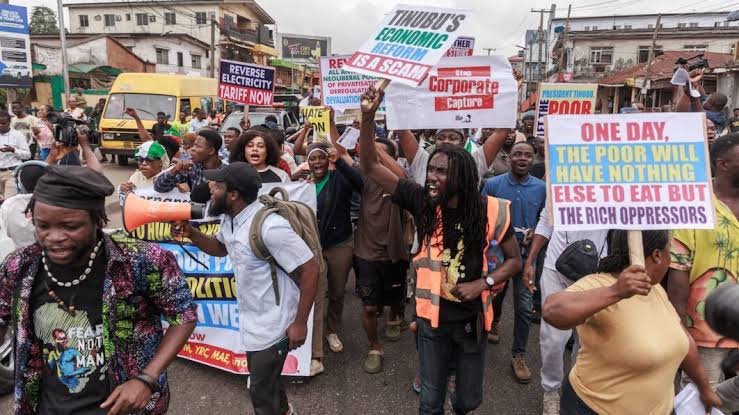
It bothers me. It bothers everyone in my estate, everyone in the shacks down the road, everyone sweating through the humid Lagos nights. But we are too tired, too worn down by the sheer friction of surviving in Nigeria to know what to do anymore. We have been systematically conditioned in this country to accept everything, to swallow our rage, and to learn early in life that silence is the safest currency. At most, we retreat to social media to create caustic, self-deprecating jokes about our suffering, mistaking our dark humor for resilience. Memes circulate. Comedy skits flourish.
But beneath the jokes is exhaustion. A quiet acceptance that things simply do not work.
In reality, it is the coping mechanism of a traumatized hostage. Because of this failure, our meager incomes and heavily depleted resources are incinerated daily just to supply what a functioning government exists to provide. We buy imported generators, we buy premium motor spirit at heart-stopping black-market rates, we take predatory loans to install solar panels. Every citizen has been forced to become their own local government, paving their own roads, pumping their own water, and generating their own light.
Over time, a population can become conditioned to endure what should provoke outrage. We learn to shrug. We learn to improvise. We learn to move on. Our generators become our electricity companies. Our inverters become our national grid. Our private spending replaces public service. And somewhere along the way, expectations fall. It is difficult to demand accountability when people are already struggling just to maintain normal life.
Many residents quietly ask a deeper political question: if leaders truly feared the consequences of failing citizens, would the situation persist like this?
Democracies are supposed to operate on a simple principle: governments respond to voters. When citizens feel their voices matter, infrastructure tends to improve. Politicians worry about the next election. They worry about angry constituents. They worry about losing power.
But when that connection weakens – when elections feel distant from everyday accountability – governance can drift. People begin to believe their suffering has no audience.
This brings us to the root of the rot, the unspoken truth that lingers in the exhaust fumes of our generators. I wanted to say that we are wasting our resources doing the job of a government we elected, but I cannot bring myself to say that, because we didn’t. And that is the crux of the matter. If they were a government born of the genuine, unmanipulated will of the people, they would have acted differently. A government that owes its existence to the ballot box lives in perpetual, healthy fear of the electorate. They would have been terrified of our response at the next poll; they would have moved heaven and earth to keep the lights on, knowing that darkness breeds electoral defeat.
But we didn’t elect them, and they know we didn’t, and that is precisely why they do not care. When power is secured through the courts, through technicalities, or through the militarized suppression of the vote, the social contract is nullified. They do not owe us light because they do not need our votes.
This is the uncomfortable truth that underpins all the technical explanations, all the tariff adjustments, all the promises of reform. We are citizens in name only. Our consumption does not translate into influence. Our suffering does not translate into political consequence. We are voiceless consumers in a system designed to extract from us without being accountable to us.
The power sector, for all its complexity, is ultimately a mirror of our larger national dysfunction. It reflects a government that makes decisions without consultation, that groups and categorizes without consent, that extracts payment without delivering service. It reflects a political class that has learned to manage our expectations rather than meet our needs, to offer explanations rather than results, to promise tomorrow what should have been delivered yesterday.
So we sit here in Abijo GRA, listening to the deafening, synchronized roar of a thousand generators echoing into the night. It is the soundtrack of a people who have been abandoned by their state. We are paying the ultimate price for our political docility – financing our own survival in a country that treats its citizens not as the owners of the republic, but as tenants who are permanently in arrears.
I don’t pretend to have solutions. I am not an engineer or an economist or a policy expert. I am just a resident of Abijo GRA, sitting in the dark, listening to the hum of my neighbour’s generator and wondering when – if ever – things will change.
But I know this much: the current system cannot continue. Not because it will collapse – these things have a way of limping along indefinitely – but because it is slowly killing us. Killing our businesses. Killing our dreams. Killing our faith in the possibility of a better Nigeria.
We need more than tariff adjustments. We need more than band reclassifications. We need a fundamental reimagining of how power is produced, distributed, and paid for in this country. We need transmission infrastructure that doesn’t collapse at the first sign of stress. We need distribution companies that actually distribute – fairly, reliably, transparently. We need generation companies that can generate without being strangled by debt and gas shortages.
We need an immediate audit of Band classifications. Are they real? Are they enforced? We need public disclosure of feeder maps and supply schedules. Let people know what to expect. We need compensation for zero-supply zones. If you don’t get light, you shouldn’t pay. We need accountability for PHCN and NERC. Who monitors them? Who penalizes failure? We need fast-tracking of infrastructure projects with community oversight. No more vague promises.
But most of all, we need a government that remembers we exist. That remembers, when it makes decisions in Abuja, that there are real people living in real darkness in Abijo GRA and a thousand other communities across this country. That remembers that electricity is not a luxury or a commodity to be traded, but the basic currency of modern life – the thing that powers hospitals and schools and businesses and homes. It powers education. It powers business. It powers healthcare. It powers security. Without reliable electricity, modern urban life becomes a daily improvisation.
We are too tired to protest. Too tired to march. Too tired to do anything except joke bitterly about our situation and pray that somehow, someday, the lights will come on and stay on.
But tired as we are, we are still here. Still waiting. Still hoping.
The question is: how much longer must we wait in the dark?
Until we realize that the darkness in our living rooms is directly connected to the darkness of our electoral process, we will continue to pay Band A prices for a Band Z reality.
So the question many of us quietly ask each night is simple. Not political. Not technical. Just human.
What exactly has happened to our light?
This article is based on personal observations and experiences in Abijo GRA axis, Lagos, supplemented by official data and reports from the Nigerian Electricity Regulatory Commission, the Transmission Company of Nigeria, and various news sources. The views expressed are those of the author.