By Dipo Kehinde
There is a sound that has come to define political moments of rupture: loud, incessant, impossible to ignore. In football stadiums, it was the vuvuzela. In global politics today, that noise is Venezuela.
Once again, the South American nation has become a blaring horn in world affairs, not because it is the most powerful state, but because its crisis amplifies everything wrong with the current international order. Venezuela is no longer just a country in distress; it is a signal flare, a warning siren, and a geopolitical vuvuzela whose sound is forcing the world to look, listen, and choose sides.
For over a decade, Venezuela’s troubles have been treated as background noise, a sad but distant hum of hyperinflation, migration, sanctions, and political paralysis. Yet today, that hum has become deafening.
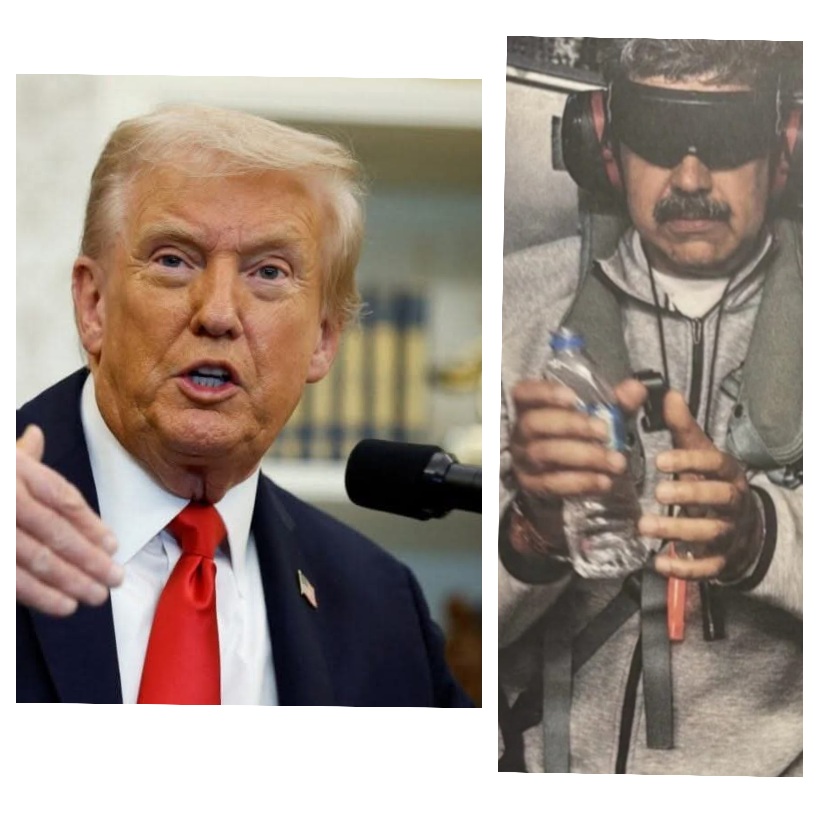
The confrontation between the government of Nicolás Maduro and Western powers, particularly the United States under Donald Trump, has pushed the crisis from regional tragedy to global test case.
This is no longer just about democracy versus authoritarianism, or socialism versus capitalism. It is about sovereignty, intervention, and who gets to decide when a nation has failed badly enough to be forcibly “corrected.”
Venezuela’s vuvuzela is loud because international rules are increasingly quiet. The norms that once governed state behaviour: respect for borders, multilateral decision-making, and proportional response, are being drowned out by unilateral action and megaphone diplomacy.
Sanctions replace dialogue. Threats substitute for treaties. Moral outrage is weaponised, while humanitarian concern becomes selectively applied. The result is a global arena where power speaks louder than principle, and Venezuela has become the amplifier.
What makes this moment dangerous is not just what is happening to Venezuela, but what is being normalised through it. If regime change can be justified by moral assertion alone, then no state, especially in the Global South, is truly secure.
Historically, Latin America has often been treated less as a collection of sovereign actors and more as a stage for ideological contest. Venezuela fits this tragic script perfectly. To Washington, it is a symbol, proof that socialism fails. To rival powers, it is leverage, evidence of American hypocrisy. To neighbours, it is a pressure valve, exporting refugees, instability, and fear.
Lost in this noise are ordinary Venezuelans, whose lives have been reduced to talking points in speeches made thousands of miles away. Their suffering is real, but it is also instrumentalised, amplified when useful, ignored when inconvenient.
For African countries, Venezuela’s vuvuzela should sound uncomfortably familiar. Weak institutions, contested elections, economic distress, and foreign interest are not uniquely Venezuelan problems.
The lesson is stark: when internal crises deepen and legitimacy erodes, external actors do not arrive quietly now. They come loudly, selectively, and often with their own agendas.
Today it is Venezuela. Tomorrow, it could be any strategically useful state with oil, gas, minerals, or geography.
None of this is an argument for ignoring Venezuela’s governance failures or romanticising incompetence. Accountability matters. Democracy matters. Human rights matter. But so does consistency. So does international law. And so does the dangerous precedent of replacing diplomacy with decibel-level coercion.
The world does not need louder vuvuzelas. It needs better referees, clearer rules, and the courage to apply them evenly.
Until then, Venezuela will keep blowing its horn, not because it wants attention, but because the world has made crisis the loudest language it understands.