The United States government imposed targeted economic sanctions against Cuba’s state-owned lender, Banco Internacional de Comercio S.A. (BICSA), on Thursday, October 15, 2026, citing its deep-running financial ties with Iran’s Karafarin Bank.
The penal measures, rolled out simultaneously by the U.S. Department of the Treasury’s Office of Foreign Assets Control (OFAC) in Washington, D.C., and the U.S. Department of State, form part of a broader push termed Operation Economic Outcast aimed at dismantling Iranian shadow banking architecture and offshore networks.
According to U.S. officials, Havana-based BICSA has provided commercial and financial services to Tehran’s Karafarin Bank since at least 2022. Karafarin Bank has been under U.S. sanctions since 2020 for its role in sustaining Iran’s financial sector amidst global trade restrictions.
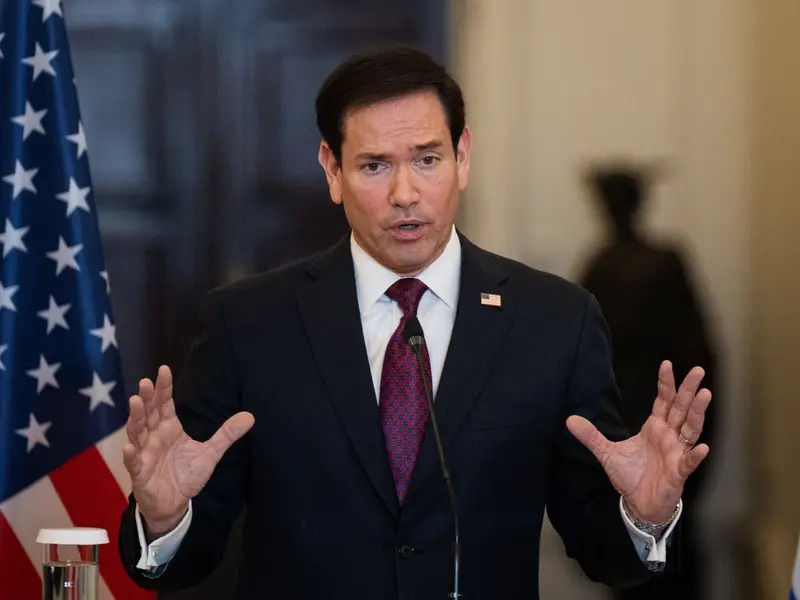
U.S. Secretary of State Marco Rubio highlighted the strategic imperative of blocking foreign adversaries from operating within proximity to American territorial waters.
”Cuba’s Banco Internacional de Comercio S.A. (BICSA) has provided services to the designated Iran’s Karafarin Bank since at least 2022,” said U.S. Secretary of State Marco Rubio in an official press statement released on Thursday in Washington, D.C. “For too long, Communist Cuba has been allowed to operate as an outpost for malign actors and terror groups, including the Islamic Republic of Iran, the world’s number one state sponsor of terrorism… to target the United States.”
Rubio added that the administration would “aggressively” dismantle financial and military linkages between Havana, Tehran, and other foreign state actors designated as adversaries.
The State Department designated BICSA under Executive Order 14404 for operating within the financial services sector of the Cuban economy, while Treasury actions targeted underlying Iranian financial conduits under Executive Order 13902.
Under the imposed sanctions, all property and interests in property of BICSA located within the United States or in the possession of U.S. persons are frozen. Additionally, foreign institutions doing business with BICSA risk secondary sanctions and exclusion from the U.S. financial system.
Responding directly from Havana via a statement issued on social media platform X on Thursday afternoon, Cuban Foreign Minister Bruno Rodríguez Parrilla rejected the U.S. designations, labeling the move an aggressive escalation.
”BICSA is an absolutely legitimate bank whose transactions in Cuba and around the world are also absolutely legitimate,” stated Cuban Foreign Minister Bruno Rodríguez Parrilla. “It demonstrates a criminal determination to impose maximum collective punishment on the Cuban people and ‘shut off every valve’ for the Cuban economy.”
The latest measures underscore intensifying geopolitical friction between Washington, Havana, and Tehran. Economic analysts note that cutting off offshore access points like BICSA aims to restrict foreign currency lifelines supporting the Cuban financial infrastructure while disrupting Iran’s capability to evade global trade restrictions through complex foreign front structures.