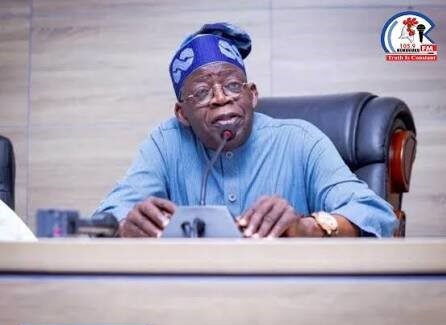
President Bola Ahmed Tinubu has strongly condemned the ongoing exclusion of Africa from the permanent category of the United Nations Security Council (UNSC), calling the historic imbalance an “unacceptable injustice” that undermines global peace and governance.
Speaking ahead of Nigeria’s diplomatic push at the upcoming United Nations General Assembly, President Tinubu emphasized that Africa’s population and geopolitical weight mean it can no longer be treated as a secondary player in global security decisions.
Under the administration’s current foreign policy push, Nigeria has intensified its demands for the continent to be granted at least two permanent seats, complete with full veto-wielding authority.
The Nigerian administration argued that the current architecture of the UNSC reflects an outdated post-World War II landscape that does not match contemporary geopolitical realities.
”It is time for Africa to occupy permanent seats on the UN Security Council, with all attendant privileges, including the veto,” President Tinubu stated. “Genuine text-based negotiations must now commence to right this historical wrong.
“Supporting this stance, Nigeria’s diplomatic envoys noted that Africa represents more than 25% of the world’s population, yet remains entirely unrepresented in the council’s permanent chamber.
Nigeria rejects any proposal for permanent African seats that do not include the same veto powers held by the current P5 members (the US, UK, France, Russia, and China). The administration’s position aligns strictly with the African Union’s unified framework, which demands two permanent seats and five non-permanent seats for the continent.
Tinubu maintains that the global community cannot successfully resolve conflicts across Africa without giving African nations a decisive, permanent vote at the highest table of global security governance.
Diplomatic sources indicate that Nigeria is rallying fellow African nations and international allies to turn these long-standing grievances into an active, text-based negotiation framework before the United Nations reaches its landmark 80th anniversary.