In a historic move toward global cartographic equity, Nigeria joined 163 other United Nations member states on Friday, September 4, 2026, to endorse a landmark UN General Assembly resolution calling for an end to centuries of map distortions that artificially shrink the African continent.
The resolution, titled “Correct the Map: Rebalancing global cartographic representation and promoting equitable representation of the world’s regions, particularly Africa,” passed overwhelmingly with 164 votes in favor.
Sponsored by Togo on behalf of the African Group and strongly endorsed by the African Union, the resolution encourages governments, educational institutions, tech companies, and media organizations worldwide to abandon the traditional 1569 Mercator projection in favor of equal-area models, notably the 2018 Equal Earth projection. The vote took place at the UN Headquarters in New York.
Out of the 171 participating nations, 164 voted in favor, six abstained (Serbia, Estonia, Georgia, Lithuania, Moldova, and Ukraine), and the United States cast the sole opposing vote. For over 450 years, the Mercator projection, developed by Flemish cartographer Gerardus Mercator to assist maritime navigation, has served as the dominant visual standard in classrooms and digital mapping tools globally.
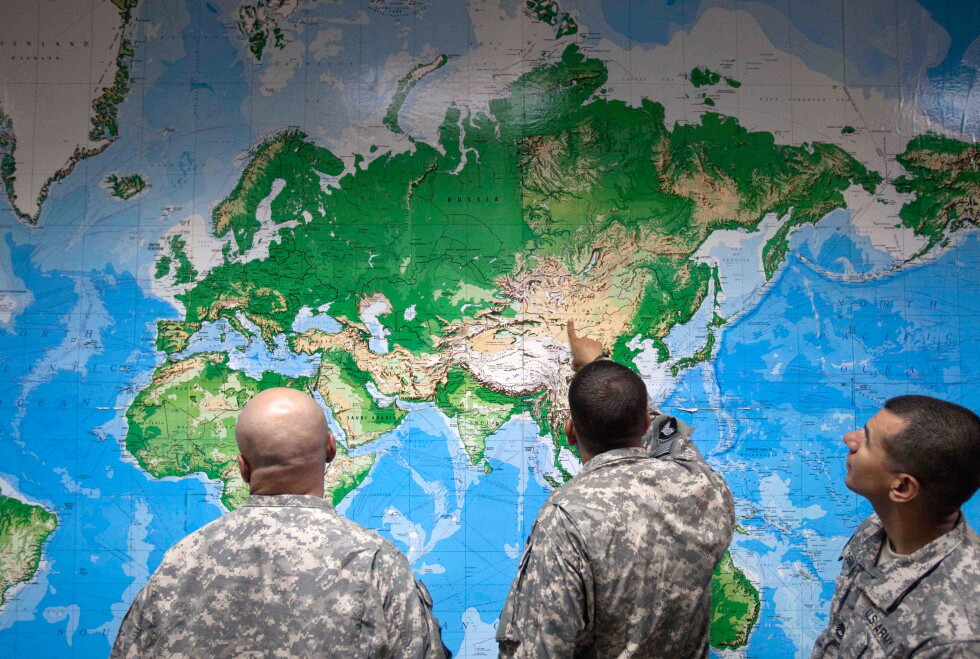
However, because the Mercator model flattens the globe onto a cylinder, it severely inflates landmasses closer to the poles while shrinking regions near the equator. As a result, maps built on the Mercator projection portray Africa as roughly equal in size to Greenland, despite Africa’s actual landmass (over 30 million square kilometers) being 14 times larger.
Speaking at the podium inside the UN General Assembly Hall following the vote, Togolese Foreign Minister Robert Dussey, who led negotiations for the draft, framed the decision as a necessary step for cultural and educational justice. Robert Dussey (Minister for Foreign Affairs, Togo): “Maps shape our understanding of the world.
They guide education, nourish the imagination, and influence collective perceptions. A fair map does not change the geography of the world; it changes how we see the world.” Jean-Noël Barrot (Foreign Minister, France): Announcing France’s support for the transition away from Mercator, Barrot stated: “Changing the map obviously doesn’t change the world.
But correcting a representation that distorts it is already an act of truth.” Yaryna Ferencevych (Deputy U.S. Representative to the UN Economic and Social Council): Explaining the United States’ solitary vote against the measure, Ferencevych argued: “Resolutions like this, and the ideological agenda they promote, are barnacles on our work here and the reason this institution is losing its credibility.”
Though the resolution is non-binding, advocates expect it to exert significant pressure on major textbook publishers and global technology giants to adjust default map settings. Togo announced that it will host an implementation summit in Lomé alongside UNESCO, the African Union, and major tech platforms like Google Maps early next year to begin standardising equal-area cartography across digital and educational systems.