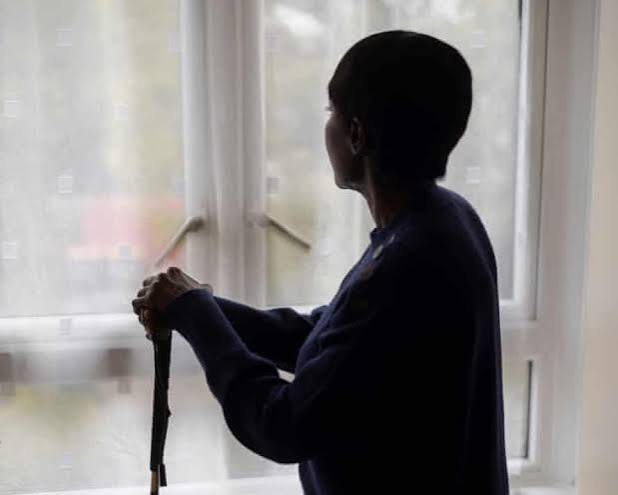
The United Kingdom Home Office has been forced to issue a corrected decision letter after erroneously advising a 67-year-old blind Nigerian pensioner, who has resided in Britain for 26 years, that she could travel to India for medical treatment, a country she has never visited and holds no ties to.
The administrative blunder came to light following an investigation published by The Guardian on Saturday, November 14, 2026, at 06:00 GMT, sparking sharp criticism from migrant rights advocates over the British government’s sweeping new permanent residency reforms.
The pensioner, identified under the pseudonym “Comfort” to protect her privacy, arrived in the United Kingdom from Nigeria in 2000. Shortly after her arrival, she lost her sight after developing acute glaucoma.
After living in the country for more than two decades, Comfort was granted permission to remain in Britain in 2022 under the Home Office’s long-residence immigration route. Under existing rules, migrants on this pathway are required to renew their visas every 30 months over a 10-year period before becoming eligible to apply for indefinite leave to remain (ILR), which grants permanent residency.
However, under the government’s newly introduced “Earned Settlement” framework unveiled by Home Secretary Shabana Mahmood, Comfort faces a drastically extended timeline.
While the revised policy increases the standard qualifying period from five to 10 years, certain categories of applicants face significantly longer waits, meaning Comfort could be required to wait nearly 20 additional years, leaving her in her late 80s before qualifying for permanent settlement.
Given her advanced age and visual impairment, legal representatives from the charity Migrant and Refugee Justice (also operating alongside the Refugee and Migrant Forum of Essex and Greater London) submitted an application to the Home Office requesting that Comfort be granted immediate indefinite leave to remain under exceptional circumstances provisions.
The Home Office rejected the fast-track request. In the official refusal letter, officials stated that services for blind people were available in Nigeria and added, in an apparent copy-and-paste error from another applicant’s file, that her circumstances did not demonstrate a lack of medical treatment in India to justify granting settlement.
Speaking from her home in the UK, Comfort expressed bewilderment and distress over the rejection and the geographical mix-up:
”I don’t know why the Home Office said I could go back to India. It’s a country I have never visited and have no connection with. In 2022, I got my permission to stay here based on long residence in the UK. I’m very disheartened that I may now need to wait nearly 20 years to get indefinite leave to remain. I have been living in this country for 26 years. I have found my home here and settled well. I have my friends, my church and do voluntary work.”
Nick Beales, Head of Campaigning at Migrant and Refugee Justice, condemned the decision and questioned the rationale behind subjecting elderly, disabled long-term residents to repeated visa renewals.
Beales emphasized that Comfort is blind, in her late 60s, and has called Britain home for more than a quarter of a century, arguing that there is no public interest served by denying her permanent security.
The incident has intensified scrutiny of Home Secretary Shabana Mahmood’s overhaul of the UK’s settlement rules, which government estimates suggest could lengthen the path to permanent residency for more than 500,000 migrants.
Data previously obtained by Migrant and Refugee Justice through a Freedom of Information (FOI) request revealed that the revised rules could push eligibility past life expectancy for vulnerable elderly applicants, including the documented case of a 103-year-old Pakistani woman who would not qualify for settlement until the age of 123.
Following media inquiries from journalists, Home Office sources confirmed that corrective action was underway to rescind the erroneous reference to India and issue Comfort with an amended decision letter.
In an official statement released in London, a Home Office spokesperson declined to discuss specifics of the blunder while defending the department’s broader assessment procedures:
”We do not routinely comment on individual cases. All applications for permission to stay in the UK are carefully considered on their individual merits, in line with the immigration rules and based on the information and evidence provided by the applicant.”