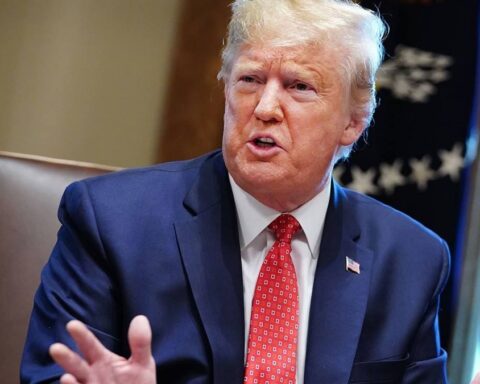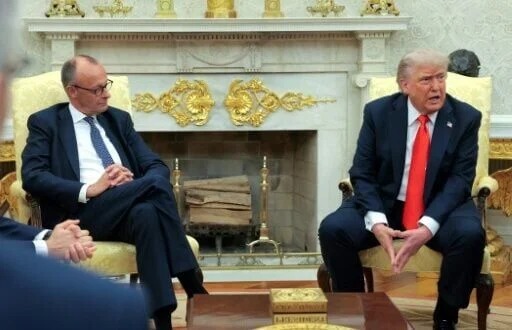
United States President Donald Trump on Tuesday received Germany’s Friedrich Merz at the White House for his first meeting with a foreign leader since Washington joined Israel in military strikes against Iran, a move that has plunged the Middle East deeper into conflict.
The long-planned talks between Trump and the German leader were initially expected to centre on the war in Ukraine and strained trade relations between the European Union and the United States. Both sides had signalled a desire to stabilise transatlantic ties amid lingering disagreements over tariffs, defence spending and support for Kyiv.
However, the escalating crisis in the Middle East quickly overshadowed those issues.
Trump’s recent indication that American airstrikes on Iran could continue for weeks has dramatically shifted the global diplomatic agenda. Tehran has responded with retaliatory attacks targeting US bases and allied interests across the region, heightening fears of a broader regional war.
Merz, who has been openly critical of Iran’s leadership, struck a firm tone against Tehran during his visit. He said Germany shared the Iranian people’s “relief” that what he described as the “mullah regime is coming to an end.” His remarks signalled Berlin’s hardening posture toward the Islamic Republic, even as Europe attempts to navigate a delicate diplomatic path.
At the same time, the German leader stopped short of openly endorsing the legality of the strikes carried out by the United States and Israel. Merz said he would not “lecture” Washington or Jerusalem on the issue, carefully balancing solidarity with key allies while avoiding a deeper entanglement in the conflict.
Germany, alongside France and Britain, has stated that it would provide only “defensive action” to assist Gulf allies if required, declining to participate in offensive operations against Iran. The stance has drawn criticism from some US officials, who described the European position as “soft” in response to the American-led campaign dubbed “Operation Epic Fury.”
The criticism risks complicating Merz’s efforts to maintain unity with Washington at a time when the transatlantic alliance faces multiple pressures, from Russia’s ongoing war in Ukraine to disputes over trade and energy security.
Despite the tensions, both leaders emphasised the importance of continued cooperation between Washington and Berlin. Analysts say the meeting underscores how rapidly shifting geopolitical crises can reshape diplomatic priorities, with the Middle East now dominating discussions that were once focused squarely on Europe’s eastern flank and economic ties across the Atlantic.