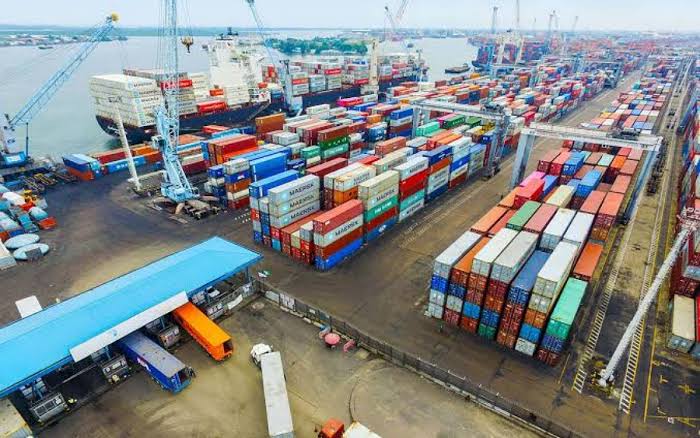
Truck operators along the Tin Can Island Port corridor in Lagos have raised an alarm over illegal multiple levies amounting to N50,000 per container, warning that the extortion is destroying haulage margins and sabotaging Federal Government efforts to boost non-oil exports.
Addressing an emergency press briefing on Sunday, November 1, 2026, in Lagos, the Chairman of the Amalgamation of Container Truck Owners Association of Nigeria (ACTOAN), Ridwan Bello, revealed that operators are losing between 20 to 25 percent of their profit margins per trip to unapproved charges imposed by port officials, security agents, and terminal operators.
Detailing the breakdown of extortion across the corridor, Bello explained that drivers transporting export-laden containers face systematic shakedowns despite holding valid electronic call-up documentation.
At the Customs clearance gate, truckers with properly documented export containers are allegedly forced to pay N15,000 to officials before being permitted to drop off cargo. Drivers who refuse or delay payment face physical harassment and risk having their trucks clamped by Nigerian Ports Authority (NPA) agents under the guise of non-compliance.
Furthermore, terminal operators levy additional offloading fees of up to N10,000 per container, while cumulative corridor tolls, unauthorized manifest demands, and gate clearance fees push the total extra cost to N50,000 per container.
Bello criticized the introduction of manual physical manifest checks along the corridor, questioning why paper documentation is being prioritized over the electronic call-up system (Eto) introduced to eliminate human interference and streamline port access.
He noted that while the country recorded over $6.1 billion in non-oil export earnings recently, local haulage operators are being driven into bankruptcy by corrupt practices along the port access routes.
ACTOAN called on the Federal Ministry of Marine and Blue Economy, the Nigerian Ports Authority, and the Nigeria Customs Service to launch an immediate investigation into the charges, dismantle unauthorized checkpoints along the Tin Can corridor, and enforce strict compliance with the electronic call-up process.
Truck owners warned that if government agencies fail to intervene swiftly, the continuous financial drain will force haulage firms out of business and severely cripple Nigeria’s broader non-oil export ambitions.