Senior Special Assistant to the President on Media and Publicity, Tope Ajayi, has criticised leaders of the African Democratic Congress (ADC) over the internal crisis rocking the opposition party, faulting their attacks on the Chairman of the Independent National Electoral Commission (INEC), Professor Joash Amupitan.
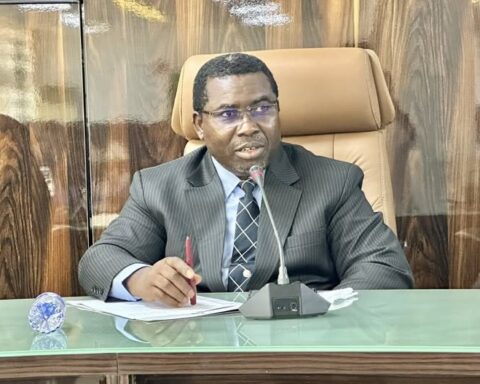
Ajayi, in two posts on his verified X handle, dismissed calls by ADC leaders for the resignation of the INEC chairman, insisting that Professor Amupitan, a legal scholar and Senior Advocate of Nigeria (SAN), is well grounded in the interpretation of the law and court judgments.
According to Ajayi, it was misguided for opposition figures to suggest that the INEC chairman lacked the capacity to properly interpret legal principles, stressing that such claims were politically motivated and not based on facts.
He specifically criticised prominent opposition figures, including former Senate President, David Mark, former Anambra State Governor, Peter Obi, former Osun State Governor, Rauf Aregbesola, and former Minister of Sports, Bolaji Abdullahi, for questioning the competence and neutrality of the INEC chairman.
Ajayi argued that Professor Amupitan’s background as a Senior Advocate of Nigeria and legal scholar places him in a strong position to understand complex legal issues, court rulings, and electoral laws, adding that public criticism of his professional competence was unfair and unnecessary.
The presidential aide also suggested that the internal crisis within the ADC should not be turned into an attack on public institutions, warning that dragging INEC into partisan disputes could undermine public confidence in the electoral body.
The controversy comes amid an ongoing internal crisis within the ADC, which has seen factions within the party disagree over leadership and legal interpretations of party decisions and court rulings affecting its structure.
Some ADC leaders had reportedly called for the resignation of the INEC chairman, accusing the electoral body of taking positions that allegedly favoured certain political interests. However, Ajayi maintained that INEC, as an independent institution, must be allowed to carry out its responsibilities without political pressure or intimidation.
He emphasized that disagreements within political parties should be resolved internally or through the courts, rather than through public attacks on institutions responsible for managing elections.
Political analysts say the exchange highlights rising political tension ahead of future elections, as political parties begin to reposition themselves and resolve internal disputes.
Observers also note that public confidence in INEC remains a critical factor in Nigeria’s democratic process, particularly as the country prepares for future electoral cycles. Any perception of bias or political interference in the electoral body could affect voter confidence and participation.
Ajayi concluded by urging political leaders to exercise restraint in their public statements and to avoid making comments that could weaken democratic institutions. He reiterated that criticism should be constructive and based on facts, not political frustration.
The development has further drawn attention to the internal challenges facing opposition parties and the growing political debates surrounding electoral administration, party leadership disputes, and the role of institutions like INEC in maintaining Nigeria’s democracy.
As political activities gradually intensify ahead of the next election cycle, analysts believe that relationships between political parties, electoral authorities, and government officials will continue to shape the political landscape, with debates over neutrality, legality, and institutional independence likely to remain at the center of national discourse.