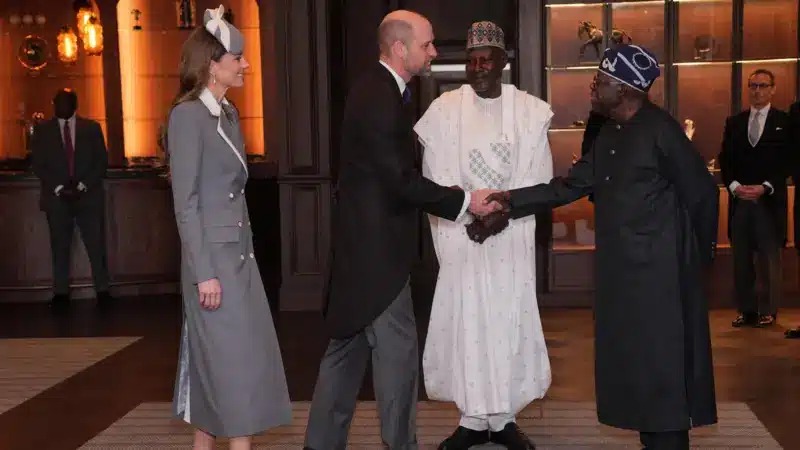
The ambassador-designate of Nigeria to the United Nations, Jimoh Ibrahim, has praised President Bola Tinubu over his recent visit to the United Kingdom, describing the trip as timely and strategically important for Nigeria’s global standing.
In a statement issued in Abuja on Sunday, the Ondo South senator said the visit came at a time when global alliances are shifting and countries are repositioning themselves to protect their economic and security interests. According to him, Nigeria must remain active and visible in international diplomacy to protect its national interests and strengthen its partnerships with other nations.
Jimoh Ibrahim noted that President Tinubu’s meeting with Charles III reflected the longstanding historical relationship between Nigeria and the United Kingdom. He explained that both countries share deep ties in areas such as trade, education, diplomacy, and security cooperation, which have developed over many decades.
He said the visit would help strengthen cooperation between Nigeria and the United Kingdom, particularly in the areas of trade, investment, security, education, and technology. He added that stronger economic cooperation between the two countries could open more opportunities for Nigerian businesses and investors, while also attracting foreign investment into Nigeria.
According to Ibrahim, President Tinubu has demonstrated that Nigeria can engage effectively across geopolitical divides by maintaining strong historical alliances while also pursuing modern national priorities. He said this approach is important in a rapidly changing world where countries are forming new alliances based on economic interests, security cooperation, and technological advancement.
He further explained that Nigeria, as Africa’s most populous country and one of its largest economies, must continue to play an active role in global affairs, especially at institutions like the United Nations where major international decisions are made. He said Nigeria’s voice must be heard on global issues such as security, climate change, economic development, and peacekeeping.
The ambassador-designate also stressed the importance of diplomacy in addressing Nigeria’s internal security challenges, noting that international cooperation can help Nigeria in intelligence sharing, counter-terrorism efforts, and military training. He said partnerships with countries like the United Kingdom can support Nigeria’s efforts to combat terrorism, banditry, and other security threats.
Political analysts say the UK visit is part of Nigeria’s broader foreign policy strategy aimed at strengthening economic diplomacy and attracting foreign investors. They note that in recent years, Nigeria has been working to improve its business environment, infrastructure, and security in order to attract more international partners.
The meeting between President Tinubu and King Charles III is seen as symbolic as well as strategic, highlighting the enduring diplomatic relationship between both nations. Observers say such high-level engagements often lead to bilateral agreements, investment partnerships, and cooperation in critical sectors.
Jimoh Ibrahim concluded by saying that Nigeria must continue to engage actively on the global stage, build strategic partnerships, and ensure that its foreign policy supports national development goals. He expressed confidence that President Tinubu’s diplomatic efforts would yield positive results for Nigeria in the areas of economic growth, security cooperation, and international influence.
As Nigeria continues to navigate a complex global political and economic environment, the ambassador-designate’s remarks underscore the importance of diplomacy, international cooperation, and strategic partnerships in achieving national development and global relevance.