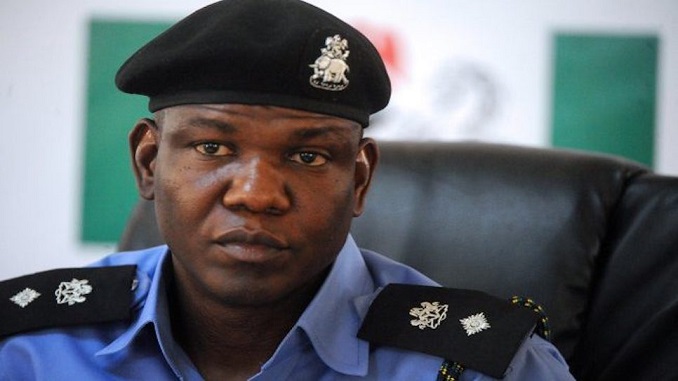
Speculation that President Bola Ahmed Tinubu had stepped in behind the scenes to shield some senior police officers from retirement has effectively collapsed following the quiet exit of Deputy Inspector-General of Police Frank Mba and several other high-ranking officials from the Nigeria Police Force.
The retirement wave comes amid a dramatic shift in the leadership structure of the force triggered by the departure of former Inspector-General of Police Kayode Egbetokun and the emergence of Tunji Disu as the new police chief.
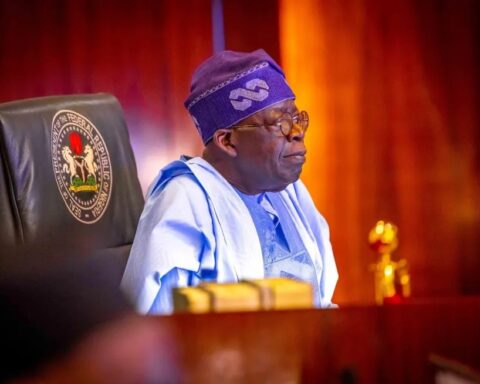
For weeks, insiders in security and political circles had speculated that the presidency might intervene to extend the tenure of some senior officers affected by the leadership transition, particularly those approaching the statutory retirement threshold or considered influential within the force.
Such presidential interventions are not unprecedented in Nigeria’s security architecture, where political considerations, operational continuity, and internal power balancing have sometimes influenced the fate of top-ranking officers.
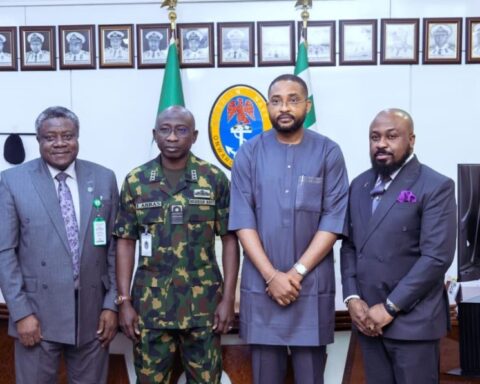
But Mba’s retirement after more than three decades in service, alongside other senior officers, suggests the anticipated reprieve never materialised, clearing the path for a new command structure under the leadership of Disu.
End of a High-Profile Career
Before his retirement, Mba served in the Department of Training and Development at Force Headquarters.
His exit after 34 years of service brings to a close a career widely regarded by colleagues and observers as one of the most intellectually distinguished within the modern Nigerian police hierarchy.
Mba joined the force in May 1992 as a cadet officer and graduated from the Nigeria Police Academy in Kano as the best cadet in academics, an early signal of the professional path that would define his career.
Over the years, he occupied several strategic operational and administrative roles across the country.
He served as Commissioner of Police in Ogun State, Commissioner of Police in charge of the Border Patrol Force at Force Headquarters, and held operational commands including Area Commander in Ajah and Festac, Lagos.
Beyond domestic assignments, Mba also represented Nigeria in global security operations, serving in the United Nations peacekeeping mission in Liberia between 2006 and 2007.
Scholar in Uniform
In addition to his policing credentials, Mba built an impressive academic profile.
A trained lawyer, he obtained a law degree from the University of Lagos and was called to the Nigerian Bar in 2002 after attending the Nigerian Law School in Abuja.
He later earned a Master’s degree in Law with distinction from the University of Dundee in Scotland.
His professional development also took him to some of the world’s most respected institutions, including the FBI National Academy in Quantico, as well as executive programmes at Harvard University and the University of Oxford.
“A Great Honour to Serve”
In his farewell message, Mba expressed gratitude to President Tinubu for the opportunity to serve under his administration.
“I am deeply grateful to President Bola Ahmed Tinubu for the privilege of serving our great nation during his administration,” he said.
“The confidence reposed in the Nigeria Police leadership and the support given to the institution during this period have been invaluable. It has been a great honour for me to contribute my quota to the security and stability of our country.”
He also thanked Nigerians for their trust throughout his policing career.
“Policing is a difficult but noble profession, and whatever success we recorded was made possible by the understanding and support of Nigerians,” he said. “I leave the service with a heart full of gratitude and pride for having had the opportunity to serve.”
Fresh Promotions on the Horizon
With Mba and other senior officers stepping aside, attention has now shifted to the next generation of police leadership.
At least seven Assistant Inspectors-General of Police are expected to appear before the Police Service Commission for interviews as part of the process for promotion to the rank of Deputy Inspector-General.
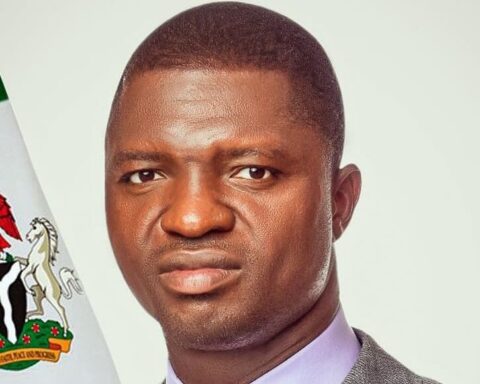
Among those tipped for elevation are Margreth Ochalla, Ekene Onwuemelie and Ishiaku Mohammed.
Their promotion would complete the emerging command architecture of the force as Inspector-General Tunji Disu begins what many observers describe as a new phase in the leadership evolution of Nigeria’s policing system.