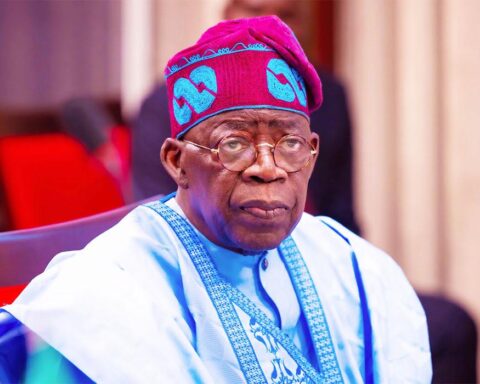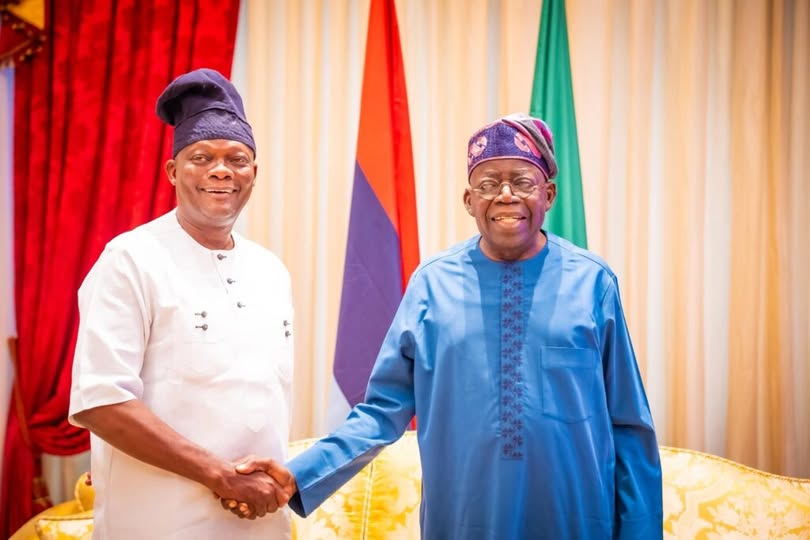
On a calm Thursday night in the upscale neighbourhood of Ikoyi, Lagos, political undercurrents quietly shifted as Bola Ahmed Tinubu hosted a prominent figure in Oyo State politics, Teslim Folarin, at his private residence.
Though the meeting was held away from the glare of cameras and public scrutiny, its implications have begun to ripple through political circles, igniting conversations about the future of the All Progressives Congress (APC) in Oyo State ahead of the 2027 governorship election.
Folarin, a seasoned politician and the APC’s governorship candidate in the 2023 general election, later confirmed the visit through a brief but telling post on his official social media platforms. While he refrained from disclosing the full details of the discussion, the mere acknowledgment of the meeting was enough to set tongues wagging among party loyalists, opposition figures, and political analysts alike.
For many observers, the timing of the meeting is far from coincidental. With the 2027 elections still some distance away, early consultations and alignments are already taking shape behind closed doors. Oyo State, a key political battleground in the South-West, remains a strategic prize for the APC, especially after the party’s loss in the 2023 gubernatorial race. The meeting between Tinubu and Folarin is therefore being interpreted as part of broader efforts to reposition the party and consolidate its chances in the next electoral cycle.
Sources familiar with the dynamics of the APC suggest that internal cohesion and candidate selection will be critical factors in determining the party’s success in Oyo. The 2023 elections exposed cracks within the party’s structure in the state, with factions and competing interests undermining a unified campaign. As such, Tinubu’s engagement with Folarin could signal a move toward reconciling differences and building a stronger, more coordinated front.
Folarin himself remains a significant political figure in Oyo State. Having served as a senator and maintained a loyal base within the APC, he is widely regarded as one of the party’s most recognizable faces in the region. His political experience, combined with his previous governorship bid, positions him as either a potential contender in 2027 or a key power broker whose support could determine the party’s eventual flagbearer.
Analysts also point to Tinubu’s long-standing reputation as a master strategist in Nigerian politics. Known for his ability to identify and nurture political talent, as well as broker alliances across diverse interests, the president’s involvement in state-level party affairs often carries significant weight. His meeting with Folarin may therefore be part of a larger blueprint aimed at strengthening the APC’s foothold not only in Oyo State but across the South-West region.
Beyond party strategy, the meeting underscores the evolving nature of political engagement in Nigeria, where informal consultations often precede formal declarations. In a system where alliances can shift rapidly, such private discussions serve as testing grounds for ideas, ambitions, and potential collaborations.
Meanwhile, opposition parties in Oyo State are keeping a close watch on developments within the APC. The ruling party in the state, which successfully retained power in 2023, is expected to mount a strong defense in 2027. However, any signs of renewed unity and strategic planning within the APC could alter the competitive landscape significantly.
For party supporters, the Tinubu-Folarin meeting offers a sense of renewed hope and direction. Many believe that early engagement by the party’s highest-ranking figure demonstrates a commitment to learning from past setbacks and preparing more effectively for future contests. Others, however, caution that meetings alone are not enough, emphasizing the need for genuine reconciliation, grassroots mobilization, and clear policy direction.
As the political clock ticks steadily toward 2027, moments like this—quiet, deliberate, and calculated—may ultimately shape the narratives that define the next chapter of Oyo State’s political history. Whether the meeting in Ikoyi marks the beginning of a strategic resurgence for the APC or simply another episode in Nigeria’s complex political theatre remains to be seen.
What is certain, however, is that the road to 2027 has already begun, and key players are wasting no time in positioning themselves for the battles ahead.