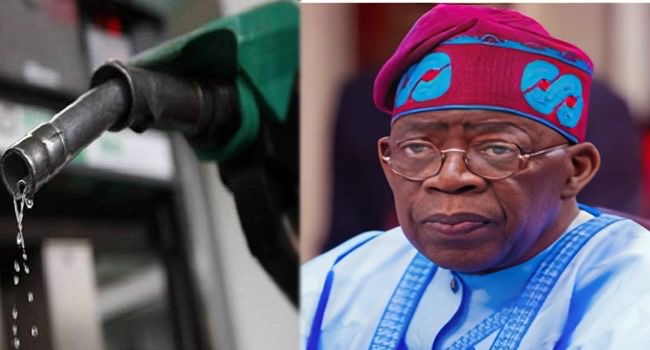
President Bola Ahmed Tinubu has once again defended his administration’s decision to scrap the decades-long fuel subsidy regime, describing it as a painful but unavoidable step to safeguard Nigeria’s economic future.
Speaking during an address in Abuja, Tinubu admitted that the removal had placed a heavy burden on ordinary Nigerians, but stressed that the country could no longer afford to sustain what he called “a system that bled the nation’s treasury and benefitted only the privileged few.”
Yes, the decision was tough. It has caused hardship for families and businesses. But continuing with the subsidy was a path to bankruptcy. Nigeria was heading towards collapse if we did not act,” the president declared.
Tinubu explained that successive administrations had grappled with the subsidy question but failed to take decisive action. He noted that while subsidized fuel prices appeared to help the masses, in reality the policy drained billions of naira each year and created avenues for fraud, smuggling, and corruption.
According to him, “Those who truly benefitted were not the poor but those who exploited the system—middlemen, smugglers, and cartels. Meanwhile, vital sectors like health, education, and infrastructure were starved of funds.”
The president said the billions saved from subsidy payments would be redirected into projects that directly impact citizens, including mass transit systems, social welfare programs, rural electrification, and investments in agriculture and manufacturing.
To ease the immediate pain, Tinubu highlighted ongoing efforts to cushion the effect on vulnerable groups. He mentioned wage awards for workers, plans for affordable transport alternatives powered by compressed natural gas (CNG), and targeted cash transfers to low-income households.
Nonetheless, he urged Nigerians to remain patient and steadfast.
The road is rough now, but it leads to a stronger, more self-reliant Nigeria. We cannot build tomorrow’s prosperity on yesterday’s failed policies,” he said.
Reactions to the president’s comments remain mixed. While some economists and financial experts have backed the decision as fiscally responsible, labour unions and civil society groups continue to criticize the government for not rolling out sufficient palliatives before implementing the subsidy removal.
For many Nigerians, the effects remain immediate—rising transport fares, higher food costs, and inflationary pressures. Yet, Tinubu insists the sacrifices being made today will lay the foundation for economic renewal, fiscal discipline, and sustainable growth.
As the debate continues, one truth remains clear: ending the subsidy has redefined Nigeria’s economic direction, and the success of the policy will ultimately depend on how effectively the promised savings are translated into visible improvements in the lives of ordinary citizens.