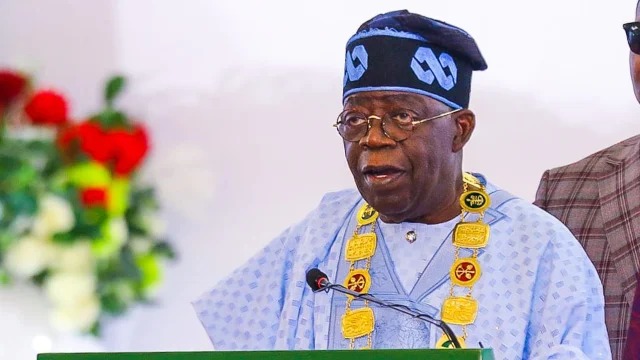
President Bola Ahmed Tinubu on Monday held a high-level security meeting with the nation’s top military and intelligence chiefs at the State House in Abuja, as concerns mount over the country’s fragile security landscape.
The meeting, which commenced at about 2:00 pm, marks the President’s first official engagement since his return to the capital from Bayelsa State on Friday. Sources within the presidency describe the session as urgent, coming at a time when Nigeria faces renewed domestic and international scrutiny over its security challenges.
In attendance were key figures at the heart of Nigeria’s security architecture, including the Chief of Defence Staff, the service chiefs of the Army, Navy, and Air Force, as well as the heads of the nation’s foremost intelligence agencies. Also present was the Inspector-General of Police, Tunji Disu, whose presence underscores the critical role of internal security coordination in the current climate.
The emergency session follows a series of troubling developments that have raised alarm both within and outside the country. Chief among them is the recent decision by the United States Embassy in Nigeria to authorise the departure of non-emergency staff from Abuja, citing security concerns. The move has sparked widespread debate and heightened anxiety, particularly among residents of the Federal Capital Territory.
Equally concerning is the fallout from a controversial military airstrike in Borno State, where reports indicate that more than 100 civilians lost their lives. The incident has drawn criticism from human rights groups and prompted calls for a thorough investigation into the circumstances surrounding the operation.
Analysts say the convergence of these developments has placed significant pressure on the Tinubu administration to act decisively. Monday’s meeting is therefore seen as a critical moment for reassessing strategy, improving coordination among security agencies, and restoring public confidence.
Inside the corridors of power, discussions are believed to be centered on intelligence-sharing gaps, operational accountability, and the need for more precise engagement in conflict zones to avoid civilian harm. There is also likely to be deliberation on how to respond diplomatically to the concerns raised by international partners while maintaining national sovereignty.
For many Nigerians, the stakes could not be higher.
In recent months, various parts of the country have grappled with security threats ranging from insurgency in the North-East to banditry and kidnapping in other regions. The situation in Borno, long considered the epicenter of insurgency-related violence, has remained particularly delicate despite years of military operations.
The reported civilian casualties from the airstrike have added a new layer of urgency, raising questions about rules of engagement and the protection of non-combatants in conflict areas.
Meanwhile, the U.S. advisory has amplified fears, even as Nigerian officials continue to reassure the public that the situation remains under control. Government insiders suggest that part of the meeting’s agenda may include strategies to counter negative perceptions and reinforce confidence in Nigeria’s security framework.
As the meeting continues behind closed doors, expectations are high that concrete measures will emerge whether in the form of policy adjustments, operational directives, or public communication strategies.
For President Tinubu, the gathering represents more than just a routine briefing; it is a test of leadership at a moment when the nation is looking for reassurance, clarity, and decisive action.
Outside the State House, the atmosphere remains tense but watchful. Nigerians await the outcome of the deliberations, hopeful that the decisions taken within those walls will translate into improved security and a renewed sense of stability across the country.