Nigeria’s Permanent Representative to the United Nations, Jimoh Ibrahim, has said that President Bola Tinubu remains firmly committed to strengthening global military partnerships and supporting reforms within the United Nations system to address emerging and evolving security challenges across the world.
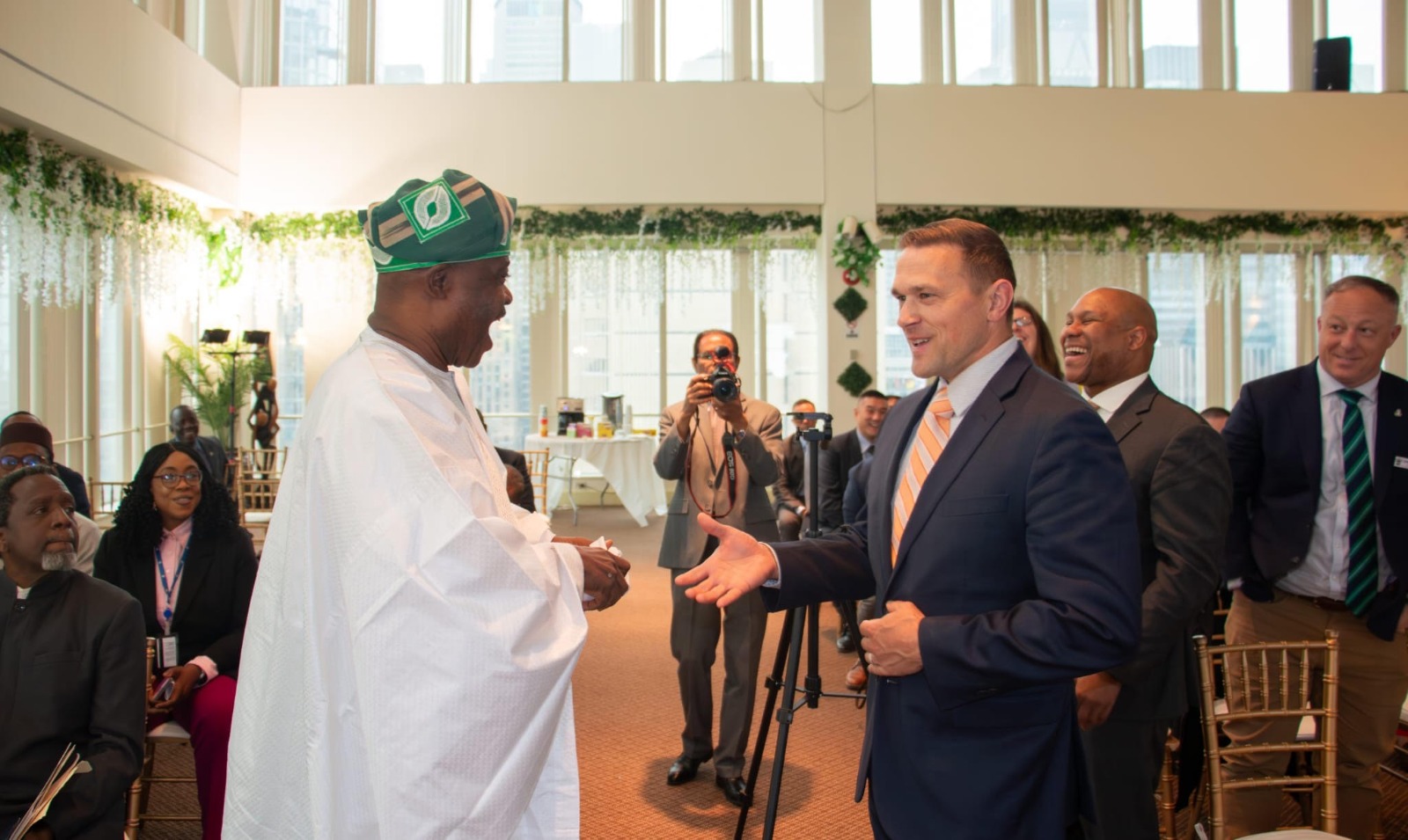
Ibrahim stated this while receiving a delegation from the United States Army War College at Nigeria’s Permanent Mission to the United Nations in New York, where discussions focused on international security cooperation, peacebuilding initiatives and diplomatic engagement among nations.
According to the envoy, Nigeria under President Tinubu continues to place strong emphasis on multilateral cooperation and strategic partnerships as part of efforts to tackle global insecurity, terrorism, regional instability and other transnational threats confronting the international community.
He explained that the President’s commitment becomes more evident through Nigeria’s active collaboration with international partners and the United Nations Security Council in promoting peacebuilding efforts and strengthening diplomatic and security frameworks across various regions.
The Nigerian envoy stressed that in an increasingly interconnected world, global security challenges require coordinated responses involving military institutions, diplomatic channels and international organisations working together toward common goals.
He noted that Nigeria has consistently demonstrated its readiness to contribute meaningfully to international peace and security efforts through peacekeeping missions, regional cooperation and diplomatic engagements under the United Nations framework.
Ibrahim also highlighted the importance of institutional collaboration between defence establishments and diplomatic bodies, saying such partnerships remain essential for sustaining global peace and stability.
“Sustained cooperation between defence and diplomatic institutions is critical to global stability,” he said during the meeting with the visiting delegation.
The envoy further explained that Nigeria recognises the need for reforms within the United Nations to enable the global body respond more effectively to emerging threats such as terrorism, cyber insecurity, armed conflicts, organised crime and humanitarian crises.
According to him, evolving security realities around the world demand stronger international institutions capable of responding swiftly and efficiently to conflicts and instability.
Observers say Nigeria’s position reflects growing calls by several countries for reforms within the United Nations system, particularly regarding the structure and operations of the UN Security Council.
Nigeria has over the years advocated greater representation for African nations in major global decision-making institutions, especially within the Security Council where permanent membership remains dominated by a few countries.
Ibrahim’s remarks also underscored Nigeria’s continuing efforts to strengthen bilateral and multilateral military relationships with strategic allies, including the United States and other international partners.
The visit by the United States Army War College delegation to Nigeria’s Permanent Mission in New York was seen as part of broader engagements aimed at promoting dialogue on defence strategy, diplomacy and international security cooperation.
The United States Army War College is widely recognised for training senior military officers and national security professionals on strategic leadership, defence policy and global security issues.
Analysts believe interactions between military institutions and diplomatic representatives are increasingly important in addressing complex modern security threats that transcend national borders.
Nigeria itself continues to confront several security challenges, including insurgency, banditry, kidnapping and communal conflicts, making international cooperation and intelligence sharing critical to national and regional security efforts.
The Federal Government has in recent years intensified collaboration with international partners in areas such as counterterrorism operations, military training, intelligence gathering and peacekeeping initiatives.
Diplomatic observers say Ibrahim’s comments reflect Nigeria’s broader foreign policy objective of positioning itself as a key player in regional peacebuilding and international security discussions.
The envoy reaffirmed Nigeria’s readiness to continue working with the international community to strengthen global peace efforts, improve diplomatic engagement and support reforms capable of making international institutions more responsive to present-day realities.
He also reiterated the importance of dialogue, cooperation and mutual respect among nations as essential tools for maintaining global stability in an increasingly uncertain security environment.
The meeting concluded with discussions centred on strategic partnerships, peacekeeping operations and the role of diplomacy in preventing conflicts and promoting sustainable international peace.