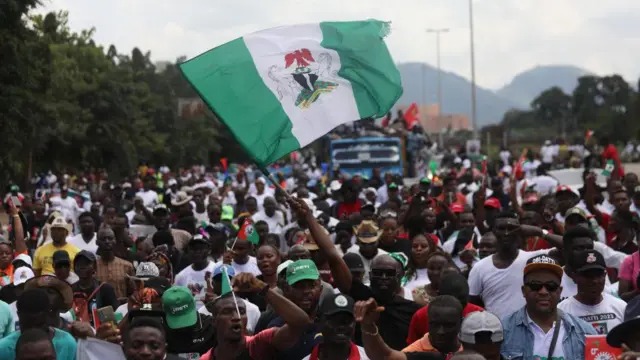
Following the kick-off of political campaigns for the 2027 edition of Nigeria’s general elections, the political parties have jumped into the fray to campaign and tell the electorate what they have in store for them. There would be attacks, insults and all manners of unwarranted vituperations against political opponents that add no value to the campaign.
Hence, there is need to stress from the on-set that there should be no such irrelevances. Parties should focus on issues that add value and benefit Nigerians. The Osun 2026 just showed why Nigeria can’t afford another “personality and violence” election.
Adeleke won on “continuity and 5-point agenda”: workers welfare, infrastructure, agro-industry, health/education, jobs. APC lost partly because their message was “misgovernance, ₦400bn no projects, family contracts” instead of their own policy plan.
The campaign period had 73 violent incidents, 29 deaths, arrests, “federal might” accusations. KDI said violence was “strategically instigated… to suppress turnout”. That’s not governance. What an “issue-based 2027” should look like.
Economy and cost of living: The question is how do we bring down cost of food, fuel, and dollar down without subsidies? From the Osun angle, Adeleke campaigned on “agro-industrial expansion for youth empowerment”. 2027 candidates must show concrete farm-to-market, SME credit, and FX plans.
Security: The question is how do we end kidnapping, banditry, and political thuggery in 4 years? Osun angle: Police were accused of “compromised” and “hit lists”. 2027 needs police reform, state policing debate, and clear timelines.
Jobs and youth: The question is given the 33 percent unemployment, what’s the plan beyond “empowerment”? From Osun, both sides promised jobs. 2027 needs numbers. How many tech jobs, manufacturing jobs, government jobs per year?
Health and education: The questions about ASUU strikes, brain drain, PHCs not working. What’s the 4-year fix? Osun angle: Adeleke’s “innovations for health and education” need to be scaled nationally.
Infrastructure and power: The question of 4,000MW grid for 200m people. What’s the energy mix plan? From Osun angle, “Infrastructure consolidation for economic prosperity” won votes locally.
Governance and accountability: The question is how do we stop ₦400bn with “limited projects”? From Osun, APC’s main attack was on transparency. 2027 must have open contracting, FOI enforcement, asset declaration with consequences.
There are things stopping issue-based campaigns in Nigeria including structure over ideas: PDP stepped aside for Adeleke in Osun. Parties still pick candidates by zoning/godfathers, not manifesto.
Money and violence: When you can “buy votes” or “suppress turnout”, why debate policy? The reported 206 percent rise in Osun violence shows this.
Media: We cover “who insulted who” more than “what’s their tax policy”. How voters can force issue-based 2027
Town hall meetings not rallies: Demand candidates sign a contract with voters and debate it live.
Fact-check manifestos: Don’t clap for “jobs” promise. Ask “how many, where, funding source?”
Reject violence: Any candidate whose supporters kill or intimidate should be disqualified in the court of public opinion.
Osun 2026 showed two truths: Welfare messaging wins — people voted for “Imole is coming back” because they felt the projects. Violence doesn’t guarantee victory — APC had federal might but still lost.
If 2027 is fought on Tinubu’s reforms vs opposition’s alternative plan vs a 3rd force manifesto, Nigeria wins. If it’s fought on “federal might vs godfatherism”, we lose again.
As it were, the 2 most critical issues that will decide the election for most Nigerians are:
Economy and cost of living: Food, fuel, rent, school fees. These are what people feel every day. In Osun, Adeleke won partly on “welfare of workers” and “agro-industrial expansion for youth”. Nationally, it’s the same story but on a larger scale.
The key questions for 2027 candidates are – how do you bring food inflation down in 12 months? What’s your plan for FX stability and local production? What real plan for 10 million jobs, not just “empowerment”.
SMEs: Access to cheap credit, power, and markets. If a candidate can’t explain this clearly, people won’t vote for them — no matter the party.
Security: Why it matters most: You can’t farm, travel, do business, or even vote if you’re not safe. Osun 2026 build-up had 73 violent incidents and 29 deaths. Police were accused of “hit lists” and intimidation. That fear is national.
The key questions for 2027 candidates: Plan to end kidnapping, banditry, farmer-herder clashes. Police reform and State Police: Yes or No, and how? How to stop political thuggery and “federal might” during elections. Justice for victims and consequences for perpetrators. People want to sleep at night and wake up to go to work without fear.
Furthermore, power and infrastructure – no light, no industry. Education and health – ASUU, japa, PHCs issues. Accountability – “Where did the ₦400bn go?” like APC asked in Osun
But economy and security are the 2 that cut across tribe, religion, and class. Win those debates, you win 2027. The two issues that matter most for 2027?
Power/infrastructure and education are literally the foundation for everything else. If we get those right in 2027, jobs, security, and cost of living all get easier.
Why it matters: No light means no factories, no 24hr hospitals, no cheap food from cold storage, no tech jobs. These are too well known with generators.
What Nigerians should demand from 2027 candidates: Power generation: What’s the plan to move from 4,000MW to 30,000MW? Gas, solar, hydro, nuclear mix? Transmission: How do we fix the grid collapse problem? Privatize TCN or not?
Distribution: Metering for all in 24 months. Band A/B/C reality. How to punish DisCos that don’t deliver? Cost: How do you bring diesel/generator cost down for SMEs in 1 year?
Infrastructure: roads: East-West road, Port Harcourt-Onitsha, PHC roads. Timeline and funding source, not just “we will fix it”
Ports: Decongest PH Port and Onne to make 24hr port operations. Cut clearing time from 30 days to 7 days.
Rail: PH to Aba to Enugu to Maiduguri. Freight rail to move goods cheap
– Digital: Fiber to every LGA. Data cost reduction. Osun case: Adeleke won on “infrastructure consolidation”. 2027 candidates should copy that but with national numbers.
On education: Why it matters: ASUU strikes, out-of-school kids, graduates with no skills. This is where the next 20 years are made or broken. What to demand from 2027 candidates:
At basic and secondary level – out-of-school kids: more than 10 million. What’s the plan to get them in school in 4 years?
Teachers: Train, pay, and hold accountable. No more “volunteer teachers”. *Infrastructure*: Toilets, light, internet in every public school
Tertiary: ASUU: End strike permanently. How? New funding model plus autonomy.
– TETFund: Transparency. Where is the money going?
– Skills: 70 percent of courses should have internship and tech skill attached. No more “graduate and joblessness”
How do we make Nigerian degrees and skills competitive globally so people choose to stay?
How to test candidates in 2027 debates: Ask them 4 questions only:
Power: “Give your 4-year MW target and exactly how you’ll fund it. No grammar.”
Infrastructure: “Name 3 projects you’ll complete in South-South and how much they cost.”
Education: “How will you end ASUU strike in your first 100 days and fund universities without tuition hike?” Accountability: “If you fail on power and education, what happens to you?” Anyone who answers with “we will do our best” should be dropped.
Dr. Onyekakeyah, a former member of The Guardian Editorial Board, is a public affairs commentator and columnist for Daily Query.