Every election season in Nigeria eventually collapses into the same quiet argument.
It rarely begins that way. It starts as policy talk, debate about parties, candidates, promises, and direction. But somewhere along the line, usually before anything concrete is settled, the conversation shifts. It becomes less about what should be done and more about where power should go next.
You hear it in Abuja hotel lounges where alliances are shaped over whisky that costs more than many people earn in a month. You hear it in barbershops where generators struggle through unstable electricity. You hear it in traffic where taxi drivers and passengers argue beside hawkers selling sachet water under a sun that does not soften for anyone.
And beneath all of it, the question keeps returning with quiet persistence.
Whose turn is it?
By the time campaigns properly begin, many Nigerians already sense the direction of the election. Before manifestos. Before debates. Before serious discussion of inflation, insecurity, or unemployment. The calculation is often regional. Power must rotate. North to South. South to North. A careful balance meant to ensure no part of the country feels permanently excluded from the centre.
This is the logic of zoning.
For years, Nigeria treated it as wisdom.
And perhaps, in the beginning, it was.
The republic that emerged in 1999 was not a confident nation stepping into democracy. It was a careful, anxious one trying to hold itself together after years of military rule. The memory of that era was still close. June 12 had not settled into history. It still lived as grievance, suspicion, and unfinished argument. Trust in a shared national centre was fragile. Ethnicity often felt safer than institutions.
In that condition, zoning made sense.
It was not ideology. It was insurance. A quiet understanding that power would move around, that no region would permanently dominate the centre, and that everyone would eventually see themselves reflected in leadership. Not immediately, but eventually.
For a fragile country, that mattered.
It lowered tension. It softened fear. It allowed a divided nation to believe, even if faintly, that unity was still possible.
But what begins as protection can slowly become a ceiling.
And that is where Nigeria now finds itself.
What started as a stabilizing arrangement has hardened into expectation. Rotation is no longer treated as compromise. It is treated as entitlement. Elections increasingly resemble a queue rather than a contest. A waiting list of regions rather than a search for leadership.
Over time, this expectation has shaped how political actors think. Many do not simply enter elections to win on competence or vision. They enter with an understanding of rotation, bargaining, and calculated timing. Politics becomes less about persuasion and more about placement. Less about ideas and more about entitlement to turn.
And the consequences are no longer abstract.
They are visible in ordinary life.
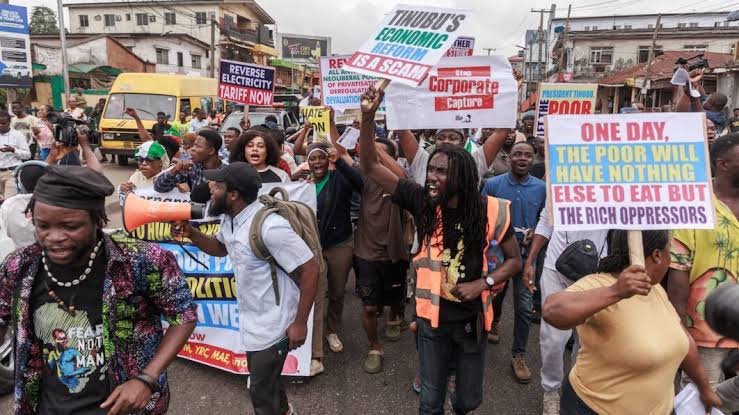
In Mile 12, a woman spreads tomatoes across a worn wooden table, adjusting prices every few minutes as transport costs change again. A small radio beside her plays political debates she no longer listens to. Her attention is on something more immediate. What can be sold before the day turns against her.
In Lagos, a young man refreshes job pages on a cracked phone screen that heats up in his palm, waiting for opportunities that rarely come.
In Benue, a farmer sleeps lightly because even rest now feels uncertain, shaped by insecurity that does not wait for political cycles.
These lives are not shaped by zoning. They are shaped by whether the country works.
And that is the contradiction at the heart of Nigerian politics.
We have built a system where emotional balance between regions often matters more than the actual condition of citizens.
A country cannot endlessly rotate who carries the burden while ignoring what the burden is doing to the people carrying it.
Yet a country struggling with inflation, insecurity, unemployment, and failing infrastructure cannot afford to treat symbolism as its main measure of leadership.
Somewhere along the way, representation replaced results.
And once that happens, accountability begins to weaken without announcement.
Because when a leader is first seen as “our own,” criticism becomes emotionally difficult. Failure becomes easier to excuse. National problems begin to shift shape, interpreted through identity instead of performance.
That is how systems decline quietly. Not through collapse, but through normalization. Through lowered expectations that slowly become culture.
There is also a deeper political logic that sustains this system. Many actors defend zoning not only as fairness, but as protection. In a country where trust in institutions is fragile, rotation becomes a form of political insurance. It reassures regions that they are not permanently excluded. It reduces the fear of domination. It keeps a fragile federation from openly breaking apart.
But insurance, when overused, can become dependency.
The painful truth is that Nigeria has never lacked capable people. In medicine, technology, business, and academia, Nigerians continue to excel globally. The problem has never been absence of competence. It has been a political habit of choosing emotional comfort over national performance.
Too often, people would rather be represented by failure from their region than governed effectively by someone outside it.
It is an uncomfortable truth, but one most people already understand.
Still, something is shifting.
A younger generation is emerging that did not inherit the original fear that produced zoning. They inherited the system, but not its justification. They are connected less by ethnicity than by shared frustration with a structure that no longer delivers.
A young woman selling clothes online in Enugu, a software developer in Lagos, and a bus conductor in Kano may not share language or background, but they share something more important.
The system is not working.
For them, the question is no longer whose turn it is.
It is whether anything is changing at all.
And that question is beginning to matter more than the political arrangements that once held the country together.
This does not mean Nigeria can ignore its history or pretend its divisions do not exist. Zoning emerged from real fear, and those fears did not disappear overnight. But a mechanism designed to prevent collapse cannot become the ceiling of ambition.
At some point, scaffolding must stop pretending to be the building.
And Nigeria has been living under scaffolding for too long.
If political parties insist on zoning, then they must at least present competence instead of recycling mediocrity wrapped in regional comfort. Each region must bring forward its clearest thinkers, most disciplined administrators, and most capable builders.
Because the purpose of democracy was never to rotate power for its own sake.
It was to ensure that ordinary people can live with dignity regardless of whose turn it is.
That is the republic Nigeria still struggles to become.
And until competence matters more than ancestry, the country will keep circling the same argument every election season, mistaking rotation for progress while everyday life continues to fall behind it.
Hunger does not recognize identity.
The woman in Mile 12 does not experience inflation differently because the president speaks her language.
And a merry go round, no matter how long it spins, does not become movement simply because it is moving.
It remains what it has always been: motion without arrival.
Shaakaa can be reached on: shaakaastephanie@yahoo.com