By Babafemi Ojudu
As another election approaches, the subsidy debate is once again raging across Nigeria.
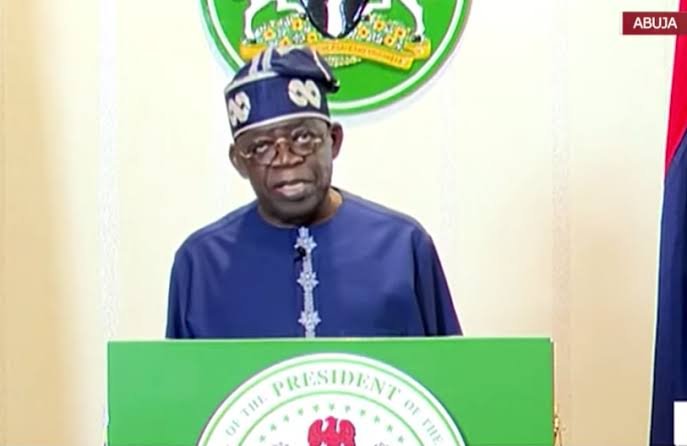
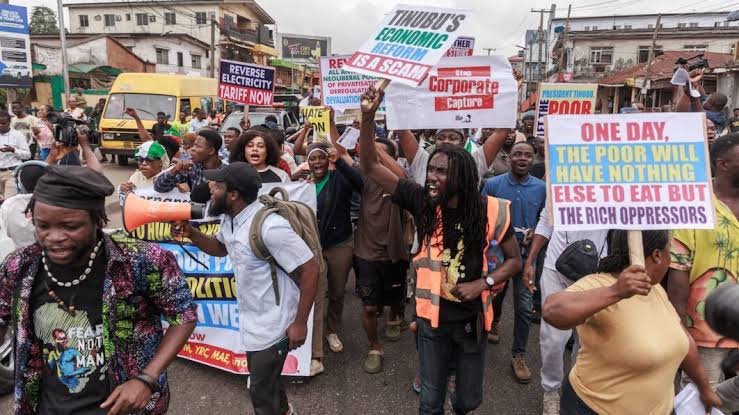
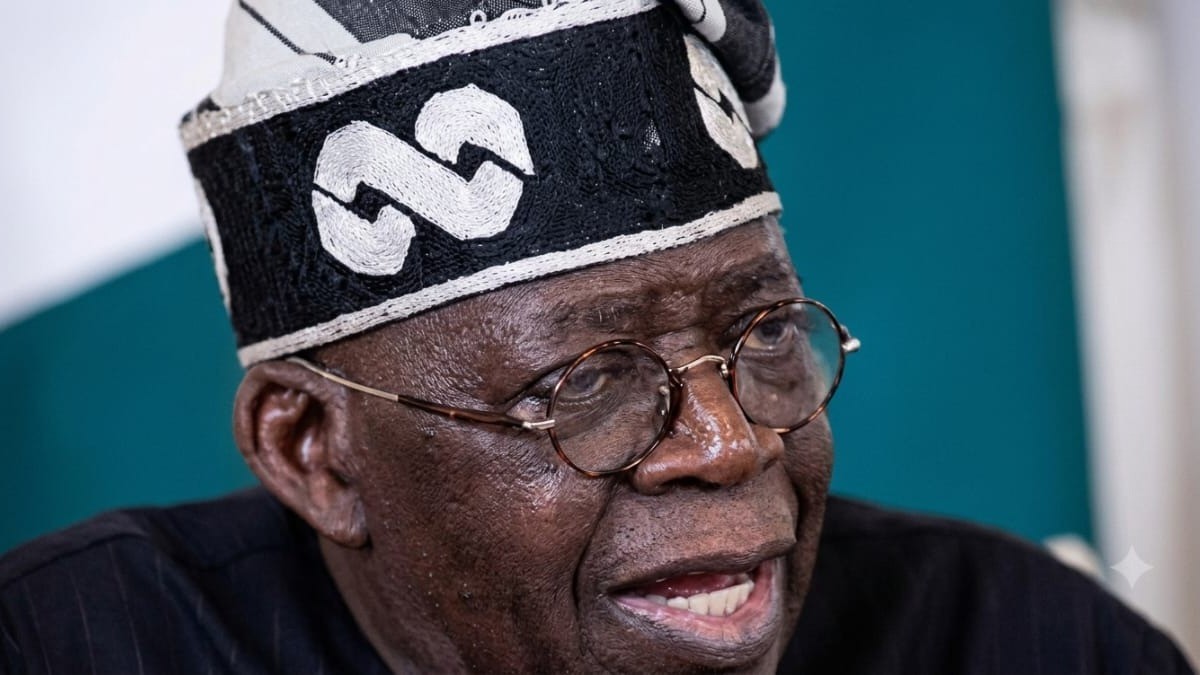
President Bola Ahmed Tinubu removed the subsidy on petrol at the beginning of his administration. The consequences have been severe. Transportation costs rose sharply, food prices followed, production became more expensive, and the cost of nearly every good and service climbed beyond the reach of millions of Nigerians.
Now, the President’s major opponent says he will restore the subsidy if elected. Many economists disagree. Their position is that, having endured the enormous pain of removing the subsidy, Nigeria should not return to a system that was fiscally burdensome, opaque, corrupt and vulnerable to manipulation.
Both sides have a point.
Those demanding the return of petrol subsidy are responding to the genuine suffering of the people. Those opposing its restoration are warning that we must not return to a system that consumed vast public resources, encouraged smuggling, rewarded fraudulent claims and disproportionately benefited those who consumed the most fuel.
But the argument should not be reduced to a simple choice between restoring petrol subsidy and abandoning Nigerians entirely to market forces. That is a false choice.
The real question should be: What should Nigeria subsidise, for whom, and to what end?
There is hardly any country in the world that does not subsidise something. Governments subsidise agriculture to guarantee food security. They subsidise education to develop human capital. They subsidise healthcare to protect families from financial ruin. They support housing, transportation, energy, research, exports and strategic industries.
Even countries that preach the virtues of the free market intervene when national interests, social stability or human welfare are threatened. The argument, therefore, should not be whether to subsidise. It should be whether a particular subsidy is productive, transparent, properly targeted and beneficial to the greatest number of people.
Nigeria’s old petrol subsidy failed too many of these tests.
For decades, we subsidised the consumption of petrol without sufficiently supporting the productive capacity that could have reduced our dependence on it. We subsidised imported fuel while our refineries deteriorated. We encouraged consumption but neglected public transportation, renewable energy and domestic refining.
The system eventually became an enormous criminal enterprise. There were controversies over inflated consumption figures, fraudulent import claims, round-tripping and the smuggling of subsidised petrol across our borders. Nigerians were told that they were consuming quantities of petrol that often defied logic. A subsidy supposedly designed to help the poor became a feeding trough for a privileged and well-connected few.
The old subsidy had to go. But removing it without quickly replacing it with a coherent system of social and productive support left millions of citizens exposed.
The World Bank warned at the outset of the reform that compensatory measures would be essential because higher petrol prices could push vulnerable households deeper into poverty. Its subsequent assessment noted that Nigeria’s improving macroeconomic indicators had yet to translate into a significant improvement in the living standards of ordinary citizens. World Bank
This is where the national conversation should now be directed. Nigeria should not necessarily bring back the old petrol subsidy. It should create a new social compact built around subsidies that reduce the cost of living, expand productivity and enable people to stand on their own feet.
Subsidise Local Refining, Not Imported Consumption
There is another element that must be brought into the petroleum debate.
Nigeria produces crude oil, yet Nigerians often buy the products refined from that crude as though the raw material had travelled halfway around the world. We own the crude, we now possess significant refining capacity, and we avoid some of the freight, insurance, port, foreign-exchange and financing costs associated with importing refined products. These domestic advantages should be reflected in the prices Nigerians pay.
Crude oil produced in Nigeria and supplied to domestic refineries should attract a clearly defined domestic-production concession. Local refiners should not have to source dollars to purchase Nigerian crude, incur avoidable foreign-exchange and financial charges, and then pass those costs to Nigerian consumers.
The existing policy of selling crude to local refineries in naira is a sensible foundation. According to the Federal Ministry of Finance, the arrangement was introduced to reduce pressure on the naira, eliminate unnecessary transaction costs and improve the availability of petroleum products. Federal Ministry of Finance
But Nigeria can go further.
The government should establish a transparent domestic crude-pricing framework under which a defined quantity of Nigerian crude is supplied to qualified local refineries at a modest discount or production-support price. In return, benefiting refineries must commit themselves to supplying an agreed volume of refined products to the Nigerian market at prices that reflect the concession they have received.
The principle must be unambiguous: if Nigerian crude is supplied at a reduced cost, the reduction must not end as additional profit for refinery owners. It must reach the people through lower ex-depot and pump prices.
This is where transparency becomes indispensable.
The price at which crude is supplied to each refinery must be made public. The quantity allocated must be published. The formula for calculating the concession must be known. Nigerians must be able to see how much crude was received, how many litres of petrol, diesel, aviation fuel, cooking gas and other products were produced, how much was released to the domestic market, and what reduction in price resulted from the concession.
Refiners participating in the arrangement should disclose the major elements of their pricing structure: the cost of crude, refining, transportation, regulatory charges, taxes and a reasonable profit margin. This does not require the exposure of legitimate commercial secrets. It simply ensures that public resources are not transferred into private hands without a corresponding public benefit.
An independent audit should be conducted regularly, and its findings published. The Nigerian Extractive Industries Transparency Initiative, the relevant petroleum regulators, the National Assembly, organised labour, consumer groups and civil society should have access to enough information to verify that the promised benefits are reaching the people.
This would not amount to restoring the old petrol subsidy.
The old system subsidised consumption through a process dominated by imported products. It created vast opportunities for fraudulent claims, round-tripping, inflated volumes and smuggling. A domestic crude concession, properly designed, would support production, encourage local refining, conserve foreign exchange, create employment and reduce Nigeria’s exposure to the volatile cost of imported refined products.
We must, however, recognise that Nigerian crude has an international value and belongs collectively to the federation. Selling it too cheaply or through secret arrangements would deprive federal, state and local governments of revenue. The concession must therefore be limited, independently audited and available to every qualified domestic refinery under the same published conditions. It must not be designed to favour one company or create another private monopoly.
A refinery that receives subsidised crude but fails to supply the agreed quantity of products to the domestic market, manipulates its figures or refuses to pass the benefit to consumers should lose the concession and refund the value received. There must be consequences for abuse.
Private investors deserve a fair return on their investment. No refinery should be compelled to operate at a loss. But neither should Nigerians produce the raw material, provide infrastructure and policy support, grant fiscal incentives and still purchase the finished product without enjoying any domestic advantage.
A well-designed domestic crude concession would be the kind of subsidy Nigeria needs: one tied to production, value addition, employment, national energy security and verifiable consumer relief.
Subsidise Power, Not Perpetual Darkness
The next major intervention should be in electricity.
An average Nigerian household pays electricity bills, buys petrol or diesel for a generator, maintains the generator and replaces appliances damaged by unstable voltage. Many small businesses spend a substantial part of their earnings merely trying to generate their own electricity.
This is not just an inconvenience. It is a private tax imposed by public failure.
The government should drastically reduce the cost of solar panels, batteries, inverters, installation equipment and other renewable-energy components. Import duties and taxes on certified solar equipment should be removed or significantly reduced. Local manufacturers should receive production incentives, affordable credit and support for research and assembly.
Low- and middle-income households should be able to acquire solar systems through long-term, low-interest financing, with repayments spread over several years. Rather than families paying endlessly for darkness, generators and fuel, they could pay gradually towards owning reliable power systems.
Government can also support cooperatives, estates, markets, schools and rural communities to develop shared solar mini-grids. The International Energy Agency identifies off-grid solar and mini-grids as important instruments for extending reliable electricity access, especially in underserved communities. International Energy Agency
If millions of Nigerian homes and small businesses can generate a meaningful portion of their electricity, the benefits will be enormous. Household expenditure will fall. Small enterprises will become more profitable. Noise and air pollution will decline. Pressure on the national grid will ease. Jobs will be created for technicians, installers, engineers and manufacturers.
That would be a subsidy with a lasting return.
But here, too, transparency must be non-negotiable. Nigerians must know which companies receive import-duty waivers, tax concessions and government-backed financing. The number and identities of beneficiaries must be verifiable. Equipment standards must be strictly enforced so that the country does not become a dumping ground for defective panels, weak batteries and substandard components.
Any company receiving a public concession must demonstrate how the benefit has reduced the price paid by the consumer. Otherwise, we will merely replace fuel-subsidy racketeers with renewable-energy racketeers.
Subsidise Food Production, Not Food Imports
Nigeria must also subsidise agriculture intelligently.
Farmers require access to improved seedlings, fertiliser, irrigation equipment, tractors, harvesters, storage facilities, extension services and affordable credit. These interventions should be targeted primarily at genuine small and medium-scale farmers rather than political associates and fictitious beneficiaries.
The country should move beyond the seasonal distribution of a few bags of fertiliser at political ceremonies. Agricultural support must cover the entire value chain: land preparation, production, harvesting, storage, transportation, processing and access to markets.
Mechanisation centres could be established in every agricultural local government area, allowing farmers to hire equipment at heavily discounted rates. Solar-powered irrigation should be supported to reduce dependence on rainfall. Government-backed crop insurance can protect farmers against floods, droughts and other disasters.
Agricultural subsidies must also be tied to measurable output. The objective should not merely be to distribute inputs but to reduce food prices, raise farmers’ incomes, create rural employment and strengthen national food security.
The names and locations of beneficiary farmers, cooperatives and companies should be available for verification. The quantities of fertiliser, seedlings and equipment distributed must be published. Agricultural subsidies should be digitally tracked from the supplier to the farm.
A poorly administered fertiliser subsidy can enrich contractors and politicians. A properly designed agricultural subsidy can feed a nation.
Subsidise Healthcare Before Illness Bankrupts Families
Healthcare is another area demanding urgent intervention.
For millions of Nigerians, illness is not only a medical emergency but also a financial catastrophe. Families sell land, vehicles and other possessions to pay hospital bills. Some withdraw their children from school. Others resort to unqualified practitioners or simply remain at home because they cannot afford treatment.
Government must expand subsidised health insurance to cover low-income earners, informal workers, senior citizens, pregnant women, children and people living with chronic illnesses. Basic diagnostic tests, maternal care, emergency services and essential medicines should be available at little or no cost to the most vulnerable.
Primary healthcare centres should receive direct and transparent funding, with public dashboards showing what each facility receives and the services it is required to provide. Citizens should be able to confirm whether medicines said to have been supplied were actually received and dispensed.
Local production of essential medicines and medical consumables should also be encouraged through tax relief and affordable financing. But companies receiving such incentives must demonstrate that the support has increased local production and reduced the cost of medicine.
A nation that subsidises the treatment and prevention of illness is not wasting money. It is preserving its human capital.
Subsidise Homes People Can Afford
Housing costs consume a disproportionate share of household income. In many cities, tenants are required to pay one or two years’ rent in advance, even though most workers earn their salaries monthly.
Government should support affordable housing through low-interest mortgages, rent-to-own schemes, serviced land and reduced costs for locally produced building materials. Housing cooperatives organised by workers, artisans, traders and professional groups should have access to long-term development finance.
Rather than constructing a few highly publicised estates that ordinary people cannot afford, the government should enable citizens to build incrementally. It can provide properly planned land, roads, drainage, electricity and water while beneficiaries finance construction in stages.
Housing subsidy should not become another avenue for allocating luxury homes to public officials and their associates. It must be designed for teachers, nurses, artisans, junior civil servants, traders and young families.
The cost of each publicly supported housing unit, the identity of the contractor, the allocation criteria and the identities of beneficiaries should be open to scrutiny. If a house is described as affordable, the public should be told: affordable to whom?
Subsidise Education That Produces Competence
Nigeria already claims to subsidise education, but too much of our educational expenditure produces certificates without competence.
Subsidy should increasingly follow the student and the skills the economy requires. Government should support vocational and technical education in construction, electrical installation, plumbing, welding, renewable-energy maintenance, agriculture, digital technology, healthcare support and manufacturing.
Students from poor families should receive scholarships and loans, but institutions must also be held accountable for the competence and employability of their graduates. Technical colleges should be rehabilitated and equipped. Companies that train and employ apprentices should receive tax incentives.
Those incentives must be tied to verifiable outcomes. A company claiming a tax concession for training one thousand young people must provide evidence that the training took place, that recognised skills were acquired and that a reasonable number of participants progressed into employment or enterprise.
We must subsidise learning that enables people to solve problems, create value and earn a living—not merely the prolonged pursuit of certificates.
Subsidise Public Transportation
One of the quickest ways to reduce the impact of petrol prices is to provide affordable mass transportation.
Federal and state governments should invest in efficient bus systems, rail networks and waterways where appropriate. Transport cooperatives should be assisted to acquire gas-powered and electric buses under transparent repayment programmes.
A well-run public transportation system benefits everyone, particularly workers, students, traders and low-income families. It reduces household expenditure, congestion, fuel consumption and the pressure for a universal petrol subsidy.
Rather than making every litre of petrol artificially cheap—including petrol consumed by owners of several luxury vehicles—government can make the daily journey of the ordinary worker affordable.
Here again, the cost of the buses, the terms of acquisition, the selection of operators and the fares charged must be public. Subsidised buses should not mysteriously disappear into private fleets or become campaign vehicles belonging to politicians.
Support Work, Not Idleness
There is also a place for temporary cash transfers, especially during periods of severe economic adjustment. But cash support must be targeted, verifiable and linked to a credible social register. It should protect the elderly, people with disabilities, unemployed youths undergoing training and families living in extreme poverty.
Beyond this, the government could introduce wage support for small businesses that employ and train young Nigerians. Tax credits could be offered to enterprises that create verifiable new jobs. Micro, small and medium-sized businesses should have access to affordable credit, particularly in productive sectors.
The best social protection is not permanent dependence. It is the opportunity to work, produce and live with dignity.
Transparency Is Not Optional
The success of any new subsidy philosophy will depend on transparency.
Nigeria’s problem has never been the complete absence of good policies. Our greater problem has been the capture of those policies by privileged interests. Programmes announced in the name of the poor often become opportunities for contractors, officials, politicians and their associates to enrich themselves.
Every subsidy programme must therefore answer certain basic questions:
Who is receiving the subsidy? How much is being spent? What are the selection criteria? What result is expected? How will that result be measured? What benefit reaches the ordinary citizen? Who audits the programme, and what happens when it is abused?
The total cost of every subsidy should appear openly in federal and state budgets. Beneficiary lists should be auditable. Allocations and payments should be digitally traceable. Independent audit reports should be published regularly, not hidden in government offices.
The National Assembly and state Houses of Assembly must conduct serious oversight. Civil society organisations, professional bodies, organised labour, consumer associations and the media must have access to the information required to follow the money.
Subsidies should also have review and expiration dates. A programme that is not reducing costs, increasing production, expanding access or improving lives should be redesigned or discontinued.
Any beneficiary—whether an oil refinery, solar company, fertiliser supplier, transport operator, housing developer, school or hospital—that diverts a subsidy or fails to pass on the intended benefit should lose the concession, refund the money and face prosecution where fraud is established.
Transparency cannot be an afterthought added to a subsidy programme after money has been spent. It must be built into the programme from the beginning.
The guiding principle must be simple: public money must produce a measurable public benefit.
The Choice Before Nigeria
Nigeria cannot afford to return blindly to the old petrol subsidy regime. But neither can the government simply tell suffering citizens to endure indefinitely while the promised benefits of reform remain remote.
Economic reform cannot survive on statistics alone. It must eventually become food on the table, medicine in the clinic, electricity in the home, affordable transportation to work and hope in the lives of citizens.
The poor do not experience the economy through graphs, foreign reserves or credit ratings. They experience it through the price of rice, the cost of transportation, the availability of medicine, school fees, house rent and whether their small businesses can remain open.
The answer to the present crisis is not to subsidise petrol indiscriminately once again. It is to support domestic refining transparently and subsidise the things that make expensive petrol less central to our survival.
Give local refineries Nigerian crude under a transparent and properly monitored concession, and insist that the savings reach consumers. Give homes affordable solar power, and families will buy less fuel. Give cities efficient public transportation, and fewer people will depend on private cars. Give farmers affordable inputs and storage, and food prices will fall. Give citizens health insurance, and illness will not destroy entire families. Give young people relevant education and productive skills, and they will build livelihoods rather than wait endlessly for government jobs.
The debate, therefore, should no longer be framed as subsidy versus no subsidy.
The real choice is between a subsidy that fuels consumption and corruption and one that expands production, opportunity and human welfare.
Nigeria does not need the return of the old subsidy. It needs a better subsidy philosophy—one that transfers public resources from waste to productivity, from privilege to need, and from temporary relief to lasting independence.
Subsidise the farmer, not the smuggler. Subsidise the patient, not fraudulent claims. Subsidise the student, the commuter, the homeowner and the small producer. Support local refining, but ensure that every concession is disclosed and every benefit reaches the consumer. Above all, subsidise the ability of Nigerians to live, work and prosper—and let the people see clearly where every naira goes.