By Charles Obiajulu Ugwu – PhD
“We have reduced the Infinite to a celestial accountant, convinced that the precision of our genuflection settles our debt to humanity. It is the ultimate spiritual swindle: using the ‘sacred’ as a buffer to ensure that the messy reality of injustice never actually touches our hearts.”
The most terrifying silence in the modern world isn’t found in a graveyard or a desert; it is the quiet, smug satisfaction of a man walking out of a cathedral, a mosque, or a temple, convinced that his two-hour stint in the pews has settled his debt to humanity for the week. We are currently presiding over a massive, unacknowledged spiritual heist where the divine has been turned into a cosmic accountant and our prayers into a stack of fraudulent receipts.
There is a cold, creeping apprehension in realizing that our intense religiosity; the booming choirs, the precise genuflections, the rigorous fasts, the rhythmic chanting might actually be the very thing enabling our cruelty. We have crafted a “holy shroud” made of incense and melody, thick enough to mask the stench of the systemic decay just outside the sanctuary doors. It is the great spiritual swindle of our time: the belief that a perfectly executed gesture buys us a hall pass to be indifferent to the screams of the world, transforming our places of worship into the ultimate exit ramps from our moral obligations.
This psychological sleight of hand operates on a principle that is as ancient as it is devastating. It is the internal mechanism that tells us that because we have “done our bit” for the heavens on a Friday or a Sunday, our moral ledger is sufficiently in the black to permit a little bit of darkness during the rest of the week. We see it in the eyes of the businessman who underpays his staff by day and out-sings the choir by night. We see it in the official who accepts a bribe in the morning and sponsors a thousand pilgrims in the afternoon.
The ritual becomes a buffer, a protective layer of “sacredness” that prevents the messy, jagged reality of social injustice from ever touching the heart. We are witnessing the birth of a global class of pious bystanders who are so busy being religious that they have forgotten how to be human. It is the victory of the shadow over the substance, where the act of worship has not just preceded ethical action, but has entirely replaced it.
When we look at the global systems that govern our lives in 2026, we see this liturgy of inaction mirrored in the secular sacraments of our age. Consider the high-stakes theater of international climate summits or global poverty forums. There is a specific, performative ritual to these gatherings: the private jets descending like polished birds of prey, the grand handshakes in front of blue-lit backdrops, the signing of “historic” declarations with gold-plated pens.
These are the rituals of the global elite. Once the photograph is taken and the communique is released, the participants experience a profound sense of “moral completion.” They have performed the rite of “Caring for the Planet.” Having done so, they return to their respective capitals to continue the very policies that ensure ecological destruction or economic disparity, their consciences pacified by the ceremony of the summit. The ritual of the meeting has replaced the heavy work of reform. It is a hollow victory of form that keeps the global system spinning in a cycle of expensive, holy excuses.
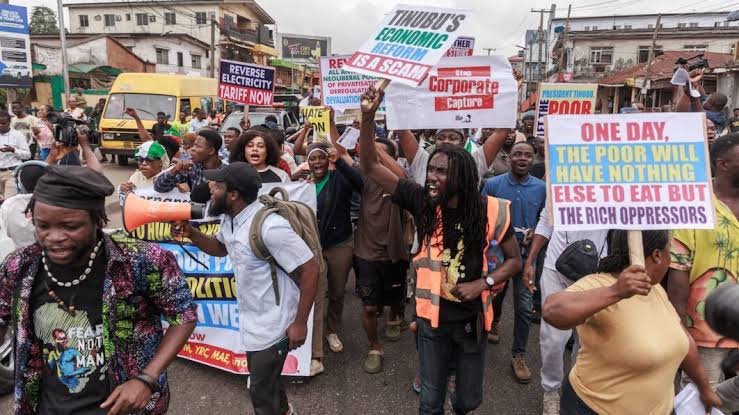
In Nigeria, this disconnect has reached the level of a national crisis, creating a society that is perhaps the most intensely “devout” on earth, yet remains paralyzed by a lack of communal empathy. The Nigerian landscape is a forest of steeples and minarets, a place where the air is thick with the vocabulary of the divine. On any given weekend, the sheer volume of prayer rising from the streets of Lagos, Kano, or Port Harcourt is enough to suggest a nation on the brink of a golden age. Yet, this intense religiosity often acts as a massive “moral distraction.”
I remember standing on a choked street in Lagos, watching a luxury SUV plastered with stickers proclaiming “My Year of Overflow” and “Protected by the Blood” weave aggressively through traffic. The driver, eyes fixed forward, nearly crushed a young girl hawking plantain chips against a concrete barrier. He didn’t even tap his brakes. He was likely on his way to a midweek service where he would dance with abandon, convinced that his presence in the pews granted him an exemption from the basic ethics of the road and the dignity of his neighbor. For him, the “Overflow” was a spiritual right, but the survival of the hawker was an irrelevant detail, a glitch in his personal matrix of blessings. This is the “ritual as an exit ramp” in its most visceral form.
In the Nigerian political sphere, this manifests as the “Holy Patron” model. We see leaders who have siphoned billions from the public treasury money meant for hospitals that now lack basic dressings and schools that lack roofs standing at the very front of massive religious crusades. They are the ones given the microphone to lead the opening prayer; they are the ones whose “donations” to the building fund are announced with the loudest fanfare. These grand, expensive rituals serve as a public laundering of their private sins. The tragedy is not just that they do it, but that the social system accepts the trade.
The followers, caught in the same loop of moral licensing, celebrate the “generosity” of the patron’s ritualistic spending while their own children suffer from the very systemic rot that the patron’s corruption has fueled. The ritual provides the moral cover for the leader to steal and for the follower to worship the thief, as long as the thief “remembers God” with a portion of the loot.
This leads to a profound “competence deficit” in the way we manage our common life. When we decide that “faithfulness” is measured by the frequency of ritual rather than the quality of work, we stop demanding excellence. We accept a doctor who prays over a patient but fails to keep up with medical journals. We accept a contractor who builds a bridge that collapses in three years, provided he dedicates the site with enough prayer. We have been socialized to believe that “God will take control,” a phrase that has become a linguistic ritual used to excuse our own laziness and lack of accountability.
Why fix the pothole when you can just pray for “divine protection” while driving through it? Why demand a transparent election when you can simply “fast for peace”? This spiritualized apathy is the weight that prevents a nation of over two hundred million people from moving forward. You cannot build a modern, functional state when your primary civic strategy is to outsource your responsibilities to the heavens through a series of liturgical gestures.
I recall an impromptu interview with a young woman in Uyo, a brilliant and self-assured architect who had spent her life trying to navigate this landscape. I was attracted to her smatcomment and observation of some fundamental flaws in the design of one of the airport buildings. Effortlessly she took a few of us through what she termed the Nigerian factor in public service execution. This flash of brilliance was sharply countered by her demeanor suggesting a much deeper concern.
She described her frustration with a colleague who consistently missed deadlines and botched technical reports. “Whenever I try to hold him accountable,” she told me, “he looks at me with this pitying smile and tells me I need to ‘be more prayerful.’ In a voice filled with lamentation, she recalls how this her colleague spent four hours at a prayer meeting last night, so in his mind, he is a ‘better’ person than I am, even though I stayed late to fix the errors in his work. His ritual has given him a license to be incompetent.”
This is the quiet poison of the system. It creates a hierarchy where the “pious” are shielded from the consequences of their actions. It turns the workplace, the government office, and the neighborhood into zones where the “right” ritualistic posture is more valuable than the right ethical action.
Globally, we see this same pattern in the “virtue signaling” of our digital social movements. Posting a black square on a social media profile or changing a profile picture to the colors of a nation under siege has become the new digital incense. It provides the participant with an immediate, intoxicating “dopamine hit” of moral righteousness. Having performed the ritual of the post, the individual feels they have “done their part” for justice.
The urgency to actually donate, to volunteer, or to change one’s own complicit lifestyle evaporates in the glow of the screen. It is the democratization of moral licensing. Everyone can now feel like a saint without ever having to leave their couch or endure the discomfort of a real sacrifice. We are building a global civilization of spectator saints who know all the right hashtags but have no calluses on their hands. We are “liking” our way to a better world while the actual world continues to burn.
When form triumphs over substance, the “praxis” of faith in the forms of the actual, lived-out commitment to justice, mercy, and truth is treated as an optional extra, a “nice-to-have” for the exceptionally holy rather than a baseline requirement for everyone. This creates a systemic drag that is almost impossible to overcome through traditional political or social means. You cannot shame a person who believes they are already “right with the Divine.” You cannot use the data of poverty or the statistics of infant mortality to move a heart that is shielded by the conviction that it has “settled its accounts” through a series of rituals. This is how corruption becomes “sanctified.” It is how a society can be filled with “prayer warriors” who are simultaneously “bribe-takers,” never seeing the contradiction because the prayer is seen as the currency that pays for the bribe.
The “victory of form” is a hollow triumph because it leaves the house standing but the inhabitants starving. We are currently living in a world of beautiful, empty shells. The global systems of power are happy to let us keep our rituals, as long as those rituals don’t lead to praxis. They are happy to let us pray for the poor, as long as we don’t ask why the poor have no bread. They are happy to let us sing about freedom, as long as we don’t march for it. But the true spiritual mandate, the one that actually has the power to shift the orbit of a nation or a planet is the one that refuses the comfort of the “check-list” and embraces the messiness of real, sacrificial love.
In Nigeria, a genuine awakening would look like a radical shift in the national psyche. It would mean that a politician’s “godliness” is measured not by how many churches or mosques he builds, but by the infant mortality rate in his local government area. It would mean that a citizen’s “piety” is reflected in their refusal to pay a bribe at a police checkpoint, even when it’s the “easy way out.” It would mean transforming the pulpit from a place of “spiritual comfort” into a place of “ethical confrontation.”
We must stop using God as a mere symbol for our status quo and start seeing the divine in the faces of the people we have spent our lives ignoring. We must realize that the most “holy” thing we can do is to make the ritual unnecessary by making the world just.
The apprehension we feel when we look at the state of our world stems from a dawning realization that our rituals are not saving us rather, they are insulating us. They are the walls we build to keep the suffering of the “other” from disturbing our peace. But the walls are starting to crack. The hunger, the inequality, and the environmental collapse are beginning to seep into our sanctuaries. We can no longer afford the luxury of the pious bystander. We can no longer afford to believe that a song or a sign is a substitute for a life of integrity.
As we move deeper into this decade, the choice is becoming stark. We can continue to retreat into our narrow, “sacred” silos, watching the world fracture around us while we perfect our ceremonies, or we can choose to recognize that the only truly sacred thing is the life of the person standing in front of us.
The “system” isn’t just something out there, managed by unseen hands; it is the collection of choices we make every time we decide whether to act or to merely perform. True defiance against the rot of our age is the act of stepping out of the temple doors and realizing that the most powerful prayer is the one that is answered by our own hands. Until our worship looks like work, and our prayers look like policy, we are just making noise in a vacuum. It is time to stop being “religious” and start being responsible. The world does not need more rituals; it needs more neighbors.
About the Author
Dr Charles Obiajulu Ugwu is a contrarian thinker writing from Lagos