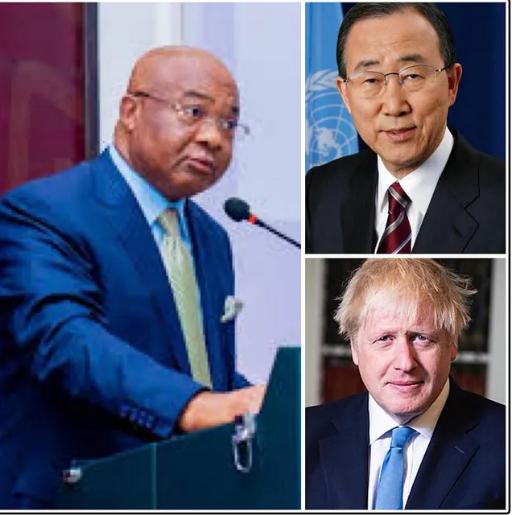
By Agbeze Ireke Kalu Onuma, AI-KO
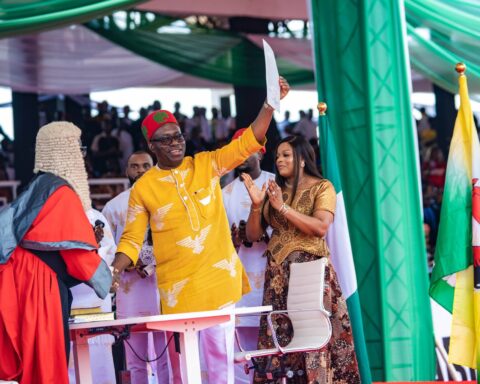
The visuals were undeniably impressive, a spectacle of power and validation choreographed against the backdrop of Owerri. To see the former British Prime Minister Boris Johnson sharing a stage with a former UN Secretary-General and presidents from neighboring nations was, on the surface, a diplomatic coup for Governor Hope Uzodinma. When Johnson stood at that podium for the 2025 Imo State Economic Summit and declared to the world, “Nigeria is safe,” the roar of applause was inevitable – the sound every administration craves, a tonic of international legitimacy. Yet, as the motorcades vanished and the private jets departed Sam Mbakwe Airport, a heavier, more familiar silence descended. It was in that silence that the average Nigerian, and the Ndigbo in particular, were left to grapple with the haunting questions that define our political moment: Was this the dawn of a genuine economic renaissance, or merely another expensive, glittering stunt? More painfully, was this summit a celebration of hard-won progress, or an elaborate masquerade ball disguising a deeper, more humiliating political capitulation?
That declaration of safety, delivered from behind a wall of DSS operatives, police escorts, and private security, rings hollow in the ears of a…
This disconnect defines the entire event. Look at the mainstream press – Vanguard, Leadership, Arise TV – and you see headlines of a historic turning point, of “investment pledges” and “global endorsements.” Then, shift your gaze to the unfiltered pulse of social media and the vibrant “radio station parliament,” and the narrative collapses into rightful, raucous cynicism. There, the summit is not a renaissance; it is a “jamboree,” a taxpayer-funded theatrical production designed to obscure the gritty reality of insecurity with a glittering facade. This chasm is not a mere difference of opinion; it is the gap between manufactured perception and lived experience. While the Governor’s aides trumpet “Centers of Prosperity,” the comment sections on X and Facebook are ablaze with the poignant mockery of the common man: Why do we need a British validation for our safety? Why does a prosperous state need to import a foreign applause track? The answers point to a grim truth: this was a performance for an audience of one – President Tinubu – a piece of political theatre for the center, not a strategic intervention for the millions of Imo indigenes.
The absurdity peaked with Aliko Dangote’s “blank cheque” declaration. “Tell me where to invest, and I will write the cheque,” he proclaimed. On the surface, this is the Holy Grail. But capital is cowardly; it flees uncertainty. Are we to believe that Dangote, a titan of surgical precision in risk assessment, was unaware of opportunities in Imo until that podium moment? This performative generosity is a scripted line in the play. For the Governor, it’s a headline. For the billionaire class, it’s a low-cost display of loyalty. It sustains an illusion of motion without movement. That “blank cheque” is the perfect metaphor for the summit itself – a grand promise in invisible ink, signed with the pen of political expediency. Until cranes dot the sky and factories hum, the cheque is a prop, and the applause is desperately premature.
Boris Johnson’s keynote at the Imo Economic Summit 2025 was a performance wrapped in policy language, a speech that oscillated between charm and challenge, between the familiar cadence of optimism and the unspoken weight of contradiction. He began, as he often does, with a flourish of statistics and humor, invoking Nigeria’s astonishing demographic momentum – eight million births a year – as both a marvel and a warning. It was, in his framing, the central paradox of Nigeria’s destiny: a nation bursting with youth and potential, yet perpetually on the brink of being overwhelmed by its own abundance. Johnson’s argument was that population is not a curse but a call to action, that the sheer scale of Nigeria’s human capital could be its greatest asset if matched with jobs, infrastructure, and innovation. But beneath the rhetorical polish lay an uncomfortable truth – one that his hosts seemed unwilling to confront. For what use is the celebration of potential when the machinery to convert it into prosperity remains rusted, corrupt, and misaligned?
He spoke of investment as though it were a moral imperative, urging Nigeria – and by extension, Imo State – to move beyond the vanity of summits and into the hard discipline of execution. Growth, he warned, must be more than numbers on a chart; it must be the kind of growth that puts people to work, that builds industries rather than headlines. It was a subtle rebuke, though delivered with the disarming levity of a man accustomed to flattering his audience while indicting them. Johnson’s insistence that “quality growth” mattered more than quantity was, in essence, a reminder that Nigeria’s problem has never been vision but follow-through. The country has mastered the art of announcing revolutions that never arrive. His words, though couched in diplomacy, carried the faint echo of exasperation – the tone of a man who has seen too many African conferences dissolve into applause and communiqués.
The speech’s architecture was built around the idea of partnership – a word that has become almost meaningless through repetition. Johnson framed the summit as a “platform for global collaboration,” a chance for Imo to position itself as a competitive hub in an increasingly interconnected world. He praised Governor Hope Uzodimma’s ambition, lauded the theme of “Unlocking Imo’s Economic Potential,” and spoke of innovation as the new oil. Yet, for all the talk of partnership, the imbalance was glaring. The relationship he described – between Nigeria and the global economy – was not one of equals but of dependency dressed up as cooperation. When he spoke of “global investors” and “international opportunities,” what he really meant was that Nigeria must continue to make itself legible to foreign capital, to reform not for its people but for the markets that measure its worth. It was the familiar gospel of neoliberal optimism, delivered with the practiced ease of a man who knows how to make exploitation sound like empowerment.
Still, Johnson’s presence carried undeniable symbolic weight. For the organizers, his attendance was proof that Imo’s ambitions had been noticed beyond its borders, that the state could host not only Nigerian elites but global figures of stature. The optics were impeccable: a former British Prime Minister on stage in Owerri, flanked by billionaires and diplomats, invoking the promise of partnership and progress. It was, for the government, a triumph of visibility. But symbolism, as always, is a double-edged sword. The same image that flatters can also expose. For many observers, Johnson’s appearance underscored the performative nature of the summit – the desperate need for external validation, the endless recycling of foreign faces to lend legitimacy to local failure. His presence said less about Imo’s readiness for investment than about its hunger for recognition.
The analytical core of his message was sound enough: Nigeria’s demographic explosion demands urgent, intelligent response. Without rapid industrialization, education reform, and infrastructure investment, the country’s youth bulge could become a time bomb. He was right – but rightness, in this context, is cheap. The challenge is not in diagnosing Nigeria’s ailments but in curing them. Johnson’s prescription – innovation, entrepreneurship, global partnerships – was a familiar refrain, one that has echoed through decades of summits and strategy documents. What was missing was any reckoning with the structural rot that makes such prescriptions futile: the corruption that diverts capital, the insecurity that deters investors, the bureaucracy that strangles initiative. His speech soared in rhetoric but remained weightless in realism. It was a sermon about building a house on foundations that everyone knows are cracked.
The risks he hinted at – the execution gap, the population pressure, the fragility of investor confidence – are not abstract. They are the daily realities that define the Nigerian condition. Every year, millions of young people enter a labor market that has no room for them. Every month, investors retreat from a country that cannot guarantee safety or transparency. Every day, citizens watch their leaders host summits about the future while failing to manage the present. Johnson’s call for reform was, in that sense, both timely and tragically misplaced. It assumed a political class capable of transformation, a bureaucracy capable of discipline, a society capable of trust. But these are precisely the capacities that have been eroded by decades of dysfunction.
And so, the speech, for all its eloquence, became another artifact in the museum of Nigerian aspiration – polished, well-intentioned, and ultimately hollow. The applause that followed was not for the truth he spoke but for the illusion he sustained: that progress can be summoned by rhetoric, that credibility can be purchased by association. For Imo, the summit was a credibility play, an attempt to signal readiness for investment. But readiness is not declared; it is demonstrated. The true test lies not in the grandeur of the event but in the quiet, unglamorous work that follows – the reforms, the transparency, the courage to prioritize substance over spectacle.
In the end, Johnson’s speech was less about Imo than about the story Nigeria tells itself – the story of endless potential forever deferred. It was a mirror held up to a nation addicted to its own promise, a country that mistakes the language of progress for progress itself. The tragedy is not that his message was wrong, but that it will almost certainly be wasted. The cameras will move on, the headlines will fade, and the same leaders who applauded his call for urgency will return to the comfort of inertia. The summit will be remembered not for what it achieved but for what it revealed: a people desperate for transformation, a leadership content with performance, and a visiting statesman who, knowingly or not, became part of the spectacle he came to critique.
Beneath this veneer of global applause and polished economic jargon lies a narrative so dark it feels like a betrayal of the very soul of the Igbo nation. This summit was never just about investment pledges; it was a glaring, painful symbol of a political elite in a frantic scramble to out-play itself within President Tinubu’s continuity plan. It is a profoundly disappointing spectacle to witness the governors of Alaigbo rushing to buy into a network that, in the view of many, brazenly orchestrated the theft of the Igbo presidency slot in 2023. The political optics scream a sad, unmistakable truth: a mandate was snatched from a more competent Peter Obi, and now, the elite scramble to normalize this “warped and repulsive” reality, trading collective dignity for a sliver of political relevance and the promise of pork barrels. Where is the integrity? One must ask, with searing clarity, if the political elites of the Hausa or the Yoruba would have been so quick to roll out the red carpet had they been victims of a similar disenfranchisement. Would they be hosting summits to praise the “reforms” of an administration that marginalized them? The likely answer is a resonant no. They would have stood their ground, weaponizing their political capital to demand redress, not applause.
Instead, what we witness is a political class seemingly desperate to retain an antiquated inferiority complex. In their rush to distance themselves from the exemplariness Peter Obi represents – that stubborn drive for honor, prudence, and integrity – they have chosen the path of least resistance, the comfortable betrayal. They appear willing to auction the collective dignity of their people for a seat at a table where they are perennial afterthoughts, treated as supplicants in a game they did not design. This is a pathetic disservice to the masses who bear the brutal consequences of this choice. The very “Igbophobia” weaponized during the elections is now conveniently swept under the plush carpets of the Concorde Boulevard by leaders who, from this vantage point, look less like statesmen and more like principle-deficient “cheap lots,” eager to please their masters.
The summit, on the surface, appeared to be a celebration of progress and dialogue – a gathering meant to project unity, vision, and renewal. Yet, beneath the ceremonial speeches and polished communiqués, it exposed something far more unsettling: a profound moral collapse within the region’s own political elite. What emerged was not simply a failure of leadership, but a betrayal of collective destiny – a slow, deliberate surrender of principle for convenience, of conviction for access, of dignity for proximity to power. At its core, this betrayal is not merely political; it is existential. It reflects a class of leaders who have internalized subjugation as strategy, who mistake servitude for pragmatism, and who have learned to rationalize defeat as diplomacy. Rather than confronting the systemic exclusions that have long defined their region’s place in the national order, they have chosen to negotiate their own marginality – turning what should have been a moment of reckoning into a theatre of submission.
The tragedy lies not only in what was lost, but in how easily it was surrendered. A historic opportunity to assert regional dignity and articulate a coherent political vision was squandered in favor of fleeting personal advantage. The summit, instead of becoming a crucible for renewal, became a mirror reflecting the corrosion of the very values that once defined collective struggle: courage, solidarity, and self-respect. Moreover, this capitulation is not accidental. It is the product of a long conditioning – an erosion of political self-belief that has taught local elites to seek validation from the very structures that marginalize them. They have become fluent in the language of compromise, mistaking it for statesmanship. Their gestures of loyalty to the center are not acts of strategy but symptoms of dependency, revealing a deep-seated fear of autonomy.
In their haste to align with the prevailing order, they have become the most efficient instruments of their own people’s disempowerment. They sanitize injustice with the rhetoric of “national interest,” even as they barter away the moral capital of their communities. Theirs is a politics emptied of conviction – an endless performance of allegiance designed to secure temporary relevance in a system that will never truly accept them as equals. What makes this betrayal particularly corrosive is its contrast with the potential for collective resistance. History shows that communities that survive exclusion do so not through appeasement, but through solidarity and moral clarity. Yet here, the instinct for self-preservation has been replaced by a hunger for patronage. The political class has traded the long arc of justice for the short-term comfort of access.
This is not merely a tactical error – it is a moral tragedy. By normalizing subservience, they have taught the next generation that power is not something to be earned through vision or courage, but something to be begged for. They have transformed the language of politics from one of purpose to one of transaction. The lesson is stark: no people can be free if their leaders are content to be clients. Political dignity is not granted; it is asserted. It requires a willingness to endure isolation, to risk exclusion, to stand firm even when the rewards of compromise seem immediate. The region’s political elite must rediscover the moral imagination that once animated its forebears – a belief that justice is not negotiated but demanded, that representation is not a favor but a right.
Until that rediscovery occurs, summits will continue to masquerade as milestones while serving as monuments to decay. The real work lies not in the choreography of political gatherings but in the rebuilding of moral infrastructure – the cultivation of leaders who understand that the true measure of power is not proximity to the throne, but fidelity to the people whose hopes they carry. In the end, the betrayal is not irreversible. But redemption will require a radical reawakening: a return to the discipline of principle, the courage of dissent, and the humility of service. Only then can a region reclaim not just its political relevance, but its moral authority.
What Governor Hope Uzodinma orchestrated at the Imo Economic Summit transcends mere political theater; it stands as a conscious, meticulously staged reenactment of the oldest colonial drama, a tragic modern iteration of the Icheoku archetype, where local intermediaries performed a script written by imperial powers. This is not a vague echo but a deliberate recasting, with Uzodinma himself willingly stepping into the worn shoes of characters like Lomaji Ugorji, who historically navigated the fraught and humiliating space between their own people and the colonial administration. Those earlier encounters were defined by coercion and a strategic exploitation of local elites to facilitate extraction and control. The profound, shameful difference now is that the governor is not a coerced victim of circumstance but an eager, proactive participant in a spectacle that diminishes the very notion of Igbo agency, purchasing a role that his predecessors were often forced to play.
The Imo Economic Summit 2025 unfolded like a meticulously choreographed illusion – an event where optics triumphed over honesty, and silence became the most eloquent form of complicity. Boris Johnson and Ban Ki-moon stood on that glittering stage not as truth-tellers, but as instruments of narrative control, their presence a calculated endorsement of stability that did not exist. Their speeches, polished and apolitical, were not accidents of omission but products of deliberate restraint. They were not there to speak truth to power; they were there to sanctify it. Theirs was the language of diplomacy masquerading as optimism, a performance designed to reassure investors and flatter hosts while erasing the lived reality of a region bleeding beneath the surface.
Johnson, with his trademark wit and rhetorical bravado, spoke of Nigeria’s “boundless potential,” of Imo’s “emerging dynamism,” and of the “safety” he personally felt while moving through the state. It was a line that drew applause in the hall and disbelief everywhere else. For those who live in Imo, where gunfire punctuates the night and fear has become a civic condition, his declaration was not reassurance – it was provocation. To say “Nigeria is safe” while encased in a cocoon of armed escorts and DSS protection was not merely tone-deaf; it was obscene. It was the performance of confidence by a man who would never have dared to walk Owerri’s streets without a convoy. Ban Ki-moon, ever the diplomat, took a different route – he spoke of climate resilience, of Africa’s role in solving global challenges, of hope and partnership. Yet his silence on the killings, the disappearances, the democratic decay was equally deafening. Both men, in their own ways, participated in a ritual of denial, lending their prestige to a government desperate for legitimacy and a summit designed to manufacture it.
Their silence was not ignorance – it was strategy. Former leaders like Johnson and Ban Ki-moon are not naive participants in these spectacles; they are seasoned actors in the global theatre of soft power. Their teams vet every engagement, every talking point, every potential controversy. They knew the statistics: the 1,844 killed in the Southeast in two years, the hundreds in Imo alone, the reports of state-backed violence and impunity. They knew that Amnesty International had described the region as a “free-for-all reign of impunity.” Yet they chose silence, because silence was the service they were paid to provide. Their role was not to challenge but to consecrate, to transform a troubled state into an investment destination through the alchemy of global endorsement. In exchange for their neutrality, they were granted access, prestige, and the illusion of influence. It was a transaction as old as empire: moral silence traded for political capital.
For Governor Hope Uzodimma, this was the point. The summit was never about solving Imo’s problems; it was about rebranding them. The presence of global figures served as a laundering mechanism, scrubbing the state’s image clean of its blood and dysfunction. Johnson’s and Ban’s attendance allowed the government to project an image of order, progress, and international relevance. The optics were intoxicating: a British Prime Minister, a former UN Secretary-General, Africa’s richest man, and the Nigerian Vice-President all gathered in Owerri to declare Imo “open for business.” It was a tableau of legitimacy, a carefully curated illusion of stability. The message was clear: if the world’s heavyweights could stand here and smile, then surely Imo’s troubles were exaggerated. The applause that followed was not for achievement but for acquiescence.
But the contradictions were impossible to conceal. Outside the summit’s fortified venue, the same security forces that protected the dignitaries patrolled a city haunted by fear. The roads that led to the conference center were swept and sanitized, while the surrounding communities remained neglected and dark. The electricity that powered the event was a temporary miracle, a performance of progress that vanished as soon as the cameras were packed away. Inside, Johnson spoke of innovation and investment; outside, traders whispered about kidnappings and curfews. Ban Ki-moon spoke of sustainability; outside, the air was thick with the smoke of poverty. The summit’s theme – “Unlocking Imo’s Economic Potential” – became a cruel irony, for what was truly being unlocked was the machinery of illusion itself.
The global figures’ silence served multiple masters. For the Nigerian government, it offered a reprieve from international scrutiny, a chance to reframe the narrative from crisis to opportunity. For the foreign dignitaries, it offered continued access to African markets and political goodwill. For investors, it provided the illusion of stability necessary to justify risk. Everyone benefited – except the people whose lives were being rewritten as success stories they could not recognize. This is the moral hazard of such spectacles: they teach the powerful that image is more valuable than integrity, that the appearance of peace is more profitable than its pursuit. The summit’s success, measured in headlines and photo ops, was built on the quiet erasure of suffering.
And yet, beneath the glitter and diplomacy, the fragility of the entire performance was palpable. The investments promised, the “blank cheque” offered by Dangote, the pledges of partnership – all of it rested on a foundation of denial. The moment reality intrudes – when insecurity flares, when corruption resurfaces, when bureaucracy strangles initiative – the illusion will collapse, as it has so many times before. Investors will retreat, citing “unforeseen challenges.” The government will blame “global headwinds.” The same dignitaries who once smiled on stage will move on to the next summit, the next stage, the next performance. What will remain is the wreckage of another wasted opportunity, another chapter in Nigeria’s long history of self-deception.
The deeper tragedy is not that Johnson and Ban Ki-moon lied, but that their hosts needed them to. Their silence was not an aberration – it was the summit’s central message. It told the world that Nigeria’s leaders no longer seek validation through truth, but through spectacle; that governance has become a branch of public relations; that the people’s pain can be managed, even monetized, if wrapped in the right optics. The summit was not a conversation about Imo’s future – it was a negotiation over its image. And in that negotiation, truth was the first casualty.
This is the cruel symmetry of our time: the more a government fails, the more elaborate its performances become. The worse the reality, the grander the illusion. The Imo Economic Summit was not an act of development – it was an act of denial, a pageant of borrowed credibility staged against a backdrop of decay. The global leaders who attended were not witnesses to progress; they were participants in its simulation. Their silence was not neutral – it was an endorsement of the very failures they refused to name. And when the applause faded and the lights dimmed, the people of Imo were left once again in darkness, their lives unchanged, their voices unheard, their suffering repackaged as success.
In the end, the summit stands as a monument to the politics of pretense – a place where truth was too inconvenient to invite, where global prestige was purchased with moral amnesia, and where a state drowning in insecurity dared to call itself safe. It is a lesson in the economics of illusion: that in Nigeria’s public life, the appearance of progress has become more valuable than progress itself. The silence of Boris Johnson and Ban Ki-moon was not a lapse – it was the price of admission. And in paying it, they helped to consecrate a lie so polished, so persuasive, that even its authors may have begun to believe it.
The depth of the tragedy is magnified by the stark fact that Uzodinma did not just act the part – he paid a king’s ransom for the privilege of performing it. The swirling allegations that Boris Johnson received a staggering sum simply to grace the stage in Owerri injects the entire affair with a layer of humiliating irony that is almost too bitter to comprehend. Here was a governor, ostensibly presiding over a sovereign state within a sovereign nation, so desperate for external validation that he effectively procured the presence of a figure from a former colonial power to confer legitimacy upon his own domain. What does it say about the confidence of a leadership that believes its word, its plans, its very reality, are insufficient until blessed by a paid endorsement from abroad? The dignity of Alaigbo, the spirit of a people renowned for self-reliance and industriousness, is thus reduced to a crass transaction, where applause is precounted and prestige is rented by the hour, leaving behind the hollow echo of a paid-for performance where authentic esteem should reside.
This act, therefore, becomes a powerful and disturbing symbol of a deeper, lingering sickness within the psyche of certain post-colonial elites: a reflexive, almost pathological willingness to reenact rituals of subservience in exchange for fleeting recognition on a global stage. By inviting Johnson to declare Nigeria “safe” and Imo “open for business,” Uzodinma staged a perfect pantomime of the old colonial script. The foreign figure, representing the gaze of the “developed world,” pronounces judgement and approval; the local elites gathered in the hall provide the mandatory, enthusiastic applause; and the masses beyond the walls are told to believe that this choreographed endorsement is the very harbinger of prosperity. The brutal, shameful twist in this modern rendition is that the colonial master was not an imposing force extracting tribute – he was a contracted performer, his reassuring narrative lines itemized on an invoice, his presence a luxury good purchased to adorn a political project.
What an utter shame, then, that in the year 2025, decades after the formal end of colonial rule, a significant Igbo leader remains trapped within this crippling psychology, seeking the validating glance of the former overseer. Instead of cultivating an unshakeable confidence built from within – forged from tangible development, genuine grassroots prosperity, and cultural self-assurance – the choice was made to reinvest in the humiliating rituals of dependence. Uzodinma’s performance was thus more than a bad political calculation; it was a betrayal of history, a stark reminder that the deepest lessons of colonial exploitation – those pertaining to psychological liberation and intellectual sovereignty – remain stubbornly unlearned. The Lomaji Ugorji character was, in his time, a tragic figure, ensnared in a web of imperial domination not entirely of his own making. Uzodinma, by contrast, walked onto the soundstage with his eyes open, sought out the costume, and paid a premium to wear it, grinning all the while as if the act itself constituted an achievement.
Consequently, the true cost of this charade cannot be measured in pounds sterling or naira alone. Its most damaging tariffs are levied in the eroded currency of dignity, the reinforced psychology of inferiority, and the perpetuation of a debilitating narrative that suggests Igbo progress must be certified by outsiders. The summit may have dazzled with its stage lights, its polished speeches, and the glamour of foreign guests, but beneath that thin veneer of sophistication lies the uncomfortable, enduring shame of a colonial script being rehearsed anew. It is the shame of leaders who, rather than writing their own future, pay to recite lines from an old play where their role is ultimately subsidiary.
The most stinging indictment of the entire gathering, however, came wrapped in the casual “praise” of the guest of honor himself. In a moment of unguarded, colonial candor, Boris Johnson laid bare the brutal, exploitative core of the relationship. “I’m very proud of what we export to Nigeria,” he beamed. “We send you pharmaceuticals, bankers, services of all kinds and huge quantities of whiskey. And in return, you send us oil, gas, Nollywood movies, brilliant doctors, nurses, tech geniuses. We are very, very grateful.” Let that sink in. As the audience – gullible Nigerians and Ndigbo alike – clapped enthusiastically, Johnson was essentially mocking our reality. We are hemorrhaging our best and brightest, our lifeblood. We ship out the doctors who should be healing our sick, export the nurses who should be staffing our hospitals, and drain the tech geniuses who should be building our future digital fortress. We give away our finite crude oil and gas, the very bedrock of our national wealth. In exchange? We get whiskey. We trade our brains for booze, our energy security for intoxication. It is a tragedy of epic proportions that our leaders sat there, smiling and applauding, as a former colonial master described a trade balance that keeps us perpetually dependent and symbolically intoxicated while they grow richer and healthier on our resources. To think we send them our brilliance, and they send us bottles to drown our sorrows. This is the ultimate neocolonial scam, and the hall’s eruption in applause was a louder cry of despair than any silence could ever be.
This context makes the applause for Boris Johnson’s “whiskey exchange” not merely gullible, but psychologically tragic. The most painful part of his remarks was not the content – which was a blunt confession of neo-colonial extraction – but the reaction. Nigerians and Ndigbo clapped, celebrating words that should have provoked a stony, shamed silence or outright outrage. This gullibility reflects a profound colonial hangover, an eager desperation for validation from foreign voices even as those voices calmly itemize our exploitation. Instead of questioning why our doctors and nurses are forced to flee, why our crude oil enriches foreign refineries while our citizens queue at dry pumps, the audience offered enthusiastic applause. It is the sound of a people being conditioned to celebrate their own depletion, to smile as the vampire compliments the quality of their blood.
The tragedy that defines this moment is not simply political exclusion – it is moral surrender. The Southeast’s predicament has evolved beyond the familiar story of marginalization by an external system; it has become an internalized betrayal, perfected by those who should have been its fiercest defenders. The denial of political justice, though orchestrated from outside, has found its most devastating expression within. What makes this tragedy so piercing is that it is not imposed – it is embraced. The region’s political class, confronted with a choice between honor and compromise, has chosen the latter with astonishing enthusiasm, dressing cowardice in the language of pragmatism and calling it strategy.
At the heart of this crisis lies a moral question: what does a people owe to their own dignity? The Southeast’s political leadership seems to have answered – very little. Their conduct reveals a disturbing readiness to trade principle for access, to mistake proximity to power for influence, and to confuse survival with success. The denial of a fair political turn, which should have galvanized a collective moral awakening, instead became an audition for servitude.
In rejecting the example of disciplined integrity and competence that once inspired millions, they have not merely distanced themselves from an individual – they have distanced themselves from the very idea of ethical leadership. The tragedy is not that they were denied power, but that they have ceased to believe that power can be pursued honorably. They have chosen the comfort of compromise over the discomfort of conviction, the applause of the powerful over the trust of their people.
This is not a failure of intellect; it is a failure of spirit. The Southeast has never lacked brilliance, enterprise, or vision. What it now lacks is moral stamina – the capacity to endure exclusion without capitulation, to resist the seductive logic of assimilation. The current political elite, in their eagerness to be included, have become architects of their own diminishment. They have learned to celebrate crumbs as concessions, to call tokenism inclusion, and to interpret humiliation as engagement.
This psychology of self-defeat is the most corrosive inheritance imaginable. It teaches the next generation that the path to relevance lies not in courage or excellence, but in docility. It normalizes the idea that betrayal is the cost of political survival. And in doing so, it ensures that the region’s brightest minds will continue to serve as ornaments in someone else’s empire rather than architects of their own.
The imagery of leaders smiling in grand halls, raising glasses in hollow celebration, is not incidental – it is the perfect metaphor for a people anesthetized by illusion. The whiskey, as I see it, is more than a drink; it is a symbol of sedation. It represents the deliberate numbing of conscience, the intoxication that allows one to applaud one’s own captivity. It is the imported anesthetic that dulls the pain of political impotence, the ritual by which betrayal is made bearable.
What we witness in these spectacles is not governance – it is theatre. The applause is not for achievement but for acquiescence. The laughter is not joy but denial. Every toast is a small burial of conscience, every handshake a quiet surrender. And yet, the audience – our people – are expected to cheer, to interpret this performance as progress, to believe that participation in one’s own marginalization is a mark of maturity.
The Southeast’s political tragedy is not isolated; it is symptomatic of a broader national malaise – a culture that rewards compliance and punishes conviction. But within the region, the consequences are uniquely devastating because they strike at the heart of a people whose historical identity was built on resilience, self-reliance, and pride. The Igbo spirit, once defined by innovation and defiance, now finds itself trapped in a cycle of political dependency.
What makes this betrayal particularly painful is that it was avoidable. The region had, in recent years, produced a model of leadership that combined competence with moral clarity – a rare fusion in Nigerian politics. That example offered not just an alternative path but a moral compass. To abandon it so quickly, to mock it as idealism, is to confess an exhaustion of will. It is to say, in effect, that dignity is too expensive a luxury in a country that rewards sycophancy.
But I reject that fatalism. I believe that the Southeast’s redemption lies not in waiting for fairness from the system, but in rebuilding from within – a moral and intellectual renaissance that redefines what it means to lead. The region must learn again to prize integrity over access, to value collective dignity over individual advancement. Without that reorientation, no summit, no alliance, no federal appointment will matter.
When Boris Johnson proclaimed that “Nigeria’s best days are ahead,” I do not dismiss the sentiment outright. Hope is necessary. But hope without justice is illusion. For the Southeast, those “best days” will remain forever deferred so long as its political class continues to trade its moral capital for temporary comfort. The future cannot belong to a people who have forgotten how to say no.
The path forward demands a new political consciousness – one that treats compromise not as strategy but as surrender, one that measures success not by proximity to power but by fidelity to principle. The region must rediscover the courage to stand apart, to endure isolation if necessary, to rebuild its political identity on the solid ground of honor.
The central tragedy, then, is not simply that the Southeast was denied power, but that its leaders have chosen to deny themselves dignity. They have mistaken participation for progress, applause for acceptance, intoxication for triumph. The whiskey, in the end, is not just an import – it is a metaphor for the moral stupor that has overtaken a people once famed for clarity and courage.
But the story need not end in despair. Every betrayal carries within it the seed of awakening. The question is whether the region’s political class – and indeed its people – will have the courage to awaken, to sober up, and to reclaim the honor that the Whiskey compromise has so long obscured. Only then will the Southeast cease to be a cautionary tale and become, once again, a beacon of principled leadership in a country starved of it.
And then there is the ghost in the room, the imperial phantom we can’t seem to exorcise. When Johnson joked about Nigeria exporting “future Prime Ministers” like Kemi Badenoch, the room swelled with a pitiable pride. But this is a false trophy, a desperate grasp for reflected glory. Badenoch is a product of the British system, not the Nigerian one. Our elite clap for our own depletion, seeking validation from the very structures that drain us. We smile when called “entrepreneurial” by nations whose visa policies shackle our entrepreneurs. We cheer the vampires as they compliment the quality of our blood.
The allegation that Boris Johnson was paid half a million pounds for his appearance at the Imo State Economic Summit, while still officially unconfirmed, serves as a stark and tangible figure around which the entire spectacle painfully crystallizes. It transforms a critique of political theatre from something abstract into something brutally concrete, offering a terrifying metric by which to measure the cost of the performance. This single, staggering number forces us to ask what that expenditure truly signifies for a state grappling with profound developmental challenges and for a populace that watches as the gears of power turn, so often, against their interests. It is a figure that hangs in the air, demanding an accounting not just of funds, but of values, of priorities, and of a deeply wounded public trust.
To grasp the full, devastating weight of this allegation, one must first internalize the sheer magnitude of the alleged. £500,000 within the Nigerian context. This is not a mere speaking fee; it is a colossal financial event. Converted, it amounts to approximately 967 million Nigerian Naira – a sum that transcends the concept of “money” to become a seismic allocation of public resources. Consider, for a moment, the promises made on that very stage: Governor Uzodimma spoke of a “power-sector revolution” to end the generator economy that strangles small businesses, while Vice President Shettima outlined partnerships in technology and agro-processing. The profound, almost violent dissonance lies precisely here: while pledging to unlock a future of electricity and enterprise, the state allegedly deployed nearly a billion naira – a sum that could fund local tech hubs, install solar micro-grids for entire communities, or equip vocational training centers for a generation – to secure the validation of a single foreign figure. What does it say about our vision of development when the cost of a day’s endorsement eclipses the potential seed capital for the industries we claim to champion?
This alleged transaction, however, cannot be viewed in sterile isolation. It slots with chilling precision into a long and painful history of financial flows between Nigeria and the United Kingdom, a history that reframes Johnson’s own “whiskey for brilliance” quip from a casual remark into a darkly literal business model. For decades, the UK’s financial and property markets have functioned as a preferred sanctuary for wealth allegedly embezzled from the Nigerian public. The ghost of James Ibori, the former Delta State governor convicted in London for laundering millions stolen from his people, haunts this narrative, as do the ongoing UK bribery charges against former oil minister Diezani Alison-Madueke. In this enduring narrative of extraction, the alleged £500,000 payment performs a perverse inversion while perpetuating the same corrosive cycle. Historically, billions have traveled from Nigeria to the UK, hidden in shell companies and Mayfair apartments. Here, a fraction of that sum – whether drawn from strained state coffers or the private purses of aligned interests – is sent back to purchase a specific, modern service: the legitimizing aura of a former imperial power. Is this not the final stage of colonial residue – not the extraction of raw materials, but the expensive importation of political validation?
Thus, Boris Johnson, whose own nation’s courts have jailed our governors and charged our ministers, becomes the expensive conduit for this very legitimization. His “bravery” in visiting and his declarations of safety are thereby stripped of their neutrality; if the allegation holds, they become a deliverable, a high-priced commodity in the global marketplace of political credibility. The thunderous applause that greeted him in that hall takes on a new, unsettling timbre. It becomes the sound of a political class applauding its own expensive procurement, a celebration not of insight, but of a successful transaction. This leads us to the devastating core of the matter: if the summit’s public narrative trade was “whiskey for brilliance,” then this payment reveals the summit’s operational underbelly to be a crasser trade of cash for chorus.
What, then, was truly purchased? The service rendered was the systematic laundering of perception. Johnson’s script – carefully praising safety, endorsing reforms, and envisioning an “absolutely fantastic future” – provided a gleaming, international-grade veneer to a local political project. It was a performative act designed to overwrite the social media narrative of a “jamboree” and the grim, lived reality of insecurity with the headline-ready sheen of global endorsement. For the average Imo citizen and the wider Igbo populace watching from the margins, this constitutes a betrayal of an almost theatrical cruelty. It is one thing to witness political elites perform their relevance within a disputed national project; it is an entirely different order of insult to suspect that they used a king’s ransom from the public purse – a purse that should fund leaking schools, understaffed clinics, and crumbling roads – to hire a foreign narrator for that very performance. The haunting question thus transforms from “Why did they applaud him?” to the more corrosive, “How much did they pay him to make us appear to applaud?”
The revelation, unsettling as it is, throws a merciless light on the entire spectacle of the summit and its parade of promises. The much-touted “blank cheque” from Aliko Dangote, delivered with the flourish of a benevolent patriarch, now reads less as a gesture of faith in the region’s future and more as a performance calibrated to flatter the audience’s hunger for significance. It was a promise suspended in air – grand in phrasing, weightless in substance. The alleged payment to Johnson, by contrast, was not ethereal at all; it was immediate, tangible, and transactional. It was not a promise of capital but an expenditure of it, not a projection of potential but a purchase of perception. The contrast between these two gestures – one airy and aspirational, the other heavy with the scent of cash – reveals the hierarchy of sincerity in our public rituals. One was a gesture designed to inspire, the other a transaction designed to impress. And in that contrast lies the anatomy of our delusion: we have built a political culture where illusion is financed more readily than integrity, where the currency of validation circulates more freely than the currency of vision.
The alleged £500,000, then, is not merely a scandalous number to titillate the gossip columns or feed the outrage of the week. It is the arithmetic of deceit – the precise cost of manufacturing legitimacy in a space where authenticity has been bankrupted. It is the invoice for illusion, the ledger entry for a performance that masqueraded as progress. That sum, whether confirmed or denied, functions symbolically as the measure of how cheap truth has become and how expensive appearances now are. It tells us, in the language of finance, what it costs to fabricate a mirage convincing enough to distract a people from their own dispossession.
In this sense, the summit’s true economy was not the economy of production, innovation, or industrial rebirth that its organizers so loudly proclaimed. It was an economy of spectacle – an elaborate marketplace where reputations were traded, images polished, and complicity rewarded. The resource extracted was not oil or gas or minerals but credibility itself, siphoned from a people’s hope and sold back to them as progress. The transaction was not about development; it was about optics. The commodity in circulation was not capital investment but moral capital, and it was imported, inflated, and consumed in the same breath.
What unfolded in Owerri, therefore, was not a summit in the true sense of the word – a gathering to deliberate on the future – but a pageant of validation, a carefully choreographed theatre of relevance. It was a stage where the actors knew their lines, the audience knew its role, and the applause was prearranged. The “centers of prosperity” so proudly invoked were not centers of production but of performance, where the only industry thriving was that of perception management. The future economy that was promised remained a distant abstraction, while the present economy – the cynical economy of influence, access, and image – was in full, throbbing operation.
And so, when we ask where our faith should lie – whether in the blank cheques of billionaires or the full coffers of foreign dignitaries – we confront a sobering truth: both are symptoms of the same malaise. One flatters our aspirations while offering nothing; the other flatters our insecurities while extracting everything. Between the two, the people are left clutching symbols instead of substance, promises instead of policy, applause instead of agency. The summit, in the end, was not a vision of renewal but a mirror held up to our collective gullibility, reflecting how easily we mistake performance for progress, how readily we trade the hard labor of transformation for the soft intoxication of spectacle.
The tragedy is not that money was spent, but that meaning was squandered. The true scandal is not the amount allegedly. paid, but the idea purchased – the belief that legitimacy can be outsourced, that dignity can be imported, that the appearance of progress is an acceptable substitute for its pursuit. In that illusion, we see the full measure of our political decay: a people so desperate for affirmation that they will applaud their own manipulation, and a leadership so hollow that it must rent credibility by the hour. The £500,000, therefore, is not just a number – it is a mirror, reflecting the price we have placed on our own self-deception.
Consequently, the masses outside the gates, those thirsting for tangible dignity and development, are left to ponder a new and cruel equation. They must reckon with the possibility that the price of one foreigner’s reassuring soundbite could have been the water in their well, the medicine in their clinic, the power in their socket, or simply the dignity in their own leader’s stance. The grinning cat, in this tragic arithmetic, knows exactly what it got for its money. And so, we are forced to ask: when the curtain falls on such a costly performance, what remains for the audience but the bill and the lingering echo of a promised future that was, all along, just another line item on a hidden invoice? The true summit, it seems, was not about economics at all, but about the high cost of illusion, and the even higher cost of the hope it consumes.
The staggering reality of Imo State’s debt – ₦262.64 billion – casts a long, suffocating shadow over every claim of progress, every ribbon-cutting, every speech about renewal. Against this grim backdrop, the alleged £500,000 payment for a single summit appearance ceases to be a scandal in the ordinary sense; it becomes a moral indictment, a grotesque emblem of a government that has lost all sense of proportion and purpose. It is not merely fiscal recklessness – it is a kind of moral derangement, a performance of prosperity enacted amid ruins. What kind of governance, one must ask, rationalizes such a delirious expenditure on imported validation while its citizens are trapped in the tightening vice of debt, unemployment, and infrastructural decay? This is not corruption in its familiar, transactional form; it is a pathology – a compulsive need to perform success even as failure festers beneath the stage.
To understand the full obscenity of it, one must hold both figures in the mind at once. On one side, ₦262.64 billion in public debt, a mountain of obligation that will haunt generations unborn, its weight compounded daily by the naira’s freefall and the state’s chronic dependence on federal allocations. On the other side, nearly ₦967 million allegedly disbursed for a two-day spectacle – an event whose most tangible legacy is a set of photographs and a few hours of applause. The governor’s own conflicting narratives about debt reduction – boasting of a miraculous drop from ₦259 billion to ₦99 billion – only deepen the absurdity. Even if one were to suspend disbelief and accept the government’s most flattering numbers, the contradiction remains unbridgeable. What kind of fiscal prudence celebrates itself by immolating almost a billion naira on pageantry? What kind of leadership, claiming to have rescued the state from insolvency, immediately reenacts the very habits that produced it? This is not mismanagement; it is contempt disguised as governance.
The waste becomes even more obscene when set against the state’s actual, desperate needs – the very needs the summit claimed to address. The governor spoke with evangelical fervor about ending “generator economics,” about unleashing a “power-sector revolution” that would electrify Imo 24/7. He promised roads, agro-processing zones, and digital innovation hubs. Yet the nearly billion naira poured into the summit’s theater could have been the seed capital for precisely those transformations. That sum could have financed solar micro-grids in rural communities, purchased transformers for darkened neighborhoods, or provided startup grants to the young innovators who are supposed to embody the state’s future. Instead, it was allegedly converted into a fleeting spectacle – a soundbite, a photo-op, a round of applause for a foreign guest whose presence, however well-intentioned, did nothing to alter the material condition of the people.
This is the anatomy of waste in its purest form: the substitution of performance for progress, of optics for outcomes. It is a politics that prefers the illusion of competence to the discipline of development. The summit, in this light, becomes not a forum for ideas but a festival of denial – a lavish distraction from the grinding realities of poverty, unemployment, and infrastructural collapse. It is the triumph of image over integrity, of vanity over vision.
And yet, beyond the numbers and the optics lies a deeper, more corrosive truth. This kind of spending signals not just fiscal irresponsibility but a profound moral exhaustion. It reveals a political class so alienated from the suffering it governs that it no longer even pretends to act in the public interest. The nearly billion naira spent on applause could have changed lives; instead, it purchased silence. It could have built clinics, repaired schools, or funded the small industries that keep communities alive; instead, it underwrote a fleeting illusion of relevance.
What does it say about a state when the cost of talking about development exceeds the cost of actually doing it? When the currency of governance is no longer service but spectacle? When leaders, faced with a quarter-trillion-naira debt, still find the moral elasticity to fund vanity? It says that the problem is no longer economic – it is existential. The waste is not an accident; it is the governing principle. And the wasters, insulated by privilege and applause, continue to mistake their own indulgence for leadership.
In the end, the alleged £500,000 is not just a number – it is a mirror reflecting the grotesque priorities of a political culture that has forgotten what governance means. It is the price tag on delusion, the receipt for a performance staged with public pain as its silent sponsor. And as Imo’s debt deepens and its people struggle, the spectacle continues – bright lights, empty promises, and a leadership drunk on the sound of its own applause, even as the house burns quietly around it.
The summit, therefore, revealed itself not as an economic platform but as a high-stakes exercise in reputation laundering, a transaction where hard cash was traded for soft power. The presence of figures like former UK Prime Minister Boris Johnson, who declared Imo “perfectly safe,” and the pledges from industrialists like Aliko Dangote, were the deliverables. This was the service purchased: a glossy, international veneer to overlay local grievances and geopolitical discontent. For a state deep in debt, this is a catastrophic misallocation of scarce resources. It is the equivalent of a bankrupt family pawning its last assets to rent a luxury car for a weekend, hoping the neighbors will think them solvent. The performance is desperate, the cost is real, and the morning after brings only deeper ruin.
This leads us to the most corrosive question of all: who, precisely, is the intended audience for this expensive pageantry? It is certainly not the average Imo citizen, for whom ₦967 million is an abstraction of suffering – representing years of unpaid pensions, crumbling classrooms, and impassable roads. The audience is a blend of foreign investors, political peers, and domestic elites. The performance shouts, “We are credible! We are open for business!” while the state’s balance sheet whispers a frantic tale of liability and strain. This creates a perverse duality: a state projecting confidence to outsiders while its own citizens experience the grim reality of its fiscal constraints. The summit becomes a walled garden of optimism, its gates paid for by the very people locked outside.
Consequently, the entire event epitomizes a dangerous modern governance model: the prioritization of perception over substance, of narrative over material progress. Governor Uzodimma’s lengthy recitation of achievements – over 120 roads, digital initiatives, revenue growth – is a familiar political script. But when such a list is presented in the shadow of monumental debt and alongside allegations of profligate spending on PR, a profound credibility gap erupts. Citizens are left to perform a cruel calculus: does a new road justify a billion-naira jamboree? Does a flyover absolve the state from investing in the fundamental, electricity-powered economy it promises? The government asks for trust based on tangible projects while simultaneously eroding that trust with intangible, extravagant vanity.
The wider implication is a systemic erosion of the social contract. When a state chooses to service its image instead of servicing the needs of its populace, it fundamentally abandons its core purpose. The national context is grimly instructive: in 2024, Nigeria’s 35 states collectively spent a staggering 26.45% of their expenditure, over N2.11 trillion, simply servicing existing debts. In this landscape, every non-essential naira spent is a double theft – it is money not spent on development and money that may need to be borrowed against in the future. The alleged summit payment is a microcosm of this national disease, where the performance of governance is financially cannibalizing the function of governance.
Thus, the real “investment” made at the Imo Economic Summit was not in infrastructure or industry, but in a perilous illusion. The state invested in the illusion of security, the illusion of prosperity, and the illusion of global relevance. These illusions are fragile and expensive to maintain. The debt, however, is brutally real. It is a legal obligation, a drain on future revenue, and a limitation on every future administration’s ability to act. The descendants of today’s Imo citizens will be repaying the creditors long after the video clips of the summit have faded from the internet. This is the ultimate intergenerational injustice: committing tomorrow’s resources to pay for yesterday’s vanity.
Therefore, the story of Imo State’s 2025 Economic Summit is a tragic fable for our times. It is a tale of a government so enchanted by the mirror of global approval that it forgot the people standing behind it, waiting for the nourishment of real progress. The staggering debt figure of ₦262.64 billion is the anchor of reality. The alleged ₦967 million payment is the weightless balloon of spectacle. A responsible government tethers its ambitions to the solid ground of fiscal responsibility and tangible deliverables. What we witnessed, however, was a state cutting the anchor line, hoping the hot air of paid endorsements would be enough to make it soar. The citizens are now left, on the hard ground of economic reality, watching their future float away on a breeze of applause they never chose to give.
The chasm between the official narrative and the lived experience of the people has rarely been so violently illuminated as in the aftermath of the Imo State Economic Summit. On one side stood the carefully choreographed chorus of mainstream media – Vanguard, Leadership, Arise TV – each outlet performing its role in the grand opera of optimism. Their coverage was not reportage but recitation, a seamless echo chamber of government talking points dressed up as journalism. The headlines glowed with the same artificial light: Boris Johnson’s “Nigeria is safe,” Aliko Dangote’s “blank cheque,” and the governor’s “historic turning point.” It was a script written for investor brochures, not for citizens. Each article, each broadcast, each panel discussion was a polished advertisement for a future that exists only in PowerPoint slides and press releases. The summit, they told us, was a convergence of global recognition and local potential, a moment when the world finally noticed Imo. But the world, as always, noticed only the performance.
The narrative was seamless, seductive, and hollow. Johnson’s speech was repackaged as a witty exchange of friendship, his “whiskey for oil” anecdote spun as a charming metaphor of mutual trade, his reference to Kemi Badenoch elevated into a feel-good celebration of Nigerian excellence abroad. Yet, beneath the laughter and applause, the absurdity was glaring. The same country that exports its doctors and engineers in droves now applauds the export as proof of global integration. The same state that cannot guarantee electricity or security for its people is told to find pride in being noticed by a man whose protection detail could repel a small army. The press did not question this irony; it embalmed it in praise. It did not interrogate the contradictions; it sanctified them. The entire spectacle was a hallucination of progress, a mirage projected for the consumption of the powerful.
But outside this manicured theatre, on the raw, unfiltered terrain of social media and independent commentary, the reaction was volcanic. The people, uninvited to the summit but paying for it nonetheless, saw through the choreography. They named it for what it was: a jamboree, a taxpayer-funded carnival of self-congratulation. The hashtags told the story better than any editorial could. They mocked the summit’s pretensions, dissected its hypocrisies, and turned its slogans inside out. Johnson’s “whiskey for brilliance” line, intended as a harmless jest, detonated as a metaphor too perfect to ignore. It captured, in one brutal phrase, the entire architecture of Nigeria’s postcolonial humiliation. We export intellect, talent, and vitality; they return whiskey, applause, and empty platitudes. The exchange is not trade – it is tribute. A nation that sends its best minds abroad receives in return the intoxicants of validation, the anesthetics of recognition.
The laughter that followed Johnson’s comment in the hall was the laughter of those who have learned to find comfort in their own diminishment. But online, beyond the reach of protocol and press handlers, the response was rage. The people recognized the joke for what it was: not a celebration of partnership but a confession of dependency. “We export brains, they send whiskey” became a slogan of despair, a shorthand for a system that rewards extraction and punishes excellence. It was a cry from a generation that has watched its brightest leave and its leaders toast the departure as success.
And then there was the cruelest irony of all – the claim that “Nigeria is safe.” Safe for whom? For a former Prime Minister encased in layers of security, flanked by armed escorts, whisked through sanitized routes, and shielded from the country’s everyday terrors? The declaration was not reassurance; it was mockery. The very security that cocooned Johnson was the proof of the insecurity he denied. The citizens who travel the same roads without convoys, who live under the daily threat of abduction, who navigate power outages and police extortion – these people were told to take comfort in a foreigner’s soundbite. The absurdity was total. The press, instead of asking the obvious question – safe for whom? – chose to amplify the delusion.
What for? What was all this for? For whom was the summit staged, the speeches written, the headlines printed? Not for the people of Imo, certainly. Not for the traders in Douglas Market, or the farmers in Mbaitoli, or the students in Owerri who study by candlelight. It was for the optics, for the illusion of relevance, for the fleeting thrill of proximity to global figures. It was for the governor’s portfolio, for the billionaire’s brand, for the politician’s next campaign video. It was for the cameras, the communiqués, the cocktail circuits of Abuja and London. The summit’s true audience was never the people – it was power itself.
And therein lies the deepest wound. The summit was not an act of governance but of theatre, not a strategy for development but a ritual of self-deception. The hype was the product, the hypocrisy the method. A state drowning in debt, struggling with unemployment and insecurity, found the resources to host a spectacle of validation. A people desperate for light, work, and justice were offered whiskey, speeches, and applause. This is the cruel arithmetic of our politics: the poorer the people become, the more extravagant the performances of prosperity.
So, I ask again, what for? For the illusion that something is being done. For the maintenance of the fiction that leadership still means direction. For the preservation of a system where appearances are currency and truth is expendable. The summit was not about Imo’s future; it was about preserving the present order of waste and worship. It was a festival of denial, a monument to hypocrisy, and a reminder that in Nigeria’s political theatre, the show must always go on – no matter how empty the stage, no matter how dark the audience’s world.
This stark dichotomy reveals more than mere difference of opinion; it exposes the fundamental rupture between a political-media complex speaking to itself and a populace it can no longer convincingly address. The press narrative of “transformation” and “investment pledges” relies on a future-tense grammar of promise. In contrast, the social media narrative is rooted in a present-tense syntax of experience: hardship from reforms, the pain of subsidy removal, the enduring insecurity. When pro-government accounts amplified Dangote’s “blank cheque,” the digital streets responded not with hope but with deep, institutional skepticism. They asked the piercing question capital never bothers to answer: why would a famously risk-averse billionaire need a podium in Owerri to discover investment opportunities in a gas-rich state unless the pledge itself was part of the performance? The “cheque” was read as a theatrical prop in a play of legitimacy, its value contingent not on economic viability but on its utility as a headline to silence critics and signal alignment.
Thus, the summit’s ultimate legacy may be this: it functioned as a high-resolution scan of Nigeria’s fractured soul. It revealed a governing elite that speaks in the aspirational language of global partnerships and macroeconomic hubs, yet remains tone-deaf to the cynical, hurting, and insightful populace that hears only empty echoes. It highlighted a media landscape often complicit in weaving the grand narrative, while the real dialogue – raw, cynical, and fiercely intelligent – flourishes in the digital town squares it cannot control. The “whiskey for brilliance” trade is, therefore, the perfect parable. The mainstream press reported the exchange; social media diagnosed the disease. And in the gap between those two reactions lies the vast, treacherous terrain of Nigerian politics – where reforms are praised, suffering is magnified, pledges are made, and trust is the most scarce resource of all. The summit did not bridge this gap; it became the gap’s most glittering and depressing monument.
The 2025 Imo State Economic Summit will be remembered not for any treaty, but for the stark, unforgiving light it cast on our fractures. It illuminated the vast desert between a political class sipping whiskey with global elites and a populace parched for basic security and dignity. It exposed the profound hollowness of “Tinubu’s continuity plan” in the Southeast – a plan built on pageantry, not penance. Boris Johnson was right about one thing: Nigeria possesses an “entrepreneurial ability” that is nearly unmatched. But that spirit thrives despite the government, not because of it. And as long as we have leaders who applaud while we are stripped of our human capital in exchange for “huge quantities of whiskey,” we remain, in spirit, a conquered people. The summit was a glittering mirage in the desert of our discontent – beautiful, shimmering, and utterly devoid of the water needed by the thirsty masses standing outside the gates.
In the final analysis, Uzodinma’s choice to reenact this anachronistic drama serves as a damning metaphor for a troubling strand in contemporary Igbo politics. It reveals a landscape where some leaders are so desperate for a place in a perceived global order that they will pay to be humiliated, actively performing scripts of subservience while mistaking a foreigner’s purchased praise for genuine historical progress. This summit will likely be recorded by its organizers as a triumph of economic vision. But history, with its longer view and sharper eye, may well remember it differently: not as a step forward, but as a pathetic and shameful reenactment of colonial dependency, painfully dressed up in the cheap finery of modern governance.
And so we arrive at the end of this charade, stripped of illusion, standing before the naked truth of a state that has mistaken noise for governance and spectacle for substance. Imo’s tragedy is not merely that it is broke – it is that it is broken. Broken in spirit, broken in conscience, broken by the smallness of its own ambitions. What we have witnessed is not leadership but theatre, not stewardship but self-advertisement. A government that owes its people light, work, and dignity instead pays for applause, hires validation, and rents relevance by the hour. It is the most grotesque inversion of governance imaginable: the ruled subsidizing the vanity of their rulers.
There comes a point when euphemism becomes complicity, when politeness becomes betrayal. That point has long passed. What we are seeing in Imo is not mismanagement – it is moral vandalism. It is the looting of meaning itself. The state’s leaders have turned governance into a pageant of deceit, a carnival of mediocrity where the loudest liars are rewarded with the longest ovations. They have perfected the art of pretending to build while expertly dismantling, of speaking reform while practicing rot. They have learned to weaponize hope, to turn the people’s hunger for progress into a marketplace for illusion.
Let us speak plainly: this is not governance; it is a racket. It is a political economy of self-enrichment disguised as development, a parasitic elite feeding on the very despair they manufacture. Every billboard, every summit, every imported dignitary is part of the same machinery of distraction. The governor’s speeches about transformation are not plans – they are performances. The billionaire’s pledges are not investments – they are props. The foreign guest’s compliments are not endorsements – they are commodities, bought and sold in the global bazaar of influence. And the people, the long-suffering people, are reduced to spectators in their own dispossession, applauding their own erasure.
What is left of governance when its language has been so corrupted? When “vision” means vanity, when “reform” means repression, when “development” means debt? What remains when a government’s greatest achievement is its ability to stage-manage failure? The answer is despair – quiet, corrosive despair that seeps into every corner of public life. It is the despair of teachers who have not been paid, of hospitals without medicine, of youths whose only exportable skill is endurance. It is the despair of a people who have learned that in Imo, progress is a press release, not a reality.
And yet, even despair can be clarifying. It strips away the pretense, the slogans, the choreographed optimism. It forces us to confront the question that haunts every thinking citizen: what for? What was all this for – the debt, the pageantry, the borrowed prestige, the endless self-congratulation? For whom was it done? The answer is as brutal as it is simple: it was for them. For the governors who mistake governance for performance. For the contractors who feed on inflated dreams. For the courtiers and consultants who profit from the illusion of progress. For the political class that has mastered the art of doing nothing expensively.
But here is the other truth – the one they cannot buy, silence, or spin. The people are watching. The people are learning. The people are remembering. Every insult disguised as policy, every lie dressed as reform, every summit that feeds the ego while starving the state – all of it is being recorded in the quiet ledger of public memory. And one day, that memory will come due.
When it does, no imported dignitary will save them. No blank cheque will redeem them. No headline will rewrite the record. The applause will fade, the lights will dim, and the stage will collapse under the weight of its own deceit. What will remain is the wreckage of wasted promise – and the reckoning of a people who finally decide that enough is enough.
That is the truth they fear most: not outrage, but awakening. Not rebellion, but remembrance. For when a people remember, they stop clapping. And when they stop clapping, the performance ends.