By Anthony Kila
Nigerian democracy faces numerous threats. Corruption and poverty are prominent examples, with insecurity also a constant issue. However, a subtler but equally damaging danger exists: the gradual acceptance of absurdity. The recent primary elections across Nigeria have once again illustrated this troubling trend.
Across parties, across states, and across ideological divides, Nigerians witnessed familiar scenes: disputed delegate lists, contested membership registers, allegations of candidate imposition, protests by aspirants, conflicting figures, legal challenges, and outcomes that sparked controversy rather than confidence. The names of the parties differed. The colours of the flags changed. The slogans varied. Yet the script often looked remarkably similar.
What should concern us is not merely that irregularities occur. What should concern us is how unsurprised we have become by them.
Across the country and beyond, Nigerians observed figures that raised more questions than answers. In some instances, vote totals appeared disconnected from publicly understood levels of participation. In others, the relationship between accreditation, delegate numbers, and final results seemed more a matter of imagination than of arithmetic.
Allegations emerged not from one political party but from several. Victorious aspirants celebrated. Defeated aspirants protested. Party officials defended the outcomes. Social media erupted. Television studios are filled with commentators of different levels, from the partisan to the shallow to the desperate.
And then, almost inevitably, the country moved on. That, perhaps, is the most troubling part.
A society does not stray from its path or be destroyed solely because of misconduct. All societies experience wrongdoing. Democracies endure not because citizens are flawless, but because institutions, norms, and public expectations constrain such flaws.
The true danger arises when citizens get used to problems that should be alarming. When absurdity becomes normal. When contradictions stop prompting questions. When the unbelievable turns into routine. When the extraordinary becomes just another part of everyday life. And when public life no longer even pretends to be sensible.
The challenge we face surpasses any political party or individual candidate. It extends beyond the fortunes of winners and losers.
The core issue is cultural, institutional, moral, and, most critically, psychological. We must ask: what effect does repeated exposure to organised absurdity have on a nation? How do we respond when evident contradictions are accepted in public life? What happens when arithmetic, facts, and outcomes are treated as negotiable or flexible?
These questions are crucial because democracy is more than a set of procedures — it’s about the underlying values and mindsets that shape a nation.
We don’t say it enough, yet it cannot be overstated that democracy is a culture and a system that relies on shared assumptions, trust, credibility, and the belief in the importance of facts. When facts are no longer deemed essential, the fabric of democratic culture begins to erode.
A characteristic of healthy societies is that misconduct often tries to hide itself.
Manipulators recognise the importance of legitimacy. Those aiming to deceive usually make some effort to appear credible. In the past, rule-benders at least respected observers’ intelligence enough to mask their actions with sophistication.
Today, however, we see a different trend. The issue isn’t just manipulation; it’s manipulation without subtlety. It’s not solely a distortion of reality, but the blatant display of distortion without shame.
This change is more significant than many realise. It indicates a deeper problem than procedural flaws. It implies that citizens no longer expect consistency from public institutions. It suggests that contradictions can be openly presented because few demand explanations. It indicates that absurdity has become normalised, and normalisation is often more dangerous than the original offence.
The sociology of this process deserves serious attention.
Human beings adapt. That is one of our greatest strengths. It is also one of our greatest vulnerabilities.
People repeatedly exposed to abnormal conditions eventually come to regard them as normal. What once provoked outrage becomes accepted. What once inspired resistance becomes tolerated. What once seemed ridiculous becomes routine. The transition is gradual. It rarely announces itself. Yet it transforms societies.
Citizens stop asking whether something is right. They begin asking whether it is useful. They stop asking whether a process is credible. They begin asking only who won. They stop questioning contradictions. They learn to navigate them. And in doing so, they unconsciously lower their expectations of public life.
This process is particularly dangerous for young Nigerians. Older generations can compare present realities with earlier standards, whereas young people often cannot. Many encounter politics in an environment where controversy seems permanent, disputes seem inevitable, and credibility seems optional. The risk is that they come to believe this is simply how democracy works. It is not.
Democracy is not the management of absurdity. Democracy is the management of disagreement through credible institutions. The distinction matters, and it must not be obfuscated or forgotten
Another uncomfortable truth we must face is that the effects of this phenomenon go beyond politics.
When a society becomes indifferent to contradictions in public life, it tends to become indifferent to contradictions elsewhere as well. The habit of accepting unlikely claims doesn’t stay limited to elections; it spreads across governance, business, education, and public discourse. Allowing absurdity in one area gradually reduces resistance to it in other areas, leading to a situation in which truth is seen as negotiable, facts become partisan, and reality appears fragmented.
Eventually, people stop asking if something is genuinely true and start questioning only whether it favours their side. This shifts public life from a pursuit of truth to a battleground of conflicting narratives, which undermines societal prosperity.
The tragedy is that none of this is necessary.
Contrary to what many would have us believe, political competition is not inherently unhealthy. Parties will always disagree. Candidates will always contest outcomes. Supporters will always dispute results. Such disagreements are normal features of democratic life. The problem arises when institutions cease to inspire confidence, and when public processes repeatedly produce outcomes that require citizens to suspend common sense.
The problem arises when the defence of political interests begins to demand the abandonment of logic.
One may support a political party and still reject absurdity. One may support a government and still insist on sound arithmetic. One may dislike an opposition candidate and still defend procedural integrity. One may celebrate victory and still demand transparency. These positions are not contradictory. They form the foundation of democratic citizenship.
Unfortunately, many increasingly behave as though political loyalty requires intellectual surrender. It does not. Indeed, the opposite is true. The highest form of loyalty is not blind support. It is the willingness to demand better of those one supports. Shame on all those who teach or demand the contrary.
The future of Nigerian democracy depends less on which parties win elections than on whether citizens retain the capacity to recognise when something is wrong. That capacity must never be surrendered. Once citizens become comfortable with absurdity, institutions quickly learn to exploit that comfort. Silence becomes permission. Resignation becomes approval. Cynicism becomes complicity. Public life deteriorates accordingly.
Nations rarely collapse because citizens disagree about politics. Disagreement is normal. Disagreement is healthy. Disagreement is democracy. Nations weaken when citizens stop expecting honesty in public life. They weaken when institutions no longer feel embarrassed by contradictions. They weaken when facts become negotiable. They weaken when logic becomes optional. They weaken when absurdity ceases to shock.
The greatest threat revealed by Nigeria’s recent primaries may not be manipulation itself. It may be our growing ability to witness manipulation, recognise it, discuss it, joke about it, and then carry on as though nothing unusual has happened. Democracies do not die only when votes are stolen. They also die when citizens lose the habit of being astonished by the absurd.
The challenge before us, therefore, is not merely electoral reform. It is cultural renewal. It is the restoration of seriousness. It is the defence of logic. It is the preservation of standards. It is the insistence that public life must continue to make sense. For when a nation ceases to demand coherence from its institutions, it eventually loses the ability to demand excellence of them. And that is how absurdity graduates from an occasional visitor to a permanent resident of public life.
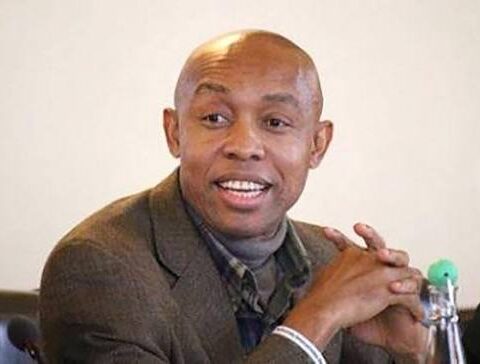
Anthony Kila is the author of “Crucial Cs Around D: The Disciplines of Decision-Making and Leadership.” He is a Jean Monnet Professor of Strategy and Development at the Commonwealth Institute of Advanced and Professional Studies (CIAPS). He also serves as Pro-Chancellor and Chairman of the Governing Council of Michael and Cecilia Ibru University (MCIU).