By Martins Azuwike
Brethren, have mercy on us. This sounds more like what is heard among various religious adherents, especially the Christian faithful. But it is far from religion. We are all involved in it, since everyone comes from one local government area or another. It connotes colleagues, members, or comradeship.
In the scheme of things in the country, however, governors are placed far above the electors who elect them. Like the proverbial cat, they have nine lives. Their instinct for survival remains high. The Constitution confers immunity on them. More of these on another day. Freedom is our goal.
By design, Local Governments in the country are meant to give communities a prominent place in the development matrix. They are the cardinal points in transmitting policies, programmes, and projects to address the critical development needs of rural dwellers. That’s the ideal. The Constitution assigns them responsibility for basic education, health, local infrastructure, primary healthcare, agriculture, and community services, and makes them the foundation of grassroots governance in the country. In practice, however, the inappropriate has become the reality, paralysing the noble framework, to the detriment of rural communities.
It was not so premeditated from the beginning. Regrettably, state governors have complicated the environment, creating and adopting systems that are warped and convoluted, allowing reprehensible outcomes to prevail in their personal interests, driven by avarice.
It is alleged that the situation is so repulsive and deplorable that today, in some of the states (if not all), politicians who aspire to the office of local government chairmen or councillors and emerge as winners after elections, are coerced into signing undated resignation letters and submitting the same to the chief executive of their state before they are sworn in. The implication of this, if it is true, is that dates are affixed on their behalf if they cross the red lines drawn by the governors, signalling their effective resignation. As part of demonstrating their loyalty, they are also not expected to implement programmes or execute projects without the knowledge and approval of the governors.
In Nigeria, the Local Government Areas are regarded as the third tier of government, after the Federal and State Governments. Not all may accept this position, but the Supreme Court judgment in July 2024 affirms it.
Forty-five years earlier, the 1979 Constitution provided for Local Governments in Chapter One, Part Two where Section 7(1) said: “The system of Local Government by democratically elected local government councils is under this Constitution guaranteed; and accordingly, the Government of every State shall ensure their existence under a law which provides for the establishment, structure, composition, finance, and functions of such councils.”
Adebayo Salami of the Department of Political Science, Olabisi Onabanjo University, Ago-Iwoye, described these as novel ideas, and added: “Subsections 1,2,3,4,5, and 6 equally address fundamental issues relating to the creation, area delimitation, public revenue sharing, and the role of the local government in economic development planning, among others. Part one of the first schedule of the 1979 Constitution not only mentions the number of States in Nigeria, but also the number of local governments in each state of the federation.”
Ideally, Local Government Areas constitute the third tier of government. It is a constitutionally guaranteed system of governance, though this status has been debated and whittled down in some quarters. Even with that, the landmark judgment by the Supreme Court of Nigeria in July 2024 clearly affirmed LGAs as the third tier of the country’s governance architecture. The apex court did not stop at that, but also granted them financial autonomy and clarified their constitutional role.
The Constitution on LGAs
The constitutional position of the local government areas in Nigeria is explicitly outlined in Section 7 of the 1999 Constitution, which:
· Guarantees the system of local government by democratically elected councils
· Requires each state to establish LGAs by law, defining their structure, composition, and functions.
· This provision entrenches the LGAs in the constitution, unlike in some federations where local governments are mere state creations and appendages.
The Fourth Schedule also:
· Lists the functions of LGAs, including primary education, health services, local infrastructure, and community development.
· This constitutional assignment of duties strengthens their claim as a distinct tier of government.
Some analysts argue that LGAs are administrative arms of states, since states define their boundaries and laws. This probably explains why the states continue to see and treat LGAs as mere add-ons and footnotes in the scheme of things. But they are dead wrong. It is clear that the constitutional entrenchment and direct allocation of federal revenue, as enshrined in Section 162, elevate Local Government Authorities beyond simple state agencies.
With the July 2024 Supreme Court ruling, much of the ambiguity regarding the status of the LGAs has been resolved, and they have been affirmed without any iota of doubt as the third tier, alongside the federal and state governments. They are meant to receive revenue allocations, which reinforces their autonomy, as clarified by the judiciary, and ends decades of debate on their status. Check Nigerian Federalism and Local Government ConstitutionNet – Supreme Court ruling on LGAs, Local Government and the Constitution: Nigerian Experience, if you are still in doubt.
Yet, the state governments won’t free them from their strangleholds. They still exert strong control, intensifying tensions over local government autonomy. When it is time for elections, the governors go full throttle on their wits, unrewarding manipulations, and gerrymandering power to swing outcomes in favour of their parties.
These outlandish, underhanded practices are limiting factors in the effort to develop local communities, but have been deftly adopted by state governors to influence the electoral outcomes of their parties. In many instances, it has become the new normal for any party in power in a state to win all the local government chairmanship and councillorship seats of the state under its watch. By parties’ manipulative calculations, metrics, and perceptions, that’s the best way to measure the Governors’ popularity and power. This thought remains fallacious, subjective, and grossly misleading rather than objective, although it may serve the immediate but ephemeral purpose.
LGAs Definition
To stay focused on the topic of discussion, the definition of the local governments would be kept within the confines and scope of the constitution.
First, the constitution guarantees the existence of local government areas, ensuring a system of democratically elected councils. By this stroke of the pen, every state is required to provide for the existence of local councils through laws that establish their structure, composition, finance, and functions.
Second, the envisaged laws are expected to define boundaries by prescribing the area over which a local government council exercises authority. The constitution also recommends that boundaries be demarcated as clearly as practicable, considering common interests of the community, traditional associations of the people, and administrative convenience.
Third, there are 774 local government units, comprising 768 LGAs and 6 Area Councils. Each LGA is governed by a local government council, led by a chairman who serves as the Chief Executive, and by Councillors, who are elected from the wards and constitute the legislative arm.
In summary, Nigeria’s Constitution defines Local Government Areas as democratically elected councils whose boundaries must respect community interests, traditions, and administrative practicality, forming the foundation of grassroots governance in the country. Distinct institutions meant for the good of the communities. That’s what they are. But the governors won’t have this. The affairs of the LGAs, especially finances, like marionettes, must be determined, dictated, and manipulated by the state (governors). But isn’t this antithetical and offensive to the spirit and letter of the Constitution? If it’s not, then the Supreme Court should have kept its July 2024 judgment on the autonomy of the LGAs and the need to allocate their funds directly to their accounts.
Functions of LGAs
In the Fourth Schedule of the Nigerian Constitution, 1999, Local Government Areas are assigned 11 core functions on grassroots governance, including community development, education, health, and infrastructure.
Construction and maintenance of roads, streets, drains, parks, and public facilities; provision of street lighting, water supply, and refuse disposal; and development of markets, motor parks, and public conveniences fall under the community and infrastructure functions of LGAs.
Regarding education, LGAs are responsible for the establishment and maintenance of primary schools (in most cases, in partnership with state governments), and promotion of adult and vocational education at the community level.
Health and social services function requires LGAs to provide and maintain health centres, dispensaries, and maternity clinics; control infectious diseases and public health campaigns; and register births, deaths, and marriages.
In agriculture and natural resources, LGAs are to encourage agriculture and forestry, and develop local fisheries and livestock markets.
Community development functions include naming streets and numbering houses, registering small businesses and shops, and promoting arts, culture, and community recreation.
Other administrative roles by LGAs include the collection of rates, radio/TV licences, and other local taxes, participation in census and electoral processes, and support for traditional institutions and community leadership.
No scintilla of doubt. The constitutional mandate of LGAs ensures grassroots development, even as their effectiveness often depends on funding and the level of cooperation with state governments. Doubters should consult Nigerpress’ breakdown of LGA functions and Section 7 of the Nigerian Constitution if the message remains hazy.
This is the essence of recent reforms, such as the Supreme Court’s July 2024 ruling that granted financial autonomy to LGAs, aimed at firming up their ability to deliver these vital services.
Division of Functions
How functions are separated between state governments and LGAs matters. The reason is that some responsibilities, such as education and health, overlap, and it is in these areas that real-world tensions arise.
Whether the state chief executives accept it or not, there are vital takeaways. Local Government Areas are entrenched in the Constitution as the third tier of government in the country. Following this, their boundaries and existence are also legally defined by state laws, but must align with constitutional principles. They come in handy as the closest level of governance to the people, ensuring representation and administration at the grassroots level. Governors should, therefore, let them go and release their financial allocations to serve the communities. Yes, they should, without further delay, untether the LGAs from their strangleholds.
Defiant Executives
In chapter four, verse seventeen of the Book of James, the holy scriptures say: “Therefore to him that knoweth to do good and doeth it not, to him it is sin (King James Version).” This piece is not being judgmental in any way. That’s not the intention of the scriptural quote. The idea is, again, to draw the attention of the state executives to what ought to be and emphasize the urgent need for not only a sea change, but also a clear departure from the ludicrous and hurtful practices that have long left LGAs and community development dangerously castrated and incapacitated.
What did the Supreme Court say in its July 2024 ruling? It ordered in unambiguous terms that monthly LGA allocations be paid directly into council accounts, not into the State-LGA Joint Account. Have the Governors complied? We see more resistance. Recalcitrance, if you like. Seventy-eight long weeks after the ruling, it is reported that governors have continued to retain the sum of N4.5 trillion from July 2024 to July 2025. In some quarters, it is estimated at a humongous N7.43 trillion by the end of 2025. Local Government Areas can leverage the allocations to deliver life-changing services when applied meticulously to address the ever-increasing needs of the communities. Yet, many of them, especially in oil-bearing rural communities, are ensconced and immersed in debilitating and suffocating poverty.
However, they should always remember that history can, one day, deliver brutal judgment. While they still draw circles and hold their strategic meetings to circumvent doing the needful, it must also not be lost on them that history rewards movements, not meetings.
Presidential Threat
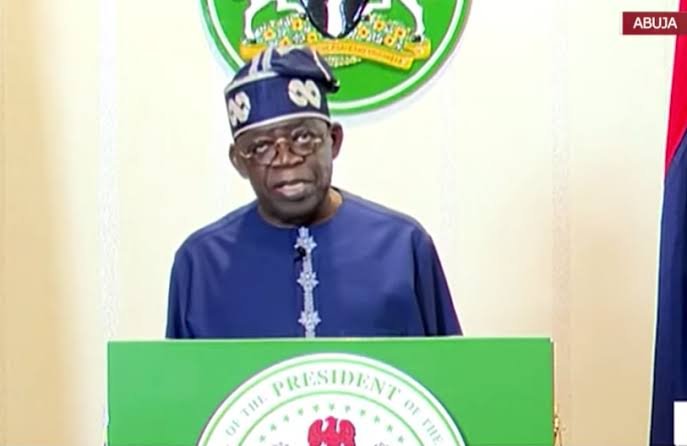
President Bola Tinubu warned the Governors to either take their eyes and hands off the finances of the LGAs, or face the harsh reality of complying by fiat. At the Executive Committee meeting of the ruling All Progressives Congress (APC) last month in Abuja, he threatened to issue an Executive Order to enforce direct deductions at source from the Federation Account, bypassing state governors, if they continue to retain funds that should be for the councils and ensure LGAs receive their funds. Maybe the governors will now comply. But the popular view is that the President does not need to warn or threaten after waiting for more than a year.
Does it matter?
For Local Government Areas, this matters much because it guarantees greater financial autonomy and the ability to fund projects directly.
This is where the frustration arises, in part. It means that Governors will lose control over LGA funds, a development that is bound to weaken their patronage networks. On the other hand, it strengthens constitutional compliance, boosting the credibility of reforms for the federal government, while increasing potential improvement in service delivery at the grassroots level for citizens.
Either way, it is tipping towards a complex case that may still be laced with risks and challenges. Governors may still resist, citing constitutional ambiguities or political influence. That would be a case of political pushback. Analysts also say that direct deductions require new administrative frameworks to prevent corruption at the Local Government Area level. This also constitutes implementation hurdles. It has further been pointed out that some governors may challenge the President’s Executive Order in court, stretching the enforcement through legal battles.
In all of these, the question remains: for how long can we continue to withhold funds for developing communities in our 774 local governments? Workable solutions are urgently needed to loosen LGAs from their manacles and yokes.
Martins Azuwike is an Economist, a member of the Guild of Public Affairs Analysts of Nigeria (GPAAN), the Nigerian Guild of Editors (NGE), and a multiple award-winning journalist in Banking/Finance (DAME Hall of Fame), Energy, Banking/Finance, Telecommunications (NMMA), and Business Analysis.