How Denial, Institutional Capture, and the Systematic Pursuit of Enemies Have Replaced Governance in Africa’s Largest Democracy
By Agbeze Ireke Kalu Onuma, AI-KO
The present moments in our nation’s political life do not require interpretation. They are so naked in their revelation, so complete in what they expose, that commentary is almost redundant. I want to go back to 2025 and do some reflections.
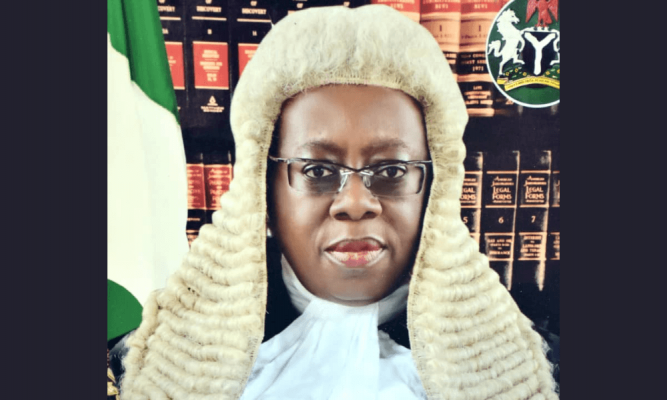
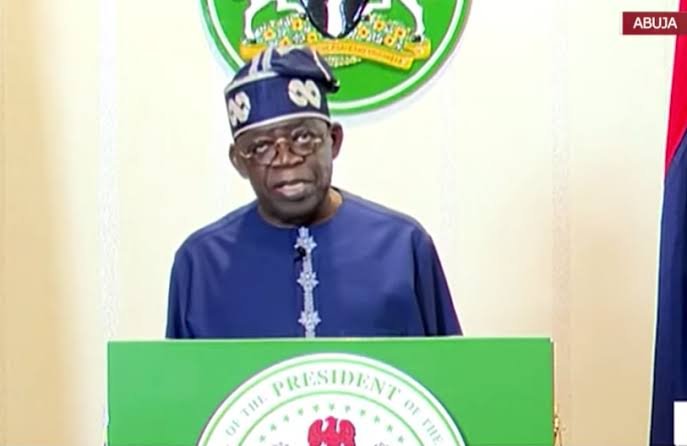
The 2025 All Nigeria Judges Conference produced exactly such a moment – a moment whose implications reverberate through every institution, every court, every oath sworn in the name of constitutional Nigeria. On a Monday morning in November, at the National Judicial Institute in Abuja, the nation’s most senior jurists gathered for their annual conference. At the conclusion of the address by Chief Justice of Nigeria Justice Kudirat Kekere-Ekun, as the president of the republic approached the podium, the Guards Brigade Band played not the Nigerian National Anthem – not the solemn, communal, constitutional hymn that belongs to every Nigerian equally – but “On Your Mandate We Shall Stand,” Bola Ahmed Tinubu’s personal campaign anthem. The anthem of a political campaign. In a hall full of judges. At the most important annual gathering of the Nigerian judiciary. While the…
When the video circulated, Atiku Abubakar’s first instinct was to dismiss it as a deep fake. He could not believe, as a Nigerian who has participated in the country’s democratic life for decades, that what he was watching was real. Then it was confirmed authentic. Then he waited for the Presidency to explain. Then he waited for the Office of the Chief Justice to explain. “Silence. Total, deafening silence.” He condemned it without equivocation: “What I saw was nothing short of an assault on our national dignity: On Your Mandate, President Tinubu’s personal political anthem, was brazenly played in place of the National Anthem at the end of the Chief Justice of Nigeria’s speech.” He called it “reckless, scandalous, disgraceful, and deeply irresponsible.”
He named the injury with the precision it deserved: “It is the most blatant signal yet that this government is attempting to drag the judiciary into the partisan gutters of the APC, if not coerce a wholesale ‘defection’ of Nigerian judges into political alignment.” And then he asked the question that this government cannot answer without convicting itself: “How can judges dispense justice fearlessly when Tinubu’s operatives are busy eroding the boundaries between state, party, and personal ambition?”
The National Judicial Institute issued a clarification explaining that the Guards Brigade Band had played the tune as part of its ceremonial protocol for ushering the president to the podium, that no judge sang or chanted any political song, and that the judiciary remained strictly non-partisan. Fine. Accept the explanation. But accepting it does not resolve the central outrage; it compounds it. If the Guards Brigade Band – a military formation under the command of the executive arm – saw fit to play a partisan campaign anthem at the most senior judicial gathering in the country, on the same day that the executive was lecturing the judiciary on integrity, then we are already well past the point where the question is whether the judiciary is under political pressure.
The question is whether anyone in this administration understands the difference between the state and the party, between the president and the office, between Nigeria and Tinubu’s mandate. The evidence before us suggests they do not. And that is a crisis more dangerous than any single policy failure, because it is a crisis of constitutional imagination – the inability to conceive of governance as anything other than the extension of partisan will.
The campaign anthem incident did not arrive in isolation. It arrived as the culmination of a pattern whose consistency has become impossible to excuse as coincidence. When a founding member of the APC – a man who helped construct the party from its progressive foundations, who campaigned for its candidate, who was recommended for a ministerial position – is summarily rejected by the Senate in August 2023 on the basis of a DSS security report, you see the machine.
When that same man spends the next two years watching from the outside as the party he helped build is transformed into something unrecognisable, you begin to understand why, on 10 March 2025, Nasir Ahmad el-Rufai formally resigned from the APC and joined the Social Democratic Party. El-Rufai was not a peripheral figure. He was a founding father of the APC. He was a two-term governor of Kaduna State. He was the man who, more than perhaps any single figure from the north, mobilised the Northern Governors’ Forum to support power rotation southward and Tinubu’s emergence as the APC’s 2023 standard-bearer. This is the man who helped build the house that Tinubu now inhabits.
In his resignation letter, el-Rufai said what every insider who has been paying attention knows: “Developments in the last two years have shown that my personal values and those of the APC no longer align.” He had already described Nigeria’s political situation, in January 2025, as “a national emergency.” He was not wrong. He was being characteristically precise. When the founders of a political project declare its current incarnation a national emergency and leave – when they cannot find their values inside the structure they built – what does that tell us about what the structure has become?
There is an irony so bitter it requires its own paragraph. El-Rufai was rejected by the Senate for a ministerial position on the basis of a DSS security report. Let us hold that thought alongside another documented fact: this is the same Tinubu administration whose Vice President publicly claimed that no journalists have been harassed since it assumed office – a claim so thoroughly contradicted by documented evidence that it provoked a formal letter from the Committee to Protect Journalists and five other organisations.
This is an administration that routinely deploys state security agencies to file reports, make arrests, detain critics, and intimidate opponents – and then insists, with the Vice President’s untroubled face, that nothing of the sort is happening. The DSS, which produced the security report that ended el-Rufai’s ministerial ambitions, is the same agency that Media Rights Agenda documented as being responsible for seven of the 141 documented attacks on journalists and civic expression between May 2023 and May 2025. The pattern of who gets protected and who gets targeted by these agencies is not random. It is deliberate. And it is political.
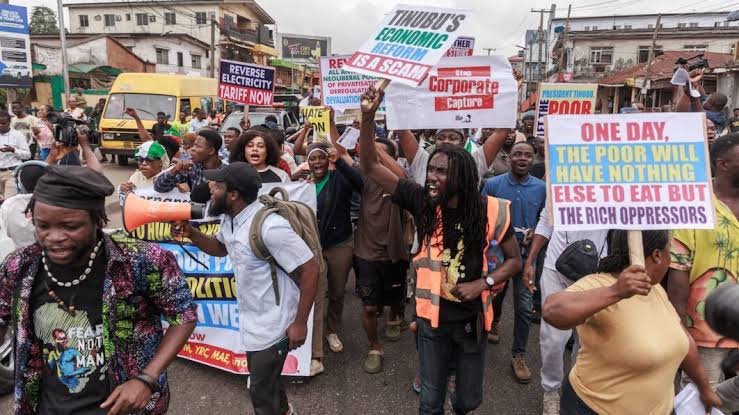
Beneath this architecture of institutional capture lies an economy whose condition the government has spent three years explaining away, dismissing, reframing, and denying – while Nigerians live its consequences in their bodies, their pots, and their children’s stunted growth. The Cadre Harmonisé assessment, conducted by the Federal Government itself in collaboration with the WFP, FAO, and UNICEF, projected in November 2024 that 33.1 million Nigerians would face acute food insecurity during the 2025 lean season of June to August – an increase of seven million people from the same period the previous year. The number of people facing emergency-level need was projected to nearly double. An estimated 5.4 million children and 800,000 pregnant and breastfeeding women were at risk of acute malnutrition or wasting.
Of those children, 1.8 million were projected to develop Severe Acute Malnutrition – a condition whose damage to developing brains and bodies is irreversible. UNICEF’s Country Representative put it without bureaucratic softening: “Children are at the heart of the crisis, facing irreversible physical and cognitive consequences, and potentially even death.” The WFP called it “a monumental hunger crisis.” Three UN agencies, speaking jointly, used the words “urgent,” “alarming,” and “immediate and massive in scale.” The assessment was led by the Federal Government’s own Ministry of Agriculture and Food Security. The government, in other words, co-produced the data that documented its own failure.
And what did the Presidency do with this assessment? Presidential spokesman Sunday Dare dismissed it. “The claim that 33 million Nigerians are at risk of hunger is a projection, not a confirmed reality,” he declared, accusing the media of “alarmist journalism” for reporting what three UN agencies and the Federal Government’s own ministry had found. He described the Cadre Harmonisé report – the gold standard for food security assessment in West Africa, used by governments, humanitarian agencies, and international donors – as merely a “regional tool used to forecast food insecurity,” as if its forecasting function somehow annulled its relevance. Columnist Tom Ohikere answered him directly and mercilessly: “Go to Utako Market, Mr Onanuga. A paint bucket of garri is N3,500.
A crate of eggs is N5,500. Minimum wage is N70,000 since July 2024. That wage cannot buy one bag of rice. Go to any teaching hospital: doctors are writing prescriptions patients cannot fill. Go to any motor park: drivers sleep in their buses because one trip no longer covers fuel. You cannot eat flyovers. When government disputes hunger, it is no longer governing. It is gaslighting.” A bag of rice that cost N35,000 in May 2023 was selling for N77,000 by July 2024. Beans had risen 282 per cent year-on-year. Food inflation hit 40.87 per cent in June 2024 – the highest in 28 years. A country’s minimum wage cannot buy a bag of rice. These are not projections. These are receipts.
Into this landscape of documented, irreversible hunger – children being permanently cognitively damaged by malnutrition, parents making daily calculations between food and medicine – the First Lady stepped on 25 June 2026, at a second-quarter meeting of the Renewed Hope Initiative with the wives of the 36 state governors at the Presidential Villa. After the meeting, she spoke to journalists. She had an opportunity to acknowledge the crisis. She had an opportunity to announce a serious policy response. She had an opportunity to speak to the gravity of 1.8 million children facing Severe Acute Malnutrition.
Instead, Senator Remi Tinubu advised Nigerians to start selling akara, roasted corn, and kuli-kuli. “To start akara business doesn’t take a lot of money. To start roasting corn or kuli-kuli doesn’t take much. We didn’t give them a loan, we gave them a grant. We have encouraged Nigerians as best as we could.” She urged Nigerians not to lose hope despite the economic challenges, saying the narrative had “really changed” and that citizens must continue to embrace hope in line with the Renewed Hope Agenda.
The nation’s response was immediate and furious – not because there is anything wrong with akara, roasted corn, or kuli-kuli as businesses, nor because the Nigerian street food economy does not sustain millions of families with dignity and intelligence. The fury was at the spectacular mismatch of scale between the crisis and the prescription. While 1.8 million children face irreversible brain damage from malnutrition, the First Lady prescribes frying bean cakes. While 33 million Nigerians face acute food insecurity, the Renewed Hope prescription is a grant for a kuli-kuli stall. While engineers, doctors, nurses, and academics are evacuating the country at historic rates because the conditions for professional life have been destroyed, the solution on offer is roasted corn.
DJ Switch was direct: “Other Nations Build Infrastructure, You Want Us to Sell Akara and Kuli-Kuli.” Rufai Oseni asked the question that destroyed the entire edifice in one sentence: “If selling Akara leads to Aso Rock, why didn’t she start?” One user captured the essential indictment: “Remi Tinubu giving small grants for akara and roasted corn while her husband’s policies have destroyed millions of businesses and pushed Nigerians into extreme poverty? This is not hope – it’s crumbs from the table they shattered.” Crumbs. From the table they shattered. If there is a more precise description of this administration’s approach to the suffering it has caused, I have not found it.
The contrast between the government’s economic prescriptions and economic realities has been crystallised in figures that the administration cannot explain away, no matter how many spokesmen it deploys. The Atiku Abubakar opposition coalition’s December 2025 joint statement – signed by Atiku, Peter Obi, former Senate President David Mark, and former APC National Chairman John Odigie-Oyegun – did not traffic in rhetorical abstractions. It translated economic failure into human terms: “Across the country, families are skipping meals, withdrawing their children from school, abandoning healthcare, and making impossible choices between transportation, rent, food, and medicine.
The father who goes to bed wondering how to provide the next meal for his family does not need a newspaper report to confirm hardship. The mother who now pays three or four times more for basic food items than she did two years ago does not require a television broadcast to understand inflation. The small business owner whose capital has been wiped out, the graduate trapped in unemployment, and the pensioner whose savings have become worthless do not need media interpretation to understand their circumstances.” This is not opposition rhetoric. This is lived testimony, assembled from the daily encounters of millions of people who have had enough.
The joint statement went further, and its language about the weaponisation of anti-corruption agencies – though it overlapped with points already widely documented – added a dimension that deserves careful attention: its explicit warning about the consequences of impunity. The opposition leaders warned that “evident social and political injustice could snowball into mayhem as the nation approaches another election cycle.” This is a warning, not a threat.
It is the warning of people who understand that societies have breaking points, that the suppression of legitimate political expression through institutional violence eventually produces the kind of volatility that neither Tinubu nor his opponents can control. We have seen it in Senegal. We have seen it in Kenya. We have seen it in Bangladesh. Citizens who cannot speak at the ballot box will speak in the streets. Citizens who cannot march in the streets will speak in ways that no government can easily manage. This is not a prediction made with satisfaction. It is a prediction made with dread, by people who love their country and can see where this road leads.
The administration’s response to criticism has itself become a defining feature of its governance model. In April 2026, Tinubu dismissed his critics as “noise-makers” and described the ADC’s national convention as “a street convention” driven by “rascality.” He warned that he would “not submit to the disobedience of lawful court orders” – in the same month in which his administration’s judicial actions in the ADC deregistration case were being condemned by the Court of Appeal as a brazen disregard for its own authority.
Atiku titled his response to the government’s posture “A Nation Gripped in the Throes of Fear” and stated with clinical precision what this government has become: “Rather than listen, the government has chosen the path of brute force and intimidation, treating dissent as treason and turning peaceful protesters into prisoners. No responsible administration fires live canisters at peaceful protesters or hides behind ambiguous laws to arrest and re-arrest citizens who have been granted bail by competent courts.” No responsible administration. It is a simple standard. It should not be a controversial standard. And yet its application to the Tinubu administration reads as indictment.
The African Democratic Congress has provided perhaps the most precise description of the Tinubu administration’s posture toward its own citizens. In its formal response to the Presidency’s dismissal of the hunger data, the party called the administration “tragically insular” and stated: “When over 80 per cent of Nigerians are struggling to feed their families, pay school fees, afford transportation and keep their businesses alive, it is extraordinary that a senior presidential spokesman can publicly suggest that the hardship is somehow overstated or even contrived. The truth is that Nigerians are not faking their suffering.”
Tragically insular.” That phrase should be inscribed somewhere prominent in the consciousness of every Nigerian citizen going into 2027. A government that is tragically insular cannot govern. It can only administer its own insulation. It can only issue statements from inside its bubble, managed by spokesmen who do not go to Utako Market or Nyanya motor park or Maiduguri General Hospital. It can only prescribe akara and kuli-kuli to people it no longer sees.
The ADC’s own trajectory from small party to the leading opposition platform for the 2027 election is itself a symptom of the crisis this essay describes. By July 2025, the ADC had become the meeting point of a coalition that included el-Rufai, Atiku, Peter Obi, Rotimi Amaechi, former Senate President David Mark, former APC National Chairman John Odigie-Oyegun, former Cross River Governor Liyel Imoke, and former Attorney-General Abubakar Malami. This is not a fringe coalition.
This is the Nigerian political mainstream – former ministers, former governors, a former vice president, a former Labour Party presidential candidate, a former APC national chairman – all of them converging under one roof, driven not by ideological affinity but by what they describe as a shared determination to rescue a country they believe is being systematically dismantled. When a project that broad – that disparate in its membership, that heterogeneous in its political histories – unites under a single banner, it is not organising for sport. It is organising because something has gone deeply, structurally, constitutionally wrong with the country’s governance. The mandate of 2023 has produced not Renewed Hope but its mirror image: a mirage that disappears the closer ordinary Nigerians get to it.
And yet the government does not see itself in this description. It cannot see itself, because its insulation from reality is now total. Its spokesmen do not see hunger. Its First Lady prescribes bean cakes. Its president says he took over from himself. Its Guards Brigade plays campaign anthems before the nation’s judges. Its agents detain political opponents with allegations a decade old while protecting current ministers under investigation. Its courts deliver judgements that defy the orders of superior courts.
Its vice president tells journalists that no journalists have been harassed. Its senior officials – surrounded by the physical symptoms of a country in crisis, by rising malnutrition data co-produced by their own ministry, by the departures of their own founding members, by the joint condemnation of five democracies – continue to explain, spin, deflect, and dismiss. This is what total institutional insulation looks like from the inside. And from the outside, it looks like what it is: a government that has stopped governing and is now merely surviving.
The question that emerges from all of this is not whether Tinubu’s administration has failed. The audit is complete: 33 million projected food insecure, a founding party member declaring a national emergency before he left in March 2025, a campaign anthem played before the nation’s judges, a First Lady prescribing akara grants as an answer to economic catastrophe, a coalition of every major opposition figure in the country assembling with rescue as their explicit mandate.
The question is whether Nigeria’s democratic institutions remain strong enough to produce a legitimate, credible, non-violently-induced change of government at the 2027 elections – or whether the project of institutional capture, now at an advanced stage, will have sufficiently hollowed out those institutions that what is called an election will be something else entirely. As el-Rufai warned in January 2025, Nigeria is in a national emergency. Not the emergency of one sector, one policy failure, or one bad year. The emergency of a country whose governing institutions are being systematically reprogrammed to serve one man’s political survival, in a manner that the man’s own former allies can no longer defend or excuse.
Nigerian judges swore an oath to defend the Constitution, justice, and the rule of law. Not to stand on the mandate of Bola Ahmed Tinubu. Not to rise to their feet when a campaign anthem is played in their hall. Not to deliver judgements that defy orders from superior courts. Not to serve as instruments of political elimination dressed up as judicial process. The oath they swore is the same oath Tinubu swore on 29 May 2023. The oath has not changed. The country has not changed its constitution.
What has changed is the behaviour of the administration sworn to uphold it – and the willingness of some within the system to accommodate that behaviour in the interest of proximity to power. But proximity to power is not a substitute for integrity. And a campaign anthem played before the nation’s judges is not a diplomatic incident to be managed with clarifying statements. It is a signal. And the signal is precisely what Atiku said it was: the most blatant declaration yet that this government sees no distinction between the Nigerian state and the personal political mandate of Bola Ahmed Tinubu.
Nigeria is watching. The Nigerian people – 93 per cent of whom, according to their own testimony in Afrobarometer surveys, say their country is heading in the wrong direction – are not confused about what is happening. They do not need analysis. They live the analysis every day, in the garri that costs N3,500 a paint bucket and the eggs at N5,500 a crate and the minimum wage that cannot buy a bag of rice.
They live it in the akara advice from a First Lady who has never had to fry akara to feed her children. They live it in the campaign song that replaced their National Anthem before their judges. They live it in the knowledge that the man who helped build the ruling party has declared the country a national emergency and left. They live it in the knowledge that three UN agencies have jointly described their country’s hunger situation as monumental – and their government has called that a projection, not a confirmed reality.
The mandate of 2023 was a promise. The promise was Renewed Hope. What was delivered is the mirage of that promise – visible at a distance, dissolving at proximity, leaving those who chase it with nothing but dust and the memory of what they were told to expect. The mandate and the mirage. That is the history of this administration, written by the facts it has produced, in the language that 200 million Nigerians speak every morning when they wake up into a country their government has stopped trying to govern.
The reckoning is coming. It always does. And when it comes – at the ballot box, in the streets, in the courts that still remember their oath – it will not distinguish between those who played the campaign anthem and those who remained silent while it played. Nigeria will remember. That is the one thing no government can take from its people: the capacity to remember what was promised and to judge what was delivered.