Agbeze Ireke Kalu Onuma, AI-KO
Before the Television, There Was a Corner at 38 Kofo Abayomi Street
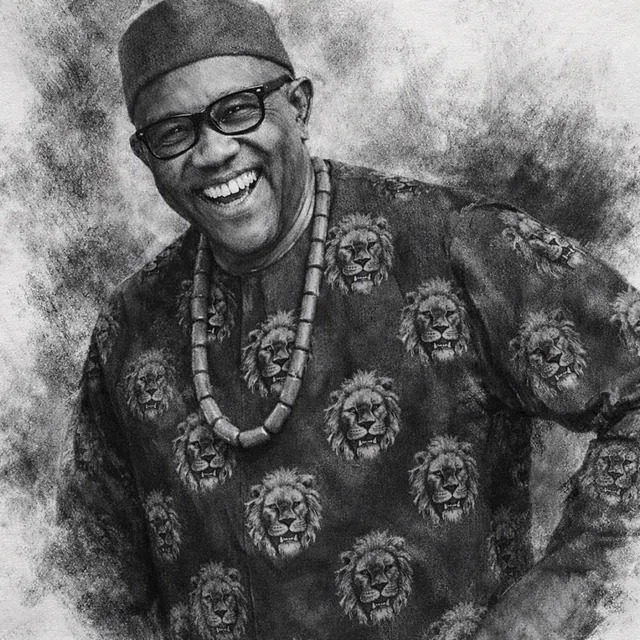
I have been watching Peter Obi since 2003. Not as a passive observer, not as a fan, not as a partisan supporter, but in the way you watch someone you met in a specific moment and decided, for reasons you cannot fully articulate at the time, that this person was worth watching carefully over time.
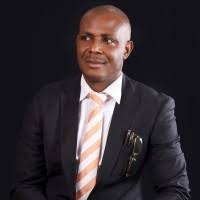
The first encounter was at an Ndigbo Lagos meeting at our Secretariat on 38 Kofo Abayomi Street. It was a political committee gathering – the kind of meeting that happens in the margins of power, where people interested in politics but not yet formally in it assemble to take stock of things. Obi was a member of the group, and he arrived early. I would later learn this was entirely characteristic. He sat quietly in a corner, exuding what I can only describe as understated composure. When I approached to greet and engage him, his reserved demeanor caught me off guard. I found myself wondering: Is this really Peter Obi, the entrepreneur, the serial investor? Or have I approached…
When I privately asked him how he intended to break the Uba brothers’ tight control over Anambra politics – the question the whole room was circling around – he did not rally for a revolution. He methodically outlined his approach: “First, we recover the stolen funds; then, we rebuild the state and its infrastructure.” No theatrics. No grand rhetoric. Just strategy. I jotted in my notebook: “Different breed.” Over the next twenty-two years, that observation has solidified into a firm conviction.
That brief conversation was enough to form a first impression that I have been scrutinizing ever since. When he decided to run for the governorship of Anambra, he returned to Ndigbo Lagos to inform the group. Our support was tacit, our prayers sincere. Once thrown into the political spotlight, he transformed – but not in the way most politicians do. Most politicians expand: they acquire entourages, develop the art of the grand entrance, learn to inhabit the theater of power until the theater becomes indistinguishable from the person.
Obi contracted. He became more precise, more deliberate, more himself. When the Uba machine illegally displaced him from office, he did not lead a raucous crowd. He went to court, armed with legal evidence. Three separate judicial battles, three victories. He served out his term, handed over over 75 billion naira in savings to his successor – not debt, not loans, not borrowed time, but actual saved money sitting in actual accounts – and walked away.
I have written about him extensively on my Medium page. In “Peter Obi: The Gadfly” – published in March 2026 – I reached for the Socratic metaphor deliberately. In 399 BC, Socrates described himself at his trial as a gadfly sent by the gods to sting the horse of Athens – large, generous, and grown sluggish – into wakefulness. His purpose was not to be loved.
His purpose was to be necessary. Athens eventually sentenced him to death, because the horse would rather swat the fly than be woken. Obi invoked this analogy himself in a 2012 speech to the Nigeria Governors’ Forum, describing how the cow needs the gadfly to stay awake. He was describing the relationship between citizens and leaders. What he did not know was that he would himself become the gadfly – not for one state, but for a nation.
In my essay “Peter Obi: The Man, The Myth, The Moments” – part of my Combing the Dust series, published in May 2025 – I was even less restrained. That essay was, in my own words, a rage. It emerged when the kite was floated that Obi might again serve as Atiku’s vice-presidential candidate – and I lost it. I wrote it as a confrontation with my own twenty-two years of observation, with the system that seemed determined to reduce a man I had watched fight and win three legal battles to a spare tyre in someone else’s jalopy. I called it an autopsy – of my own naivety, of a system that chews up integrity and spits out compromise. The man I met in 2003, the one who showed up early and sat quietly and spoke with precision, does not deserve to be a footnote in Nigeria’s book of broken promises. I said so in that essay. I say so again here.
I am writing this essay – an analysis of the Sunday Politics interview he gave on Channels Television on July 26, 2026 – with all of that history explicitly present. Because I think a genuine assessment requires someone who has been watching long enough to know the difference between what Obi has always said and what he is saying now, between the commitments he has kept and the ones where he has been inconsistent, between the persona he projects and the record he has built. I am not his fan. I am not his opponent. I am someone who has been watching since 38 Kofo Abayomi Street and who believes those twenty-two years of watching entitle me to say something honest about what one hour and fifty-two minutes of national television revealed.
I Watched All of It. Here Is What I Found.
On the evening of July 26, 2026, Peter Obi sat before Seun Okinbaloye on Channels Television’s Sunday Politics for one hour and fifty-two minutes. More than 220,000 people have watched it on YouTube already. I watched all of it, and I want to say upfront that watching a political interview in its entirety is an increasingly rare discipline in a media environment that produces sixty-second clips and hot takes before the microphone has cooled. I watched because the full two hours is the only unit that does justice to what is being said. His admirers watched for confirmation. His opponents watched for the stumble. I watched to evaluate, as honestly as I can, what this man is actually proposing, where those proposals hold up, and where they do not.
Not Desperate for the Title. Desperate for What the Title Can Do.
The interview opens at the four-minute mark with a declaration he has made many times before: “I’ve always said I’m not desperate to be Nigerian president. I’m desperate to see Nigeria work.” He went further: if the country were working, if it were creating opportunity for its young people, he would not need to run. He does not even need to hold any post.
I believe him. Not completely, not naively, but substantially. Here is my reasoning. The man I met in 2003 was not performing ambition. The man who went to court three times rather than lead a mob was not performing principle. The man who left 75 billion naira in savings for his successor – a figure that was initially met with disbelief because it was so alien to the Nigerian political psyche – was not performing frugality. These things happened before anyone was asking.
They happened when there was no national audience watching, no Obidient movement to cheer, no social media to trend. The pattern of behavior across twenty-two years does not support the hypothesis of a man consumed by the hunger for a title. It supports the hypothesis of a man consumed by the question of what is being done to this country and who intends to do something about it.
What I also note is something he said at the fifty-one minute mark, unprompted: he will be sixty-eight or sixty-nine at the end of a 2027 term. That this will almost certainly be his last presidential run. That the next generation must be allowed to lead. In a political culture where the same names return every cycle in new vehicles with new acronyms, this frank reckoning with age and succession is so unusual that it deserves more than passing mention.
As I argued in my Combing the Dust essay, the man I met in 2003 was never building a dynasty. He was never accumulating assets. He was – and remains – a man on a journey, not a man building a permanent address in power. Sunday’s interview confirmed it.
The One-Term Pledge: This Changes the Incentive Structure, and That Is the Point
At the twenty-minute mark, the one-term commitment. He said it with a force that I have not heard from him before: “I don’t need more than four years to show Nigerians the right path they will follow. A day more than four years is not Peter Obi. Even if you want me to sign it, I sign it with you.”
Most commentary has treated this as just another campaign promise. I want to argue it is structurally more significant than that. A president seeking a second term governs the first with one eye permanently on re-election. Every appointment, every policy, every reform that might alienate a necessary constituency gets filtered through the calculus of: will this cost me votes in five years? The entire architecture of second-term-seeking governance is organized around managing the coalition that must survive to vote again. That calculus produces the timidity, the compromises, the half-measures and the strategic patience about necessary reforms that have defined every presidency of the Fourth Republic.
A president who has publicly committed, with the specificity Obi used, to a single term, and whose legacy will be measured against that commitment by a generation paying very close attention, is structurally freed from much of that architecture. Nigeria’s governance problem has not primarily been a problem of intelligence or even intention. It has been a problem of incentive. Obi’s one-term commitment is a statement about incentive structure. I take it more seriously than the commentary suggests most people are taking it.
The Gadfly in the Studio: Weaponizing Data Against a Government That Cannot Rebut It
In “Peter Obi: The Gadfly”, I argued that what makes Obi a gadfly rather than merely a critic is his commitment to evidence over emotion, to data over decibels. The interview was a two-hour extension of that argument. He brought the numbers and kept returning to them with the discipline of a man who has memorized the evidence and intends to make everyone reckon with it.
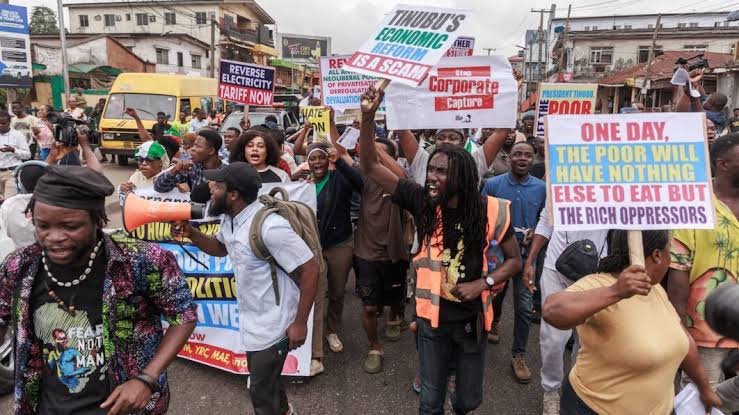
The World Bank has projected that 79 percent of Nigerians will face poverty – in a country of 230 million people, that is over 180 million human beings below the poverty line. The World Food Programme has warned that 35 million Nigerians face hunger. Mass abductions continue across Zamfara and the North-West. Out-of-school children, a figure I have cited in my own writing on the Chibok abductions and on what I call “the history Nigeria refuses to learn from,” number in the millions. These are not Obi’s numbers. They are produced by institutions with no partisan stake in Nigerian politics. He wielded them the way a prosecutor wields evidence: not to introduce new information, but to insist that existing information demands a verdict.
“I am not the problem of Nigeria,” he said. “If they want to discuss anything, let them discuss how to pull our people out of poverty, out of hunger, and secure the country.” This is not merely a deflection of criticism, though it is also that. It is a diagnosis of the structural dysfunction in Nigerian political debate that I have made repeatedly in these essays: we have become a country that discusses personalities who are supposed to solve problems instead of the problems those personalities are supposed to solve. The conversation is almost entirely about who is what rather than what is happening to whom.
The Presidency’s response, delivered by Special Adviser Bayo Onanuga, described the interview as “a PR disaster” and identified two concerns: Obi’s party movements and his claims about the 2023 election. He did not engage the World Bank poverty projection. He did not engage the 35 million facing hunger. He did not engage the out-of-school children or the security failures. He talked about Peter Obi. I want to be direct: a government confident in its record engages the record. A government that finds the record inconvenient engages the man. Within hours of the interview, the Presidency had done precisely what Obi spent two hours arguing against. He could not have scripted a more effective demonstration of his central point.
The Retirement Demand: Political Strategy and Honest Assessment, and the Difference Matters Less Than People Think
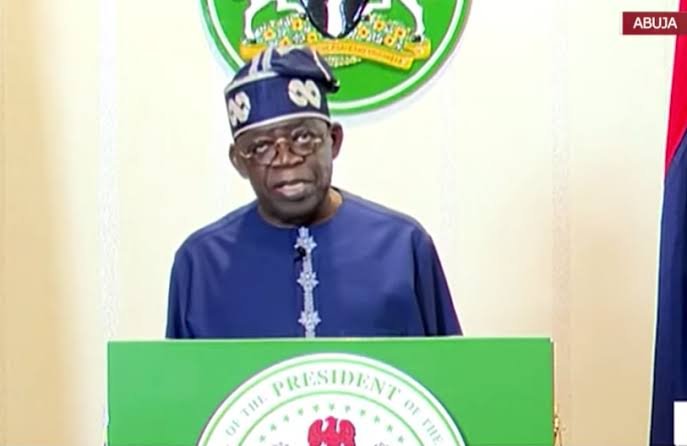
At the twenty-three minute mark, Obi said what many Nigerians think but calculate is too combustible to say in public: “The Bola Tinubu that was governor of Lagos is not the one that is president today. He is tired. The man should just step aside. Yes, he doesn’t have the capacity to do the job.”
I am not going to pretend this is a purely disinterested observation. It is a political statement made by a presidential candidate who stands to benefit from the incumbent being seen as incapacitated. I think it is important to name that, because political calculation and genuine assessment are not mutually exclusive, and pretending the political dimension does not exist is its own form of dishonesty. But the substantive claim is not obviously wrong. In my Gadfly essay I noted that the contrast between Tinubu’s Lagos governance record and his federal record is striking by any honest measure.
The argument that governing a mega-city and governing a fractured federation of 230 million people across thirty-six states are different in kind, not just in scale, is structurally sound. The evidence currently available does not make it easy to argue against. And when Okinbaloye noted that US President Trump had commended Tinubu’s security efforts, Obi handled it with diplomatic precision I admired: “Thank you to Donald Trump. But with the crisis we are facing, his best is not enough. We need to do more.” He acknowledged the endorsement without being captured by it. The 35 million facing hunger do not eat endorsements.
The Record That Cannot Be Unbuilt: Why Anambra Still Matters in 2027
Obi’s critics, including the occasional sharp piece like Azu Ishiekwene’s “Obi’s Transition From Serious Contender to Mascot,” tend to wave his governorship away as ancient history, a proof-of-concept too small and too old to bear the weight of federal ambition. I argued against this reading in my Gadfly essay, and I want to argue against it more forcefully here.
What Peter Obi did in Anambra is not a data point to be filed and forgotten. It is the only example in the entire history of the Fourth Republic of a Nigerian governor systematically prioritizing state savings over personal extraction. He recovered money stolen by his predecessors. He avoided any clash with anti-corruption agencies – a rarity so extreme in Nigerian political culture that even his critics cannot find a corruption allegation that sticks.
He left behind over 75 billion naira in local and foreign currency, funds that his successor Willie Obiano later confirmed were used in the construction of the Anambra Airport. He prioritized education, returning schools to missionary bodies that improved educational outcomes. He ranked Anambra among the top three states in fiscal responsibility. Even Nyesom Wike – who would later become a vocal critic – stood in Anambra during Obi’s tenure and declared publicly: “Obi is outstanding, and one governor everyone must learn from.”
In my Man, Myth, Moments essay, I compared this to a man who walks into Nigeria’s political arena clutching a notebook while everyone else is waving machetes and bags of cash. The Anambra record is that notebook. It is the evidence that the alternative is not merely theoretically possible – it has happened, in Nigeria, in our time, in documented and auditable form. When Obi talks on Sunday Politics about production over consumption, about slashing the cost of governance, about a president who makes sacrifices alongside the citizens he governs, he is not describing an aspiration. He is describing something he already did. That is different from everything else available on the Nigerian presidential ballot in 2027, and I am not sure enough people are saying so forcefully enough.
From Consumption to Production: A Vision That Is Right in Principle and Underspecified in Practice
Obi’s economic argument – which he has been making for years and which I have been analyzing across multiple essays – is philosophically correct and operationally underspecified. The diagnosis is right. Nigeria is a consumption economy that imports what it should produce and borrows to fund the gap. The only structural exit is a production-led economy anchored in agriculture and small business.
At the fifty-three minute mark, he elaborated the agricultural case with more specificity than he usually manages: Bangladesh has become one of the world’s top four rice producers despite having less land and far greater population density than Nigeria; Indonesia and China demonstrate that sixty to eighty percent of employment can flow from small and medium enterprises when the regulatory and financing environment supports them. He pledged single-digit interest loans, training, stable business environments for young entrepreneurs. None of this is wrong.
My reservation, stated plainly: single-digit interest loans require a banking system not captured by elite patronage networks. Training programmes require an education system producing people ready to receive them. A stable regulatory environment requires anti-corruption infrastructure that Nigeria does not currently possess in working order.
I argued in the Man, Myth, Moments essay that the Obidient Movement’s greatest strength is its organic, leaderless fury, but that without institutional scaffolding it risks becoming another footnote in Nigeria’s history of aborted rebellions. The same critique applies, with equal force, to the economic vision. Obi is strongest on diagnosis. He is weakest on the institutional architecture of execution. This is not a reason to dismiss him. It is a reason to demand more from him, and it is the kind of demand that his supporters – rather than his opponents – should be making.
On the fuel subsidy, addressed at the one hour nine minute mark: he was careful and correct. He also supported removal in principle before 2023. He did not walk that back. His argument was about sequencing: eliminate the corruption within the system first, remove the subsidy gradually, communicate transparently with Nigerians about where the savings are being reinvested.
What actually happened was an abrupt inauguration-day announcement with no social protection infrastructure in place, producing an inflationary shock the World Bank is now projecting will push 79 percent of Nigerians into poverty. The policy objective was defensible. The execution was, by any honest measure, a catastrophe for ordinary people. Obi was right about the how, even if he agreed about the what. That is an important distinction and he made it clearly.
The Electricity Refusal: The Most Honest Statement Any Nigerian Presidential Candidate Has Made in a Generation
At the one hour nineteen minute mark, something happened that I want to mark as genuinely significant in the history of Nigerian electoral promises, because it is so rare it deserves to be named as such. Obi was asked about electricity. And he said: “I will not tell them I’m going to give them reliable, stable, 24-hour electricity within four years. It is impossible.”
I have been watching Nigerian politics for a long time. The promise of twenty-four-hour electricity has been made in virtually every election cycle of the Fourth Republic. By Obasanjo. By Jonathan. By Buhari, with specific megawattage targets that were not met. The NEPA jokes, the generator culture, the accumulated irony of a country that has been promised the impossible so many times it has developed a folk literature of coping mechanisms – these are the downstream products of a political class that has consistently preferred the comfortable lie to the useful truth.
For a presidential candidate to stand on national television and say: not four years, not with current infrastructure, the physics and engineering of power generation do not cooperate with election cycles – that is not weakness. That is integrity. That is a man taking the electorate seriously enough to decline the lie they are accustomed to being told.
What he committed to instead was what he could actually commit to: reaching at least 10,000 megawatts of reliable generation, transmission, and distribution within his term; using the Geometric Power model in Aba as a template for embedded power solutions; clearing the trillions owed to generating companies that have been strangling the sector.
He also made a promise that I think carries as much moral weight as any technical target: if he fails to deliver what he has promised, he will come out publicly and explain what went wrong. This is a covenant of accountability rather than a guarantee of outcome. It is precisely the quality that Nigerian governance has been most catastrophically lacking for twenty-seven years: not intelligence, not intention, not even resources, but the willingness to be publicly answerable for the gap between promise and reality.
The ₦300 Billion Jet and Twenty Cancer Centers: Leadership as a Moral Choice
At the one hour thirty-four minute mark, Obi raised something that goes beyond policy into what I would call a moral argument about the relationship between leadership and shared sacrifice. The current administration purchased a presidential jet for ₦300 billion. He did the arithmetic that Nigerian politicians almost never do in public: a third of that sum could have built twenty comprehensive cancer centers across the country.
I want to sit with this, because it should not be allowed to drift past as a statistic. Nigeria has one of the highest cancer mortality rates in Africa. People are dying of cancers that would be survivable if caught early and treated promptly. They are dying not of the disease but of distance, of the absence of facilities, of resource allocation choices made by people who chose a jet instead. Twenty comprehensive cancer centers, distributed across the country, would save lives that are currently being lost to preventable administrative decisions. The government chose a jet.
In the Man, Myth, Moments essay, I described Obi as the market trader turned governor, the dad who won’t buy a new car because the old one still works, the politician who flies economy class not as a PR stunt but as a behavioral statement about what public money is for. The ₦300 billion jet is not just a policy failure. It is a statement of values by an administration.
And Obi’s counter-statement – that on his first day in office he would slash the cost of governance, that the Office of the First Lady would be dismantled because it has no constitutional basis and exists only to consume public money for private political arrangements, that leaders must make sacrifices alongside the citizens they govern – is equally a statement of values. I believe it is the right set of values. And I believe the ₦300 billion jet should be a campaign issue in 2027. Not as a talking point but as a test: what does every candidate think about it, and what does their answer reveal?
Security: The Philosophy Is Right. The Specifics Are Owed. I Am Not Satisfied.
Obi’s security philosophy, articulated at the twenty-six minute mark, is structurally correct and empirically well-supported: “You cannot create mass poverty and think you can deal with insecurity. The more you lift people out of poverty, the more you reduce criminality. You need to invest in education, massively.” This is the position the evidence supports. In my essays on Nigeria’s security crisis and on what I call “the history Nigeria refuses to learn from,” I have argued the same: the security crisis is downstream of the governance crisis, which is downstream of the economic failure, which is downstream of the political failure to build institutions that serve citizens rather than extract from them.
His personal record reinforces the philosophy. He visited IDP camps in Borno, Kaduna, and Benue not as a candidate seeking photographs but as a private citizen making a moral commitment. He spent Christmas and New Year in displacement facilities. He built boreholes in Gombe, in Kaduna, in the North – including at the University of Sokoto Agricultural Faculty. He received the traditional title of Sarkin Maskan Pantami from the District Head of Pantami in Gombe State, as documented in the Gadfly essay, an honor recognized even by his supporters on his behalf because Obi himself tends to decline such honors out of his characteristic distaste for ceremony over substance. A southern Christian politician receiving a northern emirate title for service, not for politics, is not an incidental fact. It is the evidence of behavior across time.
But I need to call out something directly, and I call it out with more force than I have in earlier drafts of this essay. When pressed on his specific security plan, Obi said he knows what to do but cannot reveal it on national television. I do not accept this. Security strategy is not special forces operational planning. The structural approach to community policing, the framework for decentralized intelligence, the economic programme for at-risk youth in bandit-recruitment zones, the border governance strategy, the relationship between poverty and criminal recruitment – none of these are state secrets.
They are governance choices that voters deserve to evaluate before they decide who should make them. Nigeria is losing thirty lives per day to preventable violence. “Trust me, I have a plan” is not a sufficient answer for a man asking to govern a country in that condition. He owes us the structural framework. Not the operational detail. The framework. And he has not delivered it.
The Igbo Question, the War That Never Ended, and Why This Is Not What the Critics Say It Is
In my essay “Of Obi, Gowon, Ojukwu, and the War That Never Ended,” I wrote about the extraordinary and necessary complexity of Peter Obi’s political position as an Igbo candidate in a country whose political culture has never fully reckoned with the Nigerian Civil War. Obi’s congratulatory message to Yakubu Gowon on his 90th birthday, and his framing of it as an appeal for national forgiveness and reconciliation, ignited a firestorm. I argued in that essay that Peter Obi’s call for reconciliation is a necessary starting point but cannot stand alone. It must be coupled with a frank acknowledgment and redress of the systemic disadvantages faced by the South-East – disadvantages rooted in post-civil war policies that continue to stifle the region’s economic and political development.
But in the Sunday Politics interview, when Ali Modu Sheriff’s accusation of ethnic jingoism was put to him, Obi did not respond with sentiment. He responded with a list. Muslim aides and commissioners throughout his career. IDP camp visits when there was no political audience for them. Christmas and New Year in displacement facilities in the North. Boreholes in Gombe and Kaduna and Sokoto. A personal visit to condole with Sheriff himself after the killing of Sheriff’s brother during the early Boko Haram years – a visit that predated any conceivable electoral calculation.
I wrote in my Gadfly essay that Obi’s Igbo identity, once weaponized against him, has become a bridge. By consistently asking Northern audiences “If an Igbo man can fight for your child’s education, who exactly is your enemy?” – a rhetorical move I called jujitsu – he transforms perceived tribal bias into a universalist appeal. The youth in Kano and Kaduna chanting his name at motor parks are not confused. They are not victims of manipulation. They are people who have watched a man from the South-East build boreholes in their communities when no one from their own region’s political class was paying attention, and they have drawn a rational conclusion from that evidence.
But I am also honest about the limits of what the interview resolved on this question. The accusation of ethnic jingoism is not entirely removed by a list of humanitarian actions. The deeper question – whether the Northern electorate, in sufficient numbers, can be persuaded that an Obi presidency would serve them rather than serve the South-East – is a question that the interview raised without resolving. It is the question that his campaign must spend the next forty-three months answering, not in interviews but in ward meetings and community visits and the slow, unglamorous work of building trust in places that have reasons to distrust.
The Party Odyssey: A Real Vulnerability That the Critics Understand Better Than the Supporters
The party movement question – APGA to PDP to Labour to ADC to NDC – is Obi’s most durable political vulnerability, and I am not going to write around it. I addressed it with full force in my Man, Myth, Moments essay. In that piece, I described how the kite about him returning as Atiku’s vice presidential candidate made me lose it – because reducing a man who had fought three legal battles and left 75 billion in savings for his successor to a “spare tyre in a jalopy headed nowhere” was, to me, an obscenity.
But I also argued that Obi’s refusal of that VP slot was correct for reasons that go beyond personal dignity. The VP role in Nigerian political history is a gilded cage. Ask Namadi Sambo, perpetually sidelined as Jonathan’s placeholder. Ask Yemi Osinbajo, reduced to reading pre-written speeches while cabals schemed. Obi’s strength lies in his autonomy. A VP role would not make him a kingmaker. It would make him a court jester.
But the party question in the interview is different from the VP question. Okinbaloye pressed him on five platform changes across one career. The Presidency’s response made it a central attack line. And I want to say something that his supporters may not want to hear: there is a legitimate institutional problem here, independent of the philosophical defense. The 2023 Labour Party phenomenon was a civic mobilization that happened to use the Labour Party as a vehicle.
The party machine did not create the Obidient movement; the movement temporarily occupied the party. That means the machinery that produced 6.1 million votes was not a party machine. It was a movement. And movements are volatile, decentralized, and dependent on sustained energy in ways that machines are not. Every party change forces a rebuild from zero. Whether the NDC can become the vehicle the movement needs, or whether the movement follows him there, is the organizational question that Sunday’s interview could not answer. Only the polling unit on election day will.
Rule of Law and Nnamdi Kanu: Load-Bearing Infrastructure, Not a Footnote
At the one hour twenty-six minute mark, Obi was asked about Nnamdi Kanu’s detention. His answer was brief and principled: if a court grants bail, the government must obey it. Unlawful detention is unlawful detention regardless of what the detained person is alleged to have done.
I want to be precise about why this matters beyond the specifics of any individual case. In my Gadfly essay, I documented Obi’s three judicial battles to recover his governorship as the foundational pattern of his political identity: a man who uses legal means to challenge abuse of power, who insists on institutional process when the established order would prefer to proceed without it, who refuses to accept the argument that extrajudicial convenience is an acceptable substitute for constitutional procedure.
That pattern, applied to the federal level, has enormous implications. You cannot build the production-led economy Obi proposes without a legal environment that investors trust. You cannot build the institutional reforms Obi claims he will make without the credibility that comes from a government that itself follows the law. Rule of law compliance is not a moral extra in Obi’s programme. It is load-bearing. If he means it – and the twenty-two years of consistent behavior suggest he does – it changes how every government agency would operate under his administration.
The Intellectual Class, the South-East Elite, and the People Who Should Be Doing More
I have written extensively about what I called in the Man, Myth, Moments essay the “schizophrenic stance” of the South-East’s political class toward Obi. The Works Minister who publicly urged him to endorse Tinubu’s re-election. The governors who offer “tepid” responses to his calls for collective action on security. The PDP-aligned senators who struck backroom deals during 2023 and watched Tinubu’s machinery operate with studied silence. I called this, without much diplomatic softening, a kind of Stockholm syndrome – an addiction to federal patronage so deep that the region’s political class has repeatedly bartered collective destiny for crumbs from Abuja’s table.
But I want to add something to that critique that the Sunday interview made vivid. One of the most revealing silences in the interview was around the question of who supports Obi’s specific plans in any organized, institutional way. He has the Obidient movement. He has the intellectual class – Pat Utomi, Kingsley Moghalu, Oby Ezekwesili, thinkers whose global credibility amplifies the movement’s legitimacy but who, as I argued in my essay, risk remaining marooned in their think tanks drafting roadmaps for a future being built without them.
He has the Northern youth energy documented in the Arewa Youth Consultative Forum’s polling showing 41 percent support in the North in 2022. What he does not have – and what the interview did not resolve – is a disciplined, ward-level, polling-unit-level organizational infrastructure that can convert all of this into a governing majority on election day. The movement is real. The machinery is not yet built. And building it is the work of 2026 and early 2027. Whether it gets built is the question on which everything else depends.
What Twenty-Two Years and One Hundred and Twelve Minutes Establish
After one hour and fifty-two minutes on Sunday, and after twenty-two years of watching the man from a corner at 38 Kofo Abayomi Street, here is what I think is now established and what remains unresolved.
What is established: Peter Obi’s commitment to a production-led economy, to slashing the cost of governance, to the rule of law, to a single term, and to his personal integrity regarding what he has promised and what he will not promise is consistent with the character he has maintained across the entirety of his public life. The man I met in 2003 did not perform.
The man on Sunday did not perform. He argued, he quantified, he refused the easy electricity promise, he offered to sign the one-term commitment, he called out the ₦300 billion jet against twenty cancer centers, he said Tinubu should retire and understood that saying so was simultaneously honest and strategic. The gadfly did what gadflies do: refused the comfort of performance, insisted on the evidence, stung the horse of the state and refused to be swatted away.
What is not established: the security plan at the level of institutional specificity. The operational architecture for the production-led economy, not just its vision. The organizational machinery that would translate the movement’s energy into ward-level presence. The Northern coalition-building that his 2023 geographical gaps reveal as structurally necessary to meet the constitutional spread requirement.
What I am watching for: whether the candidates who want to be president in 2027 will be held to the standard of specificity that the scale of the crisis demands. In my Man, Myth, Moments essay I wrote that the path forward demands a synthesis: leveraging Obi’s energy to pressure existing structures while cultivating alliances that prioritize policy over patronage.
Whether he can thread this needle – or whether Nigeria’s political oligarchy will co-opt or crush the insurgency – remains the defining question of this decade. The Obidient Movement cannot be a viral hashtag that fades. It must become ward commanders, polling unit agents, result defenders. The difference between those two things is the difference between a moment and a mandate.
The Final Word That Is Not Final
In my Gadfly essay, I ended with a refusal to predict the outcome of 2027. I wrote that long after the elections are over, long after the politicians and political jobbers have gone back to doing what they do best, Obi will still be here – nudging, leading, reminding us towards redemption from self and selfishness. That was not the blind faith of a devotee. It was the sober recognition of a pattern that has already inscribed itself into the political geology of Nigeria. The gadfly does not need to become the horse. It needs to prevent the horse from falling back to sleep.
Sunday’s interview did not change that assessment. It deepened it. Obi is not perfect. He is awkward in front of cameras. His speeches sometimes feel like MBA lectures. His obsession with data can read as robotic. His refusal to specify the security plan when the country is losing thirty lives per day is a failure I have named directly and will not excuse.
But here is the truth that claws at anyone who has watched this man across two decades: he is the closest thing available to a credible alternative to the governance model that has produced 180 million people in poverty, 35 million facing hunger, and thirty deaths per day from preventable violence. Not because he is perfect. Because he already demonstrated, in one Nigerian state, that a different model of governance is possible and produces measurable results.
That demonstration, once made, cannot be unmade. You cannot unring that bell. And in a country that has been told for so long that another Nigeria is impossible, a man who has already built a corner of another Nigeria, who left 75 billion naira in savings and walked away, who went to court three times and won, who flew economy class and built boreholes and spent Christmas in IDP camps and did all of it before anyone was watching – that man is worth something that the political class cannot manufacture, buy, or take away.
He is not the Messiah. I have never said he is. I said he is the gadfly. And in Nigeria, at this moment, the gadfly is what we need: the persistent, irritating, essential presence that prevents the nation from accepting its own decay as permanent. Whether he wins in 2027 or not, he has already expanded what Nigerians believe is possible. He has made integrity a political asset. He has made competence a campaign slogan. He has made a generation believe their votes are not waste paper. That is not a footnote. That is a legacy. And it will outlast every verdict the pundits write.
The interview is available in full on Channels Television’s YouTube channel. Watch all of it. Then read the twenty-two years that preceded it. Then decide.
Sources and References
- Channels TV – Full Interview: Peter Obi on Sunday Politics (YouTube)
- Channels TV – I’m Desperate to See Nigeria Work, Says Peter Obi
- Channels TV – Starting with Agriculture: Plan to Move Nigeria from Consumption to Production
- Channels TV – I Will Unite Nigeria, I Know What It Takes
- Channels TV – Discuss Nigeria’s Problems and Not Me, Obi Tells Critics
- Channels TV – That’s Renewed Hopelessness: Obi Criticises Tinubu’s Renewed Hope Agenda
- Channels TV – Tinubu is Tired, Should Be Allowed to Retire in Peace
- Daily Post – Four Years, Not a Day More: Peter Obi Insists on Single-Term Presidency
- Daily Post – Onanuga: Two Things That Caught My Attention from Peter Obi’s Interview
- Premium Times – Peter Obi Demands Tinubu’s Retirement
- Punch – Nigeria Needs New Leadership, Peter Obi
- Legit.ng – Peter Obi Rejects 24-Hour Electricity Promise
- Eko Hot Blog – I Know What to Do, But I Can’t Reveal It Yet – Obi
- QNC News – Tinubu’s Spokesman Dismisses Peter Obi Interview as PR Disaster
- Daily Trust – It’s Time to Go Home and Rest, Obi Tells Tinubu
- AI-KO on Medium – Peter Obi: The Gadfly – A Portrait of a Relentless Reformer
- AI-KO on Medium – Peter Obi: The Man, The Myth, The Moments
- AI-KO on Medium – Author Page
About the Author
Agbeze Ireke Kalu Onuma, who writes under the pen name AI-KO, is a Nigerian writer, analyst, and public intellectual based in Lagos. His work spans political history, governance analysis, security studies, theology, and narrative nonfiction, and has been published across his Medium page at medium.com/@iagbeze. His long-form series include The Country We Are Becoming, Combing the Dust, and A History Nigeria Refuses to Learn From. He has followed Peter Obi’s political career closely since 2003 and has written two major profile essays on the subject: “Peter Obi: The Gadfly” and “Peter Obi: The Man, The Myth, The Moments.” He writes to hold power accountable through the precision of argument and the force of prose, in the conviction that rigorous civic writing is itself a form of participation. Correspondence may be directed to aiko.writes2424@gmail.com