By Martins Azuwike
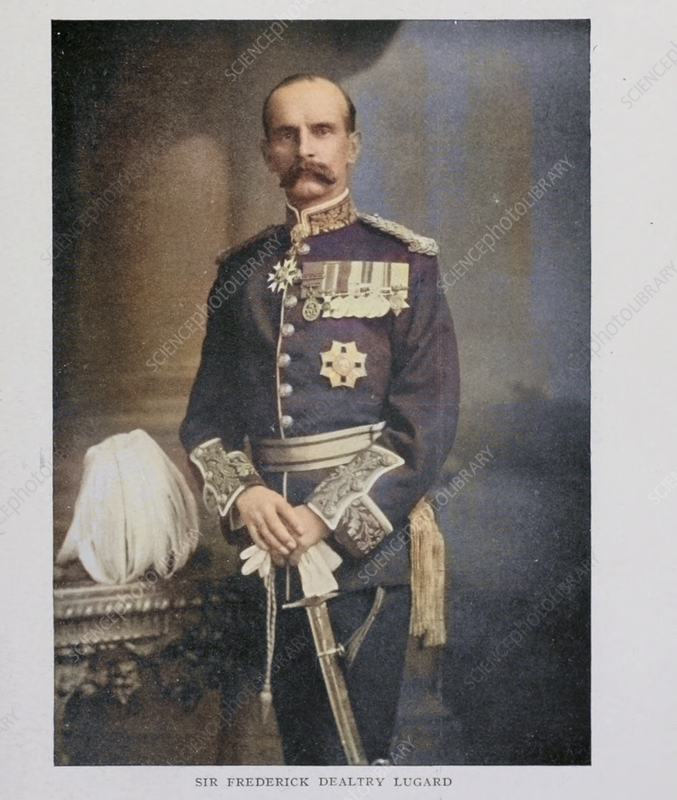
From the perspectives of historical context and economic analysis, Nigeria’s “Lugardian Economy” refers to the colonial economic model established and driven by Lord Frederick Dealtry Lugard, who was the country’s Governor-General from 1914 to 1919.
To be sure, “Lugardian Economy” is not a standard term. It only denotes the economic structures, policies, and dexterous footsteps established by the colonial administration in Nigeria, driven by Lugard as the first Governor-General of the country (January 1, 1914 – August 8, 1919), who played a major role in the amalgamation of the Northern and Southern Protectorates in 1914.
The economic template adopted by him can be best described by key characteristics, including extractive colonial models, export-driven infrastructure, a dualistic economic structure, monetary and trade controls, and social and political legacy.
The extractive colonial economic management model was implemented through resource exploitation, which at the time focused on extracting raw materials such as cocoa, tin, groundnuts, palm oil, and palm kernel for export to Britain, with negligible local processing.
The essence of this was to extract raw materials from the domestic (colonial) economy using cheap labour, export to Britain to optimize and maximize value in the home economy through industrial processing. Apart from keeping the home industries humming, job opportunities were created, and commerce was boosted to the detriment of the goose that laid the golden egg (the local economy).
The finished goods from the processed materials were then exported back to the colonial territories at prices that generated profits and sustained businesses in the home economy. Lugard also operated a tax system that introduced direct taxation (the “hut tax,” etc.), a system that forced the locals into cash-crop labour to pay taxes to fund his badly skewed and manipulative colonial administration.
The infrastructure that was put in place at the time was essentially for export, and hardly drove development in the local economy, suggesting that the colonial administration came not to build and stay, but to extract, lay bare, and move on.
For instance, railways and ports were built mainly to transport goods from inland areas, and for the movement of the North’s groundnut to coastal ports for export to Britain. It also led to neglect of local industry, with a deliberate clampdown on local manufacturing.
With this, Nigeria was a market for British goods that were processed from its raw materials and exported back to the country. Lugard’s dual economic structure brought with it a regional divide that saw the North maintain indirect rule through emirs, with a focus on agriculture, and the South (with added Western education) developing minor trade/services.
Through coercive practices, including forced labour for public works, and entrenched inequality, it was an era of labour exploitation. Lugard’s economic model further unleashed the Monetary and Trade Control Currency Board, which pegged the country’s currency to the British pound, restricting local monetary policy and elevating British trade interests.
The Lugardian economic model also entrenched import dependency, discouraged industrialization, and made Nigeria reliant on imported manufactured goods. In addition, Lugard’s pre-independence economic template had a social and political legacy, and the divide-and-rule syndrome, which amplified ethnic/regional divisions (e.g., North vs. South).
The essence of it was to weaken unified resistance against colonial policies. It also entrenched underdevelopment, which bequeathed a trifling investment in education/healthcare, preserving poverty, and restraining human capital growth.
The economic model did not end without implications for the country’s contemporary economy. Many believe that the Lugardian model laid the groundwork for Nigeria’s post-colonial challenges, including the resource curse, institutional weakness, and preponderance of the informal economy.
The resource curse also engendered over-reliance on crude oil exports, a trend that echoes colonial extractive patterns. It has also caused institutional weakness through the centralization of revenue allocation and persistent regional disparities.
In addition, many Nigerians still practice subsistence agriculture and informal trade, which is a legacy that excluded populations during colonial rule. Experts summarise the Lugardian economic model as: “A colonial extractive system designed to exploit resources and labor for British benefit, enforced through taxation, infrastructure for export, and deliberate underdevelopment—entrenching regional divisions and dependency that still shape Nigeria’s economy today.”
It is also seen in some quarters as “a description that contextualizes Lugard’s policies as a blueprint for structural dependency, where Nigeria’s economy was engineered to serve external interests, not local prosperity.”
Description of Nigeria’s Lugardian Economy It may not be a standard term, but it remains a firm description of Nigeria’s economy during the Frederick Lugard era, spanning 1914-1919 and the immediate colonial period. He was an ideologue who faithfully interpreted and implemented directives from the home government.
It’s possible the policy was packaged in Britain and delivered to him for shrewd implementation. He could also have crafted and implemented it in the country with approval from his home country.
Either way, Britain was the winner, and the colonized economy was the loser. The key points to note about the Lugardian economy in Nigeria include: · Colonial Exploitation In this context, the economy was deliberately designed, and policies tilted to serve the interests of the British Empire.
With its extractive inclination, it focused on raw materials for the export market. Cash crops, including groundnuts, palm oil, cocoa, and minerals, were exported, while manufactured goods were imported from British companies.
·Flawed Infrastructure Development Infrastructure was also developed mainly to lubricate the interests of the British economy.
Railways, for instance, were to facilitate the movement of goods from the locality to the ports for export.
The idea was never for the holistic development of the domestic economy.
· Taxation Direct taxation was introduced by Lugard, with the infamous hut tax as a striking example.
Overall, it aimed to generate revenue for the colonial administration and to shift the local population to the cash economy.
The overreach on taxation gave birth to the Aba Women’s Riot (10,000 women) in Aba and the surrounding districts of southeastern Nigeria from November 1929 to January 1930.
It was the first major anti-colonial uprising led by women in Africa. It wasn’t just about taxation, but also about challenging harsh colonial structures that undermined women’s traditional authority and economic independence.
The value? Although about 55 Igbo women were killed and many others were injured in the process, it was also one of the precursors that set the stage for bigger nationalist movements in the country. Labour Coercive methods and forced labour were sometimes applied, especially in public works.
It was also to the advantage of British enterprises. Forced labor and coercive methods were sometimes used, especially in public works and for the benefit of British enterprises. Dual Economy In the Lugardian era, a modern export-focused sector dominated by European firms and a few local elites, alongside a traditional subsistence sector. That framework was a typical case of a dual economy.
The country was structured as a supplier of raw materials and an importer of finished goods. Land Tenure Land policies, especially as applied to plantations and mining, were intentionally designed to facilitate European ownership and control.
Financial System The establishment of the West African Currency Board served as a strategy to manage the currency and ensure it was tied to the British pound, facilitating trade and constraining local economic control.
Minute Industrialization To prevent competition with British industries, the Lugardian framework ensured a deliberate lack of industrialization in the colony.
However, note that the term “Lugardian Economy” is not a widely used academic term. It is likely a reference to the economic system under Lugard’s administration.
Therefore, we describe this as the Nigerian economy during Lugard’s era. From research findings, “The term ‘Lugardian Economy’, which refers to the economic system in Nigeria during the colonial administration of Lord Frederick Lugard, particularly following the amalgamation of the Northern and Southern Protectorates in 1914, can be best described and summarized as: “Extractive and Export-Oriented: The primary goal was the extraction of Nigeria’s natural resources (such as palm oil, groundnuts, cocoa, and tin) for export to Britain and other parts of the British Empire.
This created a dependency on primary commodities, exposing the economy to vulnerability and price oscillations. “Taxation as a Tool of Control: Lugard introduced direct taxation (like the ‘hut tax’) to force the local population into the cash economy and to fund the colonial administration. This was often resented and led to unrest.
“Infrastructure for Exploitation: Railroads and roads were built to connect resource-rich areas to ports, facilitating export. There was little investment in infrastructure that would benefit the local population beyond what was necessary for resource extraction. “Limited Industrialization:
The colonial administration actively discouraged local manufacturing to ensure Nigeria remained a market for British goods. This stifled industrial growth, leaving the economy underdeveloped. “Dualistic Structure: A dual economy emerged: a modern sector (dominated by European firms and a few local elites) focused on exports, and a large traditional sector where most Nigerians engaged in subsistence agriculture.
“Labor Exploitation: Coercive labor practices were common, including forced labor for public works and private enterprises. “Monetary Policy: The currency was tied to the British pound through the West African Currency Board, which facilitated trade with Britain but limited Nigeria’s ability to control its own monetary policy.”
Overall, the Lugardian economy was characterized by exploitation, underdevelopment, and the entrenchment of a structure that served colonial interests at the expense of local development. This legacy has had long-term impacts on Nigeria’s economic trajectory.
” Vestiges of the model in contemporary Nigerian economic management Evidence abounds to support the view that the Lugardian economic model, rooted in colonial extraction and indirect rule, shapes the country’s present economic management strategy.
Dependence on resource rents, especially in oil, centralized fiscal control, and uneven regional development are entrenched in the country since 1919, when Lugard left office.
In summary, it had the blemish of colonial extraction, which prioritized revenue generation for Britain through cash crops and taxes, not local industrialization, indirect rule that tethered economic management to traditional authorities and reinforced regional disparities, and a dual economy that structured the country as a supplier of raw materials and an importer of finished goods.
How the model defines today’s economy No one is left in doubt that the country’s present fiscal system mirrors Frederick Lugard’s extractive model, where oil rents substitute for colonial taxes, leaving Nigeria’s economy susceptible to global price shockwaves.
Nor is it debatable that the imprints of the centralized control model adopted by Lugard continue in the country today, as Abuja dominates fiscal allocation, stoking pressures between federal and state governments, on one hand, and states and local governments, on the other? Just compare the doctrine of centralization versus federalism, and be in a better position to decide on the matter.
Can you also decipher the footprints of structural inequity that still suffuse the system today? It is all rooted in the colonial neglect of industrialization, which shaped regional imbalances that are still visible in the country’s matrix of uneven development.
The risks and trade-offs include the rentier trap, regional tensions, and social exclusion, as the model has bestowed hefty reliance on oil revenues that stifle diversification, a legacy of uneven development that fuels political instability, and economic growth that continues to fail to translate into wide-ranging welfare improvements.
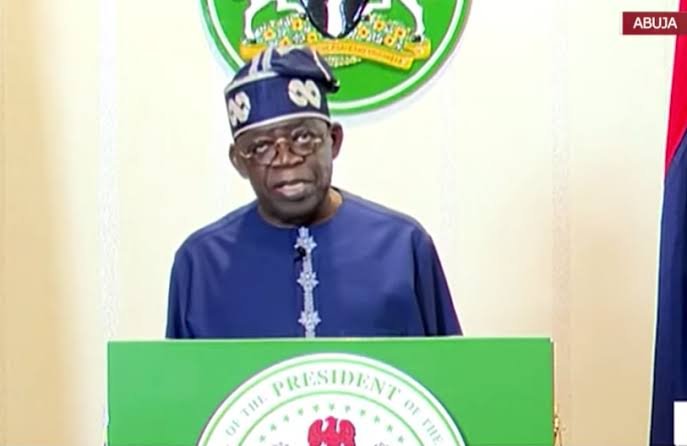
So, what is being witnessed today? Reform efforts since independence, such as the removal of fuel subsidies, foreign exchange liberalization, and fiscal restructuring, aim to break the shackles and yokes of the legacy.
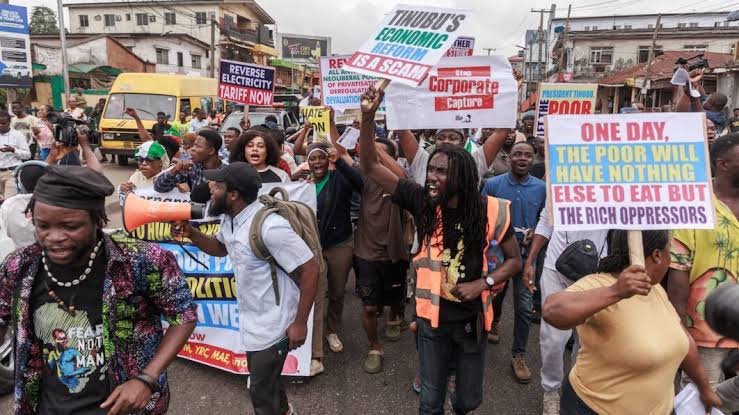
Yet, Nigerians continue to feel excluded from the benefits of growth, despite the emphasis on inclusiveness. For years, these reforms have sought to dismantle the Lugardian economic DNA. They aim to move the economy from centralized extraction toward diversification, transparency, and welfare inclusion.
Beautiful on paper, cosmetic in implementation. Analysts believe the success of these efforts depends on striking the right balance between fiscal sustainability and social cushioning, and on ensuring that reforms do not replicate the detestable inequalities they aim to undo. Does it matter? Yes.
It should matter because the flawed model explains why the economy remains centralized, resource-dependent, and structurally imbalanced even today. It also provides insight into what needs to be done by the leadership to break free from what used to be and advance to what ought to be.
There must be a shift away from consumption and rent-seeking to diversification into manufacturing and technology, decentralized fiscal autonomy for states, and more far-reaching societal protection systems to confront and reverse inequality.
So, do we continue to let history strike and bite in all of these, or take nimble and pragmatic steps to turn the iniquities of history into greater value for Nigerians today and their posterity? Today’s delay and shift could become tomorrow’s nightmare.
Martins Azuwike is an Economist, a member of the Guild of Public Affairs Analysts of Nigeria (GPAAN), the Nigerian Guild of Editors (NGE), and a multiple award-winning journalist in Banking/Finance (DAME Hall of Fame), Energy, Banking/Finance, Telecommunications (NMMA), and Business Analysis.