BEGINNINGS…. OR IS IT?
By Agbeze Ireke Kalu Onuma, AI-KO
Prologue: The Road That Writes Us
This story began long before I was born. Long before I found the words for it. It was etched into the red footpaths my grandfathers walked, their progress a slow negotiation with the earth. It was embedded in the hopeful groan of the first lorries that carried my father’s generation along newborn tarmac, stitching scattered villages into a fragile idea of a region. And it was fractured, irrevocably, into the potholes that became my inheritance – a crumbling testament to promises unmade. The journey I began on the 17th of December 2025 was not a beginning; it was merely my turn to step onto a moving conveyor belt of ancestral longing and modern ordeal. The question has never been where the journey starts, but whether it ever truly can.
I first gave this inheritance a shape not with a pen, but with a camera phone, in the passenger seat at the Umuekia junction in Abia State, at 9 PM. The day’s visceral battering had finally subsided into a fragile calm; the road to Umuahia was unexpectedly smooth, the lights of the distant tower a visual anodyne for a bruised spirit. In that pocket of stillness, the need for testimony became physical. The jolts that had travelled up my spine and the anxieties that had perched on my shoulder in the dark stretches near Owerrenta demanded a record. I began by photographing the night views and glows as we rode the expressway to Umuahia, the flash a stark, artificial star in the car’s dark interior. Then, tapping on the glowing screen, I wrote the first lines of this narrative directly onto my Facebook page and shared the images – an upload that served as the first draft of this long travelogue. This chronicle was born in motion, a digital-age scratch on the wall of a cave, a dispatch from the front lines of a pilgrimage so common it has ossified into a rite.
We begin with the primal plunge: the roaring, dust-choked artery out of Lagos. It is a study in endurance forged in the hellish liturgy of the go-slow, where patience is a survival tactic and a strange, silent fellowship forms among strangers united by the predatory geography of the Ngor Okpala stretch. But the ordeal yields to a startling benediction. Crossing into Umuahia after dark, we find not a sleeping hinterland, but a realm of light where infrastructure ceases to be a gauntlet and becomes a gateway, challenging decades of narrative written solely in decay.
Yet, this hope is brutally complicated by the reality of home. The beautiful streetlights swiftly curdle into the harsh, flat glare of the family compound. Here, our formidable communal spirit is hijacked by a roaring engine of performative festivity. We witness a carnival of untruths where grief is drowned out by competing sound systems and the industrialization of mourning. We confront the “billboard bereavement” that blankets the East – glossy vinyl posters that transform ordinary lives into digital hagiographies of “Icons” and “Matriarchs.” It is a chilling attempt to create resumes for the afterlife, Photoshopping away pain to build an altar to vanity rather than memory.
This dissonance bleeds into the holiday itself. The promised “holy day” vanishes, consumed by a frantic marathon where we attempt to ransom a year’s worth of absence with two weeks of surface-level communion. We trade depth for breadth, leaving us more spiritually bankrupt than when we arrived. This bankruptcy becomes literal in the panic of exodus at the Abiriba motor park, a scene of desperate flight where bags of rice, once trophies of arrival, are hauled away as grim sustenance for the unforgiving January ahead.
Along this path, we take a necessary, haunting detour to Mgboko. A visit to the crumbling State Psychiatric Hospital becomes a journey into our deepest collective neglect, confronting a stigma that shrouds mental health like a burial cloth and challenging our loud proclamations of community.
Finally, the long road turns homeward. The conscious, slow journey back from Benin to Lagos becomes a meditation on the psychological time-warp of the highway and the predatory tolls of anonymous villages that signal the city’s approaching sphere of influence.
This is not a travelogue; it is an excavation. It is the story of fear that tastes like metal, of the comfort found in a corrupt checkpoint, and of the relentless question that haunts every mile: What does it cost, in soul and in spine, to choose to return, only to perform a pantomime of a home that no longer exists? The road is our oldest, most brutal teacher. Let us read its lessons together.
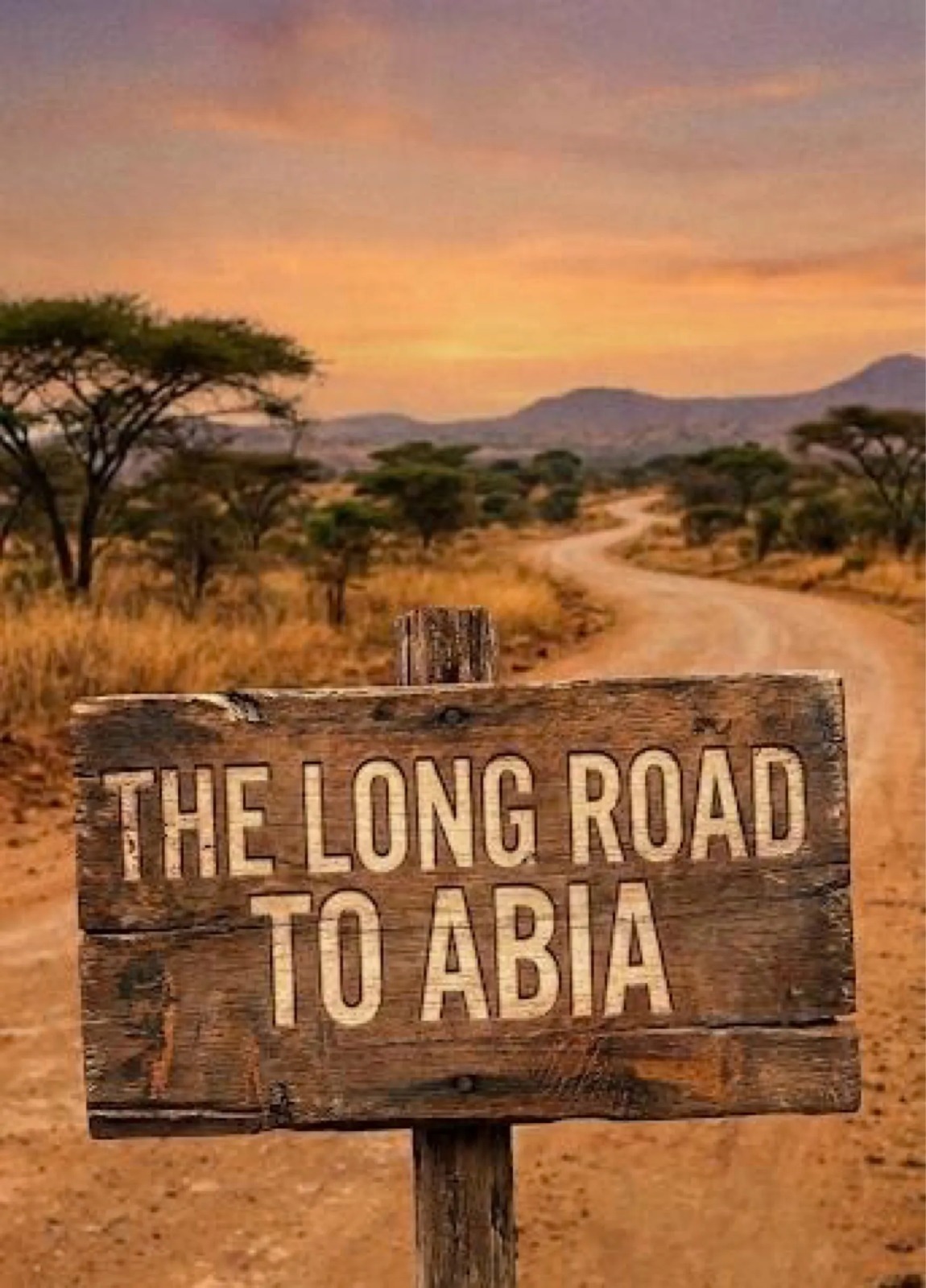
This story begins not at the point of departure, nor at the longed-for destination, but in the dust-choked space between – on a long, unspooling, hopeful, and punishing road that led me home. I call it The Long Road to Abia not merely as a geographical descriptor, but as an incantation, a title that holds within it the essence of the pilgrimage. For that road was far more than tar and gravel, more than a sequence of potholes and the aching distance between coordinates on a map. It was a living conduit, a vein pulsing with the lifeblood of a scattered people, and it carried within its cracked and uneven surface a cargo infinitely more precious and more burdensome than any physical freight: it carried time itself, stretched thin and elastic; it carried memory, both personal and ancestral, rising from the red earth like morning mist; it carried a patience worn smooth by repetition, a fatigue so profound it felt geological, and beneath it all, a quiet, stubborn reflection that only the monotony of endless movement can birth.
Though the calendar and my employment contract designated it as my Christmas and New Year holiday, a seasonal break, it felt, in my bones, infinitely deeper. It was a return in the most primal sense of the word – a physical, kinetic movement toward a point of origin, and simultaneously, an emotional and spiritual journey back to a psychic terrain that continues, with or without my conscious consent, to shape the very architecture of who I am, who I was, and who I fear I might become. The journey started slightly after 7am on the 17th of December 2025, a date I now remember, not for its celebration, but for the strange, contradictory atmosphere that surrounded it – a palpable mix of childlike excitement and a deep, foreboding weariness that seemed to hover in the very air we breathed, as if the road ahead, all those hundreds of kilometers of uncertain asphalt, was already projecting its essence backward in time, announcing its presence and its price before a single engine had turned over.
Leaving Lagos is never, can never be, a simple act of logistics. The city is an entity, a loud, restless, stubborn organism with its own gravitational pull and a personality of relentless ambition. It clings to its inhabitants with invisible filaments of obligation, noise, and relentless pace. Even in the fragile, grey-blue hours of early morning, when the city theoretically should be at its most subdued, traffic – that perennial symptom of its febrile life – clung to us, snagging our convoy in its last, desperate tendrils, stretching the moment of emotional and physical departure into a protracted, frustrating negotiation. It was a fitting prologue, a reminder that Lagos releases no one easily; escape must be earned, inch by exasperating inch, a microcosm of the larger struggle that defines existence within its bustling, unforgiving embrace.
We moved as a convoy of five vehicles, a small, self-contained migrating community bound not just by shared destination, but by a shared, unspoken resolve – a pact of mutual witness and protection. There was an ancient, tribal comfort in that formation, a throwback to caravans crossing deserts, a psychological safety in numbers. Each metal shell carried its own unique human ecosystem – bursts of laughter here, streams of complaint there, long stretches of contemplative silence, whispered prayers for safe passage, and jokes passed between cars via crackling phone lines that served as our digital lifelines. Yet, despite these individual moods, the road ahead was our common scripture, its challenges, a liturgy we were all ordained to recite. We watched out for one another with the vigilant eyes of kin, slowing down when a fellow traveler faltered, stopping together at fuel stations that became temporary oases of shared relief, moving again as one organism, a segmented beast progressing across the landscape. This convoy was our first, fragile reconstitution of community, a rehearsal for the deeper re-integration that awaited at our journey’s end.
What we had anticipated as a long but manageable journey gradually, then abruptly, revealed itself as a profound test of endurance, a marathon for the body and a siege for the spirit. Hours ceased to be neutral units of measurement; they became viscous, heavy entities that dragged on, shaped and deformed by external forces: the anxious calculus of fuel stops in areas where scarcity was a silent predator, the soul-jarring bad stretches of road that transformed driving from a skill into an act of divination, the traffic that materialized from the very air, without cause or warning, congealing into a stagnant river of steel and frustration. And beneath it all, thrumming steadily, was the dull, corrosive frustration that grows in the secret chambers of the heart when the body is tired, the mind is frayed, and the destination remains a stubborn, receding idea on the horizon. Seventeen hours passed, a biblical expanse of time, and still the journey refused to consummate itself. Day performed its alchemy, slipping imperceptibly into night, and the night itself seemed possessed of a malevolent sentience, determined to stretch itself into an eternity before us. Our headlights became surgical instruments, slicing through the dual darkness of the sky and the dust kicked up by a thousand tires, illuminating in their fleeting cones the tired, set faces of other pilgrims and the focused, weary eyes of our own drivers.
Time lost all abstract quality; it was no longer measured by clocks but by the somatic ledger of the body: by aching backs that protested every contour of the seat, by legs that stiffened into timber, by the failing glow of phone batteries that severed our last links to a world outside this metal capsule, and by a deep, cellular longing for rest that became a kind of mantra. Yet, within that grueling, protracted movement from the chaotic heart of Lagos toward the waiting embrace of Abia, there emerged an unexpected, almost paradoxical calm. As the superficial layers of energy were stripped away by pure fatigue, conversations softened, losing their sharp edges and performative vigor. Laughter, when it came, arrived in brief, surprising bursts, often sparked by the smallest, most absurd things – a shared mispronunciation over the radio, a collectively missed turn, the universal plight of a struggling roadside vendor. It was a laughter of relief, of shared vulnerability. And then silence would descend, but not a silence of emptiness or awkwardness; it was a fertile, spacious silence, heavy with unspoken understanding. This silence created a cathedral within the moving car, a space for thought to unfold without interruption. In this sanctum, I found my mind turning, unbidden, toward Abiriba, toward the abstract and concrete idea of home, and toward the mysterious alchemy by which distance and time reshape familiar places in the mind, rendering them simultaneously myth and memory.
The rough, unpredictable, often hostile road began to feel like a brutal but honest mirror of life itself – a narrative full of unexpected delays, painful detours, and those agonizing stretches where progress seems agonizingly slow despite the most steady, determined effort, where forward motion is measured not in miles but in faith. When we finally, mercifully, began to approach the outskirts of Abiriba after seventeen hours and more, relief did not arrive as a crashing wave, but in quiet, gradual swells that washed over the spirit. The very air underwent a transformation, whether through a change in actual particulate matter or through the profound filter of feeling, I could not say. The lights grew fewer, scattered like fallen stars rather than the aggressive constellations of the city; the sounds softened from a roar to a murmur, a chorus of crickets and night birds replacing the blare of horns; the pace of existence immediately downshifted into a lower, more humane gear.
My body remained a repository of fatigue, heavy and resonant with the journey’s vibrations, but my heart felt a perceptible lightening, a settling, as if a dislocated part of myself had clicked back into its rightful socket. The road had taken its undeniable toll, extracting a price in comfort and composure, but it had also, I realized, performed its necessary work. It was a purgative, a ritual of stripping away, preparing the vessel of the self for the days of reconnection, reflection, and rediscovery that lay ahead. It had scrubbed off the psychic grime of the metropolis, making me ready, however raw, to receive home.
That journey, more than the festivities, the reunions, or the rituals that would follow, marked the true, essential beginning of my holiday. Not the arrival at the compound gate, not the first embrace, but the road itself. It became the opening chapter, the foundational myth, of a season that would unfold in rhythms both ordinary and profound. And so The Long Road to Abia begins not with celebration, but with movement itself – with the patience of a monk, the endurance of a soldier, and the quiet, stubborn determination to keep going, to keep believing, until the outlines of home finally solidify from hope into view.
The stretch between Owerri and Owerrenta, undertaken between the bleak hours of 8 PM and 9 PM, stands not as a measure of distance but as a unit of existential dread. It was a mere twenty-odd kilometers transformed by the unholy trinity of absolute darkness, profound exhaustion, and a fear so visceral it had a taste – a metallic tang at the back of the throat. The journey had long since ceased to be about mileage; it had become a navigation through a landscape of rumor and recent horror. The tales were not old wives’ fables but breaking news bulletins: the brazen attack on a Governor’s convoy just days prior, the abduction of an entire bus of travelers from this very axis, some reported killed. These were not stories; they were coordinates on a map of peril, and we were now scuttling, insect-like, toward their presumed epicenter. The darkness was not an absence of light but a presence, a thick, velvety cloth that could conceal anything. Every shadowed clump of bush by the roadside was a potential ambush point; every pair of distant headlights approaching could be a decoy or a hunter. The mind, already soft from fatigue, became a cinema of the worst possibilities, each one feeling not like fantasy but like imminent documentary.
The physical road itself was a conspirator in this terror. Past the airport junction, the tarmac didn’t merely decay; it underwent a kind of violent dissolution. What was called a road became a convulsing, primordial track, a succession of craters and jagged ridges that seized the vehicle in a series of violent, mechanical jerks. This was not driving; it was a form of automotive seizure. Each plunge into a pothole was a shock that traveled from axle to spine, a physical punctuation to the mental fear. The car groaned and shuddered, its protests echoing our own. The slow, punishing crawl this enforced was the worst part; speed offered the illusion of escape, but here we were trapped in a slow-motion presentation of our own vulnerability, a sitting target for the threats we knew the darkness held. It felt less like traversing a bad road and more like being digested by it, swallowed into a belly of uncertainty and fear.
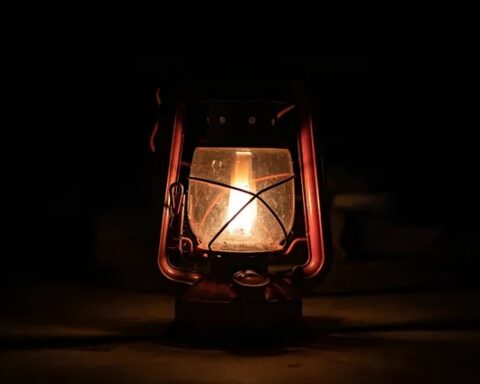
In this grim calculus, a perverse, shameful solace was found in the most unlikely of places: the very police and army roadblocks we had spent the day cursing. Their scattered, sandbagged presences, illuminated by weak paraffin lamps or the harsh glare of a solar-powered bulb, became beacons of a fragile, temporary order. The sight of a slumped figure in uniform, often still engaged in the tired ritual of extracting a two-hundred-naira “tip” from a truck driver, was now a relief. We understood the bitter irony perfectly. These agents of the state, whom we knew in our bones would vanish at the first genuine sign of danger, performing their legendary “tactical retreat,” were nonetheless a symbol of authority. Their presence meant this stretch of road was still, nominally, within the realm of the governable. It was a devastating confession of our lowered expectations: we celebrated not protectors, but landmarks; not saviors, but signposts that we were still, however tenuously, in a world where rules, however corrupt, still faintly applied. Our relief was an indictment of the nation.
The fear had a specific geography, and its capital was Ngor Okpala. The name sat in the stomach like a cold, heavy stone. It was no longer just a local government area; it was a byword in the travel advisories of the mind, a synonym for lawlessness. Every story of kidnapping, every reported attack, seemed to emanate from this vortex. As the signs for it appeared in the headlights, the atmosphere in the car shifted palpably. Conversations, what little remained, died completely. The silence that took over was thick and communal, a shared, silent prayer. I prayed, not with the eloquent verses of scripture, but with a raw, repetitive, internal mantra: Just let us through, just let us through. I presumed the others were also in our convoy in their vehicles ahead and behind. We were a fellowship of the frightened, bound together by a mutual, unspoken terror, our collective faith reduced to the most primal ask for safe passage.
Then, the relief – so profound it felt like a physical unclenching – came at the bridge. The Imo River bridge, a concrete span over dark, silent waters, was framed by the angular silhouettes of armored vehicles and the sharp, authoritative gestures of soldiers with rifles. This was not a casual checkpoint; it was a fortified position. And for once, we did not view them with the usual weary resentment of delay. We wanted to be delayed. We welcomed the flashlight scanned into our cabin, the brief, gruff questions. Each second spent under their scrutiny was a second spent in a bubble of perceived safety. I would have gladly sat there for an hour, lulled by the very bureaucracy of security I normally railed against. This is the disjointed, tragic logic of the Nigerian traveler: you celebrate the manifestation of a state so failed that its most basic function – monopolizing violence – feels like a divine favor when glimpsed in the right place.
The transition from that zone of concentrated fear to the sudden, mundane glow of Umuekia junction was disorienting, almost dreamlike. One moment we were in the belly of the beast, hearts pounding, and the next, we were amid the familiar, ramshackle vitality of roadside stalls, their fluorescent tubes buzzing weakly against the night. I could not recall the exact mechanics of how we got there; the intervening kilometers were lost to a blur of adrenaline and prayer. It felt less like a drive and more like a translocation, a miracle of mundane survival. The thought erupted, unbidden and fervent: Welcome home. Welcome to Abia. It was a border crossing not just between states, but between psychological territories – from the land of acute threat back into the land of familiar, chronic strain. The relief was not joy, but the deep, shuddering exhalation of a survivor.
This entire ordeal, compressed into a single, heart-pounding hour, serves as the ultimate distillation of the Long Road’s ethos. It is the proof that the journey is not just physically grueling, but psychically costly. You pay in fear. You pay in the humiliation of finding comfort in corrupt systems. You pay in the realization that your safety is a fleeting, conditional grant, dependent on the time of day, the reputation of a village, and the precarious presence of underpaid, unmotivated men with guns. The stretch between Owerri and Owerrenta is the road’s darkest truth: it is a gauntlet where the social contract is at its most threadbare, where you are reminded that you are on your own, and where the simple, profound act of arriving is not a given, but a victory wrested from a hostile landscape.
And so, the disjointed way we give thanks emerges from this disjointed reality. “It’s been God all through,” we say, with a sigh that carries the weight of the unsaid: because nothing else was there. The state was a bribable specter or a distant fortification. Community was the other frightened souls in other metal boxes. The infrastructure was an active adversary. In that vacuum, God becomes the only coherent narrative, the only entity credited with shepherding us through a man-made wilderness that our own society has engineered and abandoned. The gratitude is real, but it is also a devastating commentary on the total collapse of secular, civic trust. We thank God for delivering us from a terror that our own institutions are meant to render obsolete.
This episode, therefore, is not an aberration in the narrative of the Long Road; it is its core sample. It reveals the layers of anxiety that underlie every journey: the fear of the road’s physical brutality, yes, but more so the fear of the human predation that thrives in the cracks of that brutality. It explains the desperate relief of seeing the “super city-state” lights of Abia later that night – they were not just symbols of development, but beacons declaring a temporary ceasefire in the war of movement. You had survived the frontline. The rest – the exhaustion, the noise, the demanding rituals of home – would be its own trial, but a different kind. You had passed through the valley where the only tradition was violence, and the only rite was survival. Everything that came after, for all its complexity, would feel, in some strange way, like a reprieve.
The fluorescent glow of the roadside stalls at Umuekia, Isiala Ngwa LGA, Abia State, junction hangs weakly in the dust-filled air, a sickly artificial moon in a man-made night. I sit in the stationary car at exactly 9:00 PM, a specimen in a jar of exhausted stillness. The light itself feels tired, strained, as if the gas within the tubes has been on its own journey all day and is now nearing depletion. I am suspended in an odd, elastic space between profound exhaustion and dawning relief, a psychological twilight. We are waiting, once again, for the scattered members of our convoy to step out, to stretch legs that have folded into the shape of car seats, to answer the body’s persistent, animal demands. The engine is off, its familiar hum absent, leaving a ringing silence in my ears, but the journey refuses to pause in my mind. It replays on a loop – the swerves, the bumps, the close calls. My body is present here, anchored to this plastic and leather seat, yet my consciousness is still rolling, tumbling along the ribbon of asphalt behind us, unable to decelerate.
The day feels impossibly distant, a story told by someone else. It began at 7:25 AM, in a Lagos that was still rubbing the sleep from its eyes, restless and impatient even in its waking moments. Leaving the city then felt less like a departure and more like a delicate, painful act of peeling myself away from something loud, demanding, and fiercely familiar – like separating Velcro, each inch accompanied by a tearing sound. At that hour, wrapped in the cool optimism of morning, I carried hope as my primary luggage, a hope that far outweighed the faint fatigue. I believed, with the charming foolishness of one who has endured this before but is blessed with the amnesia of time, that the journey would be long but fundamentally manageable, predictable in its unpredictability. Now, fourteen hours later, that morning person feels like a stranger, his optimism a artifact from a more naïve civilization. Time has not just passed; it has stretched, warped, and folded in on itself so completely that the morning’s hopeful departure no longer feels like it belongs to the same temporal continuum as this gritty, dusty, 9 PM present. It is a severed limb of experience, still twitching with remembered feeling.
For more than thirteen of those hours, I have been a captive, a prisoner of the road. Not a traveler, but an inmate surrendered to an asphalt jurisdiction that offers no comfort, shows no mercy, and recognizes no appeal. The roads have been more than bad; they have been antagonistic, cratered and uneven like the skin of a mythological beast, demanding not just driving but a constant, vigilant negotiation – a physical and mental drain that saps energy even in those moments when the car is barely moving, idling in a sea of red brake lights. The traffic has been a palpable, pressing entity, thick and suffocating, a rolling monument to the sheer, staggering volume of human lives perpetually in motion, each chasing its own private destination, its own version of home, success, or escape. There is something overwhelmingly democratic and yet deeply tragic about Nigerian roads at this peak season – a profound, unspoken census that reveals how many of us are simultaneously in transit, carrying our burdens, our expectations, and our quiet urgencies in equal, invisible measure.
Sitting here now, in this temporary lull, I feel the weight of it all settle into my bones, a sediment of fatigue. My back aches with a dull, persistent throb, a direct mapping of every pothole encountered. My eyes burn, grainy with dust and screen-glare and the strain of peering into oscillating darkness. My patience, that fragile inner resource, has been tested not by grand crises but by a thousand tiny, persistent abrasions – the pointless slowdown, the hawker who won’t take no for an answer, the driver who cuts in without signaling. Yet, layered within this physical complaint is a slow, cold trickle of relief. Each stop, no matter how inconvenient or prolonged, is a punctuation mark, signaling progress. Each mile covered, no matter how painfully and incrementally won, is a mile that separates me from the chaos of Lagos and draws me closer to the specific, red-earth gravity of Abiriba. I engage in a silent, somatic pep talk: this discomfort is temporary, a finite passage. The road does end. Even when it feels like a new, permanent state of being, it culminates somewhere. This thought is the slender thread I cling to.
There is also a strange, profound intimacy born in moments of shared stasis like this. Watching strangers move with weary purpose around the roadside stalls – a woman adjusting her wrapper, a man lighting a cigarette, children chasing a plastic bottle even this late – hearing the disembodied snippets of conversation in dialects that wash over me like familiar music, smelling the complex aroma of suya spice and burning plantain wafting from a nearby grill… in this sensory collage, I am reminded of the universality of this experience. Everyone here, in this fluorescent-lit patch of night, is tired. Everyone is negotiating with their own fatigue. Everyone wants, more than anything, to arrive. In this collective, unspoken weariness, there is a deep, comforting solidarity. It renders my own private frustration smaller, less lonely, absorbed into a vast, human current of endurance.
As I wait, the car a temporary coffin of my own stillness, my mind circles back to the core, the why. Why does this journey, with all its attendant punishment, matter so deeply to me, beyond tradition or familial obligation? The answer, when it comes, is not intellectual but visceral. Home calls in a frequency that bypasses the rational mind, a siren song woven into my DNA. It is a pull that cannot be ignored, no matter how rationally I catalog the discomforts. And perversely, the hardship almost feels necessary, integral to the value of the arrival. It is as though the homecoming must be earned, its sweetness tempered and validated by the bitterness of the journey. The comfort of home is not a right, but a reward for endurance. Perhaps this is why, even now, swimming in fatigue, I cannot locate genuine regret. I am worn down, yes, softened at the edges, but I am also steady, grounded by the brute, physical certainty that every difficult, hard-won mile is actively transporting me closer to where I belong, to a place that defines belonging itself.
The convoy will regroup soon. Doors will slam, engines will roar back to life with a sound that is both promise and resignation, and the road will claim us once more, pulling us back into its relentless flow. Until that moment, I sit. I sit under these flickering, inadequate lights, breathing air thick with dust and diesel and the promise of rain, tired in a way that feels fundamental, but unbroken. I remind myself, a mantra against the ache: this long day, like this long road, is only a passage. It is the corridor, not the room. The destination is ahead, waiting in the darkness, and with every labored revolution of the tires, I am writing my way toward it. The journey hasn’t merely been slow; it has been an aggressive, full-sensory immersion, pressing itself against every nerve ending, demanding a response from every organ. To call these paths “roads” begins to feel like a charitable euphemism, a polite societal agreement that softens a much harsher, more anarchic reality. For hours uncounted, we have engaged in a complex, tire-slaying ballet, weaving around potholes so deep and expansively wide they resemble small, malicious canyons forged by some anti-engineering spirit – each one commanding a driver’s respect and exacting a toll of caution and shock absorbers.
Every sudden, jarring dip, every sharp, unexpected rise, transmits its violence directly through the vehicle’s frame and into the human body, lodging the impact in the base of the spine, behind the knees, in the jaw perpetually clenched in a subconscious brace against the next assault. There is a physiological transformation that occurs; after a certain threshold, the body ceases its futile bracing. It surrenders. It goes soft and absorbent, accepting the punishment as a form of kinetic rain, storing the vibrations in a silent, somatic ledger to be tallied later as stiffness and ache. The congestion we navigate transcends the clinical concept of “heavy traffic.” This is not the orderly, if frustrating, queue of a European motorway. This is human and mechanical traffic in its most raw, Darwinian form. People don’t just use the road; they spill onto it, reclaim it, live on it.
They emerge from the verges like spirits from the earth: hawkers moving with incredible balance, trays of goods towering on their heads; children playing a lethal game of chase, darting through gaps between vehicles with a fearless, terrifying precision; weary travelers-turned-pedestrians dragging oversized bags, their faces masks of determination; entrepreneurs of delay, knocking on windows with a practiced rhythm, selling water, peeled oranges, boiled groundnuts, bread, phone chargers – anything that can turn collective stasis into individual survival. Their voices form a rolling soundtrack – a cacophony of offers, pleas, jokes, and shouts that mixes seamlessly with the blare of horns, the bark of bus conductors, laughter from shared misery, and the low-frequency thrum of pure frustration. It is loud, chaotic, and yet strangely, achingly familiar – the sound of a system working at the very edge of its capacity, held together by willpower and habit.
Here, on this strip of compromised asphalt, the road sheds its inert identity and becomes a living, breathing organism. It is crowded and it breathes – exhaling heat and fumes, inhaling dust and hope. Massive trucks, the behemoths of commerce, groan under impossible loads, their axles protesting. Buses, painted in vibrant, hopeful colors and packed so densely that limbs protrude from windows, inch forward with a stubborn, bovine determination. Motorcycles, the nimble insects of this ecosystem, slip through spaces that seem mathematically impossible, their riders leaning and weaving with an intuitive grace. Everyone is engaged in a continuous, high-stakes negotiation – for physical space, for temporal advantage, for the preservation of sanity. Movement ceases to be measured in miles per hour or even minutes per kilometer. It is measured in inches gained, in centimeters lost, in the subtle, almost imperceptible creep forward that represents a minor victory against entropy.
In moments of total gridlock, when the sea of metal solidifies into a single, unmoving entity, a primal irritation threatens to crystallize into something harder, hotter: anger. I feel it rise in me, a sharp, chemical heat in the chest, a tightening of the throat. It seeks a target – the incompetent driver ahead, the avaricious policeman at the checkpoint, the faceless government official in a distant capital. But the feeling is ephemeral; it flares and then dissolves, starved of a coherent focus. There is no single villain, no simple fault line. This chaos is systemic, the result of a thousand failures large and small, a complex ecosystem of neglect, adaptation, and raw survival. To direct anger at any one part is to misunderstand the whole. Fighting the system from within your immobilized car is as futile as shaking your fist at the weather. So, you learn – or relearn – the difficult, ancient art of surrender. You loosen your psychic grip on urgency, on schedule, on control. You let go. You accept the pace imposed upon you, and in that acceptance, find a sliver of peace amidst the pandemonium.
What keeps this entire teetering, precarious system from collapsing into pure anarchy, what fuels our incremental, collective movement even when movement feels like a statistical impossibility, is a vast, unspoken, and deeply sophisticated agreement among strangers. It is a social contract written in blinking lights and hesitant gestures. Hundreds of drivers, each a universe of tiredness and personal urgency, participate in a silent, collaborative act of endurance. One person, seeing a gap too small for their own vehicle, flashes their lights to allow another to merge. A trucker, high in his cab, gestures with a hand to wave a motorcycle through. A slowdown is communicated not by brake lights alone, but by a ripple of hazard lights passed back along the line like a neural signal. It is messy, intuitive, and imperfect cooperation – a vernacular of motion. But it works. Just enough. It is the grease in the seized engine of our progress, preventing total, catastrophic lock.
As I sit within this slow, seismic procession, I am struck by a dual consciousness. I feel profoundly small, an insignificant cell in a vast, crawling organism, my individual will subsumed by the collective flow. Yet, simultaneously, I feel a powerful, undeniable connection. My private discomfort – the ache, the thirst, the mental fatigue – blends and dissolves into a larger, shared human experience. We are all suspended in this same amber of delay, bound by the same red dust coating our windshields, the same diesel-tinged air, the same fragile hope that the next bend in the road, the next hilltop, might finally reveal a clear path, an open ribbon promising the return of speed and the end of ordeal. And somehow, through this messy, cooperative, stubbornly hopeful dance, we keep inching forward. We are carried not by horsepower alone, but by collective willpower, by ingrained habit, and by the quiet, dogged refusal of thousands of people to simply stop.
Nightfall did not ask for our permission. It did not negotiate, nor did it wait for us to find a safe harbor, a well-lit town in which to pause and acknowledge the transition. It arrived abruptly, almost rudely, folding itself over the landscape like a heavy, dark velvet cloth, swallowing the horizon in one slow, deliberate, and irrevocable motion. The sky performed its dying act – shifting from a weary, dust-choked blue to a bruised, melancholy purple, before finally surrendering to a blackness so profound and heavy it felt tactile, close enough to press against the windows. By the time our conscious minds registered that daylight had been revoked, it was already an accomplished fact. Oba, in Anambra State, a theoretical waypoint, was still a frustrating distance ahead, and the road itself offered no refuge, no softening of its character.
All that remained was the thin, trembling lifeline of a thousand red brake lights, stretching into the darkness ahead of us like a string of dying stars, a constellation of halted intent. Those ruby lights became our only compass, our communal navigation system. They blinked and glowed with a weary rhythm through the suspended dust and the absolute dark, sometimes holding steady in a long, accusatory line, sometimes flaring sharply in a wave of panic-braking that traveled backward through the convoy like a shiver. Their red glow reflected off the road’s oil-slicked, uneven surface, catching briefly in the stagnant puddles left by some earlier, un-witnessed rain, transforming them into fleeting, fractured mirrors that shattered with each passing tire. Headlights from the opposing flow, when it existed, were acts of violence – harsh, blinding blades of white that cut across our darkened cabins, leaving ghostly, green afterimages burned onto our retinas that lingered for disorienting seconds too long.
The very air underwent a metamorphosis with the night; it felt thicker, heavier, pregnant with the smells of the journey now concentrated: the acrid sting of diesel exhaust, the sweet-rotten scent of burnt clutch, the earthy, smoky perfume of wood fires from unseen roadside settlements, and the deep, mineral smell of laterite soil freshly churned by the day’s relentless traffic. One might romantically assume the roads would soften after dark, that they would quiet themselves in deference to the night, allowing a gentler passage. But the East, this vibrant, relentless heartland, does not sleep easily. Its pulse is relentless, beating just as loudly, just as urgently, in the cloak of darkness as it does under the punishing sun.
Even now, deep in the night, the highway is fiercely, unmistakably alive. Hawkers, embodiments of indefatigable entrepreneurship, still emerge from the pooled shadows at the roadside, their figures momentarily sculpted by our headlights as they rush toward slowly moving vehicles, their calls – “Pure water!” “Cold mineral!” “Gala!” – rendered hoarse and phlegmy by hours of repetition. Their wares become luminous props in the theatre of need: plastic bottles of water gleaming an unnatural electric blue, oranges glowing like small, dim planets, loaves of bread wrapped tightly in clear nylon that catches the light like cellophane jewels. From somewhere in the invisible periphery, the unmistakable sound and smell of something frying in deep oil cuts through the blanket of exhaust – the sizzle of akara or plantain chips – stirring a primal hunger in my belly, a bodily need I had, in the mental fog of travel, forgotten I carried.
The soundscape of the night road is a symphony of strain. Engines hum and groan in low, tired tones, a basso continuo of mechanical endurance. Buses, overloaded to a point that defies physics, crawl forward like exhausted beasts of burden, their interiors lit by dim, yolk-yellow bulbs that reveal tableaus of human surrender: faces slumped against fogged glass, eyes half-closed in a trance of fatigue, bodies arranged in postures of profound resignation. Trucks loom in the adjacent lane like moving cliffs, their immense metal frames rattling with a cargo of unseen goods, their drivers perched high in their cabs, hunched forward in cones of dashboard light, their concentration a tangible force.
Motorcycles, the nimble specters of the night, appear from nowhere and vanish just as quickly, slipping through impossibly narrow gaps between lorries and cars, their tiny red tail lights flickering like insomniac fireflies, here and then gone. In this encompassing darkness, the road itself feels ancient, archetypal. It pulls memories from the depths of my psyche without warning or welcome. I am ambushed by visions of past journeys, of childhood trips taken at night, curled on the backseat of my uncle’s car, dozing fitfully against the cold window while the adults in the front spoke in low, coded voices about things I could not understand. I remember believing then, with the absolute faith of a child, that roads were literally endless, that movement itself was a kind of magic that could conjure new worlds from the darkness. Now, older, tempered by decades of these pilgrimages, I understand the sobering cost hidden beneath that childhood magic – the immense patience demanded, the very real risks tacitly accepted, the countless lives shaped, narrowed, or expanded by these long, unyielding stretches of asphalt.
The road is no longer a portal to wonder, but a testament to a collective, hard-won resilience. There is something deeply, essentially teachable in this suspended nocturnal moment, a lesson the road insists on imparting to anyone willing to listen. Progress, I am forced to concede, is not always – perhaps not even often – swift, graceful, or linear. More frequently, it is this: slow, uncomfortable, shared intimately with a multitude of strangers whose names and stories you will never know, bound together only by shared direction and shared ordeal. Yet, it still counts. It still accumulates. Each cautious, incremental advance, each brake light that flares in warning and then winks out in release, is a tiny, cumulative vote for forward motion, evidence of a vast, collective determination operating beneath the surface of individual frustration. No one here, in their isolated metal shell, is truly alone. We are all cells in the same slow-moving body.
We have become part of a massive, weary, nocturnal caravan, a river of light and steel moving with a stubborn, sedimentary pace through the shadows, connected by a silent, powerful solidarity. Our individual reasons for being here differ wildly – a sick parent, a wedding, a funeral, a business deal, a simple, aching longing, an escape from one pressure into the embrace of another. But the shared fact of motion, the common submission to this rite of passage, binds us together in a temporary fraternity. In this darkness, stripped of daylight’s distractions and illusions, the journey becomes more honest, more stark. It demands a raw attention, a humility in the face of forces larger than oneself, and an endurance that is less about heroism and more about simple, dogged persistence. And as we press on, guided by nothing more substantial than a river of red lights and a stubborn, almost irrational hope, the road transcends its physicality. It becomes not just a passage from point A to point B, but a mirror, held up to the face of a people, reflecting back the complicated, enduring, and often painful truths we are usually too busy, too distracted, or too optimistic to stop and see.
Staring out the window into the particulate darkness, my mind, freed from the demands of navigation but still tethered to the rhythm of the ride, begins to churn with questions. They arrive uninvited, like unbidden guests at a private vigil, and they refuse to be dismissed. They circle slowly, patiently, with the grim resolve of vultures who know the journey itself will eventually provide the weakness they need to land. Why is the journey home always this hard? Why does the fundamental, human act of returning to one’s roots, to the source of one’s identity, require such a brutal negotiation with discomfort, with endless delay, with palpable risk? Why has the very infrastructure meant to connect us, to facilitate the flow of kinship and commerce, instead become a gauntlet seemingly designed to test the upper limits of our endurance, to extract a toll not just in naira for fuel and repairs, but in spirit? These are not new questions. They are old companions, ghosts that have lived with me for years, resurfacing with faithful regularity on roads like this one, during nights exactly like this one, when exhaustion acts as a psychic solvent, lowering the defenses of daily coping and forcing a raw, unvarnished honesty to the surface.
Outside the window, the world slides past in a series of fleeting, fragmented vignettes, a silent film projected on a screen of night. A dimly lit village materializes from the gloom – a cluster of square shapes, a glowing sign for a patent medicine store, the shadowy outline of a church steeple – and is swallowed again by the darkness in a matter of seconds. A solitary kiosk stands sentinel in an expanse of nothing, its lone, naked bulb casting a frail, yellow halo over pyramids of biscuit packets and neat stacks of water sachets, an island of commerce in a sea of night. The rich, petrichor scent of wet earth – that most primal and comforting of smells – drifts in briefly through a barely cracked window, a fleeting guest before it is overwhelmed by the returning staleness of exhaust fumes and the faint, salty-sweet odor of sweat trapped in fabric after fourteen hours of immobile, anxious sitting. Dust is the unifying element, a fine, red talcum that coats every surface, inside and out; it softens colors, mutes the harshness of artificial lights, and lends the night an ancient, timeless quality, as if we are traveling not through 2025, but through a century of accumulated journeys.
My body has entered a state of profound alienation. It feels like a borrowed, poorly maintained vehicle, humming with the memory of constant vibration, as if the road’s specific frequency has been etched directly into my muscle memory. My legs are columns of stiffness, my shoulders cradle a permanent, dull ache, and my neck resists the simplest turn with the recalcitrance of rusted metal. When I close my eyes in a futile attempt to rest them, the sensation of motion does not cease. It persists as a phantom momentum – a neurological echo of bumps and sways replaying itself on a loop in the dark theater behind my eyelids. This is a tiredness that transcends mere sleepiness. It is a deep, cumulative, systemic fatigue, built layer by sedimentary layer from hour upon hour of hyper-vigilance, of muscular tension bracing for impacts that never quite come as expected, of a patience forcibly extended far beyond its natural limit.
I want, desperately, to think clearly. I want to interrogate these circling questions with the rigor of a scholar, to pull them apart and examine their components under the cold, clear light of reason. I want to ask, with historical precision, how a country so fantastically rich in human energy, ingenuity, and natural resources has allowed the most basic act of human movement – the journey from where you are to where you belong – to become such a Herculean burden. I want to trace the direct and indirect lines from colonial extraction, which built railways and roads not for connection but for resource removal, to post-independence neglect and the centralization of power and wealth; from the paradox of oil wealth that created vast fortunes while fostering a culture of rent-seeking and infrastructural decay, to the stark reality of wildly uneven development that leaves some corridors gleaming and others, like this one, in a state of perpetual decomposition. I want to understand the political economy of potholes, to see how policy decisions made in air-conditioned offices in Abuja or state capitals translate into these specific craters that now dictate the rhythm of our lives, that fracture axles and deadlines with equal indifference.
But my mind, battered by the sensory onslaught and heavy with fatigue, refuses to cooperate in this lofty endeavor. Each attempt at structured, linear thought dissolves into fragments, like a radio signal breaking up in a storm. An idea about state capacity starts strong, only to trail off into nothingness, interrupted by the urgent need to brake suddenly for a hidden pothole, to swerve around a darting dog, to stay alert in a landscape where the rules are written in fleeting moments. Philosophy, true analysis, requires mental space, a quiet room, and tonight, in this moving box of tension, there is none. The road is a jealous god, consuming attention and cognitive bandwidth greedily, leaving behind only the bare substrate of reaction and endurance. What settles in the space where coherent thought should be is not anger anymore – that sharp, clarifying flame passed hours ago. Nor is it even frustration in its active, burning form. That too has been metabolized. What sits with me now, in the passenger seat of my own consciousness, is a dull, persistent, all-pervading ache. It is emotional as much as it is physical, a soul-weariness that feels like grief for something never quite attained.
This particular ache is hauntingly familiar. I have felt its echo in other arenas of life, though never with this specific, road-born texture. It is the feeling that accompanies profound disappointment when it has settled in quietly, without dramatic fanfare, becoming a fact of life rather than an event. It is the sensation that arises when expectations are not shattered in one catastrophic moment, but are slowly, inexorably worn down, grain by grain, by the sandpaper of recurring reality. There is no single, defining collapse, no crisis point to point to. Just a gradual, somatic realization that this difficulty is not an anomaly, not bad luck, but a pattern. A season in the national life that repeats itself with tragic fidelity, year after year, administration after administration, journey after journey. It is the hardening of the inevitable.
My mind drifts back, conjuring earlier, paler versions of myself – a younger man, brimming with a more volatile optimism, sitting on similar roads, in similar traffic, but with far less historical awareness, far less accumulated weight. Back then, these marathon trips could still feel, at times, like adventures. Delays were temporary inconveniences, narrative obstacles in a personal story, not systemic indictments. The discomfort was a transient trial, something to be endured with an arsenal of jokes, shared snacks, and an impatience that still fundamentally believed in resolution, in the idea that next time it would be better. Somewhere along the line, across a decade or two of these pilgrimages, that innocence evaporated. It thinned out like the morning mist over the Niger Bridge. Direct experience replaced hopeful novelty, and the road began to feel less like a challenging obstacle course and more like a stern, repetitive lesson being administered by a weary teacher to a stubborn pupil – a lesson we, as a collective, seem unable or unwilling to fully learn.
There is something inescapably, painfully symbolic about the journey home being this arduous. Home, in its ideal form, is supposed to represent comfort, rest, unconditional grounding, a shedding of armor. Yet, the process of reaching it demands the opposite: the donning of armor, the steeling of nerves, the expenditure of immense energy. Perhaps this stark contradiction mirrors a larger, more uncomfortable truth about belonging in this particular place, in this particular time. Love and loyalty here coexist with exhaustion. Pride in heritage and community lives side by side, in the same heart, with a sharp, unflinching critique of the present conditions. We endure, we submit to this ordeal, not because it is easy or right, but because the connection – to land, to people, to a sense of self – runs infinitely deeper than convenience, deeper than logic, deeper than the pain of the journey itself. The road is the price, and we have, collectively, decided the product is worth it. For now.
Outside, a dilapidated bus sputters past us, its exhaust pipe coughing a cloud of black smoke into the night air with a sound like tearing cloth. For a fleeting second, the dim interior light of the bus illuminates a tableau of faces – expressions blank, eyes staring into the middle distance, bodies molded by long hardship into postures of profound surrender. I am pierced by a sudden, empathetic curiosity. What are their stories? Not just their destinations, but their narratives: Where are they truly coming from? What dreams, what burdens, what quiet desperations are they carrying with them, invisible alongside their bags and bundles? How many times have they made this exact same journey under this same unforgiving night?
Then the bus labors ahead, its red lights swallowed by the darkness, and the questions hang in the air, unanswered. They dissolve back into the collective hum of the road, becoming part of its fabric. There is no revelation, no sudden understanding. Only the quiet certainty that my own fatigue, my own private catalog of aches and impatience, is not mine alone. It is a shared currency. We are all, in our separate metal shells, carrying our own versions of the same weight – the weight of expectation, of memory, of a hope that must be sturdy enough to survive this transit. The man with his head against the bus window, the woman clutching a sleeping child, the driver with his eyes fixed on the endless red chain of lights – we are not strangers. We are co-authors of this night, writing the same story with our endurance, sentence by slow, grinding sentence. The road does not grant the luxury of knowing each other’s tales, but it forges, in the shared negotiation of its chaos, a silent, temporary kinship. Our fellowship is not one of words, but of weariness recognized and respected. And in that recognition, the journey becomes bearable. We press on, not as isolated units, but as a convoy of solitary souls, each moving toward our own light in the distance, yet bound, for these hours, by the common dust on our windshields and the same long road home.
We called this part “Beginnings,” but the word feels too light, too hopeful, for what this road truly is. As the car finally rolls past the last checkpoint and the scattered lights of my own village begin to prick the darkness ahead, I realize there was no clean start. This was not a beginning. It was a return to a familiar, grinding middle – the middle of a story our people have been living for generations. The dread in the pit of my stomach at the first Lagos bottleneck, the habitual calculations of fuel and time, the shared, silent prayers with every reckless overtaking maneuver – these weren’t the nerves of a new adventure. They were the muscle memory of an old, recurring trial. We don’t begin this journey; we re-enlist in it. Year after year, we trade our courage for miles, buying passage home with coins of fear and fatigue, because the pull of that red earth is a debt the heart cannot default on.
The ellipsis in the title, those three trailing dots, is what stays with me now. They are the unsaid words, the gaps between what we hope for and what the road delivers. They are the silence in the car when the radio fades to static, filled only with the grind of the engine and the weight of our own thoughts. They are the waiting – at the fuel queue, in the inexplicable gridlock, under the hawker’s persistent knock at the window. This journey is woven from those ellipses, from the suspended moments where time stretches thin and all that exists is the heat, the dust, and the shared, weary patience of a thousand strangers dreaming of the same destination.
And the final fragment, “Or is it?” hangs in the air like the dust that coats everything. It is the quiet truth that surfaces in the deepest night, halfway between exhaustion and arrival. Perhaps the real beginning isn’t the turning of the key, but the moment, days or weeks earlier, when you make the choice. The choice to believe, once more, that the embrace at the end is worth the ordeal of the passage. The choice to subject your body and spirit to this battered asphalt, not as a pilgrim to a shrine, but as a witness to a testament – a testament of what we endure for the sake of belonging. The road, with all its perils and its profound weariness, is the price. We pay it not because we are brave, but because we are bound.
So the long road to Abia ends where it always does: not at a geographical point, but at a feeling. The engine cuts, the door opens, and the night air of home, different and known, washes over you. The dread unclenches. The calculations cease. In its place is a stillness so deep it rings in your ears. The road has done its work. It has worn you down to your essentials, scraped away the city’s polish, and delivered you back to yourself, humble and tired and profoundly present. This is not a conclusion, but an arrival at a different kind of beginning – the beginning of days that will be measured not in miles covered, but in moments felt. The road asked its questions with every pothole and delay. And now, finally, in the quiet compound, under the indifferent stars, it is time to rest. The answers, if they come at all, will come slowly, in the language of home, not of highways.