By Dr. Charles Obiajulu Ugwu
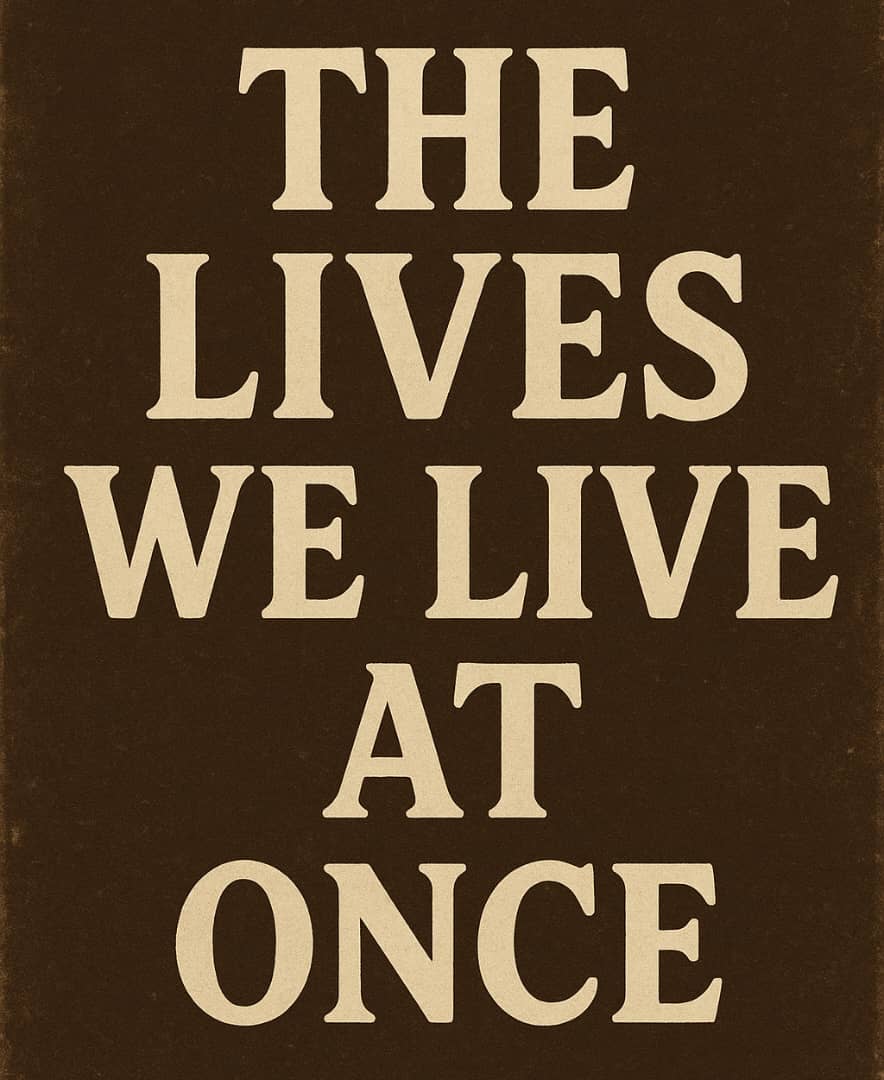
The Question That Comes on a Good Day
The question did not arrive on a bad day.
That is what unsettled me.
It came on a morning when everything was working. The calendar was full but manageable. The mind alert. The body cooperative. I had just finished a conversation that should have left me satisfied one of those exchanges where plans align, decisions land, and the future appears obedient.
And yet, while walking through a familiar street nothing poetic, just asphalt, parked cars, the smell of diesel and roasted corn it surfaced without drama:
Under which rules am I actually living this life?
Not what should I fix?
Not what is broken?
But something quieter and far more destabilizing: Which version of life is currently in charge and when did it assume authority?
Many people know this moment. It visits without warning. In an airport lounge between flights. In traffic on a route you’ve driven for years. In the bathroom mirror after a celebration has ended. It does not shout. It whispers. And because it does not announce itself as a crisis, we often ignore it until ignoring it becomes harder than listening.
This essay is for that whisper. For those who feel restless not because they lack direction, but because they are pulled by several directions at once and are finally willing to sit still long enough to understand why.
The Quiet Collision Most People Don’t Name
Most people say they are searching for meaning. That language is comforting, almost noble. But it misses the point.
What many are actually doing is trying often unconsciously to live several incompatible interpretations of existence at the same time.
One interpretation treats life as a finite opportunity. Time is limited. The clock is real. You must build, secure, extend, leave traces. Health becomes a project. Career becomes a race against obscurity. Legacy matters because disappearance looms.
Another interpretation treats life as experience rather than conquest. You are here to feel, to witness, to absorb. The world is not a problem to be solved but a place to be encountered. Completion is optional. Presence is the currency. Death is not theft; it is transition.
Then there is the interpretation that frames life as passage. A morally weighted journey. Actions accumulate consequence beyond the visible horizon. Discipline matters. Choices echo. The present is meaningful, but not final.
Each of these ways of living has sustained real people, real societies, real histories. None is foolish. The problem is not their existence.
The problem is that we are expected to inhabit all three without ever being taught how—or when to shift between them.
When Achievement Loses Its Voice
Several years ago, I spent time in London working with senior leaders in finance and consulting. One afternoon, after a long strategy session near Canary Wharf, a managing director invited me for a walk along the Thames.
He was not dramatic. Not emotional. He spoke the language of metrics and outcomes with ease. His life was an open spreadsheet of wins.
As we sat on a bench watching tourists take photos and office workers drift past with loosened ties, he said something almost apologetically.
“The strange thing,” he said, “is that this” he gestured toward the river “feels more real than my actual life.”
He explained that these moments sitting, watching, doing nothing productive were when he felt most himself. No targets. No leverage. Just existence.
He was unsettled by this. It felt disloyal to the life he had built.
What he was experiencing was not burnout. It was friction. One way of living had carried him far urgency, optimization, relentless forward motion. Another way of living was knocking quietly, asking for space.
He did not need a new job or a new philosophy. He needed a new literacy: the ability to recognize that not every moment demands maximization.
The Cost of Always Preparing
In Ibadan, I once sat with a retired schoolteacher in her modest living room. The furniture was old but clean. The walls held photographs of children she had taught decades earlier now doctors, civil servants, parents themselves.
She had lived a life guided by faith and duty. Discipline was not a burden; it was identity. She believed deeply that life was preparation that restraint now would be rewarded later.
But age had given her a different vantage point.
“I thought joy would come after,” she said quietly. “After the children were grown. After retirement. After I had done my part.”
Her regret was not about moral failure. It was about delay. She had postponed delight so consistently that she forgot it was allowed.
Her faith had given her strength. It had also narrowed her permission.
What saved her early in life structure, restraint, obedience had quietly become a cage when circumstances changed.
No one had told her that preparation, when extended beyond its season, can quietly steal the present.
Freedom as Refuge
In Nairobi, I met a young creative graphic designer, photographer, storyteller who lived lightly. No permanent address. No long-term plans. He spoke passionately about not being owned by expectations.
“Life is about experience,” he said. “Once you start fixing things, you start dying.”
He was intelligent, articulate, alive. And yet, beneath the language of freedom was something unspoken. He avoided commitments not because they were oppressive, but because they were revealing.
Commitment would ask him to measure himself. To endure boredom. To be accountable when inspiration disappeared.
His openness was genuine. So was his fear.
Freedom had protected him from disappointment. It had also protected him from growth.
The Uncomfortable Truth About Our Restlessness
What connects these lives is not confusion. It is misapplication.
Each person had adopted a way of living that once served them and then refused to let it evolve.
Urgency rescues people from scarcity.
Discipline rescues people from chaos.
Openness rescues people from despair.
But none of these is meant to govern a life forever.
The deepest mistake we make is turning survival strategies into permanent identities.
We are rarely taught to ask the more honest question: Is this way of living still appropriate to the season I am in?
Instead, we cling. We defend. We moralize our habits. And when the fit becomes unbearable, we call it confusion.
When Grief Rejects Productivity
A friend in Lagos lost his father suddenly. The days after the burial were heavy with visitors, condolences, rituals. Then came the silence.
Work waited. Emails accumulated. The world expected him to resume.
But ambition felt obscene. Targets felt hollow. Meetings felt dishonest.
For that season, presence was not indulgence. It was necessity.
He spent weeks listening to old stories, sitting with his mother, revisiting places that carried memory. Any attempt to “push through” would have been violence against his own humanity.
Years later, when grief softened, action returned. Not as denial, but as continuation.
What changed was not his values. It was his posture.
The Questions That Do Not Accuse
Clarity rarely comes from grand declarations. It comes from quieter questions that refuse to flatter.
When I feel restless, am I being called to act or to stop acting?
When I pursue certainty, am I seeking truth or escape from ambiguity?
When I speak of purpose, am I listening or hiding behind language?
These questions do not judge. They diagnose.
When Freedom Loses Shape
A woman I knew in Toronto left a high-paying corporate role to “find herself.” For a while, the freedom healed her. Sleep returned. Curiosity revived. She traveled, read, explored interests long neglected.
Then, slowly, days lost shape. Without constraints, meaning dissolved. Freedom, once restorative, began to feel like drift.
She returned to structure not out of fear, but out of clarity. Freedom had done its work. Responsibility was now required.
When Duty Overstays
In Johannesburg, a man I met had lived his entire life by duty. Family first. Sacrifice normalized. Desire deferred.
Illness interrupted the script.
Recovery taught him something discipline never had: postponement, when extended beyond necessity, becomes theft.
He did not abandon responsibility. He widened it to include himself.
The Rhythm Beneath the Stories
What emerges from these lives is not a formula, but a rhythm.
There are moments that demand effort, ambition, assertion.
Moments that demand restraint, reverence, moral accounting.
Moments that demand unguarded presence.
The danger lies in mistaking one moment for all moments.
Wisdom is not consistency of belief. It is sensitivity to context.
This sensitivity cannot be outsourced. It demands attention not the loud attention of productivity, but the quiet attention of honesty.
Precision Over Certainty
No institution will give you permission to shift. Predictability is rewarded. Coherence is applauded.
But living systems survive through adjustment.
The deepest rest is not inactivity. It is alignment when action no longer fights inner weather, when restraint no longer feels like deprivation, when presence no longer feels like escape.
You do not arrive there once. You circle it. You lose it. You recover it.
A meaningful life is not one that resolves the question of existence forever. It is one that knows which life it is living now and why.
Those who stop chasing final answers do not become empty. They become precise.
And in a world addicted to noise, precision remains a quiet, subversive form of courage.