By Bamidele Johnson
In the SS3 class I taught during my NYSC year in Borno State was a mixed-race boy with movie-star looks. His appearance made you do a small double-take before feeling embarrassed for doing so. His dad had been Libyan. His mom was Shuwa, a group reputed for producing 10/10 women with curly hair. You, however, could not know if they were 34-24-36 because of conservative dressing.
The father had died. The mother was still alive and I confess that when I asked the boy whether he had an older sister, the purpose of the enquiry was not academic. That was 1990 and Libya occupied a position in the Nigerian imagination as one of Africa’s economic paradises.
I asked the boy whether he had ever visited Libya or had plans to return to his fatherland. The answer to both questions was no. Had his mother ever been there? Also no. So how exactly had she met the man? The father had come to Nigeria, lived here for several years, fathered nine children and eventually returned home to die.
I assumed he had been posted here, attached to a diplomatic mission or a multinational organisation. He had not. He was a Muslim cleric. I wondered why he would leave Libya, where there could hardly have been a shortage of minds requiring attention. I found this puzzling but did not press the point. Then I realised the boy’s father was far from unusual.
Roughly 30 percent of the students at my school were expats and approximately half of those were from Chad. I used to tease them by calling them Dan Chad and asking why their country insisted on spelling itself Tchad. I asked whether any of them knew Goukouni Wedeyye. None did. They spoke Hausa and Kanuri and a version of English that would make Indaboski seem like Wole Soyinka, but spoke no French.
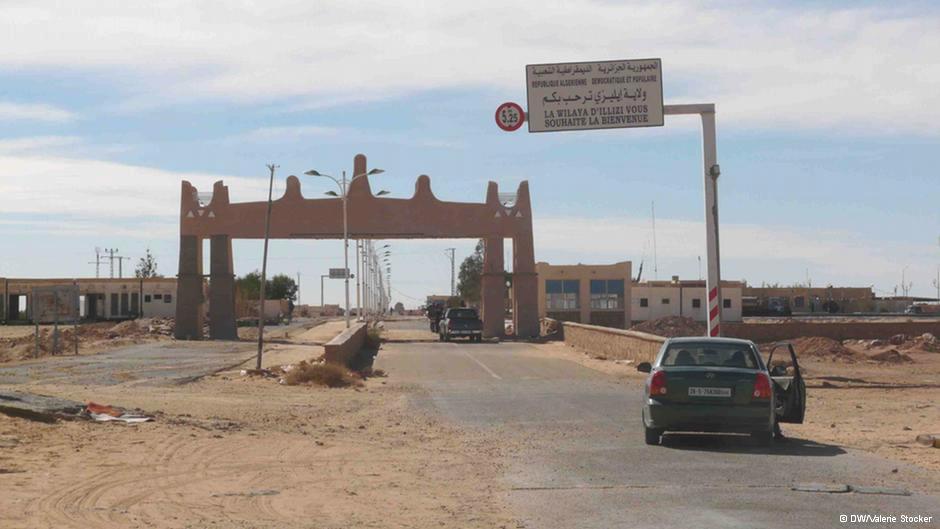
Most of their parents had crossed into Nigeria years earlier from communities near the fishing town of Baga, simply walking across a border that offered no objection. There were also students from Niger, Cameroun, Burkina Faso and Mali. I doubt many of them or their parents possessed valid immigration papers. If they had papers at all, they were probably Nigerian ones. Obtaining a Nigerian passport back then required roughly the same effort as buying Indian hemp these days.
The phenomenon is not confined to the North. In the South, Beninese and Togolese communities have long blended into the local population. Chadians, Malians, Nigeriens and Guineans also operate bureaux de change in many cities, often with little indication that the authorities know who has the legal right to work and who does not.
The documentation landscape has changed since then, but I doubt it is in a confidence-inspiring way. Foreign nationals legally resident in Nigeria are now entitled to obtain a NIN and many do. The problem is that it does not go far enough. The NIN is only as useful as the border management system that precedes it. Our border management system is, to put it as charitably as the evidence permits, atrocious.
If the frontier is merely a suggestion rather than a barrier, the NIN becomes a certificate of having remained undetected long enough to obtain paperwork rather than an identity management tool. The document does not confirm who you are. It merely confirms that you have been here long enough and escaped being caught.
I have no idea what became of those children I taught. I only hope they all went on to live productive lives here or elsewhere. But I would not be surprised if some of them or people like them ended up in the terrorism or banditry ecosystem. The ease and comfort with which they settled here, completely untroubled by bureaucracy or border scrutiny, created the kind of rootless, undocumented pool from which the HR of criminal networks recruit.
What that ease of settlement says about Nigerian hospitality is admirable. What it says about Nigerian governance is grotesque. While hospitality is a virtue, carelessness is not. It is not xenophobia to argue that a border should mean more than lines drawn on a colonial-era map. If a country cannot control who enters and leaves its territory, it has surrendered one of the most fundamental expressions of sovereignty without the dignity of a formal negotiation. This is where I think Nigeria is at the moment.
The ECOWAS Protocol on Free Movement, which often gets talked about, was never designed to yield a sub-region sans frontières, in which any citizen of any member state could walk in, settle permanently and claim the full entitlements of citizenship in someone else’s country. What it provides for is visa-free entry for up to 90 days and establishes pathways for residency and formal establishment. All of this is subject to the host country’s immigration laws.
It does not confer automatic permanent residency. It does not entitle citizens of member states to free education, free healthcare or social welfare benefits reserved under national law for actual citizens. It facilitates lawful and regulated movement. It does not repeal sovereignty.
What our sieve-like borders have done instead is turn what should be a controlled flow of legitimate movement into an unmonitored spillage, creating channels for arms trafficking, human trafficking, contraband, terrorism and the movement of serious criminals who have discovered that the entry requirements are not demanding.
The economic costs are substantial. The security implications are even greater. In a country managing an active insurgency in the North-East, rampant banditry across the North Central and kidnapping that has become something resembling an organised private sector, treating border management as a peripheral concern is not merely negligent. It is actively dangerous.
A functioning country should know to whom it is issuing identity numbers, when those people entered, on what legal basis they did, whether they have overstayed and when they eventually left. Without that chain of accountability, the entire documentation apparatus is just an administrative ritual. It should be a security instrument.
The solution is not to abandon the ECOWAS Protocol, but to implement it as it was actually designed, with robust identity management, proper immigration enforcement, intelligence sharing across member states, modern border surveillance and the political will to remove people who have violated the terms of their presence.
Nigeria is entitled under international law and the ECOWAS framework itself to verify identities, deny entry where lawful grounds exist and protect its national security without apologising for doing so. That is not happening. I doubt it has ever happened. Freedom of movement is not freedom from regulation. No serious country leaves its borders open and expects peace, prosperity and security to follow. None.