By Agbeze Ireke Kalu Onuma, AI-KO
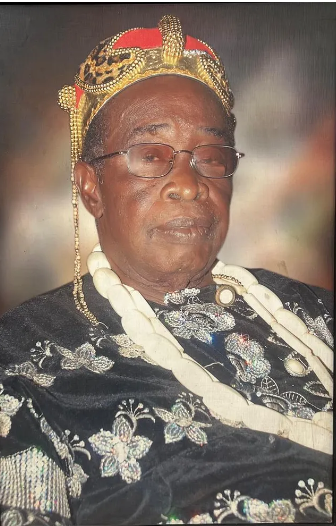
I remember the rain that day in Enugu, a persistent drizzle that turned the Ohanaeze hall stuffy and damp. The air was thick with heated debate, the kind of circular argument that often characterizes our Igbo gatherings, where every voice is a General. In a corner, in the front row, almost obscured by the gesticulating figures, sat HRH Ezeogo Elder Dr. Agom Eze. He was listening, his hands resting on his walking stick, his eyes taking in every speaker with a quiet, unnerving intensity. When the tumult subsided, not out of resolution but exhaustion, he leaned forward. He didn’t raise his voice, but the room fell into silence, the kind reserved for a father’s final judgment.
He spoke for less than two minutes, dismantling the complex issue with precision, tracing the problem back to a forgotten promise made decades prior. In that moment, he wasn’t just a man offering an opinion; he was a living archive, the conscience of the room, connecting our then present chaos to a past we had all but forgotten. That was the man: a quiet force whose depth you only grasped when you stopped to truly listen.
His was a life that seems almost mythical now, a story woven from the very fabric of our modern history. Born in 1932, Agom Eze didn’t just witness the transformation of the Igbo nation; he was one of its…
But to list his titles is to miss the essence of his influence, which was like a deep underground river, unseen but vital, nourishing everything in its path. His public life was a masterclass in silent, strategic contribution. I recall a conversation with him after one of those tense Ohanaeze meetings. Over a modest serving in his hotel room, I asked him why he often held back in debates until the very end. He smiled, a knowing glint in his eyes, and said, “My son, when everyone is shouting, the truth has no room to land. You must first let the storm pass. The land itself does not shout to prove it is solid; it simply is.”
This philosophy was forged in the crucible of his early service. I saw this same quality reflected in his deep respect for Admiral Ndubuisi Kanu, under whose administration he served from 1976 to 1977. The Admiral, a man I also followed and served with immense respect, was another quiet force, a “nationalist par excellence” who, like the Ezeogo I knew, fought for justice and a restructured Nigeria. Theirs was a partnership of parallel spirits. Admiral Kanu, deploying his “latent energy like Biblical Nehemiah” to build Imo State, recognized in my mentor a kindred spirit of integrity and intellect.
It was this trust that led the Admiral to specifically assign Dr. Agom Eze to vet a critical welcome address for a visiting Head of State, a delicate task meant to prevent diplomatic fallout. Hearing of this bond—of how one man of principle relied so completely on another—cemented my own understanding of the kind of leadership I aspired to emulate. It showed me that true influence is not about loud proclamations, but about the quiet, steadfast building of trust and the courageous application of wisdom in the face of power.
This quiet conscience extended to the highest levels of national discourse. During the delicate preparations for the Oputa Panel in Abuja, I saw him in a different light. While others postured and crafted soundbites for the gallery, Ezeogo Agom Eze was immersed in the meticulous work of memory and precedent. He was less concerned with the theatrical performance of grievance and more focused on the architectural framing of our historical claims for justice. He understood that for Ndigbo to be taken seriously, our submissions had to be unassailable, rooted in fact, law, and a profound sense of history.
He was one amongst many, of our quiet conscience, reminding us that true strength lies not in the volume of our protest, but in the irrefutable quality of our truth. In his community, this manifested as a different kind of service. He didn’t rule by edict from a distant throne. His palace in Egwunko was a place of continuous, quiet arbitration. He settled land disputes not with power, but with a patient unravelling of family histories; he guided development not with imposing decrees, but by convincing his people of the long-term benefit, making them feel the project was their own idea, their own victory.
It is one of the quiet tragedies of life that we often come to fully understand a man’s depth through the reflections cast by his children, long after our own direct encounters with him have passed. My most crucial serial engagements with Ezeogo Agom Eze belonged to a specific era of my life—those intense years of the early 2000s, in committee rooms and Ohanaeze halls. It was only several years later, after that season had passed, that I came to know his daughter, Ann. Our meeting was no accident of fate, but a continuation of a legacy; she had been posted to Lagos as the Ebonyi State Liaison Officer. We found ourselves in the same orbit, now at Ndigbo Lagos meetings, and in her, I saw a living, breathing testament to the father I so admired.
Where many who occupy such positions seem to come primarily to be seen, to occupy a title, Ann came with a different purpose entirely: she came to serve. She was focused, fiercely hardworking, and possessed a quiet determination that was immediately familiar. In the way she carried herself—with an unassuming grace that commanded respect without demanding it—and in the manner she engaged with complex issues, with patience and a desire to truly listen before speaking, I saw the unmistakable traits of her father. Observing her navigate the often-turbulent waters of Lagos politics and Igbo community affairs was like watching Ezeogo Agom Eze’s philosophy in motion, a second-generation proof of concept. She was, as the old saying goes, the apple that had not fallen far from the tree, and her presence was a comforting reminder that the seeds he had sown in a lifetime of service were bearing fruit in the most personal of ways.
It was through this living connection, through Ann, that I received the somber news of his passing. The call came a few months ago, her voice steady but layered with a grief that only a daughter knows. I was, to my shame, unaware. There was a poignant surprise in her tone that I had not yet heard, a gentle shock that someone who had shared so many crucial moments with her father could be disconnected from this fundamental truth. In that moment, the phone pressed to my ear, the bustling noise of Lagos fading into insignificance, the loss became profoundly real. It was no longer a distant abstraction but a personal void, confirmed by the voice of his child. Since that day, she has kept me faithfully in the loop, a bridge between the memory of the father and the community that mourns him, ensuring I am kept abreast of the funeral plans. This final act of service, of ensuring a mentor is properly honoured, feels like the closing of a circle she never asked to draw, but fulfills with the same dedication she learned at his knee.
And yet, as we prepare to lay this iroko to rest on November 21st, 2025, in his ancestral home of Egwunko, I am haunted by a painful and recurring truth. The outpouring of grief from across the nation confirms the scale of our loss. Governor Francis Nwifuru of Ebonyi State described his passing as a “monumental loss,” rightly identifying him as a champion of the agonizing 39-year struggle for the creation of Ebonyi State. Hon Kama Nkemkanma called him a “pacesetter in every sense,” an accomplished public servant and the very cynosure of our custom and tradition. From the business and political sphere, Chief Ifeanyi Odii mourned a “trailblazer, an outstanding scholar, cultural ambassador, and elder statesman.” To read these tributes is to confront the sheer scale of what we have lost.
Yet, I fear we are performing a familiar ritual. Ezeogo Agom Eze now joins a long and somber list of Igbo patriots who gave their intellect, comfort, and youth to serve us, only to be offered a few lines in the news, a brief moment of mourning, and then… silence. They fought for state creation, built institutions, mediated conflicts, and carried the burdens of leadership when it was neither popular nor profitable. It is a generational betrayal that we must confront. Our apex socio-cultural body, Ohanaeze Ndigbo, must urgently interrogate this pattern of amnesia. We cannot continue to celebrate our heroes only in death. We must institutionalize remembrance; we must build living archives, name institutions after these pathfinders, and hold annual remembrances to teach our children about the commissioners of the old Imo State, the founding fathers of Ebonyi, and the quiet diplomats. We must learn to honor not just the loud and popular, but the wise and principled.
Let his funeral, therefore, be our collective turning point. Let it be the moment we declare, with one voice, “No more forgetting.” He was a man of depth, grace, and sacrifice, a man I was privileged to witness firsthand. He gave his life to service for a future he may have suspected he would not live to see fully realized. As we gather in Egwunko to bid him a final farewell, let us also gather our collective conscience.
For in the end, a people who do not honor their foundational pillars are a people building on sand. The great Chinua Achebe, another of our giants we nearly let slip into the twilight, once wrote, “Until the lions have their own historians, the history of the hunt will always glorify the hunter.” Ezeogo Agom Eze was one of our lions, and more than that, he was one of our historians. He carried our story in his bones and fought our battles with the weapon of his intellect. He was the quiet, solid land upon which louder edifices were built. His legacy is a challenge to our collective memory, a testament to the power of substance over noise. If we allow his legacy to fade into the same quiet oblivion as that of so many others, then we are not just burying a king. We are burying our own memory, and with it, the very blueprint for our dignity. Let us remember. Let us honor. Let us change. May his great and noble soul find the perfect peace he so diligently worked to create for his people here on earth. Amen.