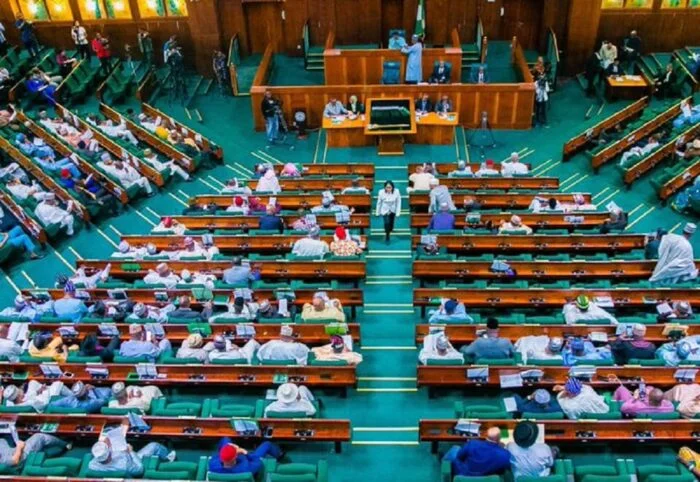
The legislative activity in the House of Representatives marks a significant move toward decentralizing specialized education and advanced medical training in Nigeria. These two bills target very different, yet equally critical, sectors: the grassroots economy and high-end medical technology.
Sponsored by Hon. James Shuaibu Barka, this bill (HB. 112) seeks to establish a dedicated institution in Gombi, Adamawa State, to move beyond theoretical education by providing vocational training and entrepreneurial mentorship.
By situating this in Adamawa, the bill aims to address the high youth unemployment rate in the North-East, offering practical skills that allow graduates to create jobs rather than just seek them.
The college is designed to bridge the gap between traditional academic degrees and the technical expertise required for modern industrial and digital economies.
Sponsored by Hon. Usman Zannah, this bill (HB. 2683) proposes a specialized institute in Maiduguri, Borno State, focusing on Interventional Radiology, Cardiology, and Neurology.
Interventional Radiology is a medical sub-specialty that uses minimally invasive, image-guided procedures to diagnose and treat diseases in nearly every organ system (e.g., using needles and catheters instead of large incisions).
Maiduguri has historically been a hub for medical excellence in the Lake Chad region.
This institute would serve as a training and research center for advanced procedures that currently often require Nigerians to travel abroad (medical tourism).
To produce a local workforce of specialists capable of performing complex vascular and neurological interventions, reducing the burden on general hospitals.
Both bills are currently at the Second Reading stage. By prioritizing these bills, the House is signaling a focus on human capital development; equipping citizens with the tools to fix both the economy and the healthcare system from the ground up.