That brief period of relative political quiet has officially expired, and we’re back to the high-stakes chess match of governance.
The administration’s strategy seems to be a classic “Economic Stabilization” play. By leaning heavily on the Dangote Refinery and a tech-driven “Silicon Savannah” model, they are attempting to address the two biggest pain points for the average citizen, inflation (via energy costs) and unemployment (via the digital economy).
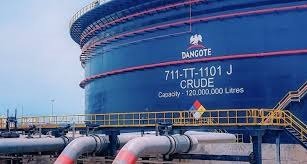
The refinery isn’t just a private enterprise; it’s a massive geopolitical and economic lever. If it hits full capacity, the ripple effects could be significant. Reducing the demand for USD to import refined petroleum could stabilize the local currency.
Cheaper or more stable fuel prices act as a “tax cut” for almost every sector, potentially cooling the runaway food inflation that fuels opposition rhetoric. It removes the embarrassment of being a top crude producer that can’t fuel its own cars.
While the refinery handles the “old economy,” the tech hubs are designed to capture the Gen Z and Millennial vote, which proved to be a formidable force in the last cycle.
These hubs offer a path to high-paying, exportable skills (coding, AI, fintech) that don’t rely on traditional, sluggish government infrastructure.
Innovation centers create a narrative of progress. If the youth feel they have a stake in a “Digital Future,” they are less likely to join the ranks of the “growing opposition” on the streets.
It’s a bold gamble, but it comes with a high degree of “Execution Risk.” The opposition won’t just sit by. They will likely focus on the timeline gap. Infrastructure and refineries take time to hit 100%, but hunger is immediate. If the “relief” doesn’t hit the pockets of the masses before the campaign posters start going up, the administration might find that tech hubs and fuel self-sufficiency are too little, too late.