By Agbeze Ireke Kalu Onuma, AI-KO
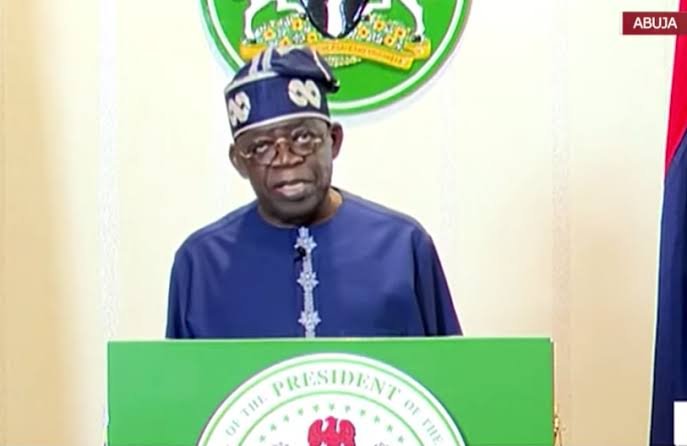
On Saturday, November 29, 2025, President Bola Ahmed Tinubu forwarded thirty-two ambassadorial nominees to the Senate for screening and confirmation. This larger list, comprising seventeen non-career and fifteen career diplomats, followed an initial batch of just three names submitted days earlier. The list’s publication by outlets including Punch and BusinessDay marked a pivotal moment, coming nearly two years after the recall of all envoys in September 2023. Therefore, the controversy surrounding these thirty-two nominees transcends the fate of individual appointees. It is a defining referendum on our national character, a clear measure of the gap between the Nigeria we aspire to build and the one these appointments reveal.
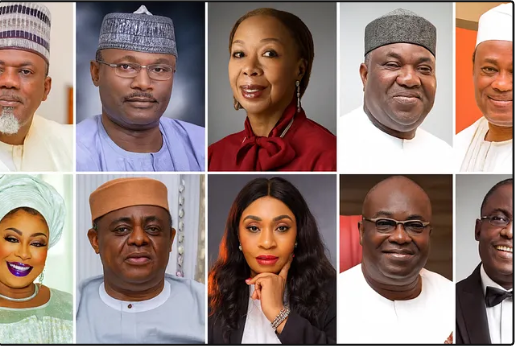
President Bola Ahmed Tinubu’s unveiling of thirty-two ambassadorial nominees has arrived in the Senate not as a routine bureaucratic exercise but as a symbolic declaration of Nigeria’s foreign policy priorities. The composition of the list itself tells a story. Among the seventeen non-career nominees are familiar political heavyweights and former officeholders whose names resonate across Nigeria’s public square. Former governors like Ifeanyi Ugwuanyi and Victor Okezie Ikpeazu, ex-ministers such as…
Tinubu’s administration has framed its global engagement through the “4D Doctrine” – Democracy, Development, Demography, and Diaspora. This ambitious framework positions Nigeria as Africa’s natural leader and a credible voice in global governance. It seeks to leverage Nigeria’s claim as the continent’s largest democracy, its economic reforms and investment drives aimed at growth, its youthful and massive population as a strategic asset, and its millions abroad as bridges for influence and capital. In practice, this vision has been expressed through a flurry of presidential diplomacy, with foreign trips yielding headline-grabbing pledges of multibillion-dollar investments from India, Brazil, and the Netherlands, reinforcing the mantra that Nigeria is “open for business.”
Yet beneath this outward projection lies a dissonance. Critics argue that the administration’s rhetoric is heavy on promise but light on delivery – “plenty sizzle, no steak.” Nigeria’s domestic realities complicate its foreign policy drive: inflation, currency instability, and unemployment erode credibility; persistent insurgency and banditry undermine stability; vacant ambassadorial posts have muted Nigeria’s voice abroad for over two years; and under Tinubu’s ECOWAS chairmanship, Niger, Mali, and Burkina Faso exited the bloc, exposing the fragility of Nigeria’s regional leadership. Against this backdrop, the ambassadorial list becomes more than names – it is a litmus test of whether Nigeria is serious about renewal or merely recycling political patronage.
The release of the list has ignited fierce debate. The Peoples Democratic Party condemned the nominations as “reprehensible and scandalous,” alleging they reward individuals with “integrity deficits.” Online commentators echoed this sentiment, branding the appointments a “political reward system” – a soft landing for loyalists rather than a merit-based selection of skilled diplomats. For every voice defending the loyalty or experience of certain nominees, many more question the wisdom of entrusting Nigeria’s global representation to figures whose past records remain contested. At a time when Nigeria’s credibility abroad is fragile, the dominance of political appointees over career diplomats has sharpened anxieties about misplaced priorities.
Engaging with this moment is to wrestle with a profound tension between aspiration and disillusionment. A nation’s character is revealed in the people it chooses as its face to the world. Examining this list forces uncomfortable questions: what values does Nigeria truly reward, what image of itself is it desperate to project, and does the 4D Doctrine translate into genuine reform or is it overshadowed by patronage? The doctrine speaks of democracy and development, yet the nominations whisper of settlement and political calculus. To remain silent in the face of this contradiction is to ignore the drafting of Nigeria’s future in real time. These choices – whether visionary or compromised – will shape how Nigeria is seen, heard, and judged on the global stage.
In essence, the ambassadorial list is more than a roster of names. It is a mirror reflecting Nigeria’s struggle between its declared ambition to lead Africa into a new era and the entrenched habits of political patronage that continue to weigh it down.
Diplomacy is not merely the art of negotiation; it is the projection of a nation’s soul, the careful curation of its best face – its most immaculate, intellectual, and morally upright citizens – sent forth to engage with the world. Yet, as a Nigerian who has watched our nation’s steady decline from a position of African leadership to a subject of global pity, I cannot remain silent while our diplomatic passport is turned into a “Get Out of Jail Free” card for the politically wounded and the reputationally bankrupt. For over two years, our foreign missions have been ghost towns, manned by junior officers while the giant of Africa slept. We were told this delay was for “thorough vetting,” a pause to find the very best. What has emerged from this long hibernation, however, is not a galaxy of stars but a roll call of the indicted, the disgraced, and the questionable – a list that reads less like a roster of envoys and more like a crime report or a feudal inheritance scroll. This is not just a disappointment; it is a diplomatic suicide note, a confession of state capture that confirms a terrifying truth: the current administration views the Foreign Service not as a tool for statecraft, but as a patronage dispensary and a rehabilitation center for the politically damaged.
To understand the profound tragedy of this moment, one must recall the legacy we are so recklessly incinerating. From the days of Jaja Wachuku to the intellectual rigour of Bolaji Akinyemi and the esteemed presence of Emeka Anyaoku, we once sent our “first eleven” to the global stage. We were the “Giant of Africa” not merely by population, but by the gravitational pull of our diplomatic presence, mediating conflicts in Liberia and Sierra Leone and sitting as the conscience of the continent. That legacy, built on merit and moral authority, has been systematically dismantled. What we witness today is the final collapse of meritocracy, the “Agbero-fication” of our diplomacy, where the only qualification required to represent 200 million Nigerians is either a stained record of service to the ruling party or a DNA connection to a godfather. This shift did not begin in 2023; it is the culmination of a deepening leadership scarcity that has been unfolding since the return to civilian rule in 2000, where political loyalty has increasingly trumped competence and integrity, eroding every institution it touches.
Consider, for instance, the grotesque spectacle of dynastic entitlement embodied by the appointment of Neya Kalu. When her father, Senator Orji Uzor Kalu, receives her in his private office to discuss her “forthcoming diplomatic responsibilities,” we are witnessing the privatization of the republic. This is not a state function; it is a feudal blessing. What signal does this send to the career diplomats who have spent decades mastering the nuances of international law and protocol in the Ministry of Foreign Affairs? It screams that their hard work is irrelevant, that in Tinubu’s Nigeria, the line between serving the nation and settling the family has been utterly erased. This nepotistic trend, replicating itself across appointments, is a symptom of a systemic rot that treats the state as a carcass to be shared among a closed circle, ensuring that influence and access become hereditary commodities rather than earned privileges.
Then there is the case of Femi Fani-Kayode, a man whose appointment as an ambassador is to institutionalize instability and export toxicity. Diplomacy relies on nuance, discretion, and bridge-building; FFK’s entire career has been an exercise in burning bridges through incendiary rhetoric, ethnic baiting, and a consistency found only in its absence. Beyond the legal stains – money laundering trials, the forgery of medical reports – his very persona is antithetical to the dignity required of a diplomat. How does a man who has insulted ethnic groups and threatened foreign envoys sit across a table to negotiate trade or security pacts? His presence on this list suggests that the President values the chaotic service of an attack dog during campaigns more than Nigeria’s standing in the international community. It is a calculated insult to the Nigerian people and a direct export of our most corrosive political instincts.
Perhaps the most brazen rewriting of history is the nomination of Ayodele Oke, the ghost of the “Ikoyigate” scandal. The image of $43 million, £27,000, and N23 million stashed in a luxury apartment is seared into our national psyche as a perfect symbol of the looting of the commonwealth. For the former Director-General of the National Intelligence Agency (NIA), whose case was swept under the rug of “national security,” to be rehabilitated with a diplomatic passport is to tell the world that in Nigeria, grand corruption is not a crime but a mere hiatus in one’s career. In the intelligence community, trust is the fundamental currency. What intelligence agency – the CIA, MI6, or Mossad – will share sensitive information with a mission led by a man whose tenure ended in such ignominy? This is not merely a corruption issue; it is an active national security risk, a voluntary compromise of our own safety on the global stage for the sake of political housekeeping.
The inclusion of former governors like Ifeanyi Ugwuanyi and Okezie Ikpeazu completes this portrait of transactional impunity. These men are not ambassadors by virtue of stellar governance; they are ambassadors by virtue of political debt. Ugwuanyi left Enugu with a crippling debt burden, while Ikpeazu departed Abia with a legacy of unpaid salaries, perennial strikes, and infrastructural decay that became a national punchline. To deem such figures fit to manage Nigeria’s complex bilateral relations is to declare that loyalty to the party machinery utterly supersedes any demonstrable competence or service to the people. It reinforces a vicious cycle where failure at home is not a disqualification but a prerequisite for reward abroad, provided one played the right political game.
And looming over this grotesque gallery is the ultimate mockery: the specter of Mahmood Yakubu. Should the man who presided over the 2023 general elections – an exercise widely described by observers as a shambolic heist that shattered public trust – be rewarded with a golden parachute to a foreign capital, it would signal the final death of institutional integrity in Nigeria. It would tell every future public servant that the surest path to security is to compromise your institution for the powers that be. How does such a figure stand before international bodies to advocate for democratic values when his own tenure actively undermined them at home? This appointment would be a brazen celebration of the electoral heist, transforming diplomacy into a safe house for those who subvert the very democracy they are meant to represent.
The unprecedented wave of public condemnation that has greeted the ambassadorial list is not merely popular discontent; it is a chorus of expert diagnosis from within the very institutions the list has undermined. From the retired corridors of the Ministry of Foreign Affairs comes a damning historical verdict. As former Ambassador M.K. Ibrahim notes with palpable distress, Nigeria’s diplomatic service, a 68-year-old institution predating independence itself, has never witnessed such widespread and contentious public rejection of its envoys. This shock from a career professional underscores that what we are witnessing is not politics as usual, but the breach of a foundational covenant. He contrasts the current list with the standards set by early leaders like Prime Minister Tafawa Balewa, who demanded ambassadors possess intellectual capacity, professional competence, and unblemished moral character. The current nominees, in his view, represent such a stark departure from this tradition that they constitute a “symptom of a deeper malaise,” warning that foreign capitals are already compiling the negative social media frenzy into damaging diplomatic cables.
This institutional lament is powerfully echoed in the nation’s press, which has dissected the list not as a political scoop but as a tragic failure of vision. Editorial boards frame the two-year delay in appointments, which left diplomatic posts vacant during global economic turmoil and regional insecurity, as a gross abdication of strategic responsibility. The Punch Newspaper captures the national mood of betrayal, arguing that the “long wait” fostered hopes of a “near-perfect list” and a “diplomatic corps revitalised,” only to produce a “business as usual” catalogue that “could easily have been assembled on Day One”. The analysis is scathing in its simplicity: at a time requiring urgency and boldness to attract investment and stabilize the currency, Nigeria has offered the world political compensation and safe choices. This media consensus transforms public frustration into a coherent critique: the state has privileged internal political housekeeping over the external representation of national interest.
Perhaps the most corrosive revelation from the commentary is the anticipated and utter failure of the checks and balances designed to prevent such failures. The court of public opinion has already tried these nominees, but the court of the Senate, as former Permanent Secretary Joe Keshi bluntly states, will not. He warns Nigerians not to expect “rigorous interrogation” from the upper chamber, predicting the continuation of a “take a bow” culture for politically connected nominees. This pre-emptive surrender of constitutional duty completes a vicious circle: controversial figures are nominated as political settlements, and a compliant Senate confirms them as a political courtesy. Keshi highlights the absurdity of rewarding former governors who “ran a state and ran it down” with a prestigious platform to represent the very country they failed. This expected lack of scrutiny confirms that the entire process is a closed loop of elite accommodation, utterly disconnected from any meritocratic or strategic imperative.
Within the political arena itself, reactions to the list are a masterclass in the transactional cynicism that defines the era. While opposition voices like the Peoples Democratic Party (PDP) rightly critique the appointment of figures like former INEC Chairman Mahmood Yakubu as a blatant “reward system”, their moral authority crumbles when their own partisans are favored. The Abia State PDP, for instance, issued a statement overflowing with praise for President Tinubu’s “well deserved” nomination of their former governor, Okezie Ikpeazu, framing it as a recognition of “competence and experience”. This instant partisan forgiveness reveals a fundamental truth: the outrage is not systemic but situational. The real grievance for many in the political class is not the corruption of the diplomatic service, but the fear of being excluded from the spoils. It is a game of musical chairs where the music is the suffering of the populace, and the prize for a seat is immunity from accountability, either at home or abroad.
Yet, the most potent and uncontrollable commentary has emanated from the digital public square – the social media platforms where the list was famously dubbed a “crime report.” This is not just citizen journalism; it is a real-time, global erosion of Nigeria’s diplomatic image. As Ambassador Ibrahim revealed, foreign missions in Abuja have spent the past week in a state of high alert, compelled to monitor the unending stream of negative posts and compile them into official reports for their home governments. The nominees, particularly those with histories of incendiary statements or unresolved corruption allegations, are arriving at their future posts under a cloud of scandal that precedes them. In a stark warning that should chill the spines of those in charge, Ibrahim suggests he “won’t be surprised if some countries refuse to accept some of the nominees”. Thus, the ultimate verdict on Nigeria’s leadership may not be delivered in Abuja or the Senate, but in the chanceries of world capitals, who may look at these tainted envoys and decide that engaging with them is a risk not worth taking. In the end, the people are speaking – through editorials, diplomatic warnings, and viral posts – and their message is clear: the nation has been offered up, yet again, as collateral for a political deal.
This list is a stark embodiment of what scholars like Joseph Nye term the collapse of “soft power.” A nation’s influence stems not just from its military or economy, but from the attractiveness of its culture, values, and the credibility of its representatives. By nominating men with such glaring credibility deficits, the Tinubu administration is declaring a voluntary bankruptcy on Nigeria’s global appeal. We spend billions on rebranding campaigns and PR slogans like “Good People, Great Nation,” yet a single list like this undoes decades of painstaking work. When host countries run dossiers on these nominees, they will find indictments, EFCC probes, and records of administrative failure. The result is a creeping diplomatic isolationism; we may still have embassies, but we will be frozen out of the rooms where real decisions are made, as serious nations increasingly view engagement with us as a reputational risk.
The tragedy is compounded by the certain knowledge that our Senate, that supposed bastion of scrutiny, will likely ask these men to “take a bow and go.” This rubber-stamp culture, where oversight is sacrificed for comradely backslapping, completes the circuit of institutional decay. They will not grill FFK on his hate speech or Oke on the millions in that Ikoyi apartment; they will share jokes and affirm “senatorial courtesy.” This failure of the last internal check is why Nigeria’s traditional sphere of influence in West Africa is now ceded to coups and foreign mercenaries. We are no longer the respected mediator but the unstable patient, and our diplomatic corps, under these nominees, would be staffed by caricatures of the very ailments that plague us.
To deepen this grim portrait, we must confront the most dangerous implication of all: that these tainted nominees do not merely embarrass Nigeria abroad but could actively be turned against her, becoming instruments of foreign manipulation. This is not speculative fear-mongering; it is a cold risk assessment based on a clear and present danger. The European Union’s ambassador to Nigeria recently issued a stark warning that foreign information manipulation and interference is a growing threat actively undermining democratic institutions and public trust within the country. When a state willingly posts individuals with profound reputational deficits and questionable allegiances into sensitive international roles, it does not just de-market the nation – it actively primes them for exploitation. These men do not walk into chanceries as respected statesmen but as individuals carrying significant, exploitable baggage, which can be leveraged as points of pressure or promises of sanctuary by hostile foreign intelligence services.
Consider the specific vulnerabilities each one carries like a loaded gift for a foreign handler. Femi Fani-Kayode, with his history of legal battles and incendiary rhetoric, is uniquely susceptible. A foreign agency could easily dangle the promise of protection from future international legal actions or leverage his well-documented financial needs; his volatile nature and hunger for relevance are liabilities that can be traded for influence, making him a risk not for what he might steal, but for what he might be persuaded to give away. Then there is Ayodele Oke, the compromised spy from the “Ikoyigate” scandal. For the international intelligence community, that $43 million is not a closed chapter but a permanent file. Hostile agencies could use the unresolved questions as perpetual blackmail material or offer to launder other hidden assets in exchange for sensitive information. Who would trust a man who failed the most basic test of handling state resources with the nation’s most delicate secrets? His entire tenure is an exploitable vulnerability.
For the former governors like Ugwuanyi and Ikpeazu, whose tenures are shadowed by allegations of financial mismanagement, the vulnerability is economic and existential. Facing scrutiny at home, their primary objective may subtly shift from representing Nigeria to securing a comfortable exile. A foreign power could offer opaque business deals, promises of investment cover, or simply a secure financial haven post-tenure in exchange for diplomatic concessions – their leverage is not secrets, but their signatures on treaties and agreements that could be skewed to favor a foreign patron. And most perversely, there is Mahmood Yakubu, the custodian of our electoral illegitimacy. His desire for international rehabilitation and legitimacy makes him acutely susceptible to foreign powers who might offer it in exchange for him downplaying future electoral malpractices at home or validating dubious political processes abroad that serve their interests. Rewarding him confirms the 2023 election was a transaction, and he is the walking receipt.
Therefore, this list does more than insult our intelligence; it actively weaponizes our diplomacy against ourselves. We are not sending ambassadors; we are deploying potential counter-intelligence nightmares. The primary task may no longer be to protect these envoys from external threats, but to protect the Nigerian state from its envoys. Our missions risk becoming fortresses of suspicion where career diplomats must monitor their politically-appointed superiors for signs of compromise. In the end, President Tinubu’s list achieves the unthinkable: it aligns the administration’s domestic patronage politics with the strategic objectives of those who seek a weaker, more malleable Nigeria. We are not just exporting our failures; we are installing them as listening posts for our adversaries, turning our sovereign embassies into potential cells of fifth columnists. This is the final, tragic metamorphosis – from diplomacy as statecraft to diplomacy as national vulnerability.
To be Nigerian today is to hold two conflicting truths in perpetual, exhausting tension: to love a nation with every fibre of your being while witnessing its systematic defilement by those entrusted with its care. The scandal of the ambassadorial list is not an aberration but a crystallization, a perfect symbol of a governing ethos that has matured from mere corruption into something far more metaphysical – a wholesale annexation of the state by private interest. To understand this, one must look past the individuals on the list and into the architecture of power they represent. As analyses of President Tinubu’s inner circle reveal, modern Nigerian leadership is often defined not by a singular vision but by a network of familial, political, and business confidants who form the “backbone of the administration,” steering policy and guiding discourse from the shadows. This is governance as a closed consortium, where a presidential nephew becomes a lens on the energy sector, a son morphs into a “power centre for youths”, and loyalty tested over decades is the supreme qualification for overseeing a national ministry. The ambassadorial list, therefore, is not a diplomatic roster but a ledger of settlements within this consortium, proving that the state’s highest offices are now the currency for repaying political debts and insulating allies from accountability.
If the diplomatic appointments reveal the character of our politics, the relentless tide of violence consuming the nation maps the devastating cost of its failure. The declaration of a nationwide state of emergency in late 2025, following the mass abduction of hundreds of schoolchildren, is a grim landmark. Picture the scene: a classroom in Niger State, now empty, desks askew, a nation’s future literally carted into the forests. The President’s response – to recruit 20,000 more police officers – feels like a man trying to bale out a flooding ship with a teaspoon. Security analysts immediately pinpoint the tragic shortfall, arguing that simply “throwing bodies at the problem” is futile without addressing the root causes: a lack of government accountability, deep-seated local grievances, and the chronic welfare neglect of the very troops sent to fight. This crisis is so profound it triggered the resignation of the Defence Minister and forced the appointment of a new military strategist, a shuffling of deck chairs that highlights systemic panic more than strategic resolve. Meanwhile, on the international stage, this vulnerability morphs into a geopolitical weapon. The U.S. House of Appropriations now holds hearings on the “targeted persecution of Christians,” with American lawmakers describing a “campaign of religious cleansing” and threatening severe consequences. Nigeria, once a regional leader, finds its sovereignty contingent, its internal chaos an open file on a foreign committee table.
This duality – between the elite’s insulated, self-serving maneuvering and the populace’s exposure to existential terror – defines the Nigerian condition. It forges a national character of astonishing resilience layered over profound betrayal. We are a people who have mastered the art of navigation, of “managing” what cannot be fixed. You see it in the market woman who budgets her life around a Naira that loses value by the hour, yet still ensures her child’s school uniform is spotless. You hear it in the gallows humour that trends on social media after every fresh catastrophe, a digital sigh that keeps despair at bay. Our daily reality is a masterclass in adaptive survival, building parallel systems for power, water, and security where the state has abdicated. This has bred a paradoxical genius: a relentless, innovative hustle celebrated globally in our music and tech scenes, yet born from the necessity of overcoming a state that is more obstacle than ally. We are, as the statistics show, one of the world’s youngest populations, a bubbling cauldron of energy and aspiration. But the question that hangs thick in the air of Lagos and Maiduguri alike is whether this energy will be harnessed for national rebirth or further consumed by the entrenched politics of extraction.
The very symbols meant to unite us now often feel like a poignant mockery of our dissonance. We recite a national pledge “to defend [Nigeria’s] unity and uphold her honour and glory”, words that can taste like ash when spoken by a citizen whose honour is beset by kidnappers and whose unity is fractured by ethno-religious entrepreneurs. Our green-white-green flag symbolizes agricultural wealth and peace, yet we import food at staggering cost while farmers are driven from their lands by violence. The reintroduction of a old national anthem in 2024 was a prime example of this disconnect – a government prioritizing symbolic, backward-looking gestures over the tangible, forward-looking governance its people desperately crave. It speaks to a leadership obsessed with the pageantry of nationhood while neglecting its substance. When ownership of the nation is debated, the correct constitutional answer is that “Nigeria is a sovereign state whose ownership is vested in the Nigerian people”. But the lived experience for millions is that of a tenant in a house owned by a distant, negligent landlord, where the rent is extracted daily through insecurity, inflation, and graft.
Yet, to define Nigeria solely by its failures is to commit a grave injustice against the spirit that persists in spite of them. Our character is also found in the world-beating creativity of Nollywood, the second-largest film industry on the globe, which tells our stories with raw, undeniable verve. It pulses in the Afrobeats rhythm that has conquered global airwaves, a sound of pure joy forged in chaotic cities. It is demonstrated in the athletic excellence that saw our football team become the only African nation to medal in every Olympic football category. This vibrant cultural and social capital exists on a parallel track to our political bankruptcy, a testament to a people who thrive not because of their system, but in the vast spaces it has failed to suffocate. The tragedy is that these two Nigerias – the dynamic, innovative society and the predatory, stagnant state – operate in parallel, one rarely fueling the other. The state does not nurture this creativity; it merely attempts to tax it or, as with the ambassadorial list, exclude its true ambassadors from official recognition.
Consequently, to be Nigerian today is to be an expert diagnostician of decay. From civil society leaders like Auwal Musa Rafsanjani, who tirelessly advocate for the implementation of long-ignored reports to slash wasteful governance, to the analyst warning that security is more than “boots on the ground”, a sophisticated public conversation dissects the country’s ills with precision. We know the problems: the unchecked terrorism financing, the 137 unguarded borders, the subversion of anti-corruption agencies. We can articulate the solutions: true police reform, judicial independence, local government autonomy, and a radical shift from consumption to production. This collective awareness makes the stagnation not just a failure of policy, but a profound act of willful neglect by a political class that finds the dysfunctional status quo more profitable than a functional nation. Our national pastime has become the meticulous documentation of our own decline.
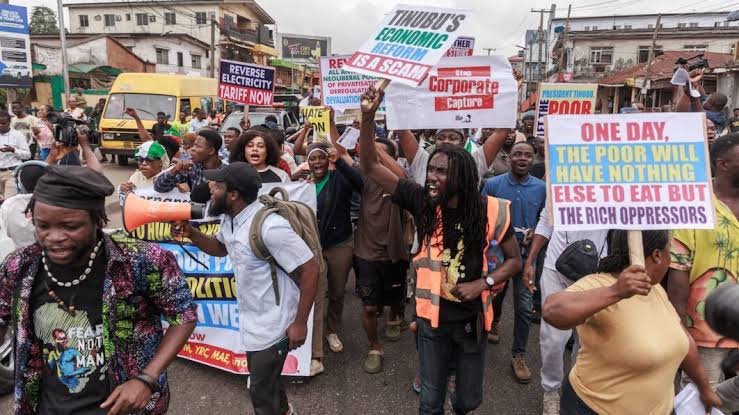
So, what does this forge in the soul? It forges a stubborn, often weary, hope that is not optimism but defiance. It is the hope of the voter who stands in line for hours, knowing the process may be flawed, yet asserting their right to participate. It is the hope of the protester demanding justice for the abducted, the hope of the entrepreneur launching a startup amid rolling blackouts. This hope is not a expectation that the system will save us, but a determination to save ourselves and, in doing so, perhaps one day save the system. It is a recognition, as one commentary starkly put it, that the nation’s challenges have gone “beyond throwing bodies at the problem”. True solutions demand a fundamental renegotiation of the social contract – one where leadership is an act of service, not settlement; where loyalty is to the citizenry, not the inner circle; and where the boundless talent of the Nigerian people is finally, faithfully, represented at home and abroad.
The recent ambassadorial list is more than a political scandal; it is a mirror. It reflects a leadership style that confuses the nation for a private estate, diplomacy for exile, and loyalty for competence. But the reflection in that same mirror is also ours. It shows a people grappling with the gap between the Nigeria they are forced to endure and the Nigeria they know they deserve – a nation of not just “great lofty heights” in its anthem, but of foundational justice and functional dignity. The distance between those two realities is the measure of our current struggle, and bridging it is the only mission that can define what it truly means to be Nigerian tomorrow.
I cannot unsee the historical parallels, the echoes of other nations that chose pageantry over principle and collapsed from within. We are crafting a modern-day version of the court of a decaying empire, where titles are bestowed to buy silence or reward sycophancy, not to govern or represent. This is not governance; it is a sophisticated form of looting, where the final asset to be stripped and sold off is the nation’s dignity itself. The message to the watching world is unmistakable: Nigeria’s ruling class has lost the capacity for shame, viewing the state not as a project to be built but as a spoils system to be exploited until nothing remains.
Amid a landscape marked by stagnation and recycled failures, the call for a new leadership paradigm grows louder – championed by those who dare to disrupt the status quo. The contrast between entrenched political habits and emerging models of governance rooted in merit and service is striking. In some quarters, we see a deliberate departure from dynastic rewards and political settlements, replaced instead by efforts to dismantle legacies of decay and elevate technocratic competence.
This divergence lays bare a deeper truth: the problem isn’t a shortage of capable Nigerians, but a system designed to marginalize them. The persistence of patronage-driven appointments is not a deviation – it is the norm, a reflection of a political culture that has normalized dysfunction. The scarcity of visionary leadership is not accidental; it is manufactured by structures that reward loyalty over expertise and perpetuate mediocrity at the expense of progress.
Therefore, this moment transcends foreign policy; it is a referendum on our national character. We are suffering from a profound crisis of imagination, where our horizons have been shrunk to the next political settlement. To export this cabal of the compromised is to willingly de-market our nation, to place sanctions upon ourselves. Foreign direct investment flees instability and gravitates toward credibility; by sending these tainted messengers, we are actively repelling the capital we so desperately beg for on foreign trips. The beat suffers at home – inflation, insecurity, darkness – while the architects of the rot are handed first-class tickets to escape the consequences of their actions.
To the world, I say: These nominees do not represent the vibrant, intelligent, and resilient Nigeria of over 200 million people. They represent only the captured cabal that currently sits atop it. To President Tinubu, I say: You cannot claim to seek a renewed hope while meticulously reassembling and exporting the very architecture of our despair. Diplomacy is the tuxedo of statecraft, but you have chosen to dress our nation in the soiled garments of disrepute. This is more than a failed appointment list; it is a metaphysical betrayal, a choice to bury our potential under the weight of our worst instincts. We must reject this charade, document this moment, and relentlessly demand a foreign service that reflects our enduring promise, not our persistent failings. For Nigeria to rise, it must first stop sending its nightmares abroad to represent its dreams.
Ultimately, the controversy over the thirty-two ambassadorial nominations is about more than individual fates. It is a defining referendum on our national character, a clear measure of the gap between the Nigeria we aspire to build and the one these appointments reveal. We have examined not just a list of names, but a governing philosophy that confuses political deal-making with statecraft, sees diplomacy as a convenience for sidelining difficult figures, and barters our global standing for short-term domestic calm. Selecting individuals entangled in financial, security, and electoral scandals is no oversight; it is the inevitable result of a system that has divorced reward from merit, loyalty from skill, and authority from accountability. It affirms a grim truth: that in certain quarters, Nigeria is viewed not as a sovereign endeavor to be advanced, but as a private holding to be administered for a privileged few.
Thus, my conclusion is not one of surrender, but of a concrete and urgent proposition. Rejecting this list is not enough; we must construct its opposite. I propose the immediate creation, by an Act of the National Assembly, of an Independent Diplomatic Service Commission. This permanent, non-partisan body, made up of esteemed experts from foreign policy, civil society, the private sector, and the career diplomatic service, would have one clear mandate: to vet, select, and recommend all ambassadorial candidates based on transparent, published standards of ability, expertise, and integrity. Its purpose would be to end the presidency’s ability to treat ambassadorships as political favors. The Commission’s standards would be strict: proven understanding of international relations, demonstrated leadership skill, sound ethical judgment, and for non-career appointees, a history of significant achievement in their field. This is not about barring non-career diplomats; it is about ensuring only the most exceptional among them – the true specialists, innovators, and leaders – can serve.
This systemic change must be matched by a fundamental shift in our foreign policy’s core objective. Our diplomacy must be dedicated to one central mission: the strategic advancement of Nigeria’s domestic development. Every ambassador, embassy, and international engagement should be evaluated by a new standard. Not by the scale of their receptions, but by concrete results: megawatts of energy investment attracted, kilometers of rail infrastructure funded, quality jobs created through specific partnerships, progress in technology sharing and farm output. Our embassies must change from ceremonial posts into hubs of economic strategy, led by people who know their main duty is not to apologize for Nigeria’s challenges, but to secure global resources to solve them.
To accept the current system is to agree to our own decline. We face a critical juncture, equipped with unprecedented assets for progress: a young and inventive population, a vibrant culture with worldwide influence, and the inherent weight of Africa’s largest economy and democracy. Yet, we are saddled with a politics of narrow interests, a leadership that projects our failures while guarding its own advantages. The resilient Nigerian spirit – that stubborn capacity for endurance and innovation – requires a state that matches its aspirations, not one that undermines them.
Let this moment mark our stand. Let the debate over this list harden into an inflexible demand for a fundamental reset. We must shift from a culture of connections to a standard of what you can accomplish for Nigeria. We must advance from a foreign policy of empty statements to one of deliberate development. We must move from a national identity shaped in spite of our government to one built in alliance with a capable and purposeful state. The world does not pause for us. It watches, assesses, and distributes its investment and esteem based on what it sees. We can continue to dispatch compromised representatives, guaranteeing we remain petitioners on the global stage, forever justifying our condition. Or, we can decide to create institutions that choose and send our finest, turning our diplomacy into a bridge for our nation’s greatest promise to finally reach the future it has earned. The decision does not rest with a handful in Abuja; it rests, as ever, with the persistent will and enduring spirit of the Nigerian people.