By Charles Obiajulu Ugwu – PhD
“We have traded the sanctuary of the hearth for the spotlight of the stage. Most modern homes are no longer built on the bedrock of shared intimacy, but on a burning platform of public expectation where the cost of maintaining the ‘Aso-Ebi’ illusion is the slow, silent suffocation of the authentic self.”
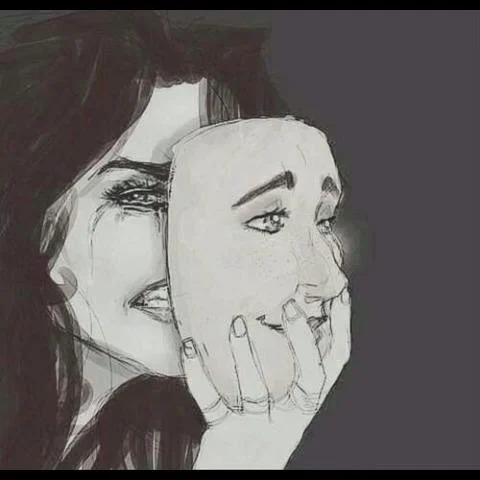
The modern home is no longer a sanctuary of private repose; it has become a high-stakes theater of public consumption. There is a global, almost rhythmic expectation of what the “ideal home” should be a space anchored by the twin pillars of expressed love and visible peace. We are told these factors are the linchpins that hold the universe of a family together. Yet, if we look past the manicured lawns and the curated social media updates, a more haunting reality emerges: the domestic space has been colonized by performance. We are living on burning platforms, dressed in the costumes of stability, while the authentic self is suffocated by the demand for external validation.
The Great Domestic Hallucination
In many contemporary settings, particularly within the upwardly mobile circles of Lagos or Abuja, the “home” has transitioned from a place of being to a place of becoming, specifically, becoming what others expect to see. We have entered an era of Domestic Hallucination, where couples spend a significant portion of their lives acting to type.
They are not living their lives; they are executing a script written by a society that fears the messiness of human friction.
Consider the “Power Couple” trope often seen in the leafy suburbs of Victoria Island or the high-brow estates of Lekki. On Sunday mornings, they emerge from their gates in coordinated lace, a picture of synchronized harmony. They sit in the front pews, their body language a masterclass in composed affection. To the onlooker, this is the “ideal.” But back behind the high walls and the electric fences, the reality is often a chilling silence or a series of tactical negotiations. They are not bonded by intimacy, but by a joint venture to maintain a social credit score. They are marking time investing hours into the appearance of peace because the alternative which would be the admission of struggle, is viewed as a catastrophic systemic failure.
The African Context: The Burden of “Good Names”
In the Nigerian context, this performance is amplified by the cultural weight of the “family name” and the religious mandate of “submission” and “headship.” We are raised with the proverb that “a wise woman builds her home,” which is often misinterpreted as “a silent woman hides the cracks.” This creates a culture where the maintenance of the veneer is seen as a moral duty.
The “Aso-Ebi” culture is perhaps the most vivid manifestation of this performative alignment. It is not merely about fashion; it is a visual contract. When a couple stands together at a wedding, draped in expensive, identical fabrics, they are signaling to the community that their unit is impenetrable. Yet, the reality is often far more fractured.
The Wedding Day Deception: The Reunion of Strangers
Perhaps the most poignant example of this “acting to type” is seen in the phenomenon of the Sudden Reunion. In many Nigerian families, there are couples who have lived apart for years sometimes decades. The fire of their union has long since turned to ash; they occupy different cities, different continents, or merely different wings of a house in a state of cold war.
Yet, when the wedding bells toll for their son or daughter, a transformation occurs. For forty-eight hours, the “burning platform” is disguised by a floral backdrop. They show up at the traditional wedding dressed in identical lace, holding hands as they dance into the hall behind the bridal party. They play the role of the doting parents, the “united front,” to satisfy the prying eyes of the Umuna, the in-laws, and the “society.”
They participate in the “cutting of the cake” and the “parental blessing” with a practiced ease that suggests a lifetime of shared mornings, when in reality, they haven’t shared a civil word in five years. This is the peak of the Domestic Illusion: a performance staged for external validation so potent that it momentarily hallucinates a reality that doesn’t exist. They do this because the “shame” of a broken home is deemed more catastrophic than the “lie” of a fake one. They choose to live a lie on a public stage rather than own a truth in private.
The “Perfect” Corporate Household
I recall a case of the Jajas. Both are high-flying executives in the banking and oil sectors. Their home is a masterpiece of modern design, filled with the latest gadgets and a staff that keeps the machinery running. To the outside world, they are the pinnacle of success. Yet, in private, they share a “functional coldness.” They have mastered the art of Performative Peace. They don’t fight, not because they agree, but because fighting is “uncivilized” and risks breaking the illusion.
They spend their evenings in separate wings of the house, communicating via text messages about the children’s school fees or the upcoming gala. When guests arrive, they seamlessly merge into a singular unit of warmth. This is the Domestic Illusion: a home that is physically standing but emotionally hollow. They are living a lie not because they are “evil,” but because they are exhausted. They have been told that the “absence of peace” is a catastrophe, so they have manufactured a synthetic peace a lab-grown harmony that has no nutritional value for the soul.
The Burning Platform of External Validation
Why do we do this? Why do we choose to live on a burning platform rather than douse the flames with honesty? The answer lies in the terror of being “less than.” The world has been configured to reward the veneer. We live in a voyeuristic economy where our private lives are the currency.
When we look at the Ladder of Inference in a domestic setting, we see how quickly we move from “data” to “action.”
We observe a couple that doesn’t look “perfect,” we apply the meaning that they are “failing,” and we conclude they are socially inferior. To avoid this, couples jump to the top of the ladder and start at the end: they provide the “conclusion” of happiness first, hoping the data will eventually catch up. This is a tragedy of displaced identity.
When you spend 90% of your energy acting as a “Socially Acceptable Spouse,” there is very little left for the “Authentic Self.”
The Systematic Defiance of the Script
If we are to move away from this burning platform, we must embrace a form of Systematic Defiance. We must stop treating the home as a PR firm. The “Ideal Home” should not be measured by its lack of friction, but by its capacity to metabolize that friction into growth.
Peace is not the absence of tension; it is the presence of a framework to handle it. When we pretend the tension doesn’t exist, we aren’t creating peace; we are creating a vacuum. Eventually, the pressure of the “real self” will implode the “performative self.” We see this in the sudden, “shocking” divorces of couples who seemed “so perfect” at the last wedding. They didn’t fail overnight; they simply ran out of the fuel required to keep the performance going.
Reclaiming the Real
We must begin to value Composed Agency within our homes. This means having the internal stillness to face the “un-ideal” parts of our relationships without panic. It means being okay with the fact that today, the home is not a sanctuary rather it is a workshop.
To manage the Domestic Hallucination, we must move away from reactive “acting” and toward a deliberate, strategic presence. The OODA Loop (Observe, Orient, Decide, Act), originally a military framework for rapid decision-making in high-tension environments, is a perfect tool to dismantle the performative scripts of a burning home.:
The Loop in Practice: A Relatable Case
Imagine the “Aso-Ebi” scenario:
Observe: See the friction for what it is, without the filter of social shame. You realize you are both angry, yet you are zipping up matching outfits for a child’s graduation.
Orient: Understand that this friction is a natural byproduct of two humans living in close proximity. You see that the “Performance” is about to cost you your mental health for the sake of a three-hour event.
Decide: Choose to address the root cause rather than painting over the crack for the next event. You decide that while you will attend the event out of love for your child, you will not pretend to be “synchronized” if you are not.
Act: Engage in a real conversation, even if it’s messy and doesn’t fit the “Happy Home” script. You attend, you are respectful, but you don’t “act to type.” You use that energy later that evening to have the difficult conversation you’ve been avoiding.
By cycling through the OODA loop, you turn the “Burning Platform” into a controlled burn clearing away the dry brush of illusions to make room for something authentic to grow.
Beyond the Veneer
The global expectation of the “Ideal Home” is a trap that produces “Socially Acceptable Ghosts” of people who move through their lives without ever being truly seen by the people they share a life with. In Nigeria, and indeed globally, we must break the cycle of living for the “Like” and the “Aso-Ebi” photo-op.
The burning platform will eventually consume those who stand on it. The only way off is to step into the cool, sometimes uncomfortable air of reality. Let us stop acting to type. Let us stop marking time. A home that is “real” and “messy” is infinitely more sustainable than one that is “perfect” and “performative.” It is time to stop being the “Ideal” and start being human.
About the Author
Dr Charles Obiajulu Ugwu is a contrarian thinker writing from Lagos