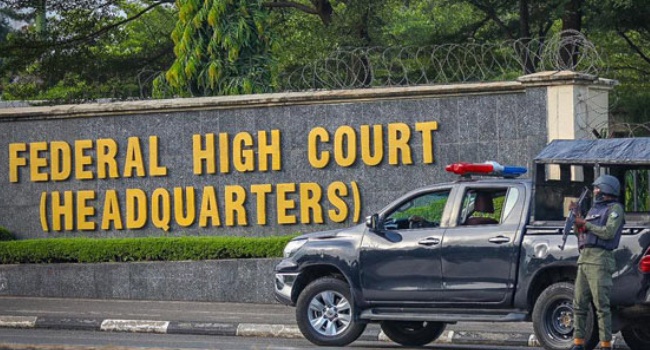
The trial of the six alleged coup plotters is a focal point of Nigerian politics and national security. Following their arraignment on April 22, the Federal High Court in Abuja has commenced the full, accelerated trial on Monday, April 27, 2026.
The Federal Government, represented by the Attorney-General of the Federation (AGF), has filed a 13-count charge against six individuals. A notable seventh suspect, former Minister of State for Petroleum Resources Timipre Sylva, is also named in the charge sheet but is currently listed as “at large.”
The prosecution alleges that the group conspired in 2025 to “levy war against the state” with the intent to overpower President Bola Tinubu.
Beyond the coup plot, some suspects (specifically Goni and Sani) are accused of handling large sums of money, ranging from ₦2 million to ₦50 million, allegedly linked to terrorism financing.
Some defendants are charged with failing to disclose information to security agencies that could have prevented these acts.
Justice Joyce Abdulmalik ordered the trial to be fast-tracked due to the gravity of the national security implications.
All defendants are currently remanded in the custody of the Department of State Services (DSS). This week, defense counsel are expected to push for bail applications, though the government is likely to oppose them given the “capital” nature of treason charges.
This trial is legally complex because it involves retired and serving personnel being tried in a civilian Federal High Court. Simultaneously, the Defense Headquarters has indicated that 16 other military officers will face separate court-martials.
This trial comes at a time of heightened political sensitivity. With the 2027 election cycle already beginning to stir, the administration is using this case to project a stance of “zero tolerance” for constitutional subversion. Opposition figures and civil society are watching closely to ensure the trial adheres to “fair hearing” standards, especially after initial delays caused by a lack of interpreters for defendants who only speak Hausa and Arabic.