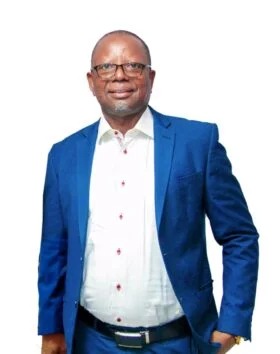
A public policy analyst and chieftain of the All Progressives Congress (APC), Mr Bola Babarinde, has urged the Federal Government to fully integrate Nigeria’s solid minerals sector into ongoing tax reforms.
Babarinde, a former APC Chairman, South Africa Chapter, in a statement on Friday in Lagos, cautioned that excluding mining revenues would undermine equity, peace and national development.
He described the setting up of the Presidential Committee on Tax Reform, chaired by Mr Taiwo Oyedele as timely given Nigeria’s revenue challenges, rising inequality and the urgent need for a fair and efficient fiscal system.
“The objective of the tax reform committee is sound — expand the tax net, reduce pressure on low-income earners and ensure big earners pay their fair share.
“However, a major contradiction has emerged. The solid minerals sector has been largely ignored,” Babarinde said.
According to him, Nigeria’s tax base remains narrow despite its population and economic size, with millions of low-income citizens carrying a disproportionate burden, while highly profitable sectors escape adequate taxation.
Babarinde noted that Nigeria is richly endowed with solid minerals across several regions, yet the sector remains poorly regulated and largely informal.
“Powerful local and foreign interests dominate mining activities, often operating illegally, while the Nigerian state earns little or nothing through taxes or royalties,” he said.
He described the situation as not only an economic failure but also a governance failure.
The analyst cited growing evidence linking illegal mining to insecurity, insurgency and terrorism in parts of the country.
“Destabilising mineral-rich areas weakens state control, fuels criminal networks and deprives government of revenue needed for security and development,” he said.
Babarinde argued that the imbalance in resource taxation across regions threatens national cohesion.
He said: “Cash crops in the South-West and oil in the South-South are heavily regulated and taxed for the benefit of the federation.
“In contrast, solid minerals, mostly found in parts of Northern Nigeria, are extracted with minimal transparency and almost no contribution to the national purse.”
He noted that despite their resource wealth, many mineral-rich communities remain among the poorest in the country.
“This imbalance fuels poverty, migration, insecurity and social strain, particularly in relatively prosperous regions such as the South-West.
“As new tax laws are expected to take effect from January, their success will depend on inclusiveness and political will.
“A tax reform that excludes mining is incomplete and unjust,” he said.
Babarinde warned that failure to address these disparities could pose long-term risks to national unity.
“Economists agree that solid minerals, if properly harnessed, could rival or even surpass oil revenues,” he stated.
Babarinde, who is based in South Africa, said Nigerians in the diaspora were willing to support President Bola Tinubu’s Renewed Hope agenda.
He cited South Africa as an example of a non-oil producing country that sustains its economy through a well-regulated and heavily taxed mining sector.
“If South Africa can thrive on mining revenues, Nigeria can achieve even greater results with the right policies and enforcement,” he said.
According to him, 2026 should mark a turning point in Nigeria’s economic governance.
“It should signal one nation under one law, where all natural resources — oil, agriculture and solid minerals, are treated with the same seriousness, transparency and accountability.
“Tax reform without mining reform is reform half done. Peace without economic justice is temporary,” he said.