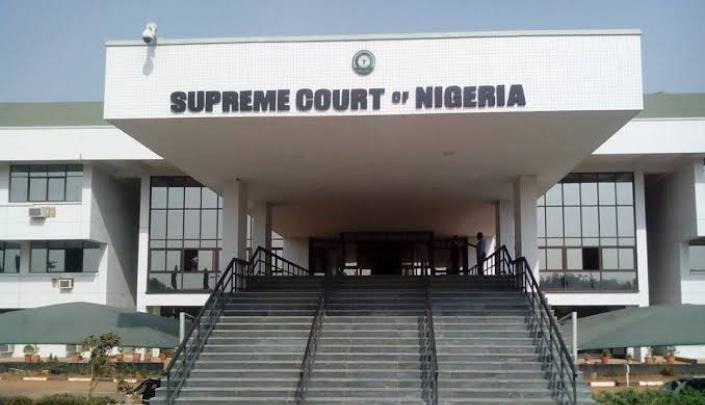
The Supreme Court of Nigeria has affirmed the legal authority of the Asset Management Corporation of Nigeria (AMCON) to proceed with the sale of the Lagos Continental Hotel, bringing an end to a long-running legal dispute involving several corporate entities.
In a judgment delivered on February 20, the apex court ruled in favour of AMCON in the case involving Polaris Bank Limited, 11 Hospitality Plc, and Milan Industries Limited over the ownership and disposal of the luxury hotel property located on Victoria Island in Lagos.
The ruling marks a significant development in AMCON’s efforts to recover non-performing loans and stabilise Nigeria’s financial system.
The legal battle originated from a credit facility granted by the defunct Skye Bank Plc—now operating as Polaris Bank—to Milan Industries Limited for the development of the Lagos Continental Hotel, one of the prominent hospitality landmarks on Victoria Island.
However, the loan later became non-performing, prompting the lender to initiate recovery measures.
As part of the recovery process, the bank appointed senior advocate Kunle Ogunba as Receiver/Manager over Milan Industries Limited to manage the company’s assets and recover the outstanding debt.
In September 2018, AMCON stepped in and acquired the Eligible Bank Asset linked to the loan from Polaris Bank, effectively taking over the responsibility of recovering the debt and managing the associated assets.
Following the acquisition, AMCON began efforts to recover the outstanding loan through the disposal of assets tied to the debt, including the Lagos Continental Hotel.
However, the move triggered a prolonged legal dispute among the parties involved, with arguments over the legality of AMCON’s actions and the authority of the Receiver/Manager appointed to oversee the company’s assets.
The case eventually made its way through several levels of Nigeria’s judicial system before reaching the Supreme Court for final determination.
In its decision, the Supreme Court upheld AMCON’s powers under its enabling law to acquire non-performing bank assets and take necessary steps to recover debts, including the sale of assets connected to such loans.
The court’s judgment effectively validated AMCON’s role in managing and disposing of the Lagos Continental Hotel as part of the debt recovery process.
Legal analysts say the ruling reinforces AMCON’s statutory mandate to tackle bad loans within Nigeria’s banking sector and strengthen financial stability.
The decision is considered significant for Nigeria’s financial sector, particularly in the area of non-performing loan recovery.
AMCON was established by the Federal Government to purchase toxic assets from banks and help stabilise the financial system following the banking crisis that affected several Nigerian financial institutions.
By affirming AMCON’s authority in the Lagos Continental Hotel case, the Supreme Court has provided clarity on the corporation’s powers when dealing with assets tied to distressed loans.
Industry experts believe the ruling could encourage more decisive actions by AMCON in recovering debts and disposing of assets tied to defaulting borrowers.
The Lagos Continental Hotel, situated in the commercial hub of Victoria Island, is one of the prominent luxury hotels in Lagos and plays a key role in the city’s hospitality and tourism industry.
The property has been at the centre of legal and financial disputes for years due to the unresolved debt linked to its development.
With the Supreme Court’s judgment now settling the legal questions surrounding AMCON’s authority, the path appears clearer for the corporation to proceed with the sale of the asset in line with its mandate.
The ruling brings closure to years of litigation involving the parties and underscores the judiciary’s support for statutory mechanisms designed to address financial distress in the banking sector.
For AMCON, the judgment represents another step in its broader campaign to recover billions of naira in bad loans acquired from banks across the country.
Observers say the outcome may also serve as a precedent in future cases involving asset recovery and the disposal of properties linked to non-performing loans in Nigeria’s banking industry.