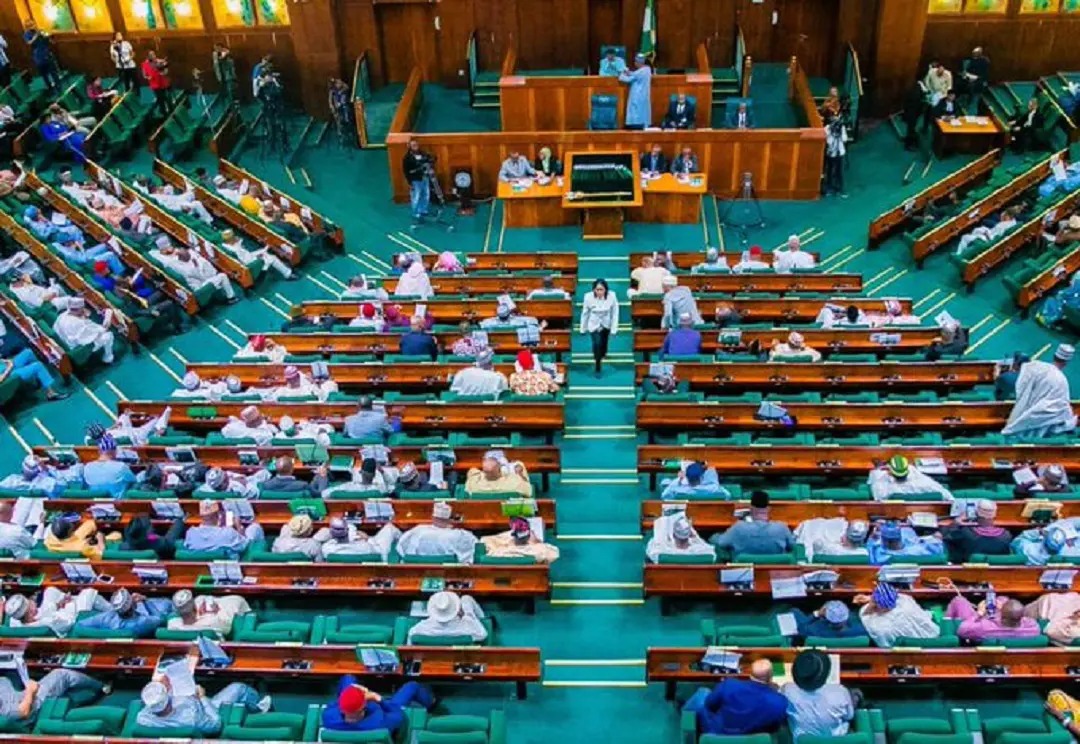
The House of Representatives has officially commenced a clause-by-clause consideration of President Bola Ahmed Tinubu’s executive bill to establish state police, with key lawmakers signaling a preference to adopt the Senate-passed version of the draft legislation with only minor adjustments.
The decision was reached at the National Assembly complex in Abuja after the House moved to harmonise its legislative agenda with the upper chamber, aiming to streamline the constitutional amendment process and eliminate potential friction between both houses.
During the session, Speaker Tajudeen Abbas guided the House into the Committee of the Whole to examine the provisions of the constitutional alteration bill. Rep. Julius Ihonvbere, the House Leader, indicated that adopting the Senate’s framework with minimal modifications would significantly accelerate the bill’s passage into law.
”Security is a national priority that requires swift and unified legislative action,” Ihonvbere stated on the floor. “By aligning our position with the Senate’s approved version, we can avoid lengthy conference committee negotiations and deliver on the President’s vision for a decentralized police system.”
The Senate had earlier passed its version of the bill following an extensive review process, inserting specific safeguards intended to balance state operational autonomy with federal oversight.
The proposed executive bill seeks to amend the 1999 Constitution of the Federal Republic of Nigeria to move policing from the Exclusive Legislative List to the Concurrent Legislative List.
Under the proposed provisions; State governments will be empowered to establish, equip, and maintain their own local police services alongside the existing Nigeria Police Force (NPF).
The Inspector-General of Police and the Police Service Commission will retain regulatory authority over minimum recruitment standards, training protocols, and firearms licensing to maintain uniform national standards.
Strict operational boundaries have been drafted to prevent state governors from utilizing local police units for political suppression or electoral manipulation.
Following the completion of the clause-by-clause review in the House, the bill will be scheduled for a third reading and final passage.
Because the proposed law involves an alteration to the 1999 Constitution, the final harmonized text must secure a two-thirds majority vote in both the Senate and the House of Representatives. Subsequently, it will require formal concurrence from at least 24 of the 36 State Houses of Assembly before being transmitted to President Tinubu for presidential assent.