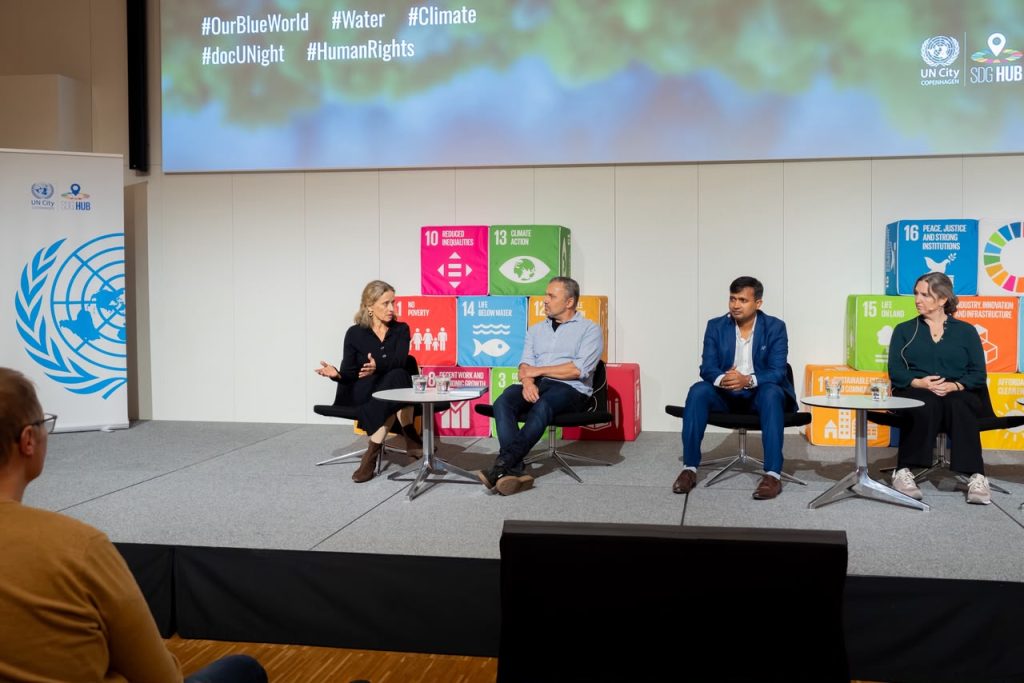
Policy advocates, gender activists, and cultural leaders convened at a high-level policy dialogue on Sunday, October 25, 2026, to demand institutional reform and guaranteed representation for women in Nigeria’s water governance structures and public budget decisions.
The event, titled the Lokoja Dialogues Water Security Summit, convened at 10:00 AM WAT at the Alliance Française Auditorium inside the Mike Adenuga Centre in Victoria Island, Lagos.
Organisers and speakers highlighted the stark disconnect between the daily burdens women shoulder in securing household water and their marginal participation in formal utility management and state budgetary decision-making.
Baseline data cited during the summit revealed a pronounced governance gap across the country, showing that women currently hold only about 5 percent of state Commissioner for Water Resources positions and 6 percent of local government chair roles in Nigeria.
Advocates warned against tokenistic invitations to consultative workshops, urging governments at all levels to mandate formal quotas and gender-responsive budgeting.
Speakers emphasized that the ongoing lack of access to clean water disproportionately affects women and girls in informal settlements and rural communities, severely limiting their educational opportunities and economic mobility.
”When we talk about inclusion, women are often just invited to participate in a roundtable, conference, or workshop, and at the end, it stops there. We must push for institutional reforms beyond superficial representation,” said Flora Asieri, a gender and policy advocate who spoke at the panel.
Adding to the call for systematic restructuring, Sarah Brun, a UN Women representative, stressed the financial imperatives of gender integration. “What remains invisible remains unfunded,” Brun noted. “The real question for us here is whether our institutions are prepared to listen to women, but also to share our power.”
Polly Alakija, Trustee and CEO of Lokoja Dialogues, observed that equitable access to water in Nigeria has severely deteriorated over the past three decades. She argued that because women bear the daily brunt of water collection and utility shortfalls, their direct experiences must shape state spending, infrastructure allocation, and municipal planning.
Former Deputy Governor of Lagos State, Sarah Sosan, called for expanded political leadership among women to address these structural deficits. “At the legislative and executive levels, women must push for greater participation,” Sosan said. “You don’t know where the shoe pinches unless you are the one wearing it. Men cannot decide water priorities for us without our voices at the table.”
The summit concluded with a joint communique presented to representatives of federal and state ministries. The resolution calls for statutory allocations guaranteeing at least 30 percent female representation on state water boards and local government Water, Sanitation, and Hygiene (WASH) committees.
The establishment of explicit budget lines dedicated to expanding clean water access in rural areas, and the direct inclusion of grassroots community women leaders in utility performance reviews and capital expenditure decisions.