The mid-morning sun cast a gentle glow over Umuahia as journalists filed into a modest hall for what many assumed would be a routine interaction. But as the gathering unfolded, it became clear that the message delivered would resonate far beyond the walls of that room.
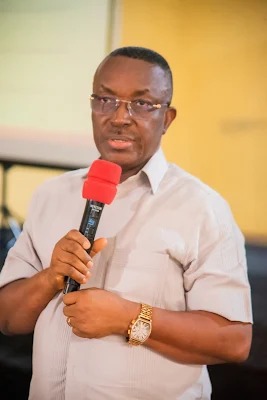
At the center of the engagement was Pastor Caleb Ajagba, a key figure in the administration of Alex Otti. Standing before members of the Correspondents’ Chapel of the Nigeria Union of Journalists, Abia State Council, Ajagba spoke not as a distant government official, but as a man keenly aware of the delicate balance between power and the press.
His message was clear, deliberate, and unusually candid.
“We are not telling you to suppress the truth,” he said, his voice steady but firm. “If you see what is not going well in this administration, don’t keep quiet.”
A quiet murmur rippled through the audience, part surprise, part acknowledgment. In a country where the relationship between government and the media has often been fraught with tension, such a statement carried weight.
Ajagba’s remarks were not merely rhetorical. They reflected what he described as the guiding philosophy of the current administration in Abia State, a commitment to transparency, accountability, and respect for press freedom.
He urged journalists to uphold objectivity in their reportage, reminding them that their role in society goes beyond relaying information. According to him, the media serves as both a mirror and a watchdog, reflecting the realities of governance while holding leaders accountable for their actions.
“The strength of any democracy,” he noted, “rests significantly on the integrity of its media.”
For many in attendance, the interaction felt like a departure from the norm. Historically, journalists in various parts of Nigeria have faced subtle and overt pressures, from political interference to economic constraints, that challenge their independence. Ajagba’s assurance that the government would not suppress the truth offered a measure of reassurance, though some remained cautiously optimistic.
He went further to emphasize that the administration of Governor Otti was open to constructive criticism. Rather than viewing critical reports as attacks, he framed them as opportunities for improvement, tools that could help the government better serve its people.
In his words, “Constructive feedback is not opposition; it is partnership in progress.”
The room grew more engaged as journalists began to ask questions, some pointed, others reflective. They raised concerns about access to information, the safety of reporters, and the practical realities of maintaining objectivity in a highly polarized environment.
Ajagba listened attentively, responding with a tone that blended diplomacy and conviction. He acknowledged the challenges but reiterated the administration’s commitment to creating an enabling environment for journalists to operate freely and responsibly.
Outside the hall, the conversation sparked by the meeting began to spread. Media practitioners discussed the implications among themselves, weighing the sincerity of the government’s assurances against the realities of their profession.
Some saw it as a genuine step toward strengthening democratic values in the state. Others viewed it as a promise that would ultimately be tested by time, and by how the administration reacts when faced with uncomfortable truths.
Back inside, as the session drew to a close, there was a shared sense that the dialogue had been meaningful. It was not just about policy or governance, but about trust, a fragile yet essential element in the relationship between the press and those in power.
For Ajagba, the message was simple but profound: a government confident in its mission should not fear scrutiny. And for the journalists gathered in Umuahia, the charge was equally clear, to report with courage, fairness, and unwavering commitment to the truth.
As they stepped out into the bustling streets, notebooks in hand and questions still lingering, one thing was certain: the real test of those words would not lie in the meeting itself, but in the stories yet to be told.