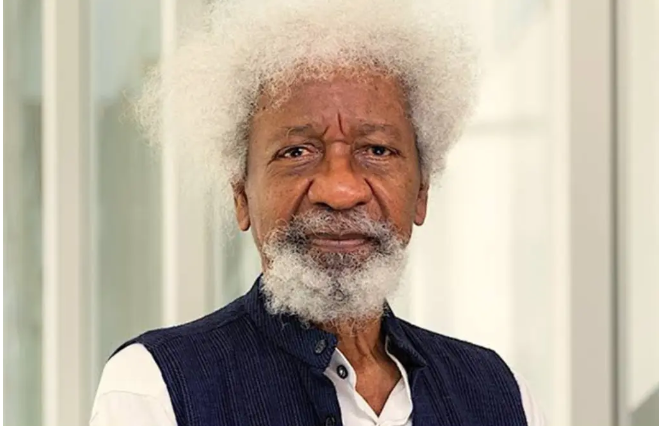
Prof. Wole Soyinka, has criticised recent remarks by United States President Donald Trump, who designated Nigeria as a “Country of Particular Concern” over alleged persecution of Christians.
Soyinka described the U.S. president’s comment as reckless and misleading, cautioning that such sweeping statements could distort reality and deepen religious divisions in a country already facing complex socio-political challenges.
In a statement issued on Tuesday, the revered playwright and human rights advocate said Trump’s remarks reflect a shallow understanding of Nigeria’s security dynamics, stressing that violence in the country stems from a mix of ethnic, political, and economic factors, not merely religious hostility.
“Reducing Nigeria’s crises to a narrative of Christian persecution is not only inaccurate but dangerous,” Soyinka stated. “It ignores the multifaceted roots of violence and risks inflaming sectarian sentiments among a population struggling for peace and justice.”
Trump had earlier this month threatened possible military intervention in Nigeria, citing alleged attacks on Christians by radical Islamist groups.
The statement sparked widespread backlash from Nigerian authorities and civil society groups, who accused the U.S. president of interfering in Nigeria’s internal affairs and fueling religious tension.
Soyinka urged the Nigerian government to respond diplomatically but firmly, emphasizing that while the country must address human rights abuses, it should reject external narratives that distort its reality.
He also called on global leaders to adopt a balanced, evidence-based approach in assessing Nigeria’s challenges, warning that “irresponsible rhetoric from powerful nations can endanger lives and destabilize societies.”
“The path to peace lies not in external threats or divisive labeling, but in justice, inclusive governance, and truth,” Soyinka concluded.
Observers say Soyinka’s comments reflect growing concern among intellectuals and policy analysts about the international framing of Nigeria’s insecurity, particularly amid efforts to foster unity and rebuild trust among its diverse religious communities.