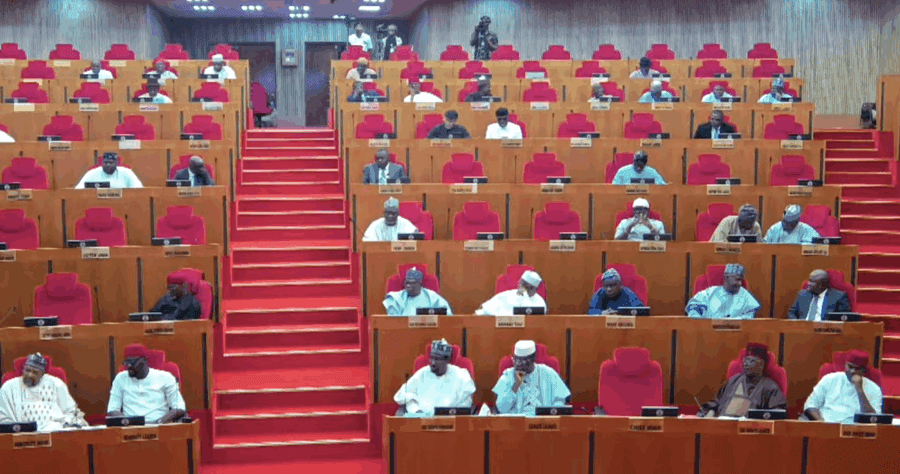
The Senate on Tuesday warned that Nigeria may be forced to review its diplomatic relations with South Africa if renewed xenophobic attacks against Nigerians persist, as lawmakers strongly condemned the reported targeting of Nigerian citizens and their businesses in the country.
The warning came during plenary following a motion sponsored by Senator Asuquo Ekpeyong, who drew the attention of the Red Chamber to reports of a June 30, 2026, ultimatum allegedly issued to Nigerians living in South Africa, describing the development as a serious threat to the safety, rights and livelihoods of Nigerian citizens.
The latest concerns have reignited longstanding tensions between Africa’s two largest economies, whose diplomatic ties have repeatedly come under strain following waves of xenophobic violence in South Africa over the years.
Previous attacks have resulted in the deaths of several Nigerians, destruction of businesses, looting of properties and widespread fear among members of the Nigerian community resident in South Africa.
Debating the motion, senators expressed deep concern over the recurring incidents, insisting that the Federal Government must take urgent and decisive steps to ensure the safety of Nigerians abroad.
The lawmakers stressed that every Nigerian, regardless of where they reside, deserves adequate protection and that attacks on innocent citizens cannot continue without firm diplomatic consequences.
The Senate therefore called on the Federal Government to immediately engage the South African government and secure concrete guarantees for the protection of Nigerians living and conducting legitimate businesses in the country.
Lawmakers also urged the Ministry of Foreign Affairs and Nigeria’s diplomatic missions to intensify engagement with South African authorities to ensure that perpetrators of xenophobic attacks are identified and brought to justice.
Speaking during the debate, Senator Salihu Mustapha, representing Kwara Central Senatorial District, advocated a much stronger response from the Nigerian government, arguing that previous diplomatic efforts had failed to prevent repeated attacks.
“We cannot continue to fold our arms while Nigerians are being killed and their businesses looted,” the senator said. “This is the starting point for a very robust engagement. I suggest we sever all diplomatic relations with South Africa.”
His remarks reflected the frustration of many lawmakers who argued that repeated condemnations without corresponding action had done little to deter future attacks. Several senators maintained that Nigeria has consistently demonstrated leadership on the African continent and has historically supported South Africa during critical periods, including the struggle against apartheid.
They argued that such longstanding relations should be reciprocated with greater commitment by South African authorities to guarantee the safety of foreign nationals, particularly Nigerians who contribute significantly to the country’s economy.
The lawmakers warned that continued attacks on Nigerians could further damage the cordial relationship between both countries and undermine regional integration efforts under the African Union and the African Continental Free Trade Area.
They also emphasized that while Nigeria remains committed to peaceful diplomatic engagement, the government must not hesitate to explore stronger diplomatic measures if the safety of its citizens continues to be threatened.
The Senate’s position comes amid renewed reports of anti-foreigner protests and alleged threats directed at Nigerian residents in parts of South Africa, raising fears of another wave of xenophobic violence.
The recurring attacks have remained a source of concern for successive Nigerian administrations, with previous incidents prompting high-level diplomatic meetings, bilateral discussions and calls for compensation for victims.
Over the years, both Nigeria and South Africa have sought to strengthen bilateral cooperation in areas including trade, security, education and investment. However, repeated outbreaks of xenophobic violence have continued to cast a shadow over relations between the two countries.
As part of its resolution, the Senate urged the Federal Government to closely monitor the situation in South Africa and ensure that Nigerian diplomatic missions provide necessary support and assistance to affected citizens.
The lawmakers also encouraged Nigerians residing in South Africa to remain law-abiding while staying vigilant and maintaining close contact with the Nigerian High Commission whenever their safety is threatened.
The Senate maintained that protecting the lives, dignity and property of Nigerians anywhere in the world remains a constitutional responsibility of the Federal Government and called for sustained diplomatic efforts to prevent another cycle of violence against Nigerians living in South Africa.