By Tony Onyima, Ph.D.
In 2018, former President Muhammadu Buhari took a historic step, moving Nigeria’s Democracy Day from May 29 to June 12. The decision, made 25 years after the annulment of the June 12, 1993, presidential election, remains one of the most significant acts of symbolic justice in Nigeria’s democratic journey. Buhari reinforced the gesture by signing the Public Holiday Amendment Act into law on June 10, 2019, formally institutionalising June 12 as the nation’s Democracy Day.
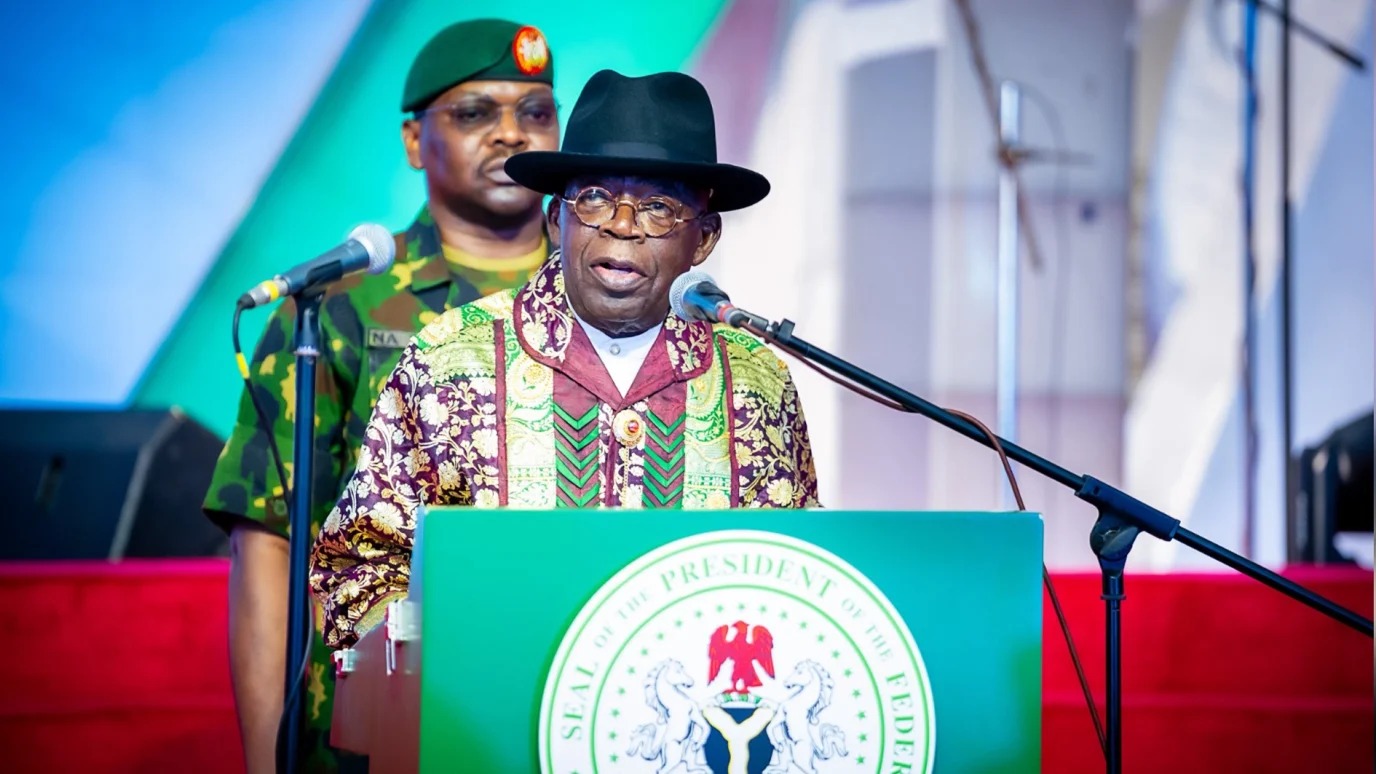
Since taking office three years ago, President Bola Ahmed Tinubu has maintained the observance of the day. In his address marking this year’s Democracy Day, he aptly described June 12 as occupying “a sacred place in our national memory,” noting that it represents “more than an election; it is a defining chapter in our story.”
Indeed, June 12 was more than a political contest. It was a watershed moment that demonstrated the possibility of a united Nigerian nation rising above ethnic, religious, and regional divisions. Widely acclaimed as the freest and fairest election in the country’s history, it produced a clear mandate for Chief Moshood Kashimawo Olawale (M.K.O.) Abiola of the Social Democratic Party (SDP), who secured 8,341,309 votes, representing 58.36 per cent of the votes cast, against Bashir Tofa of the National Republican Convention (NRC), who garnered 5,952,087 votes, or 41.64 per cent.
The annulment of that election by the military regime of General Ibrahim Babangida on 23 June 1993 plunged the nation into a prolonged political crisis. It sparked widespread protests, civil resistance, and international condemnation, eventually forcing Babangida from office. The ill-fated Interim National Government, headed by Chief Ernest Shonekan, survived barely three months before it was overthrown by General Sani Abacha, ushering in one of the darkest periods in Nigeria’s political history.
Against this backdrop, President Tinubu’s decision to confer national honours on 55 individuals, in his words, “suffered persecution, endured indignities, exile, incarceration and, at times, solitary confinement so that we may have democracy today,” is both commendable and necessary. Nations preserve their history not only through monuments and archives but also by publicly recognising those who sacrificed for freedom and justice.
Yet, while the honours mark an important step towards preserving the memory of June 12, they also highlight an enduring challenge: the incomplete documentation of those who contributed to the struggle. As with the 2025 honours list, this year’s roll call has raised legitimate concerns about notable omissions.
Last year, the family of the late Chief Adekunle Ajasin, leader of the National Democratic Coalition (NADECO), publicly expressed disappointment at his exclusion from the list of pro-democracy heroes honoured by the President. Their reaction was understandable. Ajasin was a central figure in the resistance to military rule and played a pivotal role in sustaining the democratic movement. Although the Presidency promised to address the omission and subsequently made some corrections, fresh gaps have emerged.
Among those deserving recognition are distinguished journalists such as Nsikak Essien, Mike Awoyinfa, and Eziuche Ubani. Essien and Awoyinfa were leading editors at Concord Newspapers, one of the media organisations that stood firmly against military dictatorship at enormous institutional and personal cost. The newspaper’s relentless opposition to authoritarian rule ultimately led to its closure. It is difficult to justify honouring some of their subordinates while overlooking the editors who provided leadership, direction, and courage during those perilous years.
Similarly, Ubani, then Political Editor of THISDAY, distinguished himself through fearless reporting and incisive commentary against the Abacha regime. His writings drew sustained persecution, eventually forcing him into exile.
He returned to Nigeria only on the eve of Abacha’s death. His story mirrors the sacrifices of numerous journalists whose pens became instruments of democratic resistance.
Beyond the media and political class, there are other figures whose contributions merit national recognition.
Cardinal Anthony Olubunmi Okogie, then Archbishop of Lagos, emerged as one of the most respected moral voices during the crisis years. At a time when many institutions chose silence, he consistently challenged authoritarian excesses and defended democratic values. His interventions helped sustain public confidence and lent moral legitimacy to the pro-democracy struggle.
Equally significant was Walter Carrington, then the United States Ambassador to Nigeria. Carrington used the influence of his office to draw international attention to Nigeria’s democratic crisis and became an important advocate for human rights and democratic governance. His role demonstrated that the struggle for June 12 was not merely a domestic political contest but a cause that resonated with democratic forces worldwide.
The broader point is that the June 12 struggle was won not by politicians alone. It was sustained by journalists, labour leaders, students, religious figures, diplomats, civil society activists, lawyers, academics, and countless ordinary citizens whose names may never appear in history books. Many endured detention, exile, harassment, economic hardship, and threats to their lives. Some paid the ultimate price. Others continue to live quietly among us, their sacrifices largely forgotten.
This is why recognising June 12 heroes must move beyond periodic additions to an honours list. Piecemeal recognition risks reducing a monumental national struggle to a selective exercise in remembrance. History demands something more deliberate, comprehensive, and enduring.
President Tinubu is uniquely positioned to undertake this task. As a prominent figure in the June 12 resistance and a victim of military persecution, he understands better than most the breadth of sacrifices that sustained the democratic movement. He therefore bears both a moral responsibility and a historic obligation to ensure that no genuine June 12 hero is left behind.
The time has come for the Federal Government to establish an independent committee comprising historians, archivists, journalists, civil society leaders, and pro-democracy movement veterans to compile a definitive, authoritative register of June 12 heroes. In addition, Nigeria should establish a permanent June 12 Hall of Fame or Democracy Museum to preserve the stories, documents, photographs, and personal sacrifices of these patriots for future generations. Democracy did not arrive as a gift. It was earned through courage, sacrifice, and perseverance. The least a grateful nation can do is remember all who fought for it and honour them accordingly.
Onyima teaches at Paul University, Awka, Anambra State.