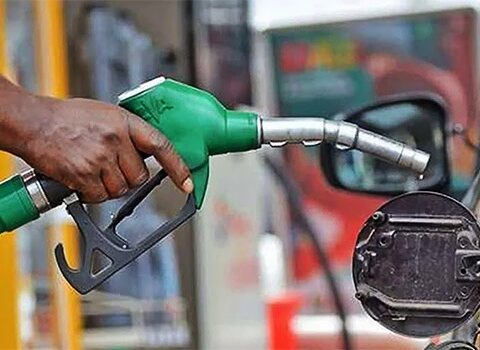
The Federal Government has firmly rejected calls for the reintroduction of the petroleum subsidy, warning that returning to the policy could plunge Nigeria into severe fiscal turmoil, cost the nation upwards of ₦20 trillion annually, and drive petrol prices to ₦2,000 per litre.
The warning was issued on Thursday, October 8, 2026, during a comprehensive press briefing held at the Auditorium of the Federal Ministry of Finance Headquarters in Abuja.
Addressing journalists and key economic stakeholders at 11:00 AM, official spokespersons and government leaders detailed the catastrophic economic ripple effects that a reversal of the subsidy removal would trigger.
Speaking on behalf of the administration, Taiwo Oyedele, Chairman of the Presidential Committee on Fiscal Policy and Tax Reforms, alongside the Minister of Finance and Coordinating Minister of the Economy, cautioned against yielding to short-term populist pressures.
Addressing newsmen at the venue, Oyedele stated that reinstating the fuel subsidy would drain critical revenues needed for healthcare, infrastructure, and education, while overwhelming the foreign exchange market.
”Reversing the removal of the petrol subsidy is an economic impossibility for the country at this stage,” Oyedele declared during the address. “If we yield to demands to subsidize fuel again, the government would be exposed to a financial bill exceeding ₦20 trillion every year.
The foreign exchange pressure this would exert on the local currency would likely push the exchange rate past ₦3,000 to $1, which would in turn force domestic petrol pump prices past ₦2,000 per litre.”
He emphasised that attempts to artificially suppress prices would ultimately backfire, creating severe scarcity, black market hoarding, and even higher prices for everyday citizens.
The Minister of Finance reiterated that funds previously consumed by fuel subsidies have been redirected to state and local governments through the Federation Account Allocation Committee (FAAC) to fund student loan programs, critical infrastructure, and social intervention schemes. Reinstating the subsidy would deplete these revenue pools and force the government back into massive deficit financing.
Instead of returning to subsidies, the government unveiled a targeted price modulation framework aimed at shielding consumers from erratic global crude oil and exchange rate fluctuations.
Under the proposal, the government is negotiating a ceiling on the domestic ex-gantry price of petrol, encouraging forward sales of crude oil to domestic refiners at fixed rates to stabilize local pump prices without creating a recurring subsidy burden.
The Federal Government concluded the briefing by urging organised labor, business leaders, and the general public to support long-term economic reforms, maintaining that price stability achieved through market-driven domestic refining remains the only sustainable path forward.