Nigeria’s First Lady, Senator Oluremi Tinubu, has defended her earlier remarks on small-scale businesses, insisting that the Federal Government’s empowerment programmes are designed to support a broad range of petty traders and not only vendors of akara, roasted corn or kuli-kuli, as portrayed by critics.
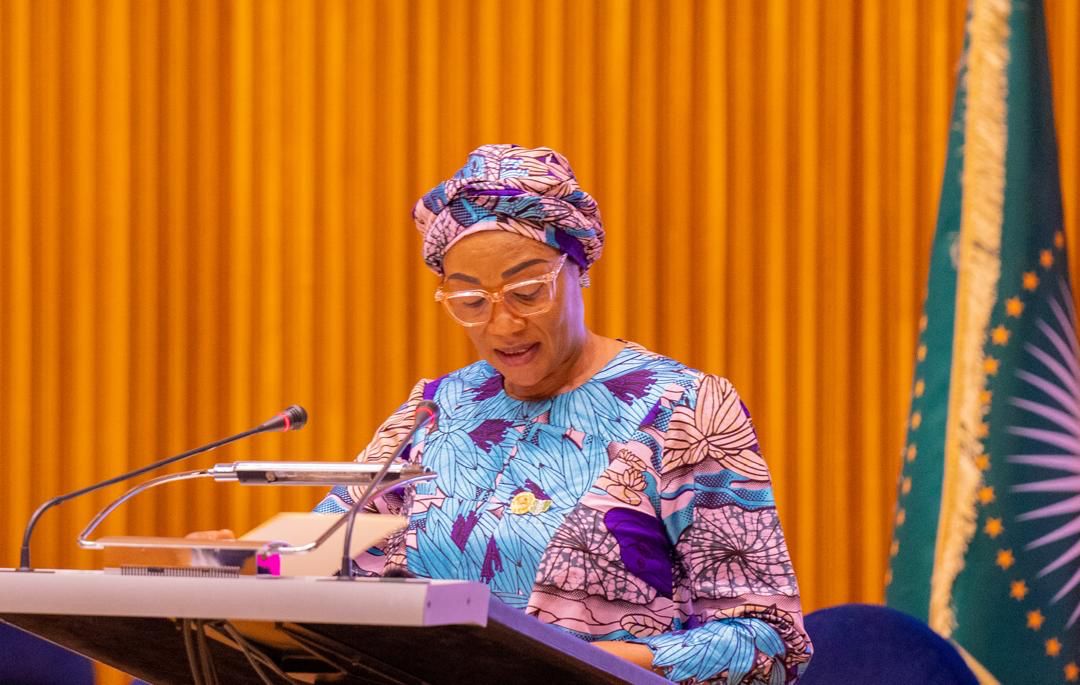
The First Lady made the clarification on Monday during the inauguration of the newly constructed Abubakar Maje Haruna Hall at the palace of the Emir of Hadejia in Jigawa State. Her remarks were captured in a video broadcast by TVC News.
Her latest comments come amid intense public debate that followed earlier statements in which she referenced businesses such as akara frying, roasted corn and kuli-kuli production while speaking about economic empowerment. The remarks generated widespread reactions across social media, where many Nigerians argued that they appeared to downplay the country’s worsening economic realities and the struggles faced by millions of citizens.
Responding to the criticism, Senator Tinubu maintained that her comments had been misunderstood, stressing that the Federal Government’s intervention programmes are meant to accommodate various categories of small-scale entrepreneurs operating across local communities.
She explained that the beneficiaries are not limited to a single line of trade but include those involved in selling tomatoes, pepper, vegetables, roasted plantain and other everyday commodities that sustain households and local economies.
According to the First Lady, the administration remains committed to strengthening the informal sector, which provides livelihoods for millions of Nigerians and contributes significantly to economic activities across the country.
As part of the Federal Government’s ongoing empowerment efforts, she disclosed that a grant of N100 million had been presented to the Jigawa State Government to support 2,000 petty traders in the state.
She said the initiative is intended to provide financial assistance to vulnerable entrepreneurs, enabling them to expand their businesses, improve their incomes and contribute more effectively to their communities.
The First Lady noted that many Nigerians earn their living through small businesses and that government support for such enterprises should not be viewed as insignificant.
She argued that empowering grassroots entrepreneurs remains one of the practical ways of promoting financial inclusion, reducing poverty and encouraging self-reliance, especially among women and youths.
According to her, numerous families depend entirely on income generated from small trading activities, making government interventions in the sector an important component of broader economic development strategies.
Senator Tinubu also reaffirmed her commitment to programmes that improve the welfare of women, children and vulnerable groups across the country through education, healthcare, agriculture and economic empowerment initiatives.
Her clarification comes as public discussions continue over the challenges posed by inflation, rising food prices and the declining purchasing power of many Nigerians.
While critics had interpreted her earlier remarks as an indication that the government was out of touch with prevailing economic hardships, supporters argued that the comments merely highlighted the importance of supporting micro-enterprises that form the backbone of Nigeria’s informal economy.
The empowerment programme in Jigawa is one of several initiatives championed by the First Lady in partnership with state governments to provide financial support for small business owners and encourage entrepreneurship at the grassroots level.
The inauguration of the Abubakar Maje Haruna Hall also formed part
of activities during her visit to Jigawa State, where she reiterated the Federal Government’s commitment to inclusive development and economic opportunities for ordinary Nigerians.
Her latest explanation is expected to further shape the ongoing public conversation surrounding the role of government empowerment programmes in addressing poverty and improving livelihoods, particularly among small-scale traders who constitute a significant segment of Nigeria’s workforce.