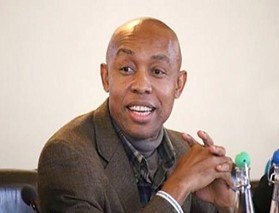
Ambakina Moses Jitoboh died suddenly on 28 December 2025. He was born on 1 June 1970 to a father from Trofani, in Sagbama Local Government Area of Nigeria’s Bayelsa State. Jitoboh’s death occurred in the week before he was due to travel out of the country for a break. The journey that he eventually got to make was, tragically, unplanned and to the Great Beyond. In the events of the past week in the Nigeria Police Force (NPF) – in the service of which Jitoboh spent his professional life – his quiet commitment to fairness has bestowed his life with a timeless legacy that is unlikely to be easily forgotten.
Moses Jitoboh graduated with a degree in geography and regional planning from the University of Calabar in 1992. Two years later, in June 1994, he was commissioned into the NPF as an Assistant Superintendent of Police. Ten years later, he found himself the Aide-de-camp (ADC) to the Deputy Governor of his home state, Goodluck Ebele Jonathan.
A rapid coincidence of events outside his control conspired thereafter to accelerate Jitoboh’s rise up the ranks of the Nigeria Police Force. Sixteen years into his service, by November 2010, Jitoboh had attained the rank of Assistant Commissioner of Police. Ten years later, in December 2020, he became an Acting Deputy Inspector-General of Police (DIG).
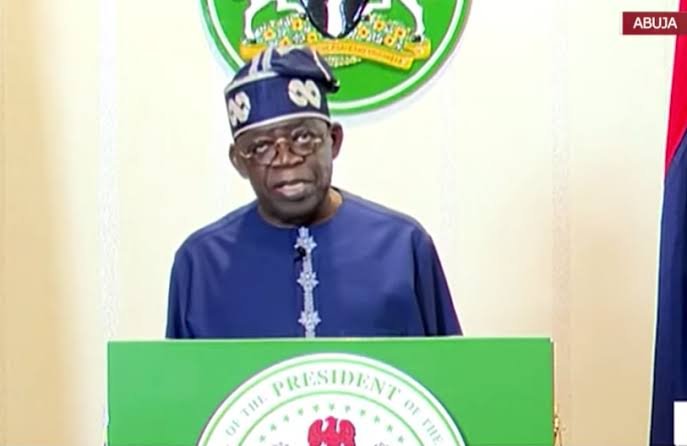
In the third week of his presidency, on 19 June 2023, President Bola Ahmed Tinubu designated Dr. Kayode Egbetokun as the Inspector-General of Police in acting capacity. Upon his elevation to the rank of DIG two months earlier in April 2023, Dr. Egbetokun was the most junior of the five officers of that rank in the NPF. However, upon being elevated to become IGP, he superseded them.
On 25 August 2023, the Chairman of the Police Service Commission, Dr. Solomon Arase, issued a letter to the four DIGs then in service requiring them all to proceed on “compulsory retirement from the service of the Nigeria Police Force with immediate effect from 25th August 2023.” The Commission did not find any of the officers guilty of any mis-conduct. Instead, it said that its instruction was “premised on the fact that you were senior to the Acting Inspector-General of Police prior to his appointment on 19th June 2023.” The letter cited what it called an imperative need “aimed at discouraging status reversal which is inherently dangerous to the exercise of authority by the Inspector-General of Police.”
The PSC did not exactly explain what it meant by “status reversal”. At the time, Dr. Arase was the latest in a succession of Chairmen of the PSC whose route to the position was paved by their having previously served as IGP. It was not supposed to be so.
The 1999 Constitution created the PSC as an independent police oversight institution.
When it began functioning in 2001, its inaugural chair was Simon Okeke, a civilian. However, when Chief Okeke’s five year tenure came to an end in 2006, then IGP, Sunday Ehindero, successfully persuaded President Olusegun Obasanjo that it was safer to hand the headship of the Commission over to retired police chiefs. This, it was believed, was to make the Commission more amenable to the machinations of the leadership of the NPF contrary to the clear design of the constitution. Ironically, that development produced the opposite result and the PSC and IGP sued one another up to the Supreme Court.
Back to the story; of the four affected DIGs, Dan-Mallam Mohammed, Hafiz Inuwa and Bode Adeleke complied and proceeded on compulsory retirement.
In October 2023, Moses Jitoboh sued. In the proceedings before the National Industrial Court of Nigeria, he argued through his lawyer, Silas Joseph Onu, that the PSC exceeded its powers in terminating his service in the NPF before the mandatory retirement age of 60 years or 35 years in service, and asked the court to set aside the Commission’s decision.
Bayelsa State Governor, Douye Diri, would later reveal that following the onset of this litigation, he met with Jitoboh and “urged him to drop his case against the Nigeria Police but he explained that he did not do it for himself but for the sake of justice.” He would get his wish – posthumously.
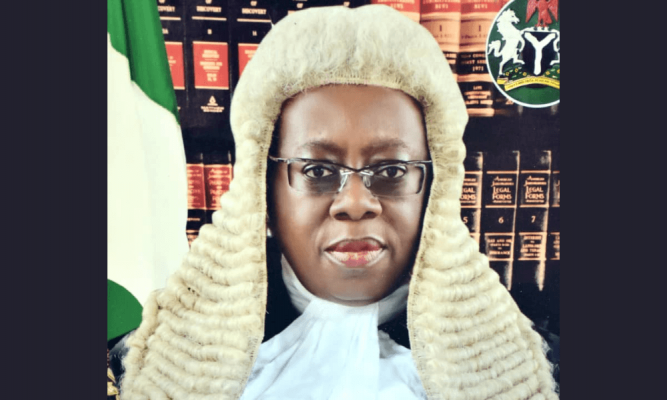
Sixteen days after his death, on 13 January 2025, Osatohanmwen Ayodele Obaseki-Osaghae, a judge of the National Industrial Court of Nigeria, handed down judgment in Moses Jitoboh vs. PSC. The Court found as a fact that Jitoboh had served in the NPF with distinction and without blemish.
But it was the findings of the court concerning the institutional practice of the Police that were to become revolutionary. The court found that “it is not the custom of the Nigeria Police, and there is no policy that senior officers are expected to tender their resignation on the appointment of their junior as IGP.” The PSC’s notice of compulsory retirement, the court held, was contrary to both the Public Service Rules and the Police Act, “which read together provide that the compulsory retirement age for all grades of officers in the public service shall be 60 years or 35 years of pensionable service whichever is earlier.”
Additionally, it also found that “in the history of the NPF there is in existence evidence that when a junior officer is appointed to a higher rank, his seniors are not compulsorily retired but allowed to serve in different capacities until retirement.”
The court, therefore, declared the compulsory retirement of Moses Jitoboh from the rank of DIG to be “unlawful, null and void and of no effect”, ordered him to be reinstated in the same rank and awarded him N50 million in damages, in addition to costs assessed at N750,000.
On that day of the judgment, Ambakina Moses Jitoboh was in his 16th day in the morgue. The judgment had sadly been delayed by one month from its original date of delivery in December 2024. It is only a matter for speculation what the effect could have been on his fate if the delay had not occurred.
The PSC chose not to appeal against the judgment.
In the past week, following the resignation of Dr. Egbetokun from the position of IGP and the appointment of Tuni Disu, an Assistant Inspector-General to replace him, much ink was spilt in pitted arguments over whether or not eight DIGs and 21 AIGs who were considered senior to the new helmsman should be cleared out of service. Many claimed that it was “the tradition of the police”, unaware that a court of competent jurisdiction had ruled that no such tradition existed and that, even if it did, it would have been considered unlawful.
A country in a life-and-death struggle with insecurity could ill have afforded such waste of experience and expertise. At the end of the week, it was reported that President Tinubu had moved to rule that out. It was the ultimate tribute to the memory of Ambakina Moses Jitoboh, the police officer who refused to accept injustice for an answer.