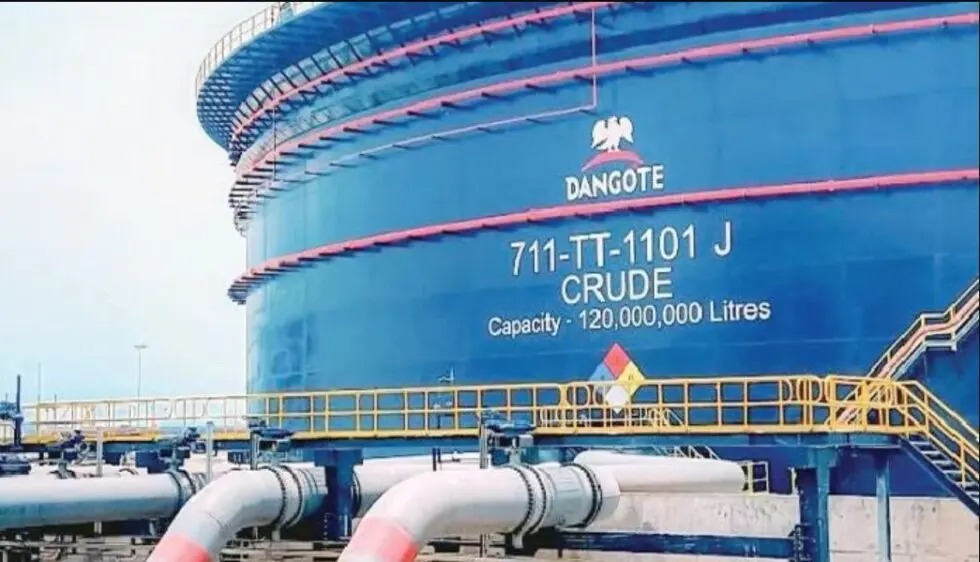
In a development that has sparked cautious optimism across Nigeria’s energy sector, Dangote Petroleum Refinery & Petrochemicals has reduced the ex-gantry price of Premium Motor Spirit (PMS), commonly known as petrol, to N1,200 per litre. The move comes as a reversal of its earlier upward price adjustment and is being attributed to a sharp decline in global crude oil prices influenced by unfolding geopolitical events.
The latest price cut represents a N75 drop from the previous rate of approximately N1,275 per litre, which had only recently been introduced amid rising international oil prices and concerns over supply disruptions. The reduction, confirmed late Tuesday by a senior official at the refinery, reflects the facility’s responsiveness to global oil market dynamics and its attempt to align domestic pricing with international benchmarks.
According to the source, who spoke under the condition of anonymity due to lack of official authorisation, the decision was not made in isolation but was a direct consequence of shifting realities in the global energy landscape. He pointed to ongoing tensions in the Middle East as a major factor influencing crude oil price volatility.
“The adjustment is in line with global market trends,” the official explained. “You are aware of the ongoing tensions in the Middle East and their impact on crude oil prices. These are external factors that directly influence refined product pricing.”
The Middle East, which accounts for a significant share of the world’s crude oil supply, has long been a focal point of geopolitical uncertainty. Recent developments in the region have triggered fluctuations in oil prices, with initial fears of supply disruptions driving prices upward. However, as the situation evolved and supply fears eased, global crude benchmarks began to decline, creating room for downstream price adjustments such as the one announced by the Dangote refinery.
For many Nigerians, the reduction in petrol price—though modest—offers a glimmer of relief in an economy grappling with high inflation, rising transportation costs, and the ripple effects of fuel price volatility. Petrol remains a critical driver of economic activity in the country, influencing everything from food prices to logistics and power generation.
Industry analysts suggest that the refinery’s decision could have a stabilising effect on the downstream sector, particularly if other market players follow suit. As Africa’s largest refinery, the Dangote facility holds significant sway in determining domestic fuel pricing trends. Its actions are often closely watched by marketers, regulators, and consumers alike.
However, experts also caution that the sustainability of the new price level will depend largely on global oil market stability. Should geopolitical tensions escalate again or supply constraints re-emerge, crude oil prices could rebound, potentially forcing another upward adjustment in petrol prices.
The Nigerian government, which has in recent years moved towards deregulating the downstream petroleum sector, has consistently maintained that fuel prices should reflect market realities. This policy direction has made local prices more sensitive to global crude oil fluctuations, as seen in the recent adjustments by the Dangote refinery.
Meanwhile, transport operators and small business owners have begun reacting to the news with a mix of hope and skepticism. While some believe the price cut could translate into lower operational costs, others argue that the reduction may not be sufficient to significantly impact the high cost of living.
“This is a welcome development, but the impact may not be immediately felt,” said a commercial driver in Lagos. “We’ve seen prices go up and down before, but everything else—spare parts, food, rent—remains high.”
As Nigerians continue to navigate the realities of a market-driven fuel pricing system, the latest move by Dangote Petroleum Refinery & Petrochemicals underscores the growing influence of global forces on domestic economic conditions. It also highlights the delicate balance between local supply considerations and international market pressures in shaping the price of a commodity that remains central to everyday life.
For now, the N75 reduction stands as a small but significant shift—one that offers temporary relief while reminding citizens of the broader forces at play in the global energy market.