By Agbeze Ireke Kalu Onuma, AI-KO
I have thought long and hard about the nature of lies and prevarications in Nigeria. And this recent outburst by Primate Ayodele, which he has since resorted to prevarications to explain away, got me up. This parable which I start this essay with speaks to the heart of our predicament, a story that exposes the mechanics of the deception being played out before us.
In a vast and prosperous valley, there was a great city where people from many villages were supposed to be able to live and work. A wide, sturdy gate stood at its entrance, built for all to use. For generations, however, the people of one particular village, known for their industriousness and travel, found themselves turned away whenever they sought to enter the city’s highest halls. They were told the gate was not for them. A man, who called himself the Keeper of the Key, stood by the gate. He did not hold a physical key, but he wielded something far more powerful: the story of a key. He spoke in a voice that dripped with ancient authority, telling all who would listen that a terrible, invisible lock sealed the gate against this village. “It is a spiritual lock,” he would declare, his eyes wide with feigned concern. “A curse from the old days. The mechanism is complex and divine, and only I can interpret its workings.” The people, in their desire for order and their respect for tradition, began to believe him. The Keeper grew rich and influential from the gifts of those who already lived comfortably inside the city, who paid him to keep proclaiming the lock’s existence. He would occasionally offer “directions” to the villagers on how to live piously enough that the lock might one day click open, all the while assuring the city’s elders that the barrier was eternal. One day, a child from the ostracized village, who had grown tired of hearing about the legendary lock, simply walked up to the gate and pushed. With a groan of disuse, it swung open freely. There was no resistance. No lock. No mechanism. Just air and fear and the weight of a lie. The Keeper, his face flushing with panic and rage, shouted, “You misinterpreted the nature of the lock! It was a conditional lock! You have not cleansed the curse, you have only angered it!” But it was too late. The people had seen the truth. The gate had never been locked. The only thing blocking their path had been the Keeper himself, and the terrifying power of a story they had been fooled into believing.
This is the precise nature of the prison that Primate Elijah Ayodele and his ilk are trying to build for the Igbo mind and the Nigerian political spirit. He is the Keeper, selling the illusion of a locked door, profiting from the curse he invented and the keys he never possessed.
It is with disdain, anger and profound disappointment that we must confront and address this deception. I have stopped paying attention to the crass, irresponsible doublespeak of the so-called men of God, who actually are men of gums – so far from God and so full of themselves. These are men who for a pittance speak and prophecy for Baal, whilst deceiving themselves and others that they serve the living God. Nigeria is such a bad and sad case of this phenomenon.
Ayodele’s comments are not prophetic; they are the latest stain in a long history of spiritual and political manipulation that has plagued Nigeria. To cloak raw ethnic prejudice in the sacred language of prophecy is a sacrilege of the highest order, a cowardly act that exploits faith to fracture a nation already bleeding from the wounds of division. This is not the work of a shepherd guided by the God of Abraham, Isaac, and Jacob, but the calculated rhetoric of a man seemingly intoxicated by the allure of political relevance, a man whose words carry the weight of malice, not divine mandate.
The justified anger that has met these declarations is a necessary and healthy response for a society straining towards democracy. This kind of rhetoric does not enlighten; it poisons. It drives the deep wounds of national division even deeper, lending a divine legitimacy to the very biases that have held Nigeria back, all while distracting from the urgent, practical work the nation requires – the work of building justice, fostering genuine inclusion, and demanding accountable governance from its leaders.
To understand the phenomenon, one must first dissect the carefully constructed persona he presents to the world. Primate Ayodele has cultivated a public identity as an indispensable divine oracle, a self-styled “mouth piece of God” whose pronouncements are delivered with what his platform brazenly claims are “clinical accuracies.” This strategic positioning, which often involves comparing himself to Old Testament prophets like Isaiah and Jeremiah, is designed to build an aura of infallibility and strategically inoculate him from any form of criticism.
To complement this image of unassailable divine authority, he simultaneously projects a “humble benefactor” facade, publicly insisting that “God has blessed me there is nothing I want again in life,” and meticulously highlighting his long-running philanthropy for widows and orphans. This benevolent image is a crucial piece of the armor, serving to deflect accusations of vested interests and to lend a sheen of moral credibility to his more divisive and politically convenient statements. It is a classic fusion of the celestial and the terrestrial, a performance designed to convince the public that his words are not his own, but God’s, and that his motives are pure, not partisan.
Yet, when one pierces this veneer, a consistent and troubling pattern of divisive and inflammatory prophecies emerges, prophecies that consistently foster division rather than unity. At the heart of the current controversy are his specific claims about the Igbo people, assertions that are as harmful in their implication as they are in their initial shock value. His declaration that the Igbo cannot attain the presidency unless a mysterious “curse” is cleansed is a profound act of stigmatization, regardless of his subsequent attempts to soften the blow by insisting his words were a prophetic warning, misunderstood, and that he is not, in fact, against an Igbo presidency.
This retrospective spin is a common tactic, but the core message remains toxic: to tell millions of citizens that they are bound by a collective spiritual impediment to political equality is not only politically incendiary but stands in stark opposition to the biblical principles he claims to represent. This pattern of pronouncement and retreat is further illustrated by his repeated, sweeping dismissals of specific political figures, all while positioning himself as a mere source of spiritual “direction.” This two-step – first issuing a sweeping condemnation and then retreating behind the vague language of counsel and public misinterpretation – is the very essence of clerical doublespeak, designed to have it both ways: to sow a desired political narrative while maintaining plausible deniability.
The Bible itself issues stern warnings about such figures. Scripture commands the faithful, “Beloved, do not believe every spirit, but test the spirits to see whether they are from God, for many false prophets have gone out into the world” (1 John 4:1). The litmus test for a true prophet is unerringly clear: “But the prophet who presumes to speak a word in my name that I have not commanded him to speak… that prophet shall die. You may say in your heart, ‘How will we know the word which the LORD has not spoken?’ When a prophet speaks in the name of the LORD, if the thing does not happen or come true, that is the thing which the LORD has not spoken; the prophet has spoken it presumptuously. You shall not be afraid of him” (Deuteronomy 18:20–22).
A thorough examination of Ayodele’s public record reveals a trail of verifiably failed predictions, from forecasting the victories of Goodluck Jonathan and Atiku Abubakar to prophesying catastrophic events like a Boko Haram bombing of the South-West that never occurred. By the clear, uncompromising standard of God’s own word, this repeated and documented failure exposes his pronouncements as fundamentally false. Furthermore, Jesus Christ himself warned us to “Beware of false prophets, who come to you in sheep’s clothing but inwardly are ravenous wolves” (Matthew 7:15). The true nature of these individuals is revealed not by their sanctimonious titles or grand appearances, but by their fruit – the tangible outcome of their ministry. When the fruit of a man’s words is the stigmatization of an entire people, the deepening of ethnic animosity, and the provision of a spiritual excuse for political exclusion, we are not looking at the fruits of the Holy Spirit.
We are witnessing the rotten harvest of division, a harvest that aligns perfectly with the description of those who “secretly bring in destructive heresies… and in their greed they will exploit you with false words” (2 Peter 2:1–3). This is not a servant of Christ, who proclaimed a radical unity in which “There is neither Jew nor Greek, slave nor free, male and female, for you are all one in Christ Jesus” (Galatians 3:28), but a servant of discord.
He is the archetype of the wolf in shepherd’s clothing, a predator whose ministry is not built on the rock of faith but in the swamp of human vulnerability. He is precisely the kind of “prophet” who preys systematically on the desperate and the disenfranchised, a man who understands that a broken spirit is the easiest to manipulate and a hungry stomach the most willing to believe in miracles. He defiles vulnerable women who come to him in their hour of need – seeking solace for a broken marriage, prayers for a barren womb, or divine intervention against an abusive husband. To these, he does not offer the pure, disinterested compassion of Christ; instead, he offers a transaction, a twisted spiritual quid pro quo that often demands a price paid in the currency of their dignity, leveraging their desperation against their virtue.
He is the kind of man who baits small, innocent children with sweets and shiny trinkets, a calculated performance of benevolence designed to seduce not just the children, but the watchful eyes of their grateful parents. This is how he builds his façade: not through genuine charity, but through a staged economy of kindness, where every lollipop is a down payment on unwavering loyalty and every gift-wrapped toy is a brick in the wall of his untouchable reputation. Meanwhile, he whispers to the unhinged and the ambitious, to those burning with a lust for power or vengeance they cannot legitimately fulfill. To these, he becomes a dark oracle, a facilitator of their darkest ventures. He offers not redemption, but empowerment; not a path away from sin, but a spiritual guarantee for their success within it. He sanctifies their malice with a prayer and anoints their greed with holy oil, providing a divine license for their descent into the abyss.
And all this grotesque machinery of exploitation is cloaked in the most visible, most performative costume of piety: the ever-ready smile, the public show of humility, the ostentatious displays of worship. This visible cloak of smiles is the ultimate sin, for it is the lie that makes all the other lies believable. It is the carefully maintained mask that allows him to operate in plain sight, transforming his sin not into a secret shame, but into a public spectacle of sanctimony. He is a spiritual poison, bottled and sold as holy water, and his greatest trick is convincing the multitude that the smile on his face is a reflection of the grace in his heart, rather than the gleam of a conqueror who has successfully taken yet another soul captive.
When confronted with these undeniable failures, a clear and calculated playbook emerges, a set of tactics that is itself revealing of the operation. Defenders engage in retroactive reinterpretation, often claiming the prophecies were conditional warnings that were “misinterpreted” as fixed predictions. Another key tactic is shifting the goalposts. When a predicted event does not occur, the narrative is shifted from a “failed prediction” to a “successful warning.” Defenders argue that the prophecy’s purpose was to prompt prayer and action that averted the disaster, a logic that makes the prophecy fundamentally unfalsifiable; whether an event happens or not, the prophet can claim credit. This is combined with selective highlighting, where proponents vigorously promote the rare vague “hits” while ignoring the numerous specific “misses,” creating a confirmation bias that sustains his followers’ belief.
This pattern aligns not with a prophet, but with a political influencer whose currency is the persistent illusion of truth. A critical examination reveals a telling chronological dissonance that exposes the cynical mechanics at play. Primate Ayodele’s controversial declaration – that the Igbo are bound by a “curse” blocking them from the presidency – was not uttered in the heat of the current political moment. It was first propagated in late November 2023, delivered via his social media channels and video messages. Its deliberate resurrection now, as Nigeria enters the early but potent pre-election season for the 2027 polls, is a calculated political strategy, not a spontaneous rekindling of prophetic insight. This recycling is a deliberate act of narrative warfare, timed for maximum impact.
When I apply my second year University Marxist lens to the phenomenon of Primate Elijah Ayodele, his ministry begins to look less like a divine calling and more like a perfect, almost textbook example of a superstructural force. His prophecies and ethnic pronouncements seem to function as a powerful ideological tool, one that ultimately mystifies our harsh social realities, protects the interests of the ruling class, and commodifies faith itself. In doing so, I see his activities as actively impeding the development of a unified class consciousness among Nigeria’s vast proletariat.
This aligns with the classic Marxist view of religion as an “opiate of the masses.” From my perspective, Ayodele’s work serves as a sedative, dulling the pain of exploitation by redirecting attention from the material to the metaphysical. For instance, he reduces the profound socio-political question of Igbo marginalization – an issue deeply rooted in historical and material conflicts over resources and power – to a simplistic narrative of a spiritual “curse” requiring “cleansing.” This explanation is profoundly disempowering; it directs the oppressed to seek supernatural solutions for problems that are fundamentally earthly and political, effectively discouraging any organized, material struggle against the actual structures that exploit them. This isn’t just an isolated observation; when groups like MASSOB accuse him of being part of a “sponsored campaign” to discredit political alternatives while ignoring the “huge evils” of the status quo, it strongly suggests to me that his prophetic platform is, whether consciously or not, serving to legitimize the current ruling class and attack its opponents.
As I dig deeper, the political economy of his prophecy becomes impossible to ignore. Marxism insists we follow the money, or at least the economic logic, of any social institution. To me, Ayodele’s operations resemble a form of commodity production, where prophecies are the goods and media attention is the currency. His ministry systematically produces a steady stream of pronouncements on politics and elections, even compiling them in formal, book-like publications. This process turns the ethereal concept of divine revelation into a mass-produced, distributable commodity. The entire business model seems to rely on a calculated cycle of controversy and recantation: making dramatic, often incendiary statements to capture headlines, and then issuing “clarifications” or elaborate reinterpretations when faced with backlash or when predictions fail, as we saw after the 2023 elections. This cycle is not a failure of his model but its very engine, guaranteeing the perpetual media relevance that is the true source of his influence and capital.
Perhaps what I find most damaging in the Nigerian context is how his rhetoric actively fractures the very class solidarity we so desperately need. A key function of the bourgeois state is to prevent the proletariat from recognizing its collective power, and Ayodele’s language of ethnicity serves this function perfectly. His claim that the Igbo are “cursed” feels like a classic tactic of divide and rule. By framing one major ethnic group as inherently problematic, he redirects the legitimate anger of the exploited Yoruba, Hausa, and other masses away from the exploitative ruling class and toward their fellow oppressed neighbors. This promotes the very stereotypes that make “one tribe look inferior or disqualified from national leadership,” ensuring that a Yoruba worker is more likely to see an Igbo worker as a “cursed” competitor rather than a comrade in our shared struggle against the bosses who exploit us all.
In my mind, this analysis inevitably raises the question: what would a genuine, counter-hegemonic prophetic voice look like? I imagine a figure aligned not with power but with the proletariat, one who would relentlessly condemn the concrete, material suffering of the people – “the ongoing genocide against Christians,” state negligence, and the brutal capitalist policies that immiserate the masses – rather than focusing on electoral outcomes for the powerful. Such a voice would replace Ayodele’s ethnic and spiritual analysis with a clear, class-based framework, identifying the Nigerian bourgeoisie and their international backers as the common enemy of all working people, regardless of ethnicity or religion.
In summary, from where I stand, Primate Ayodele emerges as a quintessential superstructural figure in our neo-colonial capitalist state. His ministry produces ideologies that mystify power, commodifies spiritual hope, and deliberately divides the oppressed, thereby playing a deeply reactionary role in Nigeria’s ongoing class struggle. This Marxist framework, I believe, provides a robust way to cut through the spiritual noise and examine the earthly machinery at work.
This venomous rhetoric is not a novel poison but the revival of a familiar, hateful liturgy whose pages are stained with the blood of history. To understand the true gravity of Primate Ayodele’s pronouncements, one must trace them back to their sinister precedent: the anti-Igbo pogroms of 1966, which were not mere spontaneous riots but a meticulously stoked genocide. In the months and weeks leading to the slaughter, mosques across Northern Nigeria were transformed into chambers of ethnic incitement. Religious bigots, posing as Imams and Sheiks of moral authority, perverted their sacred platforms to preach a gospel of hate.
They skillfully wove political grievances into their sermons, not as issues for discourse, but as divine indictments. The political ambition of a people was framed as an unforgivable sin; their presence in the North was painted as an infestation; their success was branded as a conspiracy. This was not just political mobilization – it was the theological dehumanization of an entire population. The chilling efficiency of this campaign lay in its fusion of faith with ethnic identity. The message from the pulpit was clear: to kill an Igbo man was not just a political act, but a pious one; to destroy his property was to cleanse the land. This created a moral alibi for mass murder, granting a sense of religious impunity to the perpetrators. The resulting carnage was therefore not a chaotic frenzy, but a sanctified slaughter, leading to the deaths of tens of thousands and the desperate flight of over a million Igbo people back to their ancestral homeland – a traumatic exodus that made the subsequent Civil War a tragic inevitability. The pogroms were, in essence, a war declared from the pulpit long before the first bullet was fired on a battlefield.
When Primate Ayodele now stands in his own pulpit and speaks of a “curse” on the Igbo people, he is not offering a prophecy. He is reactivating this very same playbook of spiritualized othering. He is draping the same old ethnic prejudice in a new Christian vestment. His language of a collective “curse” is the theological cousin of the dehumanizing labels preached in 1966; both serve to frame the Igbo as a people metaphysically flawed, spiritually contaminated, and inherently unfit for full membership in the Nigerian project. For a man of his standing to do this is to anoint the graves of the 1966 slaughtered with fresh libations of contempt. It is a profound betrayal of the Christian gospel he claims to represent.
To truly grasp the existential threat embedded in Ayodele’s rhetoric, one must recognize that it is not merely tribalistic or politically cynical; it is fundamentally fascist. He is demonstrating and remonstrating the same traits and mindset of those religious fascists used by the Nazi regime to promote, justify, and execute the Holocaust – the archetypal genocide of the Jewish people. This is a pattern that transcends the immediate context of Peter Obi, Ndigbo, and the quest for the presidency; it is about the eternal struggle against the weaponization of faith for genocidal ends. The Nazi project did not emerge in a vacuum; it was meticulously prefaced and supported by a perversion of Christian theology that created a moral and spiritual alibi for mass murder.
The “German Christian” movement, for instance, actively worked to align Protestantism with Nazi ideology, purging the Old Testament for its “Jewish influence” and re-casting Jesus as an Aryan warrior opposed to the corrupting influence of the Jews. They provided the metaphysical justification for the Nuremberg Laws, framing racial purity as a divine mandate. Pastors like Joachim Hossenfelder proclaimed, “One People, One Reich, One Faith!” thereby sanctifying a political project of exclusion with the language of divine order. They were the spiritual gatekeepers who declared an entire people metaphysically unfit, a cursed and corrosive element within the national body, whose removal was not just a political necessity but a sacred duty.
Ayodele is operating from the same sinister playbook. His declaration of a “curse” on the Igbo people is the theological cousin of the Nazi’s branding of the Jews as a “virus” or a “degenerate race.” Both strategies employ the language of spiritual impurity to achieve a political goal: the dehumanization of a target group. Just as the Nazi-aligned clergy shifted the German national conversation from economic and political woes to grand, metaphysical narratives about racial destiny and national purity, Ayodele shifts Nigeria’s conversation from the tangible crises of corruption, insecurity, and infrastructural collapse to a fabricated spiritual narrative about a “curse” on the Igbo.
This is a classic fascist tactic – to create a unifying scapegoat, a domestic enemy whose alleged inherent wickedness is the source of all national problems. The “Final Solution to the Jewish Question” was the logical, horrifying endpoint of this process of dehumanization. It began not with gas chambers, but with sermons, with pamphlets, with pastors and priests lending their authority to the idea that a people were less than human, that their aspirations were a threat to the nation’s soul, and that their exclusion was a holy cause.
In Nigeria today, we are witnessing the same early, insidious stages of this process. Ayodele’s rhetoric is a form of spiritual genocide, a preparatory conditioning of the public mind. He may not be calling for violence, but he is diligently creating the ideological and moral climate in which violence and political persecution can be rationalized and even celebrated. He is providing a divine pass for those who wish to maintain a status quo of exclusion. To dismiss this as mere political partisanship is to miss the grave historical warning.
The road to the Holocaust was paved with the sermons of complicit clergymen who, like Ayodele, claimed to be offering “spiritual direction” while systematically stripping a people of their God-given dignity. When a man of God stands at his altar and declares a people cursed, he is not prophesying; he is pouring holy water on the seeds of hatred and watering the roots of a potential future atrocity. This is what we are dealing with: a vision of Nigeria where the pulpit is not a place of refuge for the oppressed, but a courtroom where entire ethnic groups are tried, convicted, and sentenced to perpetual political subjugation under the false authority of a vengeful god. This is not just about an election; it is about the soul of the nation and its resistance to the oldest and most deadly form of hatred, now dressed in the robes of a Nigerian prophet.
This pattern of pulpit-sanctioned violence is not confined to the history books or to the specific targeting of the Igbo; it is a live, metastasizing crisis currently devastating the Middle Belt of Nigeria, where a campaign of mass killing, land dispossession, and cultural erasure is being waged. Here, the same toxic fusion of religious and ethnic chauvinism has been weaponized to apocalyptic effect. For years, sermons from certain mosques across the region have been tailored to incite followers against indigenous, non-Fulani communities – Christians and followers of Traditional Religions alike. These communities are systematically cast not as fellow citizens, but as kafirai (unbelievers) and outsiders in their own ancestral homelands.
This theological framing, much like the dehumanization of the Igbo in 1966 and the Jews in 1930s Germany, serves a clear political and territorial objective: to spiritually legitimize a land grab of staggering proportions. The rhetoric from the pulpit portrays a divine mandate to dominate, cleanse, and claim territory, transforming a calculated project of resource capture and demographic conquest into a holy war.
The consequences of this sustained incitement are not abstract; they are written in the ashes of burnt villages and the mass graves dotting the landscapes of Benue, Plateau, Southern Kaduna, and Taraba. We have witnessed the systematic massacre of thousands of farmers, the obliteration of entire communities, and the forced displacement of millions into squalid internally displaced persons (IDP) camps. This is not spontaneous conflict; it is a meticulously orchestrated campaign where religious ideology provides the moral cover for mass murder.
The perpetrators, often armed and mobilized, are emboldened by a sense of religious impunity, believing their actions are sanctified by the hateful dogma preached to them. The result is the comprehensive impoverishment and traumatization of an entire region. Vibrant agrarian societies, with their rich cultures and deep historical roots, have been shattered. Their farmlands, the source of their sustenance and identity, are now occupied, their ancestral heritage erased in a wave of violence that began with words of hate spoken from a sacred platform.
This grim reality in the Middle Belt is the ghost of 1966 haunting a new generation, and it shares a direct ideological lineage with Ayodele’s pronouncements against the Igbo. While the specific targets and religious affiliations differ, the underlying machinery of hatred is identical: the use of religious authority to declare a segment of the Nigerian family spiritually and politically illegitimate. Whether it is a cleric in a mosque declaring indigenous Middle Belt communities to be infidel obstacles to a Fulani hegemony, or a prophet in a Lagos church declaring the Igbo “cursed” from national leadership, the outcome is the same – the fragmentation of the nation’s soul and the justification of oppression.
Ayodele’s rhetoric, therefore, must be seen as part of this broader, terrifying tapestry of Nigerian fascism. He may not wield a machete, but he forges the ideological blades. He may not light the torch that burns a village, but he provides the spiritual kindling. By branding the Igbo as a “problem” and a “cursed” people, he is contributing to the same ecosystem of hate that has already turned the Middle Belt into a killing field. He is normalizing the idea that some Nigerians, by divine decree, are less entitled than others, thereby pouring a foundation of theological sand upon which no true, multi-ethnic democracy can ever safely stand.
To claim that the Igbo people are the “problem of Nigeria” is a profound and ahistorical inversion of reality, a classic tactic of the oppressor who blames the oppressed for their own wounds. The true problem is not the dynamism of a people who have built vibrant commerce from Sapele to Shanghai, or their relentless pursuit of education and self-improvement, or their legitimate aspiration for a presidency that reflects Nigeria’s federal character. The real, festering problem is a corrupt and unworkable political structure that requires a perpetual scapegoat to survive. This structure, built on a foundation of petro-state clientelism and ethno-religious patronage, is fundamentally threatened by the Igbo ethos of individual achievement, meritocracy, and Pan-Nigerian enterprise.
The system cannot tolerate a people whose success is not primarily mediated by state handouts or political godfathers. Therefore, the Igbo are not the problem; they are the living, breathing indictment of a system that has failed everyone else. Their visibility and success become a convenient distraction from the colossal failures of the ruling class, turning the victims of structural violence into the alleged perpetrators of national malaise. Furthermore, the assertion crumbles under the weight of its own illogic.
How can a single ethnic group be the “problem” in a nation where every region is a theater of its own unique catastrophe? Is the problem in the oil-rich Niger Delta, where decades of environmental degradation and poverty persist amidst unimaginable wealth, an “Igbo problem”? Is the problem in the North-West, where banditry has turned villages into killing fields and children into kidnap victims, an “Igbo problem”? This ludicrous scapegoating is a psychological mechanism to externalize a national cancer. The truth is that Nigeria, as currently constituted, is the problem for the Igbo and for every other community that yearns for freedom and progress. It is the problem for the Yoruba professional trapped by a failing infrastructure, for the Hausa farmer whose security the state cannot guarantee, and for the Niger Delta youth whose future is stolen daily.
The unitary system masquerading as a federation actively suppresses the potential of all its constituent peoples, and the vibrant, irrepressible spirit of the Igbo simply highlights this suppression more starkly. Ultimately, the most potent evidence against this poisonous claim is the historical and contemporary reality of the Igbo people themselves. Having endured a genocide and a civil war aimed at their annihilation, they did not retreat into permanent bitterness but chose the arduous path of national re-integration through commerce, intellect, and culture. They rebuilt their homeland without the petro-dollar allocations that built Abuja, demonstrating a legendary capacity for self-regeneration. To now pathologize this resilience as “the problem” is the height of moral bankruptcy.
It is not the Igbo who have failed Nigeria; it is Nigeria that has consistently failed the Igbo, just as it has failed the vast majority of its citizens. The relentless energy spent on devising new spiritual and political locks to keep Ndigbo out of the national center is energy stolen from solving the actual problems that afflict us all. The fear of an Igbo presidency is not a fear of incompetence, but a fear of accountability – a terror that a group accustomed to building from the ashes might just expose the rottenness of the foundations and demand a nation that works not for a select few, but for everyone, everywhere.
This is not an isolated incident but part of a broader, systemic issue enabled by a shadowy ecosystem of patronage and protection where religious voices, by becoming reliable megaphones for entrenched power, are rewarded with visibility, access, and a sense of impunity. This cycle is dangerously amplified by a media landscape that often prioritizes sensation over substance. Incendiary soundbites and headlines declaring “Igbos are the problem of Nigeria” circulate with viral speed, and even when they are later walked back as “misinterpretations,” the damage is done. The initial shockwave of the prophecy achieves its goal, shaping public perception and reinforcing biases.
This “shock and recantation” cycle rewards controversy, which in a crowded information space is a potent currency, cementing the prophet’s relevance and potentially translating into access, patronage, and a powerful seat at the political table. His ultimate goal may be less about guiding a specific candidate to power and more about cementing his own institution as a permanent, king-making force in Nigerian politics. This cycle entrenches cynicism and grievance ever deeper into the public square, making the difficult work of truth and reconciliation all but impossible. Yet, this calculated manipulation has not gone unchallenged.
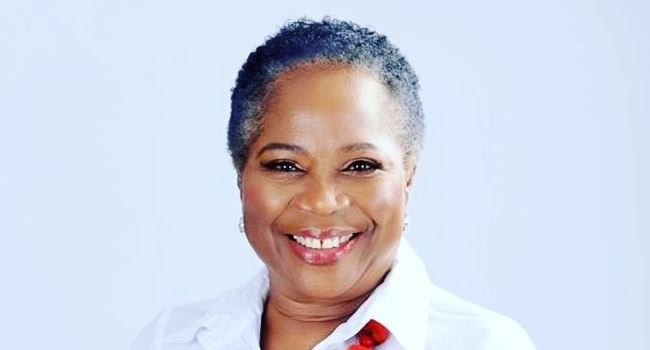
The backlash represents a growing public immunity to such clerical toxins, a refusal to allow the pulpit to be a platform for prejudice. This refusal was given powerful voice by Oluchi Oparah, a former National Treasurer of the Labour Party, who publicly condemned Ayodele, articulating the fury and disappointment of millions. She directly named the sin as “Tribalism,” not Prophecy, stripping away the spiritual pretense and describing his actions as “promoting ethnic division under the guise of prophecy” and accusing him of “political propaganda disguised as divine insight.”
She highlighted the dangerous deflection from real issues, stating, “Banditry is destroying communities. Hunger is killing families. Insecurity is gripping Nigeria. Yet instead of using your platform to condemn injustice… you have chosen the weaker path: attacking an innocent tribe…” Most importantly, she issued the ultimate challenge that strikes at the heart of his operation: “If politics excites you so much, then stop pretending. Resign from the altar and declare your political ambition openly. But do not continue hiding behind ‘prophecy’ to push dangerous rhetoric…” This forces the very confrontation Ayodele seeks to avoid with his “strategic ambiguity.”
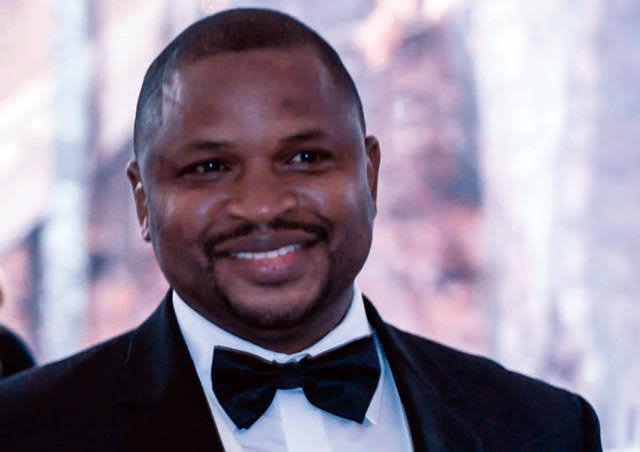
This growing public condemnation was given formidable legal and constitutional weight by Chief Malcolm Emokiniovo Omirhobo, a Human Rights Advocate and Constitutional Lawyer. In a press release that systematically dismantled Ayodele’s rhetoric from the bench of the Nigerian Constitution, he authoritatively framed the issue as a fundamental breach of the nation’s social contract. “Nigeria is a constitutional democracy, not a spiritual monarchy guided by the personal prophecies of any individual,” he declared, cutting through the spiritual pretense to place Ayodele’s pronouncements in their proper context: a matter of civic responsibility and legal order.
Chief Omirhobo grounded the rights of the Igbo people in the unassailable provisions of the 1999 Constitution (as amended), citing its guarantee of the equality of all citizens (Section 17), its prohibition of discrimination on the basis of ethnicity (Section 42), and its affirmation that sovereignty belongs to the people of Nigeria, not to prophets or spiritual gatekeepers (Section 14(2)(a)). This legal framing recast Ayodele’s “curse” and ethnic profiling as what it truly is: unconstitutional hate speech. He delivered a tripartite condemnation that is both concise and exhaustive, declaring the remarks “unbiblical, unconstitutional, incendiary, and morally reprehensible,” thereby condemning Ayodele in the three spheres where he claims authority: his own faith, the laws of the nation, and the universal codes of human decency. Ultimately, Chief Omirhobo issued the definitive rebuttal to the politics of spiritual segregation.
“Nigeria belongs to all of us… No one is cursed. No group is superior. And no prophet has the authority to rewrite the Constitution of the Federal Republic of Nigeria,” he affirmed. This statement serves as the constitutional echo of the theological truth from Galatians, uniting the law and the gospel in a common, unanswerable defense of human dignity and national unity. This legalistic condemnation is the final nail in the coffin of Ayodele’s fraudulent prophecy, demonstrating that his statements are not merely distasteful, but an active assault on the foundational compact that holds the nation together.
Therefore, a direct and unambiguous response to Primate Ayodele is necessary: your words are reckless, your “curse” is a fiction, and your retreat into claims of “misinterpretation” is a tired and cowardly tactic. You have spoken a destructive falsehood against a people of immense dignity and strength, and you must own the poison you have released. We stand in unwavering defense of Ndigbo and their God-given, constitutionally-protected right to aspire to, and attain, any office in the land based on their competence, character, and the will of the electorate – not on the deceitful pronouncements of a false prophet. The God we serve is a God of justice and unity, and by His standard, you will be judged. The attempt to gatekeep the presidency through claims of a “curse” is nothing less than a form of soft disenfranchisement.
It is imperative to stop spiritualizing tangible inequality. The challenges Nigeria faces – from the scourge of insecurity to the cancer of corruption and the pain of exclusion – are, at their root, problems of policy, governance, and political will. They are not metaphysical barriers. To cloak bias and political calculation in the language of faith does not sanctify it; on the contrary, it exposes it, revealing a troubling convergence of the pulpit and the backroom deal. Responsible faith leadership in a nation as complex and wounded as Nigeria looks entirely different. It chooses to speak for justice rather than for patrons. It uses its moral authority to call for concrete reforms, equitable appointments, transparent elections, and the genuine inclusion of all regions and peoples. It stands in solidarity with communities ravaged by violence and discrimination. It resists, with every fiber of its being, the temptation to turn sacred pulpits into platforms for partisan intimidation. It uses Scripture as a tool to heal, not to harm, praying earnestly for national unity and teaching the intrinsic, God-given dignity of all peoples. It consciously and courageously rejects the destructive myths that seek to cast any segment of humanity as inherently unfit or eternally cursed, recognizing that such ideas are a poison to the soul of the nation and a betrayal of the very faith they claim to represent. The portrait of Primate Ayodele, when viewed in full, is a cautionary tale of this betrayal, a stark reminder that the most dangerous lies are often those told in the name of God.
The Sovereignty of the Human Spirit
Let us be clear and unsparing in our assessment: Primate Ayodele is a spiritual fraud, a man who has perfected the alchemy of turning base political gossip into what he dares to call “prophecy,” and distilling raw ethnic prejudice into vials of “divine revelation.” His entire ministry operates not as a conduit for any godly truth, but as a cheap, high-decibel loudspeaker for the agendas of those who require a Nigeria that is perpetually divided, frightened, and distracted from the real architects of its misery.
This man has carefully constructed a career not on lifting the downtrodden, but on systematically tearing down a people. He has dedicated himself to two corrosive missions: the relentless psychological assault on the Igbo spirit and the calculated poisoning of the Yoruba mind with a slow-drip toxin of ethnic suspicion and fear. I ask you, since when did the portfolio of a prophet of the Most High God include the petty, malicious work of a tribal provocateur? A true prophet heals, unites, and confronts power with truth. What Ayodele practices is not prophecy; it is a form of spiritual arson. If Nigeria is a house on fire – and it is – then men like Ayodele are not firefighters; they are the sorcerers dancing in the flames, chanting incantations and pouring petrol on the blaze, all while disguised in the sacred vestments of a shepherd.
The sheer, damning selectivity of his so-called visions reveals the entire grift. His “prophetic” focus is myopically, obsessively, fixed on one thing and one thing only: the calculus of political power. His god, it seems, is a god of elections. Where is his voice, thundering with the urgency of Isaiah, against the scourge of banditry that has turned our highways into valleys of the shadow of death? Where was his “clinical accuracy” in foreseeing the murder of an Army General, a defender of this nation? Why did no “revelation” alert him to the movement of a massive convoy of armed bandits, or the abduction of schoolgirls in the very region of our Defence Minister?
His silence on these fronts is a roaring testament to his fraudulence. He never sees the insurgency before it detonates. He is blind to the bandits until after they have struck. His prophetic radar is mysteriously disabled in the face of our true, grinding national tragedies, only to miraculously reactivate when there is a ballot box to be prophesied over. This is no prophet. A prophet who is consistently deaf to the sound of weeping families but can allegedly hear the whisper of election results three years in advance is not a man of God – he is a spiritual contractor, a hired hand whose services are tailored to a specific, political clientele.
A Philosophical Explanation of the Title: The Cowardice at the Core
The title I have chosen for this essay, “Primate Ayodele and the Cowardice of False Prophecy and Prophets,” was not chosen lightly. It is my Marxist philosophical diagnosis, not a mere insult. To call his prophecy “false” is a factual correction based on his record of failed predictions. But to identify its core as “cowardice” is to expose the very engine of this spiritual malpractice. Cowardice, in this context, is not a lack of physical bravery, but a profound moral and intellectual abdication – a refusal to engage with the terrifying, beautiful, and demanding realities of truth, freedom, and human equality.
The cowardice of the false prophet lies first in his relationship with truth. A true prophet, in any tradition, stands upon the solid, unyielding ground of truth, even when it is inconvenient, even when it angers the powerful and upsets the comfortable. This requires immense courage. The false prophet, however, is a coward who flees from this responsibility. He cannot bear the weight of a truth that does not serve him. So, he takes refuge in ambiguity, in the “strategic misinterpretation,” in the retroactive “clarification.” Ayodele’s entire methodology – the pronouncement and the retreat – is the dance of a man running from accountability. He wants the influence that comes from certainty but refuses the consequences of being definitively wrong. This is the cowardice of a man who will not stand by his own words, who uses the cloak of the divine as a hiding place from the demands of intellectual honesty.
Secondly, and more insidiously, his cowardice is evident in his choice of targets. A true prophet, a courageous one, looks at the complex, daunting problems of a nation – the systemic corruption, the failing institutions, the powerful predators in government – and speaks truth to that power. This is a dangerous and noble vocation. The false prophet, the coward, looks at that same landscape and chooses the safest, most vulnerable target available: a minority group already on the margins of political power. To attack the Igbo people, to declare them “cursed,” is an act of profound strategic cowardice. It is punching down. It requires no courage to stigmatize a people who have no army, no state machinery to deploy against you, only their history of resilience and their voice of protest. He preys on the politically disenfranchised because he is too cowardly to confront the truly powerful who are the architects of Nigeria’s ruin. He is a spiritual bully, and bullying is always the action of a coward.
Finally, and most fundamentally, his cowardice is a philosophical failure in the face of human potential. The most courageous belief one can hold in a broken world is a belief in human agency – the radical idea that people, through their choices, their effort, and their will, can shape their destiny. This is the bedrock of democracy and the essence of hope. Ayodele’s “curse” is a cowardly surrender of this belief. It is a fatalistic, deterministic worldview that says, “You cannot overcome. Your fate is sealed by metaphysical forces.” This is a theology of despair designed for those too cowardly to face the hard work of building a just society. It is far easier to declare a people permanently unfit for leadership than to roll up your sleeves and compete in the marketplace of ideas and competence. His prophecy is a coward’s excuse for his own – and his patrons’ – inadequacy and fear of a fair contest.
Therefore, the title is my thesis: Primate Ayodele is not just a liar or a fraud. He is a moral coward. His false prophecy is the weapon of this cowardice, a tool to evade truth, to bully the vulnerable, and to justify a pathetic surrender of national ambition. He is not a fearsome figure; he is a frightened one, hiding from the light of reason and the demanding call of justice, all while pretending to speak for the heavens.
Nigeria is tragically cursed with these political prophets, these mercenary seers who auction their “visions” to the highest bidder and dress their personal biases in the borrowed robes of divine instruction. Ayodele sits enthroned in this hall of infamy. His proclamations do not build the nation; they expertly destabilize it. His words do not inspire unity; they meticulously incubate the eggs of ethnic bitterness until they are ready to hatch into open conflict.
From the likes of Gumi, who openly massage the egos of terrorists, to Ayodele, who amplifies ethnic hatred, what we are witnessing is nothing less than the spiritual vandalism of a nation. These are men who have no moral or theological business standing near a pulpit, yet they command the microphone.
Let this be the final distinction we engrave in the public consciousness: A true prophet is a danger to corrupt power; he rebukes injustice, confronts wickedness in high places, and warns a nation of the consequences of its moral failures. A false prophet, however, is a danger to the people; he entertains crowds, sells packaged fear, and cowardly hides behind the name of God to push his own private, divisive agendas. By every measure of scripture, reason, and human decency, Ayodele is firmly, unquestionably, and tragically in the latter category – loud, misleading, divisive, and wielding an influence that is as dangerous as any weapon. Our problems are catastrophic enough. The very last thing we need are these fraudulent clerics, these merchants of chaos, who have made it their vocation to multiply our sorrows.
As I draw this to a close, it is imperative to step back from the specific figure of Primate Ayodele and behold the larger, more terrifying landscape his rhetoric inhabits. We have not only been analyzing a man, but diagnosing a sickness in the Nigerian soul – a sickness that manifests as a desperate, clawing need to find theological justifications for our most base and human fears. The central, unspoken tragedy of Nigeria is not its poverty or its corruption, but its poverty of imagination.
We have become a nation that would rather believe in curses than in the simple, demanding power of competence; a people who find more comfort in the myth of divine disfavor than in the terrifying, liberating responsibility of building a just society with our own hands. Ayodele’s “curse” is, in this light, a collective psychological crutch. It is a narcotic for the conscience, allowing a corrupt political class and a complacent citizenry to outsource their failures to the metaphysical, to blame the suffering of millions on a spiritual flaw in one group rather than on the concrete, remediable flaws in our governance and our national character.
This essay and reflection has been an attempt to stage an intervention, to break this addiction to destructive mythologies. We have traced the lineage of this hatred from the pogroms of 1966, through the global archetype of Nazi Germany, to the ongoing genocide in the Middle Belt, and finally to the digital pulpits of Lagos. The through-line is unmistakable: the fusion of faith with fascist impulse. But to see this only as a political problem is to miss its deeper philosophical core. At its heart, this is a battle between two opposing visions of God and humanity.
The god that Ayodele and his ideological kin across faiths invoke is a small god, a tribal deity, a celestial gatekeeper whose primary function is to sanctify our prejudices and anoint our quest for dominance. This is a god made in the image of man’s worst nature – petty, vengeful, and exclusionary. Against this, we must pit the God of the prophets, the God of Isaiah and Amos, the God-Christ – a God whose central ethic is justice for the oppressed, whose nature is love, and whose kingdom is built on the radical, inconvenient idea that every human being, regardless of ethnicity, carries the divine imprint. To choose this God is to choose a politics of inclusion; it is to recognize that the only “curse” upon Nigeria is the curse of our own collective choice to betray this foundational principle of universal dignity.
Therefore, our final stand must be for the sovereignty of the human spirit over the tyranny of false prophecy. The ballot box is not just a political instrument; it is a theological declaration. It is the moment where the citizen, armed with their God-given reason and conscience, asserts that their future will be shaped by their choice, not by a clerical decree. The quest of Ndigbo for the presidency, and indeed the quest of every marginalized group for full belonging, is thus a sacred national ritual.
It is a collective exorcism of the demons of tribalism and a profound affirmation that our destiny is not pre-written in the stars or sealed by a curse, but is a story we are writing together, one policy, one election, one act of courage at a time. The resilience of the Igbo people, their breathtaking ability to create life from the ashes of war and commerce from the ruins of prejudice, is not evidence of a curse, but the very definition of a blessing. It is a testament to a spirit that no prophecy can bind and no hatred can extinguish.
For me, this essay is more than a rebuttal; it is a reclamation. A reclamation of faith from the bigots, of prophecy from the profiteers, and of our national narrative from the merchants of despair. The gates are not locked. The curses are not real. The only power these false keepers have is the power we grant them through our fear and our credulity. We have pushed on the gate, and it has swung open. The path ahead is difficult, fraught with the real work of building a nation – a work of justice, infrastructure, security, and empathy. But it is our path to walk, freely and together, refusing to be spiritually gaslit into believing we are anything less than a people blessed with immense potential, tasked with the holy and patriotic duty of finally, and truly, becoming Nigeria and Nigerians!