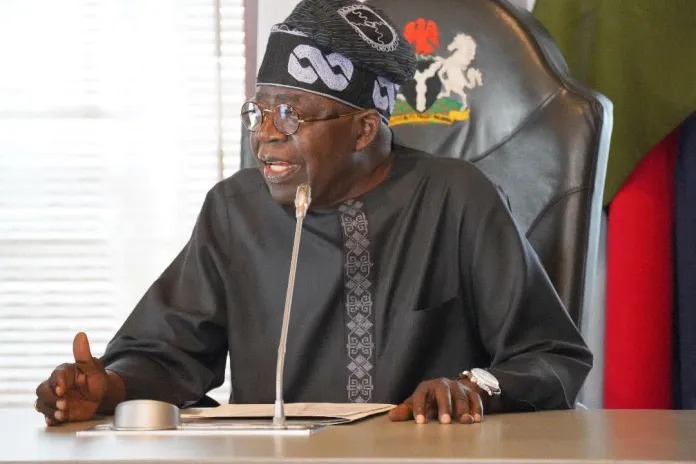
President Bola Ahmed Tinubu has formally written to the Senate, transmitting five executive bills aimed at overhauling drug law enforcement, expanding transport safety investigations, and modernizing public sector training.
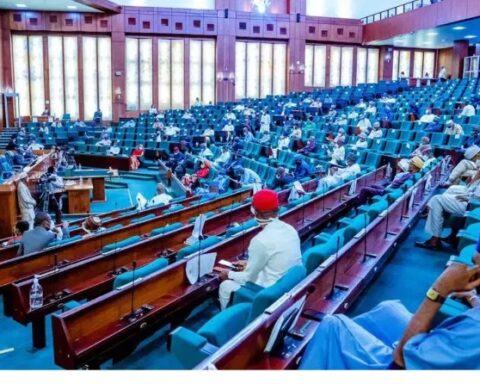
The executive communication was officially read during plenary on Tuesday, October 13, 2026, in the Senate Chamber, National Assembly Complex, Abuja, presided over by Senate President Godswill Akpabio.
President Tinubu urged the upper legislative chamber to give the bills accelerated consideration pursuant to Section 58(2) of the 1999 Constitution of the Federal Republic of Nigeria (as amended).
National Drug Law Enforcement Agency (NDLEA) Bill, 2026 Repeals the existing NDLEA Act (Cap. N30) and the Indian Hemp Act (Cap. I16, LFN 2004) to enact a unified legal framework. It enhances the agency’s capacity to investigate, prosecute, and disrupt networks involved in the cultivation, processing, trafficking, and use of illicit substances.
Nigerian Safety Investigation Bureau (NSIB) Amendment Bill, 2026 Amends the NSIB Act No. 35 of 2022 to reposition the bureau as an independent, multimodal safety investigation body. Its scope will explicitly cover rail, maritime, and land transport occurrences alongside aviation. The bill also moves supervisory oversight of the NSIB directly under The Presidency.
National School of Government Bill, 2026 Repeals the Administrative Staff College of Nigeria (ASCON) Act to establish a modern National School of Government. The institution will serve as a national hub for public sector leadership training, policy execution, and administrative capability development.
International Humanitarian and War Crimes Enforcement Legislation Domesticates the four Geneva Conventions of 1949 and their two Additional Protocols of 1977 protecting victims of armed conflict. It also incorporates the Rome Statute of the International Criminal Court into domestic law to punish genocide, war crimes, and crimes against humanity.
Following the reading of the executive communications, Senate President Godswill Akpabio referred the legislative packages to the Senate Committee on Rules and Business, chaired by Senator Titus Tartenger Zam, for scheduling on the Senate Order Paper for second reading.
Spokesperson for the Senate and Chairman of the Senate Committee on Media and Public Affairs, Senator Yemi Adaramodu, noted that the bills align with critical national security and public administrative reform efforts, assuring that the National Assembly will thoroughly examine the proposed legislations.